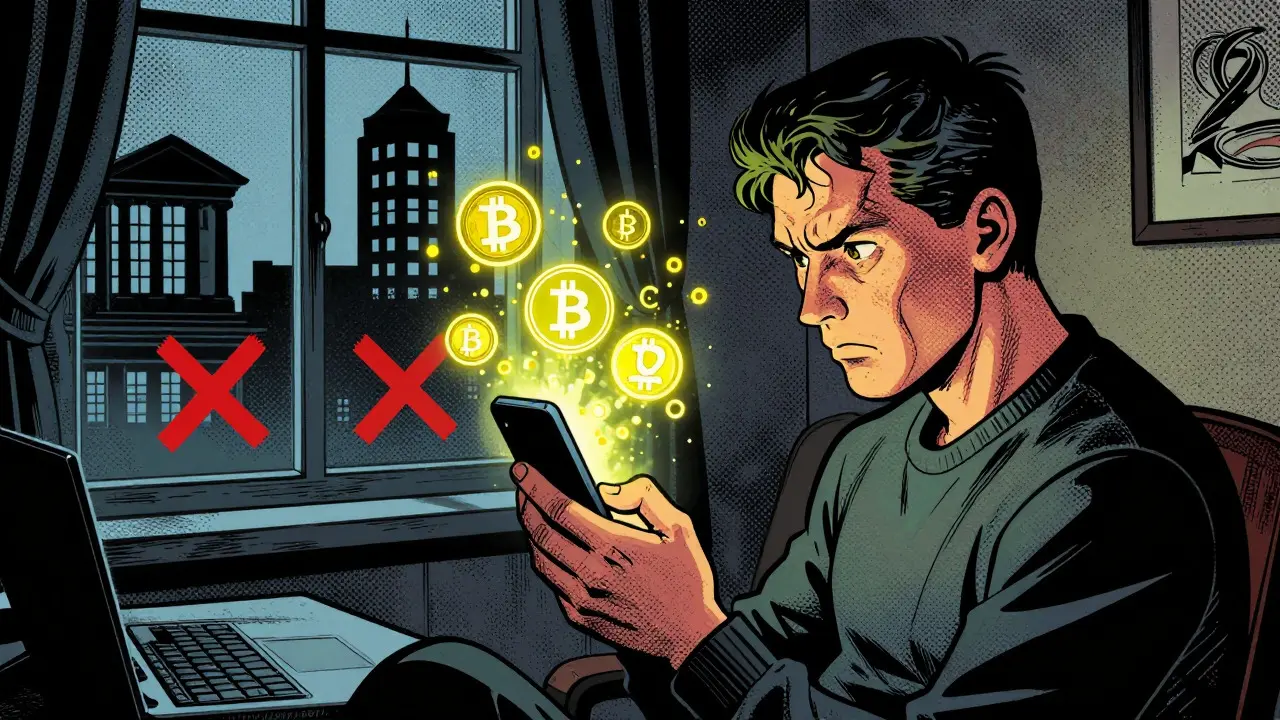
Imagine trying to send money abroad while your bank account is frozen by international sanctions. For millions of people in Russia, this isn't a hypothetical scenario; it's daily life. This reality has turned cryptocurrency from a speculative asset into a survival tool. As of late 2025, approximately 20 million Russians-roughly 13.6% of the population-are actively using digital assets. That’s not just early adopters chasing gains; that’s a significant portion of the economy finding ways to move value when traditional rails are blocked.
The story of crypto adoption in Russia is unique. It’s driven less by hype and more by necessity. While the government officially prohibits using crypto for payments, the sheer volume of users forces regulators to adapt. In October 2025, Deputy Finance Minister Ivan Chebeskov admitted that crypto is an economic reality that must be addressed to secure benefits for the country. The total value held in Russian exchange wallets hit 827 billion rubles (about $10.15 billion) by March 2025, up 27% from the previous year. So, how does this ecosystem function under such heavy restrictions? And what does it mean for the future?
The Numbers Behind the Boom
To understand the scale, we have to look at the data beyond the headlines. The Chainalysis 2025 Global Crypto Adoption Index ranks Russia #10 globally. While this is a drop from #8 in 2024, it still places the country ahead of major economies like the United Kingdom (#11) and far behind nations with strict bans like China. The real surprise lies in the breakdown of who is using these tools.
Russia ranks #4 globally for institutional centralized service value received. This means big players-companies, funds, and large entities-are heavily integrated into the crypto space, likely for cross-border trade and treasury management. Conversely, retail users rank #8. This dual-track system highlights a sophisticated market where both everyday citizens and large institutions rely on blockchain technology, albeit for different reasons.
| Metric | Global Rank | Key Insight |
|---|---|---|
| Overall Adoption | #10 | Strong overall presence despite geopolitical isolation |
| Institutional Value Received | #4 | High corporate usage for cross-border settlements |
| Retail Centralized Service | #8 | Massive individual user base driving demand |
| DeFi Value Received | #52 | Lagging integration with decentralized finance protocols |
| Bitcoin Penetration | #2 | Second only to the US in Bitcoin-specific usage |
The asset distribution tells another part of the story. According to the Bank of Russia, Bitcoin dominates holdings at 62.1%. Ether follows at 22%, and stablecoins like USDT and USDC make up 15.9%. The high percentage of stablecoins is crucial. In an environment with currency volatility and capital controls, users aren't just betting on price pumps; they're parking value in dollar-pegged assets to preserve purchasing power.
Regulatory Gray Zones and Legal Realities
You can’t talk about Russian crypto without addressing the law. The framework is confusing by design. The Federal Law "On Digital Financial Assets" (No. 259-FZ), effective since January 2021, allows you to own cryptocurrency but explicitly bans its use as payment for goods and services. This creates a legal paradox: you can hold Bitcoin, but you can’t buy bread with it.
This restriction severely limits merchant adoption. Statista’s September 2025 survey found that less than 0.5% of Russian businesses accept crypto directly. Compare this to the global average of 3.5%, and you see the friction caused by regulatory ambiguity. Most transactions happen peer-to-peer (P2P) or through offshore exchanges, keeping the activity largely invisible to domestic merchants.
However, the tide is turning. In October 2025, Vladimir Chistyukhin, an official at the Bank of Russia, announced plans to allow banks to handle cryptocurrency transactions under "strict capital and reserve requirements." This is a massive shift. If implemented, it would bridge the gap between the fiat banking system and the crypto world, reducing the need for risky P2P transfers. A comprehensive survey scheduled for early 2026 aims to inform these new rules, signaling that the state wants to regain control over a sector it previously tried to ignore.
Why Russians Are Turning to Crypto
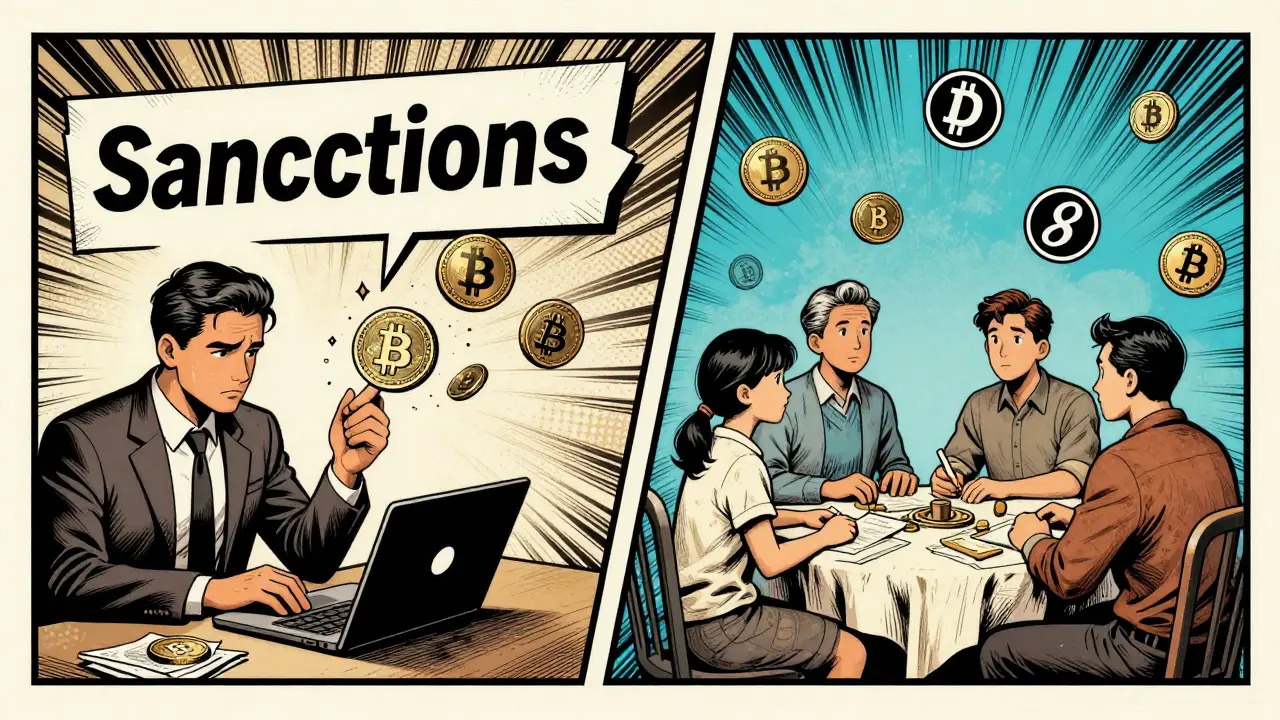
What drives someone to navigate complex wallet setups and security risks? The answer usually comes down to three factors: sanctions, inflation, and access.
- Circumventing Sanctions: After the 2022 invasion of Ukraine, Western payment systems like Visa and Mastercard exited the Russian market. SWIFT restrictions made international business nearly impossible. Crypto became the lifeline. Users report using Bitcoin and stablecoins to pay for imported software, hire international contractors, and settle trade deals. One user on Reddit noted that Bitcoin became "essential" for importing business software after Western blocks.
- Hedging Against Inflation: With the ruble fluctuating against major currencies, many Russians view crypto as a store of value. Stablecoins offer a way to hold dollars without needing a foreign bank account. This is particularly appealing for those worried about local currency devaluation.
- Access to Global Markets: For investors locked out of Western stock markets, crypto offers exposure to global financial instruments. Decentralized exchanges (DEXs) and offshore platforms provide access to assets that are otherwise inaccessible due to capital controls.
The speed and cost advantages are also significant. Traditional international wire transfers can take 3-5 business days and cost 3-5% in fees. Crypto transactions often settle in 10-15 minutes with fees under 0.5%. For small businesses exporting software or services, this efficiency translates directly to higher margins.
The Infrastructure Challenge
Despite high adoption, the infrastructure remains fragile. Major global exchanges like Binance and Coinbase are largely inaccessible to Russian users due to compliance with international sanctions. This vacuum was initially filled by local platforms like Garantex, which was shut down by U.S. Treasury sanctions in September 2022. Today, users rely on a mix of smaller domestic alternatives like BitPrepay and EXMO, as well as decentralized exchanges.
This reliance on lesser-known platforms increases risk. Security incidents are common, though exact statistics are hard to pin down because Russian authorities don’t publicly report hacking figures. A survey by FinProm Analytics in April 2025 revealed that 28% of users experienced account freezes during the Bank of Russia’s compliance reviews. One user reported losing 250,000 rubles in potential profits after their exchange account was frozen for three weeks during routine verification.
Moreover, the lack of regulated centralized exchanges means users often operate in the wild west of P2P trading. While this offers freedom, it exposes them to fraud. Trustpilot reviews for Russian crypto services show that 63% of negative feedback cites "sudden policy changes" and "lack of legal protections." The learning curve is steep; Moscow State University estimates new users need 15-20 hours of study to safely manage wallets and understand regulatory constraints.

Demographics and User Behavior
Who exactly is using crypto in Russia? The demographic profile is distinct. Data shows that 72% of users are males aged 25-44, and 89% live in cities with populations over one million, such as Moscow and St. Petersburg. This urban concentration reflects better internet infrastructure and higher digital literacy.
Interestingly, the gender gap is narrowing as crypto becomes a household necessity rather than a tech hobby. Women are increasingly involved in family wealth preservation strategies using stablecoins. Additionally, the rise of Telegram-based crypto communities has democratized information. There are approximately 450,000 members across major Russian crypto Telegram channels, providing real-time support and news updates that often outpace official media.
Enterprise usage remains niche but growing. Only 1.2% of Russian businesses accept crypto directly, compared to 3.5% globally. However, behind the scenes, larger enterprises use crypto for B2B cross-border settlements. A case study from a Telegram community highlighted a software exporter who reduced transaction costs by 40% by switching to USDT payments for Southeast Asian clients. These success stories drive quiet adoption among SMEs facing similar logistical hurdles.
Future Outlook: Integration or Isolation?
Where does this leave Russia in 2026 and beyond? The trajectory points toward formal integration. The government recognizes that banning crypto hasn’t stopped its use; it has only pushed it underground. By bringing banks into the fold, regulators hope to monitor flows, collect taxes, and protect consumers. Statista projects the market revenue will reach $2.3 billion in 2025, with user numbers potentially hitting 23.5 million by the end of 2026.
However, risks remain high. International scrutiny is intensifying. The U.S. Treasury Department has signaled "heightened scrutiny of Russian crypto activities," which could lead to further sanctions targeting mixing services or specific tokens. Geopolitical tensions may also accelerate the development of alternative financial infrastructure, including the Digital Ruble, the central bank’s digital currency project. While the Digital Ruble aims to modernize payments, it poses a threat to private cryptocurrencies by offering a state-controlled digital alternative.
For the average user, the message is clear: crypto is no longer optional. It’s a critical component of financial resilience. Whether you’re a freelancer getting paid from abroad or a business owner navigating supply chain disruptions, understanding how to securely store and transfer digital assets is now a basic skill in the Russian economic landscape.
Is cryptocurrency legal in Russia?
Yes, owning cryptocurrency is legal in Russia under the Federal Law "On Digital Financial Assets." However, using it as a direct payment method for goods and services within the country is prohibited. You can buy, sell, and hold crypto, but merchants cannot legally accept it for retail transactions.
Which cryptocurrencies are most popular in Russia?
Bitcoin is the most dominant asset, holding 62.1% of all crypto balances in Russian exchange wallets. Ethereum follows with 22%, and stablecoins like USDT and USDC account for 15.9%. The high share of stablecoins reflects their use for preserving value against ruble volatility.
How do Russians buy crypto if global exchanges are banned?
Since major global exchanges like Binance and Coinbase are restricted, Russians primarily use domestic platforms like BitPrepay and EXMO, or engage in peer-to-peer (P2P) trading. Decentralized exchanges (DEXs) are also gaining popularity as they require fewer identity checks and are harder to sanction.
Will Russian banks start accepting crypto soon?
There are strong indications that this is happening. In October 2025, the Bank of Russia announced plans to allow banks to handle crypto transactions under strict capital requirements. A comprehensive survey scheduled for early 2026 will help shape these regulations, suggesting a move toward formal integration rather than continued prohibition.
What are the main risks for crypto users in Russia?
The primary risks include regulatory uncertainty, account freezes during compliance checks, and fraud on unregulated P2P platforms. Additionally, international sanctions could target specific crypto infrastructure, limiting access to certain tokens or services. Users must also navigate the technical complexity of securing their own wallets.
How does Russia compare to other countries in crypto adoption?
Russia ranks #10 globally in overall crypto adoption according to Chainalysis' 2025 index. It performs exceptionally well in institutional adoption (#4 globally) but lags in decentralized finance (DeFi) usage (#52). This contrasts with countries like Ukraine, where retail adoption drives the rankings.