
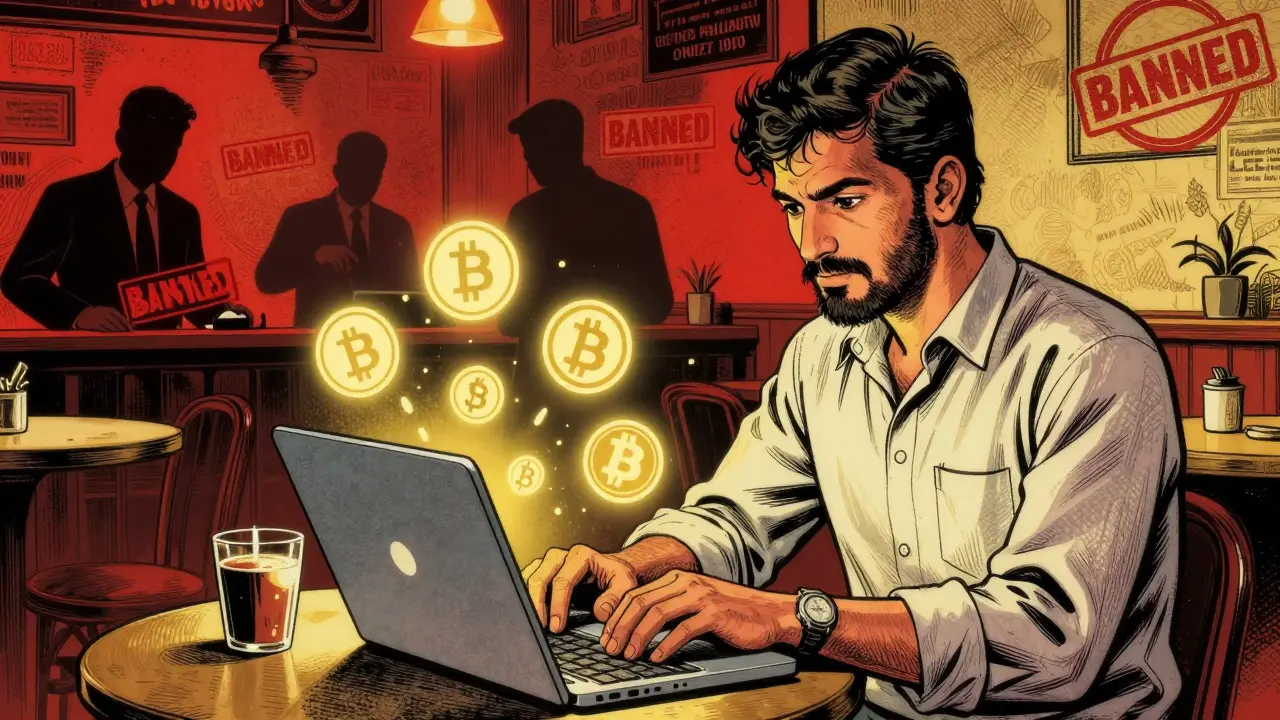
For years, Pakistan’s government told its citizens: crypto is illegal. Banks were ordered to block transactions. Exchanges were shut down. But in 2025, the country saw over $300 billion in annual cryptocurrency trading - one of the highest volumes in the world. How? Because when people can’t use banks, they find other ways.
Why Pakistan’s Crypto Market Grew Anyway
The State Bank of Pakistan banned crypto-related banking in 2018. The message was clear: don’t touch Bitcoin, Ethereum, or stablecoins. But the economy didn’t wait for permission. With inflation hitting 38% in 2024 and the Pakistani rupee losing over 60% of its value against the dollar since 2018, people needed something stable. Bitcoin became a savings tool. USDT, a digital dollar, became the new rupee. By 2025, over 40 million Pakistanis were using crypto. That’s more than half the population of Canada. Most weren’t speculating. They were working. Freelancers in Lahore, Karachi, and Faisalabad got paid in crypto by clients in the U.S., Europe, and Australia. Traditional wire transfers took days, cost 8-12%, and often got rejected. Crypto? Sent in minutes, for less than 1%. Peer-to-peer (P2P) platforms exploded. Local traders on Paxful, Binance P2P, and smaller homegrown apps like CryptoPak and CoinSage connected buyers and sellers using Easypaisa and JazzCash - mobile wallets that didn’t ask questions. A worker in Multan could receive $500 in USDT, convert it to cash via a local vendor, and pay rent. No bank involved. No paperwork. No delay.How the $300 Billion Number Is Real (and Why It’s Hard to Measure)
The $300 billion figure doesn’t come from official reports. It’s estimated by tracking on-chain activity, P2P volume, and wallet usage. CoinLaw recorded 18.2 million verified crypto users in 2025. But experts say the real number is closer to 40 million because many people use cash-in, cash-out networks without registering on apps. Think of it like this: if 10 million people trade $100 worth of crypto every month, that’s $12 billion a year. Multiply that by 40 million, and you’re already at $480 billion. The $300 billion estimate is conservative. Most of the volume comes from USDT, Bitcoin, and Ethereum. USDT alone accounts for over 70% of all trades because it’s the most reliable way to hold value when the rupee keeps falling. The Global Crypto Adoption Index ranked Pakistan third in 2025 - behind only India and Vietnam. Why? Because adoption isn’t about how many exchanges you have. It’s about how many people are using crypto to solve real problems. Pakistan’s youth, 64% of whom are under 30, are the engine. They’re tech-native, job-hungry, and tired of waiting for banks to catch up.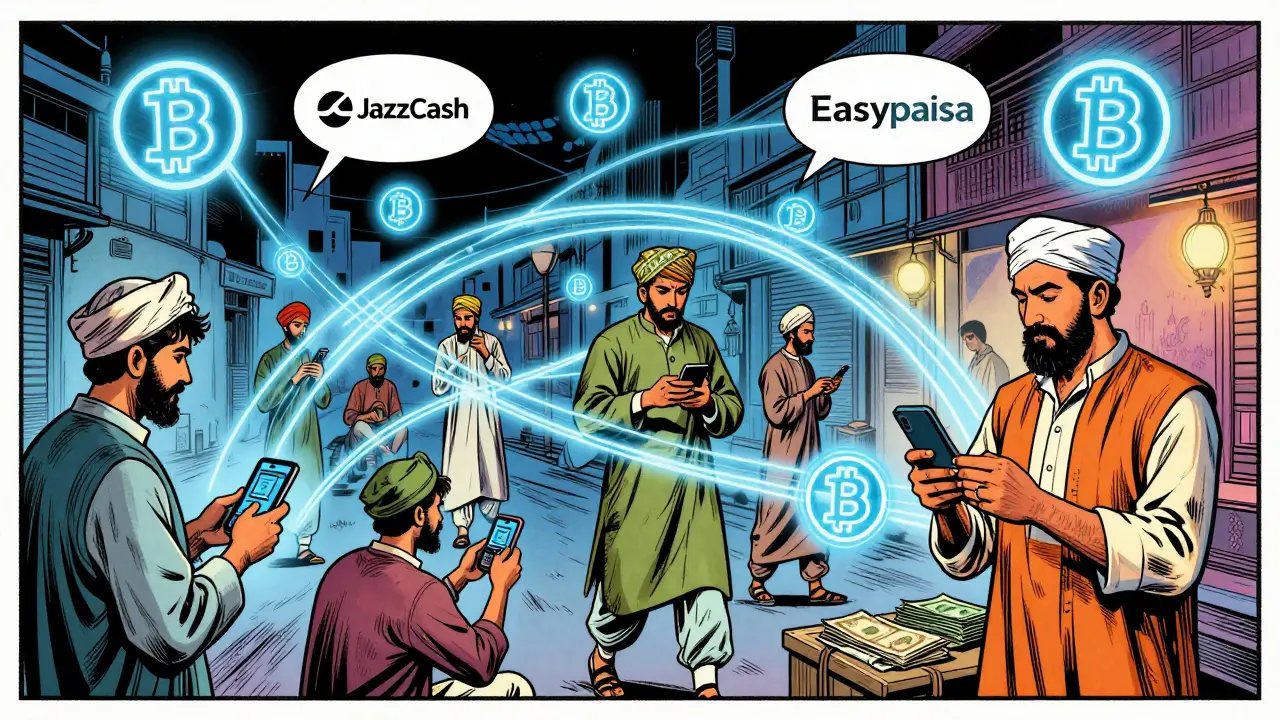
What’s Actually Happening on the Ground
You won’t find crypto ATMs in Islamabad. You won’t see Coinbase ads on TV. But you’ll find traders in cafes using WhatsApp groups to match buyers and sellers. One common flow:- A freelancer in Karachi gets paid $1,000 in USDT from a client in Germany.
- They transfer it to a local P2P seller via a Telegram bot.
- The seller deposits Rs. 280,000 (the local rate) into their JazzCash account.
- The freelancer withdraws cash from a nearby shop that accepts JazzCash.
The Regulatory Paradox
The government still calls crypto illegal. But in 2025, the Ministry of Finance quietly started discussions about a national digital asset framework. Why the shift? Because crypto is already the financial backbone for millions. Pakistan’s central bank collects $1.2 billion in annual fees from international remittances. Crypto bypasses that. But now, with crypto trading at $300 billion, the government realizes: if you can’t stop it, you might as well tax it. Some experts predict a future where Pakistan creates a regulated crypto exchange backed by the state - not to control, but to capture revenue. A national Bitcoin reserve? That’s being whispered in policy circles. Imagine Pakistan holding BTC as part of its foreign reserves. It’s not science fiction. It’s economics.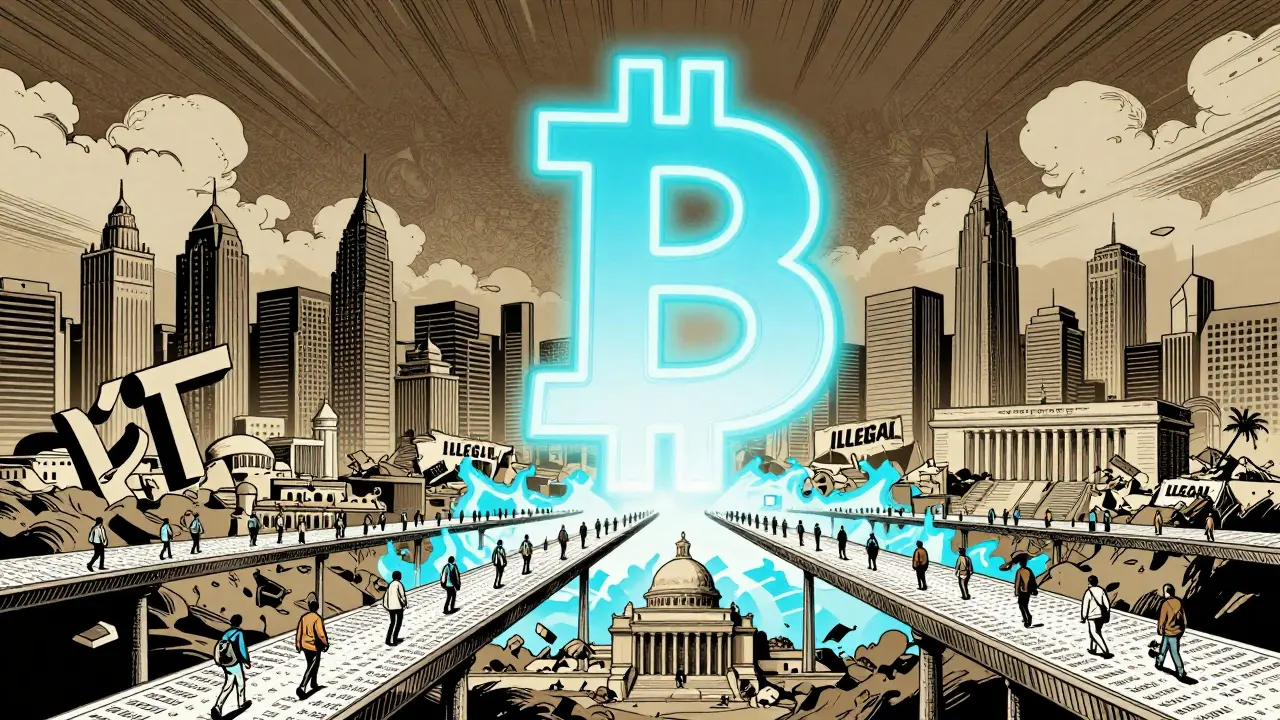
What Traders Need to Know
If you’re a Pakistani trader in 2026, here’s what you’re up against:- Volatility: The rupee still swings. USDT is your shield.
- Scams: Fake P2P sellers exist. Always use escrow platforms with verified ratings.
- Legal risk: No law says crypto is legal. But no law has been enforced against individuals either.
- Access: Rural areas still struggle. If you’re outside major cities, your options are limited.
There are 23 Comments
Howard Headlee
ann neumann
William Montgomery
Allison Davis
Brandon Kaufman
Craig Gregory
Anthony Marshall
Jenni James
Chelsea Boonstra
Alex Thorn
Julie Tomek
Anshita Koul
PIYUSH KOTANGALE
vishnu mr
Grace van Gent-Korver
Zephora Zonum
Lindsay Girvan
Douglas Anderson
Tina Keller
vasantharaj Rajagopal
Mara Alves Mariano
Adam Ashworth
Tom Jewell
Write a comment
Your email address will not be published. Required fields are marked *