
If you've been watching the crypto space recently, CoinCatch is a cryptocurrency derivatives trading platform founded in 2022 and registered in the British Virgin Islands has popped up on your radar. It promises something that many seasoned traders have wanted for years: massive leverage without the headache of uploading sensitive documents to verify your identity. In an era where regulatory crackdowns are tightening globally, finding a spot where you can trade substantial volumes privately feels like finding a secret door in a crowded room. But does the lack of paperwork come at the cost of safety? And is the 200x leverage actually useful, or just dangerously tempting?
This review cuts through the marketing fluff. We're going to look at the actual numbers behind the hype, from their matching engine capabilities to the specific jurisdictions they avoid. Whether you are a professional looking for liquidity or a retail trader curious about privacy-first exchanges, understanding the mechanics of CoinCatch is crucial before you deposit any funds.
Platform Foundation and Ownership Structure
Before trusting an exchange with your assets, you need to know who owns the building. CoinCatch isn't a ghost project; it operates under Linkbase Technology Limited is the operating company behind the CoinCatch trading platform , incorporated in the British Virgin Islands is a tax-neutral jurisdiction often used by financial services . While BVI incorporation is standard for crypto platforms seeking flexibility, what sets them apart slightly is their active pursuit of money service business (MSB) status.
They hold MSB registrations with FINTRAC is the Financial Transactions and Reports Analysis Centre of Canada in Canada and FinCEN is the Financial Crimes Enforcement Network in the United States in the US. This might seem contradictory if you look at their geographic restrictions-specifically, they block users physically located in the US-but having these licenses demonstrates a level of operational legitimacy that many offshore-only competitors lack. It signals they aren't running a server out of a basement in a dark alley.
Trading Capabilities and Leverage Options
The core draw for most users is the sheer power available under the hood. If you are used to traditional brokerage accounts, CoinCatch looks like a rocket ship strapped to a scooter. They offer incredibly high leverage ratios, topping out at 200x leverage on Bitcoin is allowing traders to control positions 200 times their collateral and 150x on Ethereum. For context, many established exchanges cap Bitcoin leverage between 50x and 125x to protect user equity.
This isn't just marketing; the infrastructure supports it. Their financial-grade matching engine reportedly processes millions of transactions per second. In volatile markets where milliseconds matter for liquidation prices, engine speed is vital. The platform supports three primary contract types:
- USDT-M: Perpetual contracts settled in Tether (USDT). This is popular for those wanting to stay within stablecoin pegs.
- USDC-M: Similar to above but settles in USD Coin, offering a regulated alternative.
- Coin-M: Contracts settled in the underlying asset itself, such as BTC or ETH.
Fees are competitive but standard for high-leverage tiered pricing structures. You're looking at a maker fee of 0.02% and a taker fee of 0.06%. For high-volume traders, there are rebate tiers available that can effectively reduce these costs even further. The average funding rates, however, deserve scrutiny. Bitcoin currently sits around -0.0011%, meaning longs are paying shorts very little, or vice versa depending on the trend, keeping borrowing costs relatively low compared to some saturated markets.
The Privacy-First Approach and KYC Reality
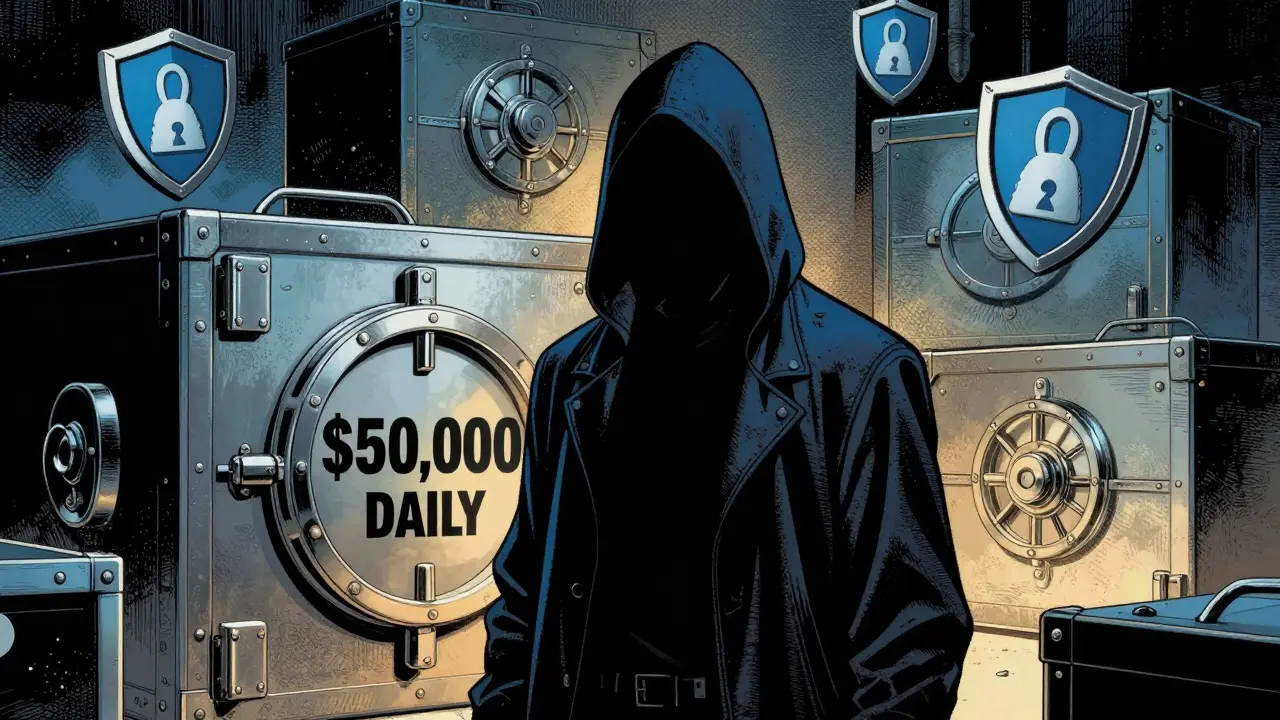
Here is where CoinCatch diverges sharply from the mainstream. Most major platforms require ID verification, selfies, and proof of address before you can touch a single dollar. CoinCatch allows you to withdraw up to $50,000 per day without requiring identity verification. This "non-KYC" feature is rare for a platform handling this volume.
However, this privacy comes with a hard limit. If you attempt to access the site from a US IP address, the doors lock shut. Even Canadian users face friction due to local regulations, despite the FinCEN/FINTRAC connections. This creates a "safe haven" environment for international traders but excludes a significant portion of the global market. If you live in New Zealand, Australia, or Europe, this barrier doesn't apply, which keeps the platform highly attractive in those regions.
It is important to weigh the pros and cons of this model. On one hand, your financial data isn't uploaded to a centralized database waiting for a potential breach. On the other hand, customer support recovery for lost accounts is harder without verified identities. You are responsible for your seed phrases and email security in ways you might not be on compliant giants like Coinbase.
| Feature | Value / Description |
|---|---|
| Max Leverage | 200x on Bitcoin |
| KYC Limit | $50,000 daily withdrawal without ID |
| Supported Currencies | 400+ coins including BTC, ETH, LTC |
| Fees | 0.02% Maker / 0.06% Taker |
| Security Tech | Merkle Tree Proof of Reserves |
Liquidity and Market Data
For derivatives trading, liquidity is the lifeblood. If you can't get in or out of a position quickly without slippage, the platform is useless for large trades. As of our latest check, CoinCatch is reporting 24-hour trading volume hovering around $9.4 billion. This figure is substantial, indicating deep order books even for less common altcoins.
The platform lists over 400 cryptocurrencies for trading. Major pairs like Bitcoin (BTC), Ethereum (ETH), Litecoin (LTC), and Polkadot (DOT) see the tightest spreads. But even deeper alts like Filecoin (FIL) or Shiba Inu (SHIB) are available, giving traders exposure to meme and utility tokens directly via futures. The open interest stands at nearly $4.9 billion, suggesting a robust amount of capital is currently committed to open positions rather than just wash-trading volume.
Security Measures and Fund Safety
In the wake of past industry collapses, trust is the scarcest currency. CoinCatch has implemented a Proof of Reserves system using Merkle Tree technology is a cryptographic method to prove fund inclusion in asset trees . This allows independent auditors and users to verify that every user balance is backed 1:1 by actual on-chain assets. Unlike simple screenshot audits, Merkle Trees prevent selective hiding of liabilities.
They maintain cold storage for the majority of user funds and utilize multi-signature wallet protocols. While no platform is entirely immune to external hacks, their commitment to transparency regarding reserves is a step above many unregulated competitors. They also publish regular updates on audits through their social channels and help desk, fostering a transparent relationship with their user base.
User Experience and Interface Design
You would think a platform focused on high-frequency trading would feel cluttered or overwhelming. CoinCatch manages to keep the interface intuitive. It offers both a classic chart view for technical analysts and a streamlined mobile view for active traders on the go. The layout highlights key data points: depth chart, recent trades, open interest, and long/short ratios.
Newbie bonuses can jumpstart your account. Currently, new users can claim up to 5,125 USDT in bonuses, though this comes with trading volume requirements and withdrawal limits. These promotions are designed to cover your initial losses while you learn the ropes. The learning curve is moderate; you don't need to code to use it, but understanding terms like "cross margin" versus "isolated margin" is essential for survival.
Critical Limitations to Consider
No platform is perfect. While CoinCatch excels in specific niches, it falls short in others compared to established veterans like Binance is one of the world's largest cryptocurrency exchanges or BitMEX is a veteran institutional-grade crypto derivatives platform .
One significant gap is the age of the platform. Founded in 2022, it hasn't weathered multiple full market cycles (bull/bear/bull) in the same way older players have. A rating of 65 from WhalePortal suggests moderate performance relative to top-tier exchanges. Another constraint is the lack of staking or lending products found on comprehensive exchanges. This is purely a derivatives shop, which may limit diversification strategies for long-term holders.
Finally, customer support relies heavily on ticket systems. While 24/7 coverage exists and response times are generally praised, complex recovery issues related to lost passwords on non-KYC accounts can take significantly longer to resolve due to the stringent security checks required to verify ownership.
Final Verdict: Who Should Use CoinCatch?
If you are a sophisticated trader who values privacy, requires massive leverage for hedging strategies, and resides outside restricted jurisdictions like the US, CoinCatch offers a compelling toolset. The fee structure is low enough to profit even with scalping, and the liquidity is sufficient for executing heavy orders.
However, if you are a beginner just dipping toes into crypto, the 200x leverage is likely a trap rather than a tool. Without the knowledge to manage margin calls, the high leverage setting can wipe out capital in seconds. Stick to lower leverage or spot markets until you understand risk management deeply. Additionally, if you need integrated fiat on-ramps or banking integration, look elsewhere, as this platform focuses strictly on crypto-to-crypto derivatives operations.
Frequently Asked Questions
Is CoinCatch safe for storing large amounts of crypto?
While CoinCatch utilizes cold storage and Proof of Reserves, best practice dictates never keeping more funds on an exchange than necessary for trading. The platform has robust security, but the ultimate safety involves using hardware wallets for long-term holdings.
Can US residents use CoinCatch?
No, US-based traders are explicitly prohibited from accessing the platform. The platform enforces geo-blocking measures to comply with regulatory requirements, preventing US users from creating accounts or trading.
Do I need to provide ID for verification?
Not for daily withdrawals under $50,000. CoinCatch allows trading without mandatory Know Your Customer (KYC) procedures, though higher withdrawal thresholds or dispute resolutions may eventually trigger verification requests.
What is the maximum leverage available?
You can trade up to 200x leverage on Bitcoin perpetual contracts. Lower leverage tiers exist for altcoins depending on volatility, ranging typically between 50x and 150x for assets like Ethereum or Dogecoin.
How do I transfer funds into my account?
Deposits are made via crypto transfers only. You must send compatible assets (like USDT, BTC, ETH) to your generated deposit address. CoinCatch does not currently accept direct bank wire deposits or credit card funding on the exchange side.


There are 14 Comments
Lauren Gilbert
Privacy in finance is a fundamental right rather than a feature. We often forget why decentralization matters in the first place. The rise of centralized exchanges created too many points of failure. When we trade without knowing our identity we reclaim autonomy. It feels like a step back towards true freedom in asset management. However safety nets are often tied to personal verification systems. This creates a paradox where security relies on surveillance. We must weigh the risk of hacking against the risk of doxxing. Many people prioritize convenience over their own digital footprint. I see the appeal of platforms that respect anonymity deeply. Yet the lack of KYC limits recovery options significantly. Losing access without proof of identity leaves funds stranded forever. Philosophically this shifts responsibility entirely onto the individual. We are building a society where self custody is mandatory. Ultimately the technology serves the user if they stay vigilant.
Erica Mahmood
High leverage mechanics are risky for retail investors without proper hedging strategies.
david head
totally agree with that sentiment tbh leverage is scary sometimes 😅 just stick to spot
Sharhonda Walker
i thnk teh privicy features are awesom but i hope they dont recieve bad hacks soon its scary to trade wihout id verifycation
Susan Payne
One must exercise extreme caution regarding these unregulated entities. The allure of non-KYC environments often masks significant systemic vulnerabilities. It is irresponsible to encourage such behavior without due diligence.
vijendra pal
leverag is gud but safty first 😎 crypto is crazy world 🚀 dont lose ur money bro
Alexandra Lance
Oh please tell me you are joking about safety with zero regulation 🙄 they watch everything even without KYC because blockchain isnt anonymous you fools
Siddharth Bhandari
The matching engine specifications listed are quite impressive for a platform of this age. Liquidity depth seems sufficient for executing large orders during volatile windows. Technical infrastructure appears robust compared to competitors.
Sonya Bowen
Focusing on technical specs is smart. Always verify the proof of reserves before depositing. Keep cold storage habits separate from trading balances.
akash temgire
The jurisdictional restrictions are clear yet contradictory in nature. BVI incorporation paired with FINTRAC status suggests complex compliance layers. One must remain skeptical until further audits confirm fund security.
Krystal Moore
I am so tired of scams in this industry every day bringing my heart rate up with news of rug pulls
Carol Prates
Understand your fear completely it is valid but we need to trust the tech eventually. Being too scared stops us from growing our portfolios though.
Taylor Meadows
Your financial situation looks vulnerable if you are trusting offshore setups like this. You clearly do not understand the risks involved here personally.
Carmelita Gonzales
please take care of yourself when trading it is stressful enough without added pressure from others
Write a comment
Your email address will not be published. Required fields are marked *