
Imagine filing a flight delay claim and having the money hit your account before you even leave the airport. That isn't science fiction; it's how AXA’s Fizzy works today. The magic behind that instant payout isn't just faster banking-it's blockchain technology creating an immutable, shared record of truth between the insurer and the policyholder. For decades, the insurance industry has been bogged down by paper trails, siloed databases, and endless reconciliation meetings. But as we move through 2026, the shift toward Insurance Data Sharing on Blockchain is no longer a niche experiment. It’s becoming the standard for anyone serious about cutting costs and killing fraud.
The End of the "Single Source of Truth" Myth
If you’ve ever worked in claims or underwriting, you know the pain. You have one version of the truth in your CRM, another in your legacy policy admin system, and a third sitting in a spreadsheet sent by a broker. Reconciling these discrepancies eats up 15-20% of operational time according to recent NAIC assessments. This is where distributed ledger technology (DLT) changes the game. Instead of each party keeping their own private copy of the books, everyone shares one synchronized ledger.
This isn't just about convenience. It’s about trust. When B3i (Blockchain Insurance Industry Initiative) launched back in 2016 with giants like Allianz and Munich Re, the goal was simple: create a single source of truth for reinsurance. Today, with 87% of global insurers piloting or using blockchain, that vision is reality. By eliminating the need for manual data entry and verification, companies are seeing administrative burdens drop significantly. Jim Bramblet from Accenture put it best: friction in business processes drops drastically when you stop arguing over whose database is right and start trusting the code.
How It Actually Works: Public vs. Private vs. Consortium
Not all blockchains are created equal. In insurance, you won’t see many public chains like Bitcoin being used for sensitive customer data. Why? Privacy. If every transaction were visible to the world, competitors could sniff out your risk models. Instead, the industry relies heavily on two types:
- Private Blockchains: Controlled by a single entity, great for internal audits but limited in sharing value.
- Consortium Blockchains: The sweet spot for insurance. Here, multiple organizations-insurers, reinsurers, brokers-jointly manage the network. R3 Corda and Hyperledger Fabric are popular choices here because they offer permissioned access. Only authorized parties can see specific data points, solving the privacy paradox while maintaining transparency among partners.
The technical backbone involves cryptographic hashing. Each new "block" of data is chained to the previous one. If someone tries to tamper with a past record, the entire chain breaks, and the network rejects the change. This creates an unbreakable audit trail. For regulators, this is gold. No more digging through emails to prove compliance; the history is written in stone.
Killing the $40 Billion Fraud Problem
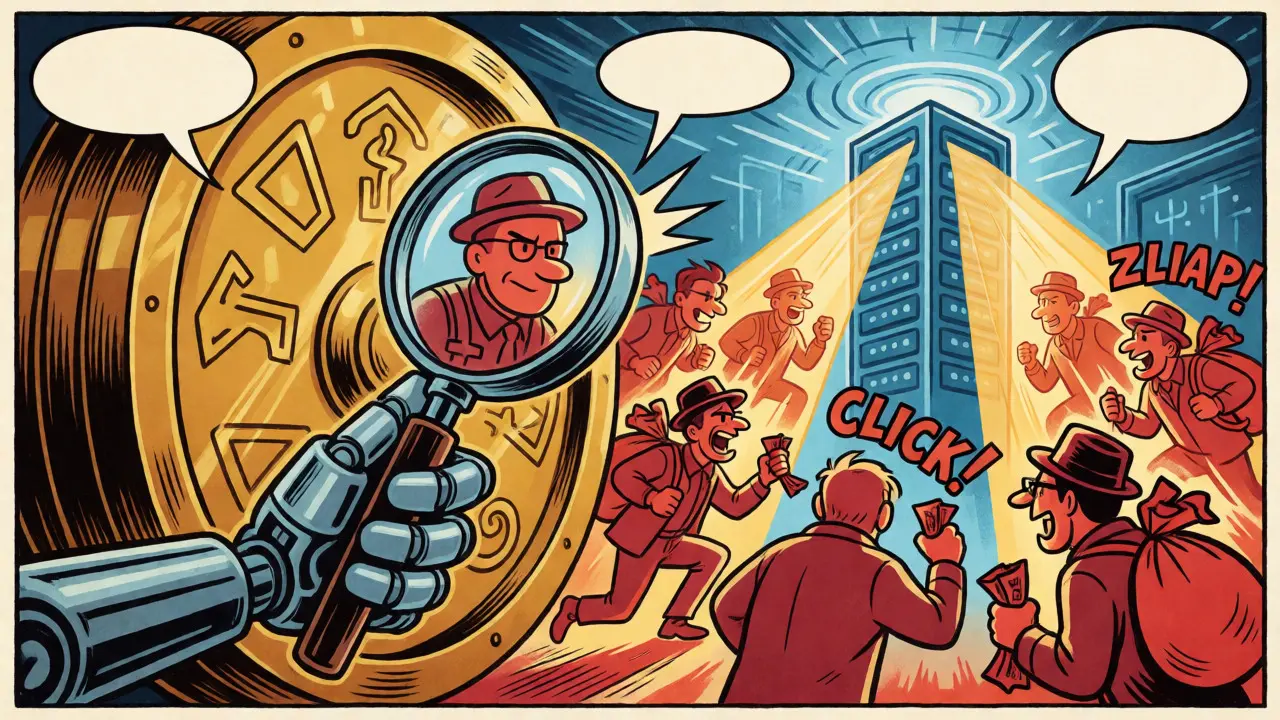
Fraud costs the global insurance industry roughly $40 billion annually. Traditional methods rely on post-hoc detection-finding the fraud after the check has cleared. Blockchain flips this script. Because the ledger is immutable, double-claiming becomes nearly impossible. If a car accident is logged on the chain with a unique timestamp and location hash, a second insurer trying to pay out for the same incident will see the conflict immediately.
Smart contracts automate this logic. A smart contract is self-executing code stored on the blockchain. In the context of parametric insurance, like crop insurance, the contract triggers payment automatically if weather data hits a certain threshold. There’s no adjuster to bribe, no paperwork to lose. AXA’s pilot showed payouts settling in under five minutes compared to the industry average of 10-14 days. This speed doesn't just please customers; it removes the window of opportunity for fraudulent manipulation during the processing lag.

Reinsurance: The Biggest Win So Far
While retail consumers might not feel the immediate impact, the reinsurance sector is undergoing a quiet revolution. Reinsurance deals involve massive amounts of complex data exchanged between primary insurers and reinsurers across borders. Historically, reconciling these transactions took 45-60 days. With blockchain platforms like those run by B3i, this process now completes in under 72 hours.
| Metric | Traditional Methods | Blockchain Implementation |
|---|---|---|
| Data Reconciliation Time | 15-20% of ops time | Reduced by 70-90% |
| Claim Processing Cost | $8-$12 per claim | $1.50-$2.50 per claim |
| Cross-Border Settlement | 45-60 days | < 72 hours |
| Breach Risk | High (Centralized DBs) | Reduced by 62% |
These numbers aren't hypothetical. IBM’s case study with AIG demonstrated a 70-90% reduction in reconciliation time. For mid-sized insurers, this means cash flow improves dramatically. Money stuck in limbo waiting for paperwork gets released faster, allowing capital to be deployed elsewhere.
The Hurdles: Legacy Systems and Culture
It’s not all smooth sailing. The biggest barrier isn't technology; it’s people and old software. Many insurers still run core systems from the 1990s. Integrating a modern blockchain layer with these legacy architectures is tough. Reddit threads on r/InsuranceTech are full of horror stories about six-month delays due to API incompatibilities. One senior architect noted unexpected regulatory hurdles in three US states requiring custom compliance modules.
Then there’s the cultural shift. Dr. Elena Rodriguez from Munich Re warned that 65% of failed pilots stem from underestimating organizational transformation. Insurers are used to guarding their data like crown jewels. Moving to a shared ledger requires a mindset shift from "my data" to "our truth." Without executive buy-in and cross-functional teams-including developers who understand Solidity programming and actuaries who understand risk-the project stalls.
Getting Started: A Practical Roadmap
If you’re looking to implement this, don’t try to boil the ocean. Start small. Most successful implementations follow a clear path:
- Select Architecture: 85% of insurers choose consortium models for external sharing. Decide if you need public visibility or private permissions.
- Governance First: Define who owns the data, who validates transactions, and how disputes are resolved before writing a line of code.
- Pilot a Specific Use Case: Don’t digitize everything at once. Pick one high-friction area, like proof of insurance or a specific reinsurance treaty.
- Invest in Training: Expect to spend $15,000-$25,000 per employee on specialized training. Your team needs to understand both the tech and the new workflow.
Costs vary widely. Joining a consortium like B3i might cost around $500,000 initially, whereas building a proprietary solution can hit $2.5 million. However, the ROI is tangible. The World Economic Forum’s Joint Value Assessment Tool suggests payback periods of 14-18 months for well-executed projects.
The Future: AI Meets Blockchain
We are just scratching the surface. The next frontier is combining blockchain with Artificial Intelligence. Imagine AI analyzing historical claims data on the blockchain to predict risk with 22% higher accuracy, as Allianz has piloted. Or tokenization, where insurance assets are broken into digital tokens, allowing fractional ownership of risk. This could open insurance markets to new investors and provide liquidity to insurers.
As of late 2024, the market is growing at a 45.7% CAGR. European insurers lead adoption due to GDPR compliance benefits, while North America lags slightly due to fragmented state regulations. But the trend is undeniable. Blockchain isn't replacing insurance agents; it's removing the drudgery so agents can focus on advice rather than administration.
Is blockchain secure enough for sensitive health data?
Yes, provided it uses a permissioned or consortium model. Public blockchains store hashes of data, not the raw personal information itself. The actual medical records remain in encrypted off-chain storage, while the blockchain verifies integrity and access logs, satisfying HIPAA and GDPR requirements.
Why do some insurers hesitate to adopt blockchain?
The main barriers are integration complexity with legacy systems, high initial implementation costs ($500k-$2.5M), and a lack of in-house expertise. Additionally, regulatory uncertainty in jurisdictions like the US, where rules vary by state, causes 28% of insurers to delay adoption.
Can blockchain prevent all insurance fraud?
No tool prevents all fraud, but blockchain significantly reduces it by making data immutable and transparent. It eliminates duplicate claims and tampering with records. However, social engineering or errors in data entry before it hits the blockchain (the "garbage in, garbage out" problem) still require human oversight.
What is the difference between a public and consortium blockchain in insurance?
Public blockchains allow anyone to join and view transactions, which is bad for competitive secrets. Consortium blockchains restrict participation to approved members (like insurers and reinsurers). This allows for faster transaction speeds and privacy controls necessary for commercial agreements.
How long does it take to see ROI from insurance blockchain projects?
Typical payback periods range from 14 to 18 months. Savings come primarily from reduced administrative costs, faster claims settlement, and lower fraud losses. Complex implementations involving cross-border reinsurance may see returns sooner due to the high volume of transactions.