
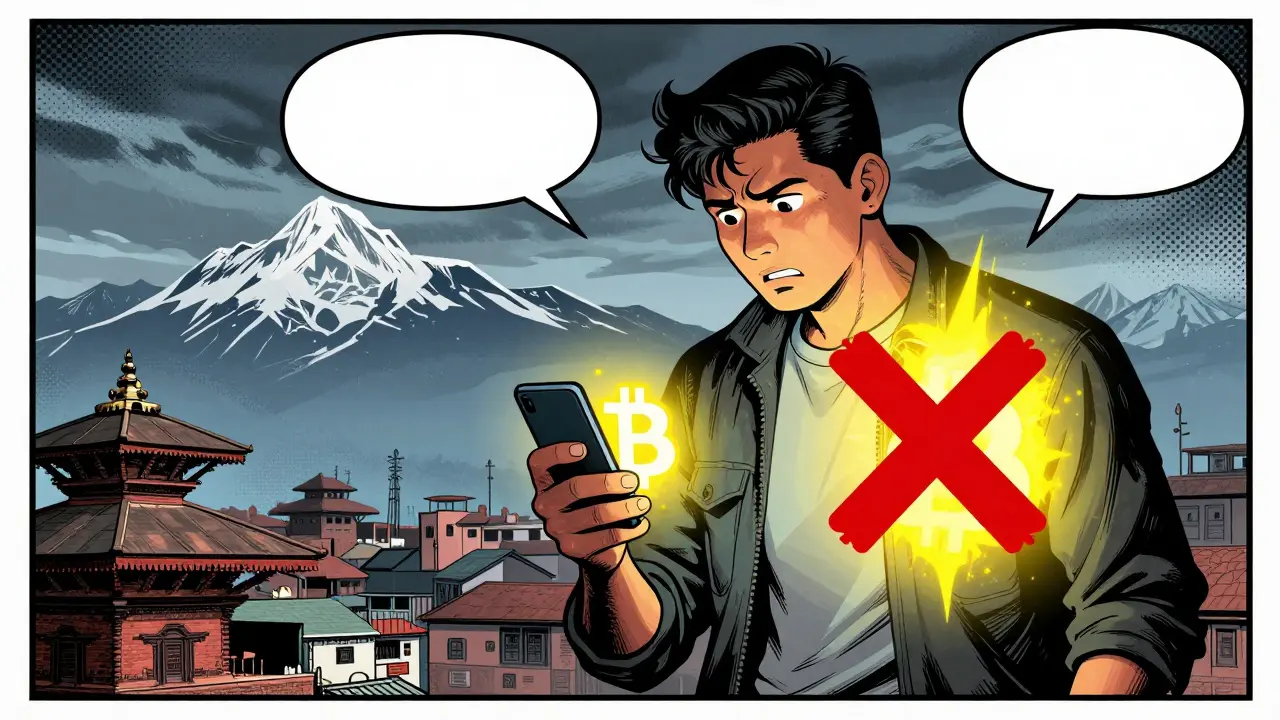
Imagine trying to send money to a friend abroad, but every step you take is technically illegal. For millions of people in Nepal, this isn't a hypothetical scenario-it's daily reality when it comes to cryptocurrency. Whether you want to buy Bitcoin, trade Ethereum, or mine digital coins, the government says no. And if you try? You could face jail time and massive fines.
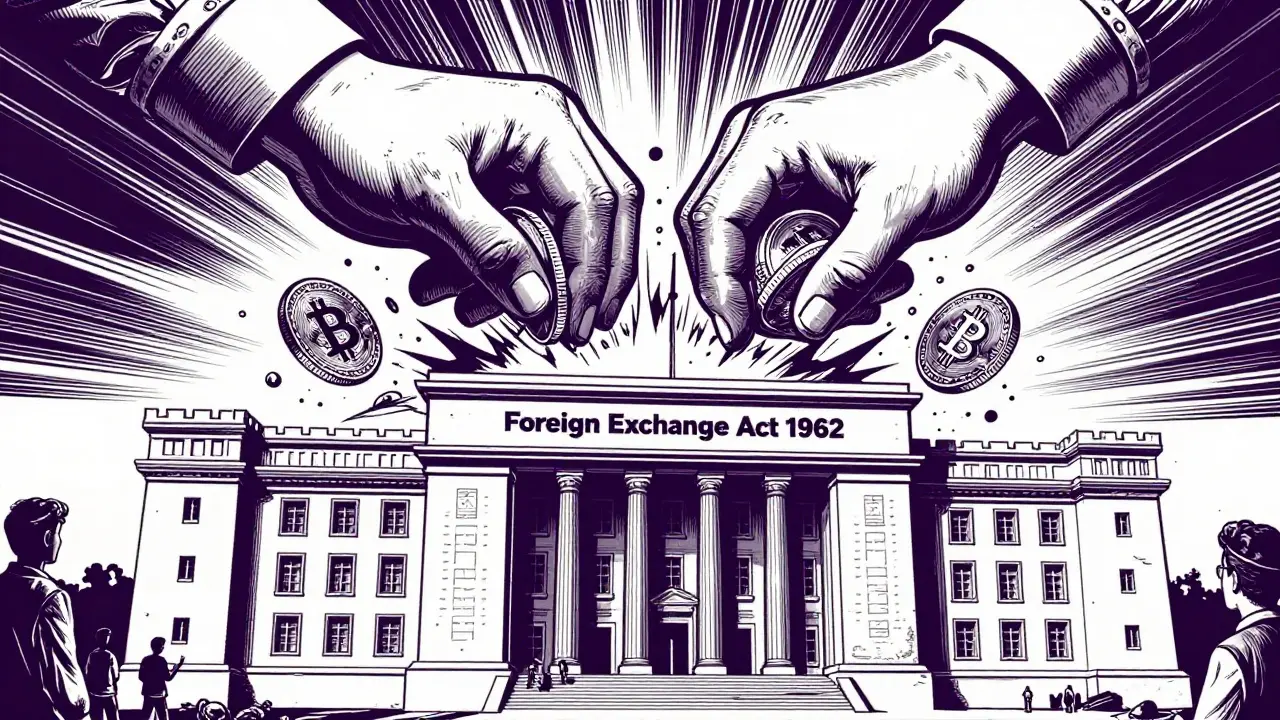
This strict stance stems from one specific piece of legislation: the Foreign Exchange (Regulation) Act, 1962. It might sound like old-fashioned lawmaking, but this act is the backbone of Nepal’s total prohibition on digital assets. But why does a country with abundant hydroelectric power and a young, tech-savvy population block something that powers the global digital economy?
The Legal Wall: How the 1962 Act Bans Crypto
To understand the ban, you have to look at how Nepal controls its money flow. The Nepal Rastra Bank (NRB), which serves as the country's central bank, issued Notice No. 37/074/075 back in August 2017. This notice didn't just discourage crypto; it explicitly banned transactions involving Bitcoin under Section 12 of the Foreign Exchange (Regulation) Act, 1962.
The logic is straightforward but rigid. The NRB argues that cryptocurrencies are not issued by any recognized central authority. Because they aren't backed by a sovereign government, they violate foreign exchange regulations designed to protect the nation's financial stability. In simple terms, if the central bank didn't print it or approve it, it's illegal tender.
Over time, the net tightened. By September 2021, the Government of Nepal expanded the ban to cover all activities related to virtual currencies, including mining, trading, and even promotion. Then, in January 2022, they added another layer, prohibiting business and trading related to network marketing alongside crypto. Today, the legal framework rests on three pillars:
- Section 12 of the Foreign Exchange (Regulation) Act, 1962: Prohibits dealing in unapproved foreign currencies and assets.
- Sections 52(1) and 61 of the Nepal Rastra Bank Act, 2002: Empowers the central bank to regulate financial institutions and penalize violations.
- Section 3 of the Act Restricting Investment Abroad, 1964: Prevents citizens from investing capital overseas without permission, which applies to buying crypto on foreign exchanges.
If you use a VPN to access Binance or Coinbase, you are still breaking these laws. The method doesn't matter; the intent and action do.
Punishment That Bites: Fines and Jail Time
Most countries warn you before they punish you. Nepal skips the warning. The penalties for violating the crypto ban are severe enough to make most people think twice-and then some.
Under the Foreign Exchange (Regulation) Act, anyone caught trading, mining, or facilitating cryptocurrency transactions faces imprisonment for up to three years. On top of that, the fine can reach three times the value of the transaction. Let’s put that in perspective. If you traded $10,000 worth of Bitcoin illegally, you could be looking at a $30,000 fine plus potential jail time.
| Violation Type | Legal Basis | Potential Penalty |
|---|---|---|
| Trading/Buying/Selling Crypto | Foreign Exchange Act, 1962 | Up to 3 years imprisonment + Fine up to 3x transaction value |
| Crypto Mining | Government Ban Order (2021) | Confiscation of equipment + Legal prosecution |
| Facilitating Transactions (Exchanges/P2P) | Nepal Rastra Bank Act, 2002 | Heavy fines + Criminal charges |
| Investing Abroad via Crypto | Act Restricting Investment Abroad, 1964 | Repatriation of funds + Penalties |
In early 2022, the Department of Revenue Investigation filed a case against four individuals for misappropriating over Rs376 million through illegal crypto investments. This wasn't a small-time operation; it showed that authorities are actively hunting large-scale violators. Even peer-to-peer (P2P) trades between friends are technically illegal because they bypass regulated banking channels.
Why Nepal Cracks Down So Hard
You might wonder why Nepal is so aggressive compared to neighbors like India, which taxes crypto but allows trading, or China, which banned trading but developed its own digital yuan. The answer lies in Nepal’s unique economic vulnerability.
Nepal relies heavily on remittances-money sent home by Nepalis working abroad. These inflows account for roughly 22.6% of the country's GDP. When Prakash Kumar Shrestha, Chief of Economic Research at the NRB, spoke in February 2022, he pointed out a troubling trend: remittance income had fallen by 7.3% in the first five months of the fiscal year. He directly linked this drop to people moving their savings into cryptocurrencies instead of traditional banks.
Then there’s the issue of foreign exchange reserves. Between July and December 2021, Nepal’s reserves dropped by 14.7%, falling to $10.03 billion. Dr. Shanker Sharma, a former NRB Governor, argued that this volatility threatened the nation’s ability to import essential goods. From the central bank’s perspective, crypto is a leak in the boat-a way for capital to flee the country instantly and irreversibly.
Additionally, Nepal lacks the technical infrastructure to monitor blockchain transactions effectively. While the NRB partnered with Chainalysis in 2022 to train officials, only 12 people received certification. Without robust monitoring tools, the government chooses a blanket ban rather than risking regulatory gaps.
The Underground Reality: Mining and P2P Trades
Laws don’t always stop demand. Despite the harsh penalties, cryptocurrency activity in Nepal hasn’t disappeared; it has gone underground.
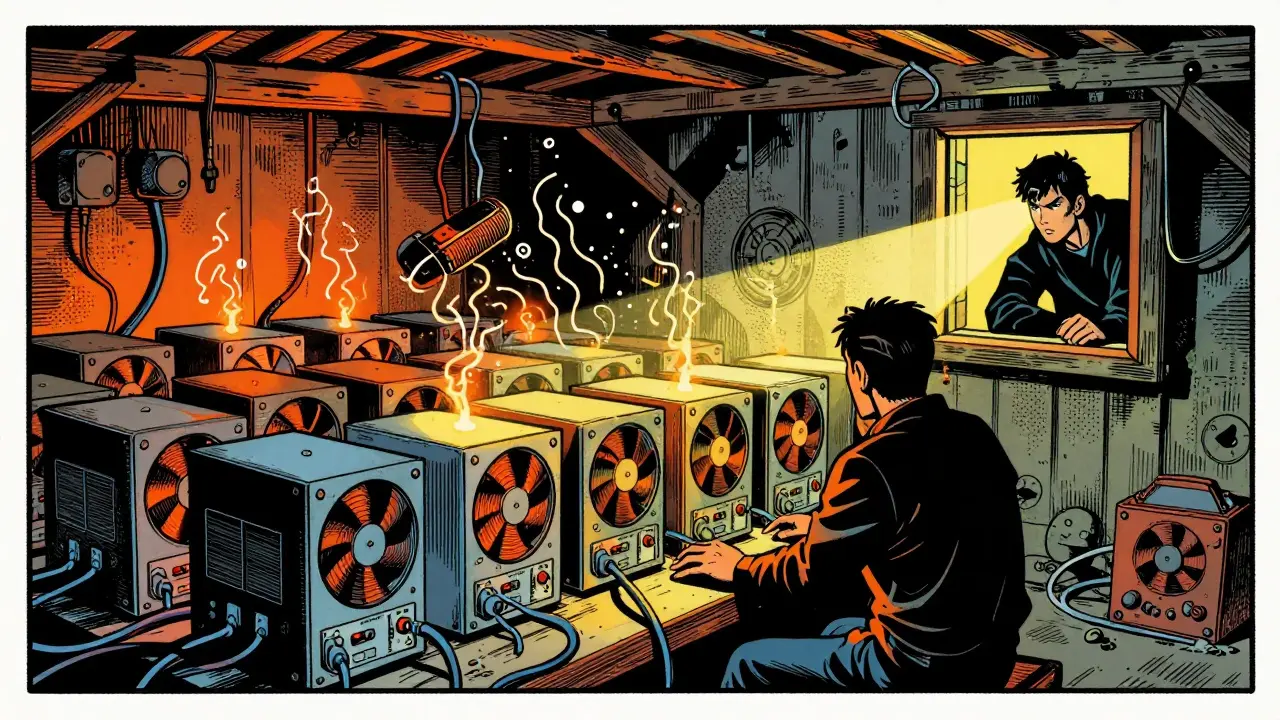
Nepal has an advantage many countries envy: cheap electricity. Thanks to its abundant hydropower resources, electricity costs average around Rs5.50 per kWh in districts like Kavrepalanchok and Nuwakot. This makes Bitcoin mining surprisingly profitable, even with the risk. Reports from 2022 suggested that 15-20% of the country’s mining operations continued quietly, hidden in residential homes and remote facilities.
For everyday users, the scene is messier. A 2023 survey by Young Innovations Nepal found that 18.7% of tech-savvy Nepalis aged 18-35 had engaged in crypto transactions. Of those, nearly two-thirds used foreign exchanges via VPNs, while others relied on risky peer-to-peer trades. But these unregulated markets are dangerous. On forums like Hamro Patro, users frequently report losing thousands of dollars to scams because there is no legal recourse. If someone steals your Bitcoin in a P2P deal, you can’t call the police-they’ll likely arrest you for possessing crypto in the first place.
How Nepal Compares to Its Neighbors
To see how extreme Nepal’s position is, you have to look at South Asia. Most regional countries have moved toward regulation rather than prohibition.
| Country | Current Status | Key Regulatory Action |
|---|---|---|
| Nepal | Banned | Total prohibition under Foreign Exchange Act 1962 |
| India | Regulated/Taxed | 30% tax on gains; strict reporting requirements |
| Pakistan | Restricted but Registered | Exchanges must register with anti-money laundering agencies |
| Bangladesh | Banned (with exceptions) | Banned under Money Laundering Act; exploring CBDCs |
| Sri Lanka | Unregulated/Grey Area | No explicit ban, but banks restricted from processing crypto payments |
Even China, which shares Nepal’s initial hardline stance, has pivoted. After banning private crypto trading in 2017, China launched the digital yuan, a central bank digital currency (CBDC) now used by over 260 million people. Nepal, by contrast, remains isolated. According to Chainalysis’ 2023 Geography of Cryptocurrency Report, Nepal is one of only 11 countries globally with a complete ban, placing it in the bottom quartile for crypto adoption despite having nearly 68% internet penetration.
Is the Ban Likely to Change?
The winds of change are blowing, but slowly. In July 2023, NRB Governor Maha Prasad Adhikari announced that Nepal was exploring its own CBDC. He stated that development was underway but emphasized it would remain under full central bank control. This suggests the government isn’t against digital money itself-it’s against decentralized, uncontrolled money.
The Ministry of Finance established a 12-member committee in late 2022 to study global crypto regulations, though no public recommendations have emerged yet. International pressure is also mounting. The International Monetary Fund (IMF) noted in its 2023 consultation that the current ban drives activity underground without addressing underlying risks, potentially making financial crime harder to detect.
However, don’t expect a sudden reversal. The NRB’s 2023 Financial Stability Report maintained that the ban would remain essential for at least five more years. The World Bank offers a slightly different view, suggesting regulatory adaptation might occur within 2-3 years as global norms evolve. The most likely path forward involves separating blockchain technology from cryptocurrency speculation. Nepal may eventually allow regulated blockchain use for supply chain or land registry purposes while keeping speculative trading illegal.
What Should You Do If You’re in Nepal?
If you live in Nepal or have ties there, the advice is simple: stay away from crypto unless you want legal trouble. Here’s what you need to know to stay safe:
- Do not buy or sell crypto locally. Even small P2P trades are illegal and carry heavy fines.
- Avoid using VPNs for financial transactions. Authorities are improving their ability to detect and trace such activities.
- Be cautious with remittances. Ensure money sent from abroad goes through official banking channels to avoid being flagged as illicit crypto conversion.
- Wait for official announcements. Keep an eye on NRB notices regarding CBDCs or new regulatory frameworks before engaging with any digital asset projects.
The temptation to join the global crypto economy is strong, especially when friends abroad talk about profits. But in Nepal, the cost of participation is too high. Until the Foreign Exchange Act, 1962, is amended or repealed, the safest move is to stick to traditional banking.
Is owning cryptocurrency illegal in Nepal if I bought it abroad?
Technically, yes. While ownership itself exists in a gray area, the Nepal Rastra Bank considers holding crypto purchased abroad as a violation of foreign exchange regulations. Bringing crypto into the country or converting it to Nepali Rupees is strictly prohibited and can lead to confiscation and fines.
Can I mine Bitcoin in Nepal legally?
No. Mining is explicitly banned under the government’s 2021 order. Although some individuals mine secretly due to low electricity costs, doing so risks equipment confiscation and criminal prosecution under the Foreign Exchange Act.
Why does Nepal ban crypto while other countries allow it?
Nepal fears capital flight and instability in its foreign exchange reserves. With remittances making up over 22% of GDP, the government worries that crypto will encourage citizens to move money out of the formal banking system, weakening the national economy.
Are there any plans to legalize cryptocurrency in Nepal?
As of mid-2026, there are no immediate plans to legalize private cryptocurrencies. However, the Nepal Rastra Bank is developing a Central Bank Digital Currency (CBDC). Experts predict regulatory changes might occur within 2-5 years, focusing on controlled digital assets rather than decentralized ones like Bitcoin.
What happens if I get caught trading crypto in Nepal?
You face imprisonment for up to three years and a fine equal to three times the transaction value. Additionally, your assets may be confiscated, and you could be blacklisted from future banking services.

There are 22 Comments
Josephine Finlayson
It is truly heartbreaking to see such restrictive measures imposed on a population that desperately needs financial inclusion. The fear of capital flight is understandable, yet the blanket ban ignores the nuance of individual economic empowerment. One must consider the human cost of these policies.
Tuan Nguyen
The sheer incompetence of the Nepalese regulatory framework is staggering. They cling to archaic laws from 1962 while the rest of the world moves into Web3. It is a testament to their intellectual stagnation that they cannot comprehend basic monetary theory. Truly pathetic.
Hazel Fruitman
i mean like... its kinda messed up they jail people for this. shouldnt be illegal to hold money in a different form. feels wrong.
Autumn Story
I hope things get better soon!! Its really scary to think about losing everything just because you wanted to try something new. Maybe the CBDC will help? Fingers crossed!!!
Mark Tuason
While I understand the central bank's perspective regarding foreign exchange reserves, it seems prudent to consider a more nuanced approach rather than outright prohibition. Regulatory frameworks in other nations suggest that taxation and oversight may yield better results than criminalization.
Ella Collinson
The macroeconomic implications are dire. By suppressing liquidity through prohibition, they are creating a black market that exacerbates systemic risk. The lack of blockchain analytics integration renders their enforcement efforts largely performative. It is a classic case of regulatory capture failing to adapt to technological disruption.
Ray Arney
Yeah, it’s pretty wild how strict they are. I guess when your whole economy depends on remittances, any leak feels like a disaster. Makes sense why they’re so tight on it.
Andrew Schneider
Oh wow! 🤯 Can you believe they actually JAIL people for this?! 😱 It’s like living in the stone age while everyone else is on Mars! 🚀 The drama is real! 💥
Eric Braddock
They aren't banning crypto because of 'stability.' They are banning it because they can't track the money flow. The NRB knows exactly what is happening but pretends ignorance to maintain control over the populace. It is a surveillance state tactic disguised as economic protectionism. Wake up sheeple!
Nick G
One must appreciate the cultural context here, where trust in institutions is paramount, and thus, anything outside the formal banking structure is viewed with extreme suspicion. However, it is crucial to recognize that the youth demographic is increasingly disconnected from these traditional narratives, leading to a significant generational divide in financial literacy and adoption patterns across the region.
Nick Wengel
In many developing nations, the tension between central control and decentralized finance is a common theme. Nepal’s situation is unique due to its heavy reliance on remittances, which makes the government particularly sensitive to any alternative channels for moving money abroad.
Alicia Hull
This is absolutely unacceptable behavior by the government! How dare they restrict personal financial freedom under the guise of national security? It is an egregious violation of civil liberties that demands immediate attention and reform!
Jackie D
so weird right? like why not just tax it? i feel like they are scared of losing power. its kinda sad tbh.
Ruth Williams
It is quite amusing to watch the uneducated masses fall for the hype of volatile digital tokens while ignoring the sound advice of established financial institutions. The Nepalese government is merely protecting its citizens from their own ignorance. A necessary evil, perhaps, but certainly justified.
Sophie Nakasako
What do you think drives the younger generation to take such risks despite the severe penalties? Is it purely financial gain, or is there a deeper desire for autonomy and connection to the global community that traditional banking fails to provide?
Kristy Morrow
the ban is stupid. obviously. they dont know shit about tech. stop pretending its about safety. its about control. simple as that.
John Harman
Look, if you want to trade crypto, move to Dubai or Singapore. Nepal isn't ready for it. Their infrastructure sucks and their legal system is outdated. Don't blame the government for trying to keep order in a chaotic market.
Shay Thomson
The emotional toll on families who lose savings to scams is unimaginable! To then have the state punish them instead of helping them is devastating. We need empathy, not incarceration! This policy breaks hearts!
DJ Maleko
Let me tell you something about these 'experts' at the NRB. They are clueless. 📉 The data shows that P2P markets thrive despite bans. It’s not about regulation; it’s about greed. They want to monopolize the transaction fees. Typical corrupt bureaucracy. 🙄
Erika Pozzetto
From a comparative legal standpoint, the application of the Foreign Exchange Act of 1962 to digital assets represents a significant interpretive leap by the judiciary and regulatory bodies, raising questions about statutory intent versus contemporary technological realities in the realm of international finance.
Russ Fincham
It’s interesting to note the disparity between the official stance and the underground reality. While the government claims total prohibition, the persistence of mining operations suggests a level of tacit acceptance or inability to enforce the law effectively.
Linda Hilliard
As a seasoned financial analyst, I find the Nepalese approach to be a textbook example of regulatory failure driven by ideological rigidity. The use of Section 12 of the Foreign Exchange Act is a clumsy sledgehammer approach to a problem that requires surgical precision. It is laughably incompetent. 📉
Write a comment
Your email address will not be published. Required fields are marked *