
You might have stumbled upon Solidly is a decentralized cryptocurrency exchange on the Ethereum blockchain created by Andre Cronje. The name carries weight. Andre Cronje built Yearn.finance and shaped early DeFi. So, when he launched Solidly in 2022, eyes were on it. But here we are in mid-2026, and the reality looks very different from the hype.
If you are looking for a place to swap large amounts of crypto with low fees and deep liquidity, Solidly is likely not your answer. It is a niche platform with extremely limited activity. Before you connect your wallet, let’s look at what is actually happening on the platform right now.
The Numbers Tell a Stark Story
Data does not lie, and the current metrics for Solidly V2 are striking. As of July 2026, the platform reports a 24-hour trading volume of just $49.70. To put that in perspective, major decentralized exchanges like Uniswap or Curve handle hundreds of millions daily. Even small altcoin pairs on bigger platforms often see more volume than Solidly’s entire ecosystem combined.
Worse still, this volume dropped by over 62% in a single day. That kind of volatility suggests there is almost no consistent user base. The most active pair, LUSD/WETH, accounts for nearly 80% of that tiny total. If you try to trade anything else, you will face massive slippage or simply find no liquidity at all.
| Metric | Solidly V2 (July 2026) | Typical Top-Tier DEX |
|---|---|---|
| 24h Volume | $49.70 | $100M+ |
| Available Pairs | 5 | 100+ |
| Supported Coins | 5 | 200+ |
| User Reviews | 0 | Thousands |
How Solidly Works: The Tokenomics Twist
Solidly was designed to fix issues seen in earlier automated market makers like Curve Finance. The core innovation lies in how it distributes fees. On Curve, users get a share of protocol fees regardless of which pools they vote for. Solidly changed this rule completely.
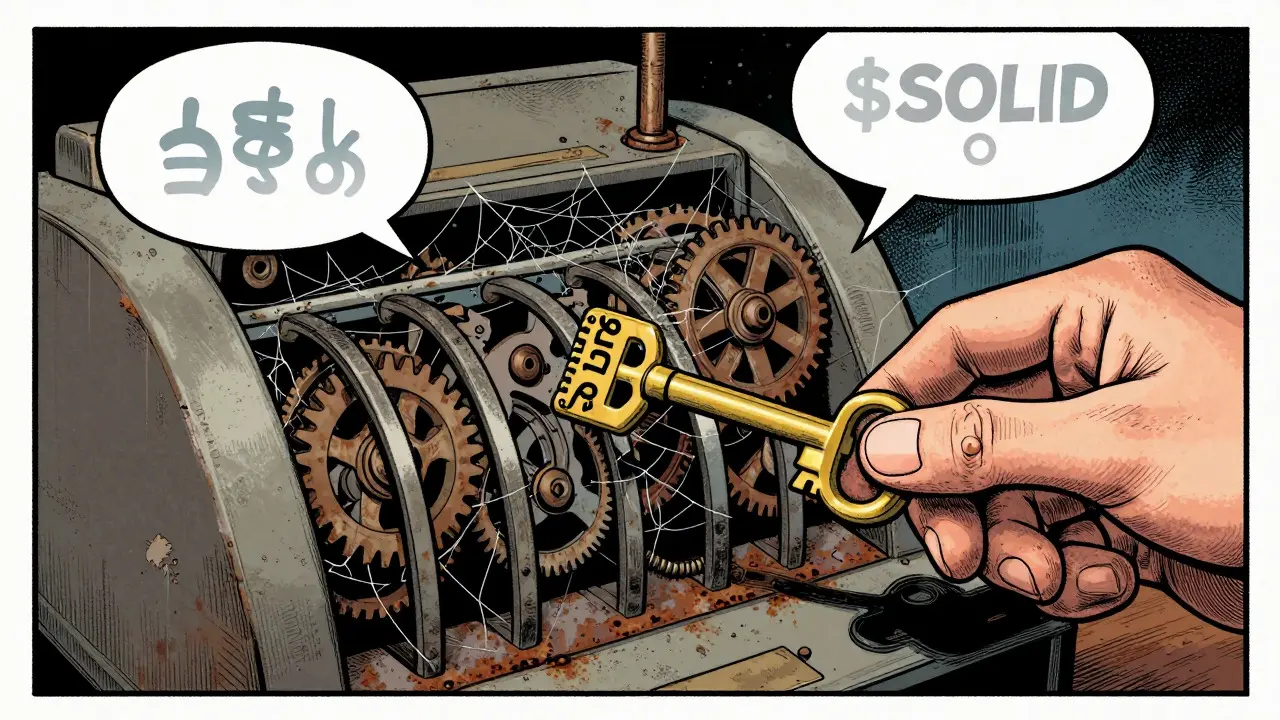
On Solidly, you only earn fees from the specific liquidity pool you vote for using the native $SOLID token is the governance and utility token of the Solidly exchange.. This creates a direct link between your voting power and your earnings. If you vote for a pool, you support it, and you profit from it. If you ignore a pool, you get nothing from it.
This model sounds efficient on paper. It encourages liquidity providers to back the pools they truly believe in. However, efficiency means little without participation. With such low trading volume, the fees generated are negligible, making the sophisticated voting mechanism largely theoretical for most users today.
Staking and NFT Receipts
Another unique feature is how Solidly handles staking. When you stake SOLID tokens, the weekly emission rate changes dynamically. If everyone stakes their tokens, new emissions stop. If no one stakes, emissions hit maximum. This aims to control inflation based on community commitment.
More interestingly, staked SOLID tokens are issued as NFTs. These non-fungible tokens act as receipts for your position. You can trade these NFTs on secondary markets or use them as collateral elsewhere. This adds a layer of capital efficiency, allowing you to move value around without unstaking. Yet, again, with minimal activity on the platform, the practical utility of these NFTs remains untested in a high-volume environment.
Liquidity and Slippage Risks
For any trader, liquidity is king. Low liquidity means high slippage. Slippage is the difference between the expected price of a trade and the executed price. On Solidly, with only five coins available, your options are severely restricted.
Imagine trying to swap a few hundred dollars worth of ETH for LUSD. On a major DEX, this happens instantly with minimal cost. On Solidly, that same trade could eat up a significant portion of your capital due to the thin order book. For micro-transactions, it might work. For anything substantial, it is risky. The absence of margin trading also limits advanced strategies, keeping the platform strictly for basic swaps.
Comparison with Major Competitors
Why choose Solidly when giants exist? Let’s compare it briefly with established players. Uniswap offers thousands of pairs, deep liquidity, and a robust ecosystem. Curve specializes in stablecoins with minimal slippage. MEXC supports over 200 cryptocurrencies with high volume.
Solidly occupies a strange middle ground. It is too small to compete on volume but too complex in its tokenomics to be a simple alternative. Its main advantage is ideological alignment with Andre Cronje’s vision of fairer fee distribution. But ideology does not pay bills if the pool is empty.
Is Solidly Safe?
Safety in DeFi depends on code audits and team reputation. Andre Cronje is a respected figure, though his past projects have had mixed security histories. Solidly’s smart contracts have been audited, but the lack of recent updates raises questions about ongoing maintenance.
With zero user reviews on major platforms like FxVerify and minimal social media engagement (around 9,000 Twitter followers), there is little community feedback to gauge safety. In crypto, silence can be dangerous. Always start with small amounts to test waters before committing significant funds.
Who Should Use Solidly?
Honestly, very few people should use Solidly as their primary exchange. It makes sense for:
- DeFi Enthusiasts: Those interested in experimenting with novel tokenomics models.
- NFT Collectors: Users who want to hold SOLID staking NFTs as speculative assets.
- Micro-Traders: Individuals swapping tiny amounts of LUSD or WETH where slippage matters less.
For everyday traders, investors, or those seeking yield farming opportunities, larger platforms offer better security, liquidity, and returns. Solidly is a curiosity rather than a utility at this stage.
Future Outlook
The future of Solidly hinges on revitalizing its liquidity. Without a surge in users, the innovative features remain dormant. The broader crypto market is consolidating around top-tier DEXs. For Solidly to survive, it needs a catalyst-a new partnership, a viral token incentive, or integration into a larger ecosystem.
Until then, treat it as a museum piece of DeFi innovation. Respect the design, understand the mechanics, but keep your main portfolio elsewhere.
What is Solidly V2?
Solidly V2 is a decentralized exchange on Ethereum created by Andre Cronje. It uses a unique voting mechanism where users earn fees only from pools they vote for, unlike traditional AMMs.
Is Solidly safe to use?
While developed by a reputable figure, Solidly has low activity and limited recent audits. Start with small amounts to assess risk personally.
How many coins does Solidly support?
Currently, Solidly supports only 5 coins across 5 trading pairs, making it a highly niche platform compared to major exchanges.
What is the trading volume on Solidly?
As of mid-2026, the 24-hour trading volume is approximately $49.70, indicating extremely low usage and potential slippage issues.
Can I stake SOLID tokens?
Yes, staking SOLID tokens generates NFT receipts. Emissions adjust based on staking levels, offering a dynamic approach to token distribution.