
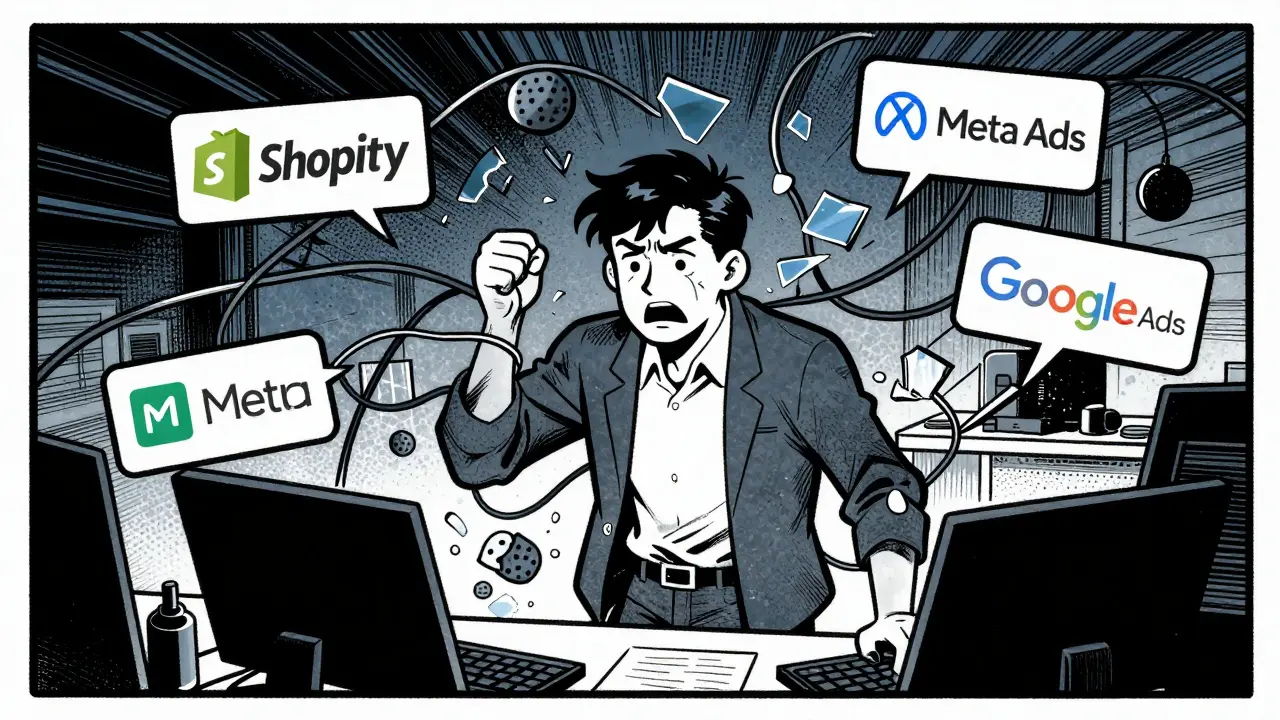
Imagine spending thousands on ads but having no idea which ones actually drove sales. That was the reality for most e-commerce brands until recently. Now, with privacy changes from Apple and Google making traditional tracking nearly impossible, brands are scrambling for answers. Enter Triple Whale, a platform that has evolved from a simple dashboard into what many call the 'operating system' for direct-to-consumer (DTC) businesses. As we move through 2026, Triple Whale isn't just showing you data; it's starting to make decisions for you. But is it worth the price tag? Let's break down where this tool stands today and where it's heading.
From Dashboard to Decision Engine
When Triple Whale launched in 2021, founded by David Reischer and Nitzan Mekel-Bobrov, it solved a basic problem: data silos. Brands had data in Shopify, Meta Ads, Google Ads, and Klaviyo, but none of it talked to each other. Today, the platform processes over 1.2 billion commerce events monthly across more than 15,000 active merchant accounts. The shift hasn't been about collecting more data-it's about context.
The core technology rests on four integrated layers. First is the Triple Pixel (v3.1), a first-party data collection solution. In an era where iOS privacy updates have crippled third-party cookies, the Triple Pixel achieves 98.7% accuracy in multi-touch attribution. Compare that to standard Google Analytics, which hovers around 62.3% accuracy in similar environments according to internal benchmarks from early 2025. This isn't a small gap; it's the difference between knowing your return on ad spend (ROAS) or guessing.
Next comes the Founders Dashboard, which integrates 37 different data sources. Whether you're using Shopify Plus, TikTok Ads, or Recharge for subscriptions, everything feeds into one view. The semantic layer underneath ensures that 'ROAS' means the exact same thing whether you're looking at Facebook or Google data-a common pain point for marketers who’ve ever tried to reconcile two conflicting reports. Finally, there’s the AI Layer powered by Moby, Triple Whale’s proprietary AI system trained on 12.7 billion commerce events. This is where the real magic happens in 2026.
The Rise of Agentic AI in Commerce
Most AI tools in analytics still require you to ask questions. You type "Why did sales drop?" and it gives you a chart. Triple Whale is moving toward agentic AI-systems that act without being asked. David Ly Khim, founder of PostPaddle, noted in early 2025 that Moby Agents were the first genuinely useful implementation of this concept in e-commerce. Instead of just reporting, these agents identify hidden opportunities. For example, one agent noticed an abandoned cart sequence was underperforming during specific time zones and suggested optimizations that increased recovery rates by 28%.
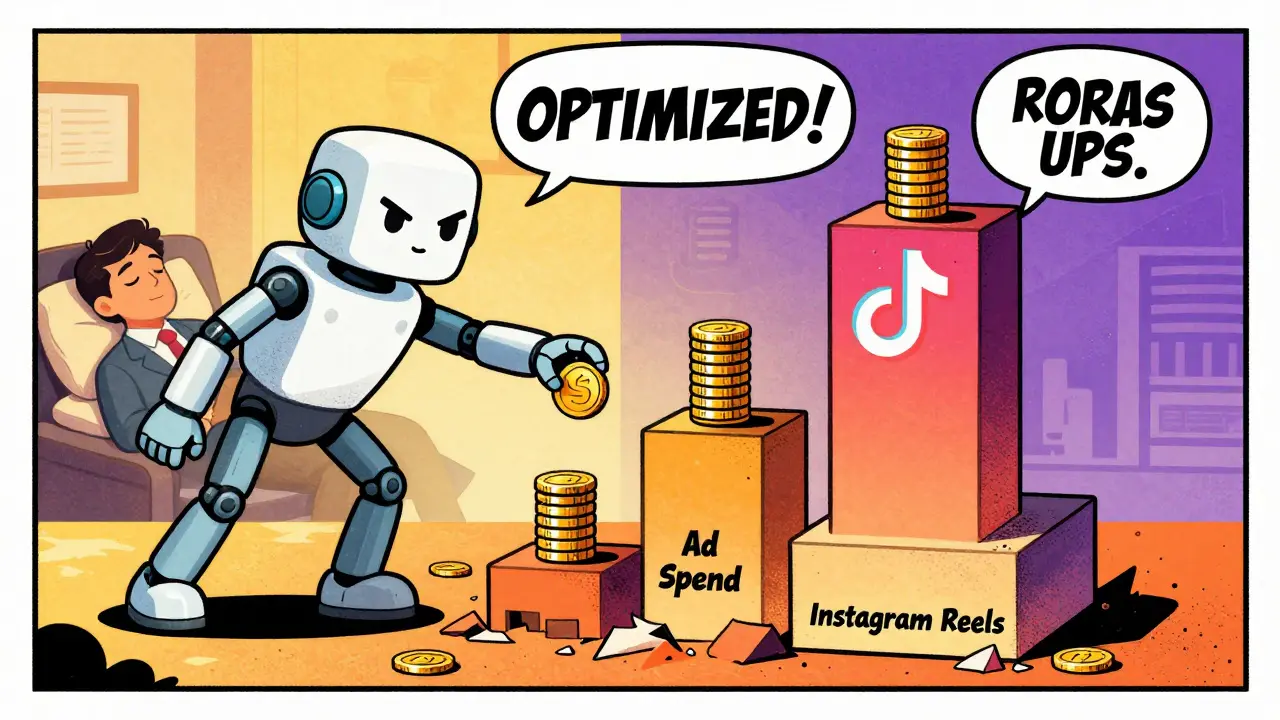
In Q1 2025, Triple Whale introduced Scheduled Moby Agents that automatically run weekly revenue optimization analyses. Users reported a 76% reduction in manual reporting time. By mid-2026, the roadmap includes Automated Budget Allocation, set to release in July 2025 (and likely refined by now), which dynamically shifts ad spend across platforms with claimed 92% accuracy in early testing. Imagine waking up to find your AI has moved $5,000 from underperforming TikTok campaigns to high-converting Instagram Reels overnight. That’s the promise of contextual intelligence.
However, not everyone is convinced. Data strategist Laura Chavez criticized Triple Whale’s attribution models in March 2025, arguing they still overvalue last-click channels by 15-18% compared to incrementality testing. If you’re scaling rapidly, relying solely on last-click data can create dangerous ROAS illusions. It’s crucial to understand that while Triple Whale reduces noise, it doesn’t eliminate the need for strategic human oversight.

How Triple Whale Compares to Alternatives
If you’re evaluating analytics platforms, you’re likely looking at Polar Analytics, Out of the Blue, or even Shopify’s native tools. Here’s how they stack up based on G2 reviews and industry tests from 2025:
| Feature | Triple Whale | Polar Analytics | Out of the Blue |
|---|---|---|---|
| Attribution Accuracy | 87% | 72% | 85% |
| AI Recommendations | 4.9/5 | 4.3/5 | 4.1/5 |
| Implementation Ease | 4.8/5 | 3.9/5 | 4.2/5 |
| Starting Price | $299/mo | $199/mo | $249/mo |
| Best For | Multi-channel DTC brands | Data-savvy teams | Facebook ad specialists |
Polar Analytics wins on flexibility for technical teams who want deep customization. Out of the Blue excels if your entire world revolves around Facebook Ads. But Triple Whale leads in ease of use and AI depth. If you’re running Meta, Google, and TikTok simultaneously, Triple Whale’s unified view saves hours of cross-referencing. However, if you rely primarily on organic traffic, Northbeam might offer better accuracy. And for subscription-heavy models, Recurly’s LTV predictions remain superior.
Who Should Use Triple Whale?
Not every business needs this level of sophistication. Triple Whale’s starter plan costs $299 per month and requires a minimum $5,000 monthly ad spend to unlock full features. For brands spending less than $10k a month on ads, the ROI can be questionable. One Reddit user noted paying for three months only to see value during a single Black Friday sale-a classic case of over-engineering for scale.
Conversely, for Shopify Plus brands generating $1M+ annually, adoption is soaring. In 2025, 63% of such brands used Triple Whale, up from 48% the previous year. Enterprise clients benefit from dedicated account managers and SOC 2 Type II certified security protocols. The platform handles complex multi-channel attribution seamlessly, particularly during peak seasons like Black Friday. Case studies show brands like MATE the Label shifting $120k in ad budget based on Triple Whale insights, achieving a 220% ROAS in Q1 2025.
Implementation takes 7-14 days. The Triple Pixel installation itself is quick-about 2 hours for tech-savvy users-but mastering the platform requires 8-12 hours of training. The good news? Moby Chat reduces the learning curve significantly. You can ask plain-language questions like "Which audience segment has the highest lifetime value?" and get instant answers, cutting training time to 3-5 hours for basic operations.
Challenges and Risks to Consider
No tool is perfect. The biggest complaint among users is pricing complexity. With tiers tied to ad spend and transaction volume, it’s easy to feel nickel-and-dimed as you grow. Additionally, because Triple Whale derives 83% of its revenue from Shopify merchants, it’s heavily dependent on Shopify’s ecosystem. Any major policy change from Shopify could ripple through Triple Whale’s functionality.
Support quality also varies by tier. Enterprise clients report 92% satisfaction with dedicated managers, but startup-tier users often face 18-hour response times via email. During major Shopify API updates, sync issues occasionally arise, though Triple Whale’s support team resolves 97% of these within 24 hours. Always keep a backup data export strategy handy.
The Road Ahead: What’s Next for Triple Whale?
Looking toward late 2025 and into 2026, Triple Whale is betting big on automation. The acquisition of AI startup DeepSight in April 2025 signals a push into visual analytics, helping brands optimize product imagery and ad creative performance. Meanwhile, Triple Whale Connect, slated for October 2025, will allow developers to build custom agents tailored to specific business logic.
Industry analysts predict Triple Whale will capture 28% of the Shopify analytics market by Q4 2025. McKinsey reports that their Sonar data enrichment tool improved Meta audience targeting accuracy by 33% in beauty sector tests. As Google moves toward cookie deprecation, first-party data solutions like Triple Pixel become indispensable. Brands that adopt contextual intelligence now will have a significant advantage over those still relying on legacy dashboards.
The future of e-commerce analytics isn't just about seeing what happened-it's about predicting what will happen and acting on it automatically. Triple Whale is leading that charge, but it demands investment in both money and learning. If you're ready to let AI drive your growth, it’s a powerful partner. If you're just starting out, you might wait until your ad spend justifies the cost.
Is Triple Whale worth the cost for small businesses?
For brands spending under $10,000 monthly on ads, Triple Whale’s $299/month starter plan may not deliver immediate ROI. The platform shines for businesses with complex multi-channel strategies and higher ad spends. If you're just starting out, consider cheaper alternatives like Polar Analytics or Shopify’s native tools until your revenue scales.
How accurate is Triple Whale’s attribution compared to Google Analytics?
Triple Whale claims 98.7% accuracy in multi-touch attribution using its first-party Triple Pixel, compared to Google Analytics’ ~62.3% accuracy in iOS 15+ environments. This makes Triple Whale significantly more reliable for tracking conversions after Apple’s privacy updates, especially for paid media channels.
Can Triple Whale replace my media buying team?
No, but it can augment them. While Moby AI provides recommendations and can automate budget allocation, human oversight remains critical for strategy, creative direction, and interpreting nuanced market shifts. Think of it as a co-pilot, not an autopilot.
What is the Triple Pixel and why do I need it?
The Triple Pixel is a first-party data collection script installed on your website. Unlike third-party cookies, it tracks user interactions directly, bypassing browser restrictions. It’s essential for accurate attribution in a post-iOS 14 world, ensuring you know exactly which ads drive sales.
Does Triple Whale work with platforms other than Shopify?
Currently, Triple Whale is optimized exclusively for Shopify and Shopify Plus stores. It does not support WooCommerce, Magento, or BigCommerce. If you’re on another platform, you’ll need to look at alternatives like Littledata or GA4-based solutions.