For years, the name Tornado Cash was a decentralized Ethereum mixer that allowed users to obscure transaction trails was synonymous with regulatory danger. If you were a US-based developer or trader, touching its smart contracts meant risking severe federal penalties. But as of March 2025, the landscape has shifted dramatically. The US Treasury Department lifted sanctions against the Tornado Cash protocol itself, marking a pivotal moment in the battle between government oversight and decentralized technology.
This isn't just a minor policy tweak. It represents a fundamental legal victory for code over centralized control. Understanding why this happened, what it means for your wallet, and how crypto mixers are tools designed to break the link between sender and receiver addresses on the blockchain work is crucial for anyone navigating the current digital asset ecosystem. Let’s break down the history, the court rulings, and the new reality.
What Are Crypto Mixers and Why Do They Exist?
To understand the controversy, you first need to grasp the utility of these tools. Blockchains like Ethereum is a public ledger where every transaction is visible and traceable are transparent by design. Every transfer is recorded permanently. This transparency is great for security but terrible for privacy. Anyone can look up your wallet address and see exactly how much money you have, who sent it to you, and where you spent it.
Tornado Cash was launched in August 2019 by developers Roman Semenov and Roman Storm to solve this privacy issue. It operates as a non-custodial service. This means no company holds your funds. Instead, users deposit cryptocurrency into smart contracts. The system pools these deposits together. When you withdraw, you get funds from the pool, but there is no cryptographic link connecting your deposit address to your withdrawal address. It breaks the on-chain trail.
Privacy advocates argue this is essential. Just as cash allows people to make anonymous purchases without revealing their entire financial history to the world, crypto mixers allow users to protect their financial data from hackers, doxxing, and corporate surveillance. However, this same anonymity makes it difficult for authorities to track illicit activities.
The 2022 Sanctions: A Regulatory Shockwave
The tension between privacy and compliance came to a head on August 8, 2022. The U.S. Department of the Treasury's Office of Foreign Assets Control (OFAC) is the agency responsible for administering and enforcing economic and trade sanctions took an unprecedented step. They sanctioned Tornado Cash, adding its Ethereum addresses to the Specially Designated Nationals and Blocked Persons (SDN) List.
This was not a standard sanction against a bank or a corporation. It was a sanction against immutable code. The Treasury argued that Tornado Cash had facilitated the laundering of over $7 billion in cryptocurrency. Specific incidents cited included:
- $455 million stolen by North Korea’s Lazarus Group is a state-sponsored hacking group linked to cyberattacks on financial institutions from the Axie Infinity hack.
- $96 million from the Harmony Bridge Heist in June 2022.
- $7.8 million from the Nomad Heist in August 2022.
The logic was straightforward: if the tool is used primarily for bad actors, ban the tool. The order prohibited all US persons from interacting with Tornado Cash’s smart contracts. This created immediate chaos. Developers who had simply coded parts of the protocol faced arrest warrants. Users who had withdrawn funds found themselves unable to move their assets without violating federal law. The distinction between using a tool and committing a crime blurred significantly.
The Legal Battle: Van Loon v. Department of Treasury
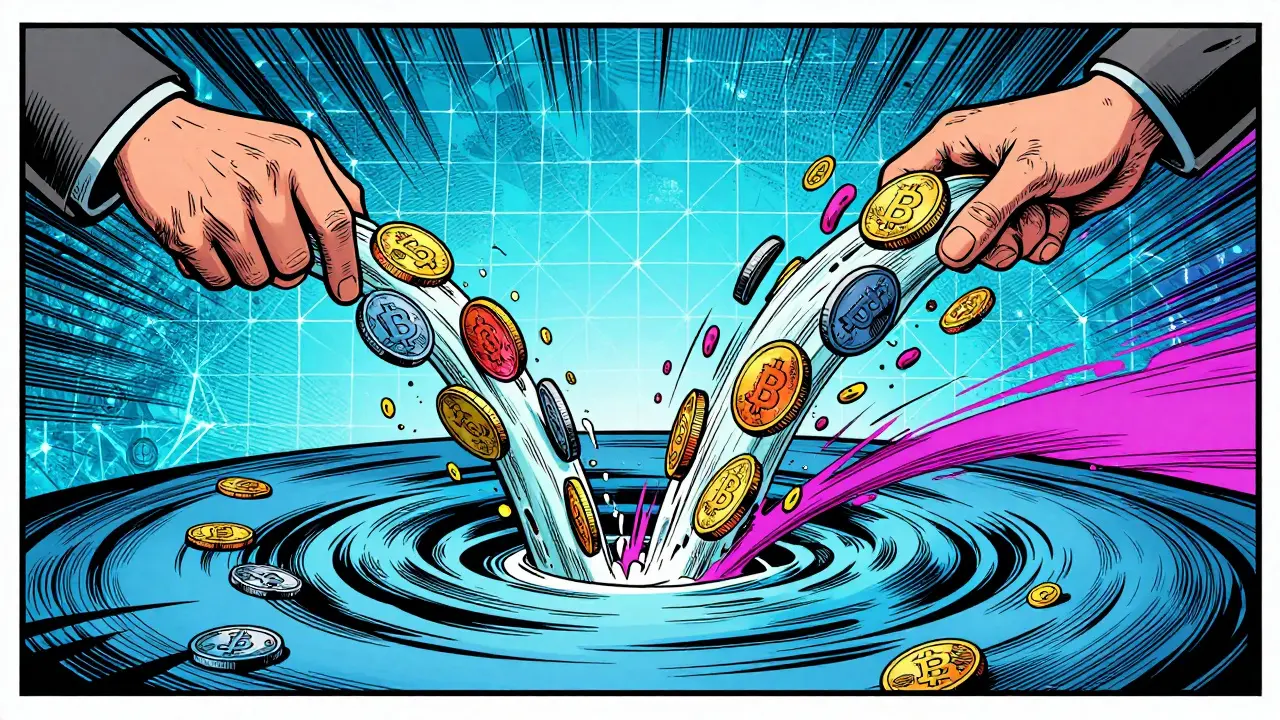
The sanctions didn’t go unchallenged. In November 2024, the US Fifth Circuit Court of Appeals issued a landmark ruling in Van Loon v. Department of Treasury. The court determined that OFAC had exceeded its authority under the International Emergency Economic Powers Act (IEEPA).
The core of the ruling rested on a critical legal definition: property. IEEPA allows the President to block transactions involving "property" in which foreign nations have an interest. The Fifth Circuit ruled that Tornado Cash’s smart contracts do not qualify as "property" or "interests in property." Code, once deployed on a blockchain, is immutable and autonomous. It cannot be owned, controlled, or directed in the traditional sense required by the law.
The court stated clearly that OFAC had overstepped its regulatory authority. They remanded the case back to the District Court with instructions to grant summary judgment in favor of the plaintiffs. This decision established a vital precedent: you cannot sanction software code itself because it lacks the legal characteristics of property.
March 2025: Sanctions Lifted, But With Caveats
Following the court’s pressure, the US Treasury Department officially lifted sanctions against Tornado Cash on March 21, 2025. However, the delisting was strategic and limited. The Treasury removed the smart contracts from the SDN List, making it legal for Americans to interact with the protocol again. But they maintained sanctions against the human actors behind it.
Roman Semenov is one of the co-founders of Tornado Cash who remains sanctioned by the US Treasury remains on the SDN List. The Department of Justice also proceeded with criminal charges against co-founder Roman Storm is the other co-founder of Tornado Cash facing conspiracy charges related to money laundering, including conspiracy to money launder and operate an unlicensed money transmitting business.
This dual-track approach highlights the government’s nuanced strategy. They acknowledge they cannot ban the code (due to the court ruling), but they continue to pursue individual accountability for those who developed and promoted the platform. For the average user, this means the protocol is accessible again, but the legal risks for developers remain high.
| Aspect | August 2022 - Nov 2024 | Post-March 2025 |
|---|---|---|
| Smart Contract Status | Sanctioned (Illegal for US persons) | Delisted (Legal for US persons) |
| Developer Status | Sanctioned | Still Sanctioned / Facing Criminal Charges |
| User Risk | High (Federal Penalties) | Low (Protocol Level) |
| Transaction Volume | Dropped significantly (~$200M/month) | Expected increase as fear subsides |
Implications for the Crypto Industry
This resolution sends shockwaves through the decentralized finance (DeFi) sector. It validates the argument that decentralized protocols cannot be treated like centralized banks. You cannot shut down a server to stop a DApp; the code lives on the network.
However, the threat of prosecution against developers remains. The DOJ’s pursuit of Roman Storm signals that while the *tool* may be legal, the *intent* behind its creation and promotion can still be prosecuted. This creates a chilling effect for open-source developers. Many will now hesitate to contribute to privacy-focused projects without extensive legal counsel.
Furthermore, the rise of alternative mixing services and zero-knowledge proof technologies continues. While Tornado Cash is back in play, the industry is moving toward more sophisticated privacy solutions that offer compliance features, such as selective disclosure. These newer tools aim to provide privacy without the stigma of being associated with illicit flows, addressing the Treasury’s original concerns about money laundering.
Practical Takeaways for Users
If you are considering using Tornado Cash or similar mixers today, keep these points in mind:
- Legality Has Changed: As of March 2025, US persons can legally interact with the Tornado Cash smart contracts. The direct OFAC prohibition on the code is gone.
- KYC Still Matters: While the mixer is legal, exchanging mixed funds for fiat currency at regulated exchanges often requires Know Your Customer (KYC) checks. Exchanges may still flag transactions coming from known mixing addresses due to internal risk policies, even if not legally required to block them.
- Developer Caution: If you are a developer, avoid interacting with sanctioned individuals or entities. The line between using a tool and aiding a sanctioned person is thin and heavily litigated.
- Volatility in Usage: Transaction volumes may fluctuate as market participants adjust to the new legal reality. Liquidity in the pools might change rapidly.
The era of banning code has ended, but the era of scrutinizing intent has begun. The balance between privacy and regulation is delicate, and this case study will likely influence how governments approach Web3 technologies for years to come.
Is it legal to use Tornado Cash in the US now?
Yes. As of March 21, 2025, the US Treasury Department lifted sanctions against the Tornado Cash smart contracts. Following the Fifth Circuit Court of Appeals ruling that the code does not constitute "property," it is no longer illegal for US persons to interact with the protocol itself. However, sanctions against the developers remain in place.
Why did the court rule against OFAC?
The Fifth Circuit Court ruled that OFAC exceeded its authority under the International Emergency Economic Powers Act (IEEPA). The court determined that immutable smart contracts do not qualify as "property" or "interests in property" because they cannot be owned or controlled in the traditional legal sense. Therefore, they could not be sanctioned under that specific act.
Are the Tornado Cash developers still sanctioned?
Yes. While the protocol’s smart contracts were delisted, the US Treasury maintains sanctions against co-founder Roman Semenov. Additionally, the Department of Justice has filed criminal charges against co-founder Roman Storm for conspiracy to money launder and operate an unlicensed money transmitting business.
How do crypto mixers work?
Crypto mixers like Tornado Cash use smart contracts to pool funds from multiple users. When you deposit cryptocurrency, it goes into a shared pool. When you withdraw, you receive funds from the pool, but the blockchain record shows no direct link between your deposit address and your withdrawal address. This breaks the transaction trail, enhancing privacy.
Will exchanges block Tornado Cash transactions?
While the federal ban on the protocol is lifted, individual cryptocurrency exchanges may still choose to restrict transactions associated with Tornado Cash based on their own internal risk management policies. Many exchanges implement strict Anti-Money Laundering (AML) filters that flag any interaction with known mixing addresses, regardless of current legal status.
What was the volume of illicit funds processed by Tornado Cash?
According to Chainalysis and Treasury reports prior to the sanctions, Tornado Cash processed over $7.6 billion since its inception. Approximately 30% of these funds were traced to illicit actors, including hacks by the Lazarus Group and various bridge exploits totaling hundreds of millions of dollars.