
Imagine holding a digital asset that promises the future of artificial intelligence but trades for less than a billionth of a cent. That is the reality of KIZUNA, a cryptocurrency token launched in October 2023. It bills itself as "the first token built from Decentralized AI," inspired by principles of decentralized maximalism. But does the hype match the utility? Or is it just another speculative bet in the crowded world of micro-cap coins?
If you are looking at KIZUNA right now, you are likely trying to figure out if this is a hidden gem or a risky trap. The answer lies in understanding its unique structure, its extremely low liquidity, and the mixed signals coming from the market. This breakdown covers what KIZUNA actually is, how it works on the blockchain, and whether it has any real-world value beyond community vibes.
The Core Identity: What Makes KIZUNA Different?
KIZUNA is a community-driven cryptocurrency that operates without a central team, developers, or transaction taxes. The name comes from the Japanese word meaning "bond" or "tie." The project describes this bond as the thread weaving together the feathers of a crane, symbolizing unity and collective self-accountability.
Unlike most tokens that have a visible development team with a roadmap and regular updates, KIZUNA explicitly states there is "no team, no dev, no transaction tax." This positions it as a purely autonomous perpetual community. The philosophy leans heavily into Decentralized AI, suggesting that the network’s intelligence emerges from its users rather than a centralized algorithm. However, technical documentation supporting these claims is sparse, which raises questions about how exactly this "AI" functions in practice.
- No Central Authority: No CEO, no core dev team managing funds.
- Zero Tax: No fees taken during buys or sells, which is rare for such small projects.
- Community Focus: Governance and direction come from the holder base.
Technical Specs and Blockchain Reality
Technically, KIZUNA is an ERC-20 token operating on the Ethereum blockchain. Its contract address is 0x470c8950C0c3aA4B09654bC73b004615119A44b5. You need an Ethereum-compatible wallet like MetaMask to hold or trade it. There is some confusion online about whether it runs on Solana, but major trackers confirm it is native to Ethereum.
The supply numbers are massive. The total supply is 1 quadrillion tokens. As of late 2025, the circulating supply sits around 960.93 trillion tokens. Because the circulating supply is so close to the maximum supply, the Fully Diluted Valuation (FDV) is almost identical to the current market cap. This means there isn't a large pool of unissued tokens waiting to be dumped on the market later, which is a plus for stability, provided the price holds.
| Attribute | Value | Note |
|---|---|---|
| Blockchain | Ethereum (ERC-20) | Requires ETH for gas fees |
| Total Supply | 1 Quadrillion | Fixed supply |
| Circulating Supply | ~960.93 Trillion | Nearly all tokens are in circulation |
| Market Cap | ~$678,000 | Micro-cap classification |
| Daily Volume | $300 - $15,000 | Extremely low liquidity |
Price Action and Market Position
Let's talk numbers, because they can be confusing here. The price of KIZUNA is incredibly small. Recent data points show prices hovering around $0.0000000007 USD. To put that in perspective, you would need over a billion tokens just to own one dollar worth of the coin. This tiny price tag often misleads new investors into thinking the coin is "cheap," but in crypto, price per token doesn't matter as much as market capitalization.
KIZUNA ranks around #2786 to #4802 globally, depending on the tracker. It is firmly in the micro-cap zone. The All-Time High was reached at roughly $0.00000006, meaning the current price is down about 95% from its peak. Trading volume is the biggest red flag. On days when volume is only $300, moving even a small amount of money in or out can cause significant price swings due to slippage. If you buy too much at once, you might push the price up against yourself, making your entry worse than expected.
Risks: Liquidity and Volatility
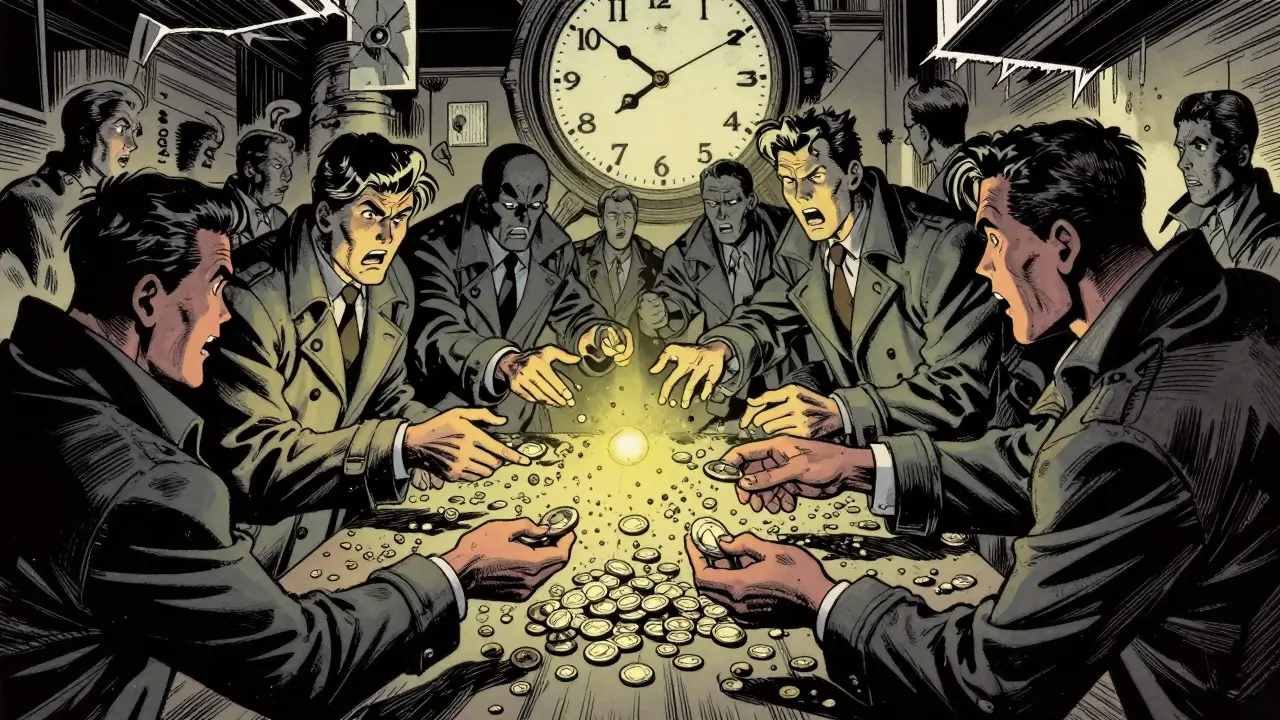
The main risk with KIZUNA isn't just that it might go down; it's that you might not be able to sell it easily. With daily volumes often under $1,000 on major decentralized exchanges like Uniswap v3, liquidity is thin. Expert analysis suggests that tokens with market caps below $1 million and daily volumes under $1,000 face existential liquidity risks. Historical data shows a high failure rate for coins in this bracket within 18 months of launch.
Volatility is also extreme. Daily price movements frequently exceed 10%. For a retail investor, this makes it hard to predict short-term trends. Furthermore, there is a concentration of holdings. Some on-chain analysis suggests a large portion of the supply may be held in few wallets, which could lead to sudden sell-offs if those holders decide to exit. Always check the holder distribution on Etherscan before buying.
How to Buy and Hold KIZUNA
If you decide to take the risk, here is the practical side of things. You cannot buy KIZUNA directly with fiat currency on most major centralized exchanges, though it is listed on Coinbase with minimal activity. The primary way to acquire it is through decentralized exchanges (DEXs) like Uniswap.
- Set Up a Wallet: Install MetaMask or a similar Ethereum-compatible wallet.
- Get Ethereum: Buy ETH on an exchange and send it to your wallet. Remember, you need ETH to pay for transaction gas fees.
- Connect to DEX: Go to Uniswap and connect your wallet.
- Swap ETH for KIZUNA: Use the verified contract address to avoid scams. Be careful with decimal places; entering the wrong number of zeros can result in a massive overpayment or underpayment.
- Manage Slippage: Set a higher slippage tolerance (e.g., 10-20%) to ensure your transaction goes through, but be aware this means you might get a slightly worse price.
Keep in mind that there is no official whitepaper or detailed technical documentation available on GitHub or Medium. Your main sources of information will be the project's Discord server and Twitter account, where community AMAs (Ask Me Anything sessions) occur weekly.

Is KIZUNA Worth Investing In?
This depends entirely on your risk appetite. KIZUNA is not a safe, blue-chip investment. It is a high-risk, high-reward speculation play. The "Decentralized AI" narrative is intriguing but lacks concrete proof of utility. There are no enterprise partnerships, and adoption is limited to a niche community of 7,440 holders.
For long-term investors, the lack of development activity since 2023 is concerning. The GitHub repository shows only minor documentation updates, with no substantive code changes. For traders, the low volume makes it difficult to enter and exit positions without affecting the price. If you do invest, treat it as a lottery ticket rather than a core portfolio holding. Only buy what you are willing to lose completely.
Frequently Asked Questions
What is the main use case for KIZUNA?
KIZUNA primarily serves as a community governance token and a vehicle for the "Decentralized AI" concept. It does not currently have a specific product or service attached to it, functioning more as a social experiment and speculative asset than a utility tool.
Where can I buy KIZUNA?
You can buy KIZUNA on decentralized exchanges like Uniswap v3. It is also listed on Coinbase, but trading volume there is very low. Most activity happens on DEXs using Ethereum as the base currency for swaps.
Why is the price of KIZUNA so low?
The price is low because the total supply is enormous (1 quadrillion tokens). When you divide the market cap by such a huge number of tokens, the individual price becomes a tiny fraction of a cent. This is common in high-supply cryptocurrencies.
Does KIZUNA have a development team?
Officially, no. The project markets itself as having "no team, no dev." This means there is no central group responsible for future upgrades or marketing. The project relies entirely on community effort and autonomous operation.
What are the risks of holding KIZUNA?
The primary risks are illiquidity (difficulty selling without moving the price), high volatility, and potential obsolescence. Since there is no active development team, the token could lose relevance if community interest wanes. Additionally, regulatory scrutiny on "teamless" tokens is increasing.