You might have stumbled upon the ticker L2DAO is a governance token for a decentralized autonomous organization focused on Ethereum Layer 2 ecosystem growth while scrolling through a list of low-cap altcoins or digging into old DeFi threads. If you are wondering what this coin actually does, why its price has dropped so drastically from its peak, and whether it still holds any value in 2026, you are not alone. Many early adopters from the 2021-2022 bull run are still holding bags, hoping for a resurgence.
This article breaks down exactly what Layer2DAO operates as a venture fund-style DAO investing in Ethereum scaling solutions is, how its token mechanics work, and what the current market reality looks like. We will look at the facts, the history, and the hard numbers so you can make an informed decision without relying on hype.
The Core Concept: A DAO for Layer 2 Growth
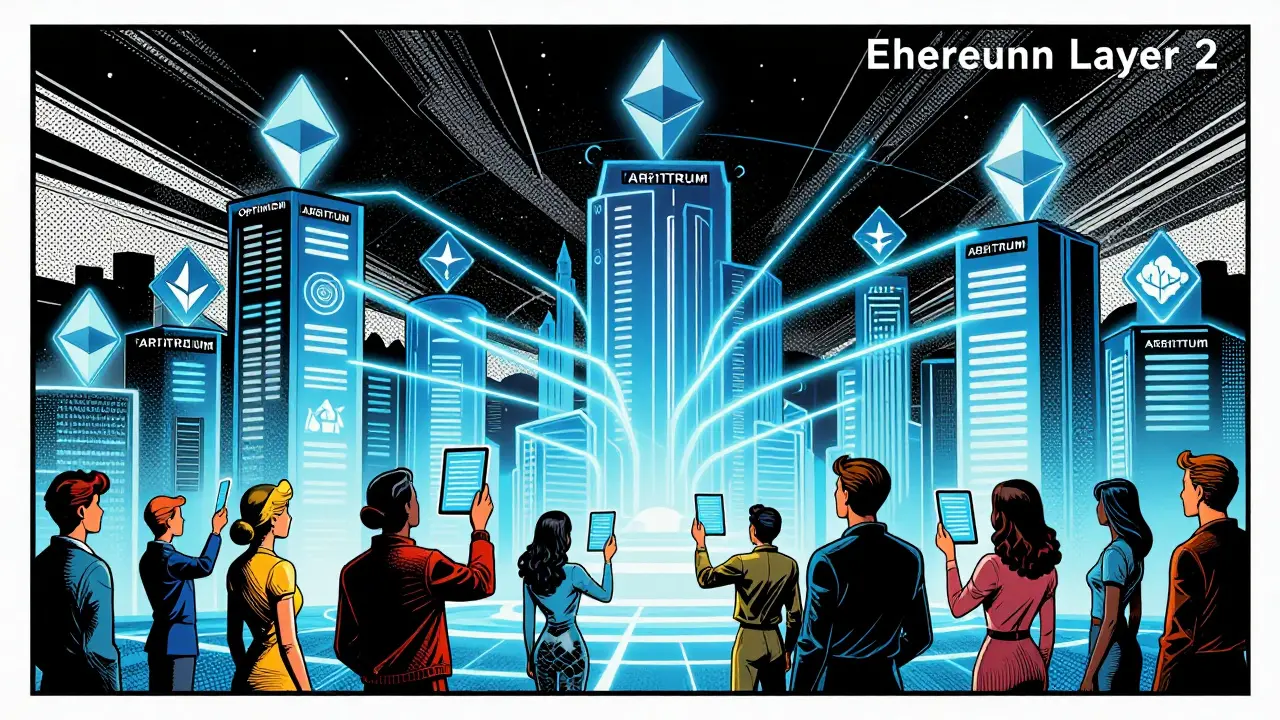
To understand L2DAO, you first need to understand its mission. The primary goal of Layer2DAO is to drive adoption of Ethereum Layer 2 networks through strategic investments and incentives. Ethereum’s mainnet is fast and secure, but it can get congested and expensive during busy periods. Layer 2 (L2) solutions like Optimism is an optimistic rollup protocol that scales Ethereum by processing transactions off-chain, Arbitrum is another leading optimistic rollup providing scalable smart contract functionality, and Polygon offers a suite of blockchain solutions including PoS chains and zk-rollups were built to solve this by handling transactions faster and cheaper, while still relying on Ethereum for security.
Layer2DAO was created to act as a community-governed venture fund. Instead of one VC firm deciding which L2 projects get funding, the holders of the L2DAO token vote on where the treasury money goes. The idea was to create a diversified portfolio of high-impact Layer 2 protocols. When these underlying projects grow, the theory was that the value of the DAO’s treasury-and thus the L2DAO token-would increase.
- Venture Fund Structure: The DAO invests in multiple L2 protocols rather than just one.
- Community Governance: Token holders vote on strategic decisions and resource allocation.
- Incentive Mechanisms: The DAO provides rewards to encourage users to move funds from Ethereum mainnet to Layer 2 solutions.
Token Mechanics: L2DAO vs. xL2DAO
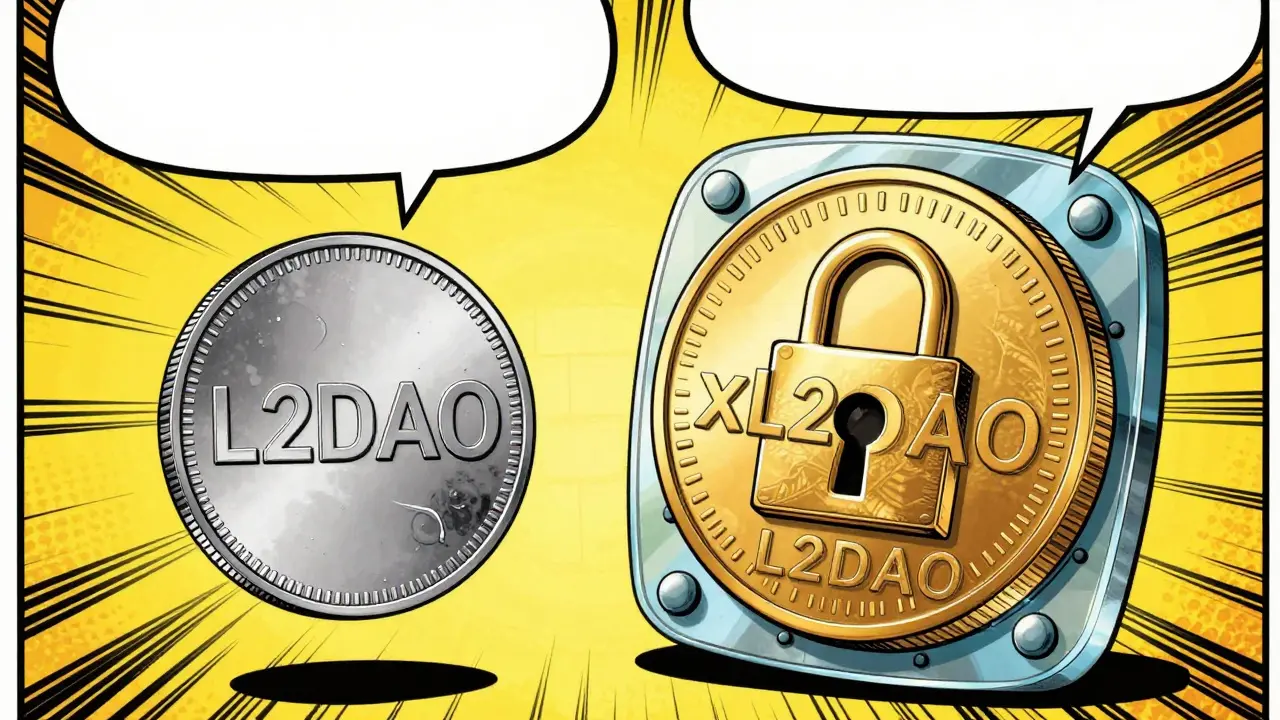
The L2DAO ecosystem uses a two-token model, which is common in many DeFi protocols but often confusing for newcomers. You have the standard L2DAO is the native governance and utility token with a fixed supply of 1 billion units and then there is xL2DAO represents staked or locked L2DAO tokens that grant enhanced governance power and revenue sharing.
When you hold L2DAO, you have the right to participate in the DAO. However, if you want more influence or better returns, you stake your L2DAO to receive xL2DAO. This locking mechanism helps reduce selling pressure because people have to wait to unlock their tokens. It also aligns the interests of long-term believers with the project’s success. In traditional finance, this is similar to restricted stock units (RSUs) that vest over time, ensuring employees stay committed to the company.
| Feature | L2DAO | xL2DAO |
|---|---|---|
| Function | Native currency, trading, basic governance | Enhanced governance, revenue share, staking receipt |
| Supply | Fixed at 1,000,000,000 | Variable based on staking activity |
| Liquidity | Highly liquid (tradeable on DEXs) | Low liquidity (must be unstaked to trade) |
| Primary Use Case | Entry point for investors | Long-term alignment and yield generation |
Key Initiatives: L2D4 and L2StateOfMind
A DAO is only as good as its execution. Layer2DAO didn’t just sit on its hands; it launched specific infrastructure projects to generate revenue and build utility. Two major initiatives stand out from its history.
First, there was L2D4 is a stablecoin liquidity pool deployed on Saddle Finance comprising Frax, Alchemix, Sperax, and Forcenet. Launched in January 2023, this pool allowed for efficient trading between four different stablecoins within the Layer 2 ecosystem. By providing liquidity here, the DAO could earn trading fees, which were then reinvested back into the treasury. This is a classic DeFi strategy: provide liquidity to earn yield, then compound that yield.
Second, the project introduced L2StateOfMind (L222) is a collection of 2,022 PFP NFTs that grant double xL2DAO revenue shares and weekly airdrops. These Non-Fungible Tokens (NFTs) served as a membership pass. Holders received double the revenue share compared to standard token holders and had access to exclusive weekly Ethereum airdrops. This created a tiered system where early supporters and NFT holders got significantly more value, incentivizing them to promote the DAO and lock up their assets.
Market Reality: Price Crash and Current Status
Here is where things get tricky. While the ideas behind Layer2DAO were sound, the market reality has been harsh. Cryptocurrency markets are incredibly volatile, and governance tokens for niche ecosystems are particularly risky.
Let’s look at the numbers. At its all-time high on August 6, 2022, the L2DAO token traded at approximately $0.02549 USD. As of May 2026, the price hovers around $0.0001248 USD. That is a decline of roughly 99.5%. To put that in perspective, if you invested $1,000 at the peak, you would now have about $4.87 left.
Why such a massive drop? Several factors contributed:
- Broad Market Correction: The entire crypto market went through a severe bear market after 2022, causing most altcoins to lose significant value.
- Competition: Major Layer 2 protocols like Arbitrum and Optimissum launched their own robust governance models and incentive programs, reducing the need for a third-party DAO to facilitate adoption.
- Lack of Liquidity: With a market capitalization of only ~$30,000 and near-zero daily trading volume, it is difficult for large investors to enter or exit positions without crashing the price.
- Dormancy: There have been few major public updates or new product launches since 2023, suggesting a slowdown in development momentum.
The token currently ranks #7111 on CoinMarketCap, indicating it has fallen far behind in terms of relevance and market interest. The circulating supply is about 241.79 million tokens, meaning roughly 24% of the total supply is actively held, while the rest remains locked or unclaimed.
Risks and Considerations for Investors
If you are considering buying L2DAO today, you need to be aware of the significant risks involved. This is not a blue-chip asset like Bitcoin or Ethereum. It is a high-risk, speculative play on a specific narrative that has largely played out.
- Liquidity Risk: With minimal trading volume, you might find it hard to sell your tokens quickly. Slippage could eat into your profits or amplify losses.
- Governance Risk: As a DAO, decisions are made by voters. If the community becomes inactive or makes poor investment choices, the treasury value can stagnate or decrease.
- Opportunity Cost: Money tied up in a dormant token like L2DAO could potentially earn higher yields in more active DeFi protocols or established Layer 2 tokens.
- Smart Contract Risk: Like all DeFi projects, there is always a risk of bugs or exploits in the underlying code, although no major hacks have been reported for Layer2DAO specifically.
However, if you believe in the long-term vision of community-driven ecosystem development and think the DAO will restart aggressive marketing or launch new profitable ventures, there is a small chance for recovery. But this would require a significant shift in community engagement and market sentiment.
How to Evaluate Similar DAO Tokens
Whether you stick with L2DAO or look elsewhere, understanding how to evaluate DAO tokens is crucial. Here is a quick checklist:
- Treasury Transparency: Can you see exactly what assets the DAO holds? Are they in reputable blue-chip tokens or obscure altcoins?
- Active Governance: Are proposals being submitted and voted on regularly? An inactive forum is a bad sign.
- Revenue Generation: Does the DAO actually make money from its activities (like trading fees or yield farming), or does it rely solely on token appreciation?
- Competitive Advantage: Why do users need this DAO? Could they achieve the same results by interacting directly with the underlying protocols?
Layer2DAO pioneered an interesting model, but the landscape has changed. Today, most Layer 2 projects handle their own incentives directly, making intermediaries less necessary. This structural shift is likely the biggest reason for the token’s decline.
Is Layer2DAO (L2DAO) still active in 2026?
While the smart contracts remain live and the treasury exists, public activity and development updates have significantly slowed since 2023. There is no major news or new product launches reported recently, suggesting the project is in a maintenance or dormant phase.
Why did the L2DAO token price drop so much?
The price dropped due to a combination of the broader crypto bear market, increased competition from direct Layer 2 governance models, loss of community momentum, and lack of new value-driving initiatives. The token fell over 99% from its all-time high in August 2022.
What is the difference between L2DAO and xL2DAO?
L2DAO is the standard token used for trading and basic governance. xL2DAO is obtained by staking L2DAO and grants enhanced voting power and a larger share of the DAO's revenue. Holding xL2DAO indicates a longer-term commitment to the project.
Can I still buy L2DAO tokens?
Yes, you can likely find L2DAO on decentralized exchanges (DEXs) like Uniswap or SushiSwap, given its presence on Ethereum Layer 2 networks. However, be cautious of extremely low liquidity, which can lead to high slippage and difficulty selling your position later.
What happened to the L2StateOfMind NFTs?
L2StateOfMind (L222) was a collection of 2,022 NFTs that provided double revenue shares and weekly airdrops. Minting ended after a governance proposal passed. Holders still retain these benefits, but the secondary market for these NFTs is likely very thin due to the overall decline in project activity.
Is Layer2DAO safe to invest in?
Like all cryptocurrency investments, it carries risk. The primary risks here are liquidity risk (hard to sell) and opportunity cost (money could grow faster elsewhere). There have been no reported hacks, but the lack of recent development suggests the project may not recover its previous valuation.