You’ve probably seen the ticker $GPT pop up on your exchange app or in a Discord chat. It sounds familiar because of the massive hype around Generative Pre-trained Transformers (the technology behind ChatGPT), but this isn’t OpenAI’s project. This is QnA3.AI, a specialized Web3 knowledge engine designed to help cryptocurrency traders make better decisions using artificial intelligence. The core promise is simple: instead of drowning in raw data and conflicting news, you get an AI assistant that analyzes market trends, explains complex blockchain concepts, and suggests trading strategies. But before you buy in, you need to understand exactly what this token does, where it fits in the crowded AI-crypto space, and whether the risks match the potential rewards.
The Core Concept: An AI Search Engine for Crypto
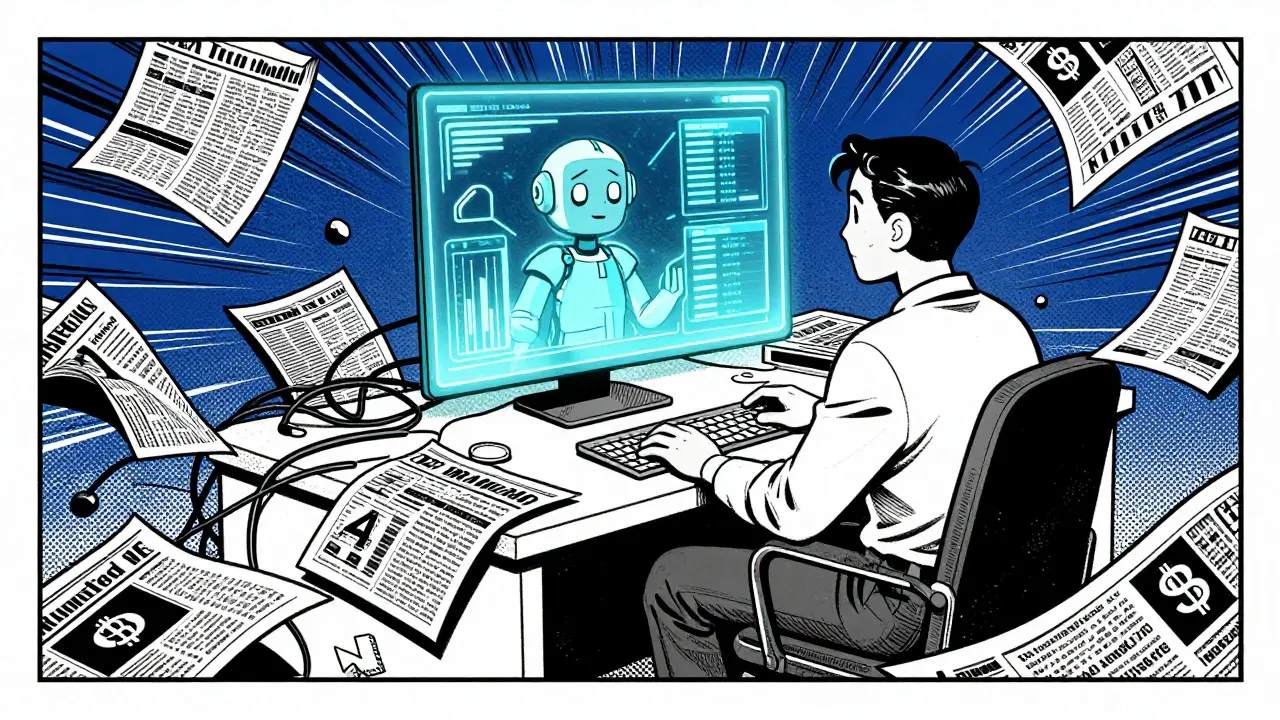
Most people use Google to find information about Bitcoin or Ethereum. You type a question, and you get a list of links. Some are helpful; many are outdated, biased, or just plain wrong. QnA3.AI tries to fix this by acting as a dedicated search and analysis tool specifically for the digital asset world. Think of it like having a financial analyst who never sleeps. The platform uses large language models (LLMs) trained on cryptocurrency-specific data. When you ask it, “How does the recent Fed rate decision impact Solana?”, it doesn’t just give you a generic definition. It pulls real-time market sentiment, historical price correlations, and on-chain data to give you a structured answer. This positions QnA3.AI as a "knowledge engine" rather than just another chatbot. Its goal is to bridge the gap between technical blockchain data and actionable trading insights. For retail investors who feel overwhelmed by the speed of crypto markets, this utility proposition is the main reason the project exists.
Tokenomics: How the $GPT Coin Works
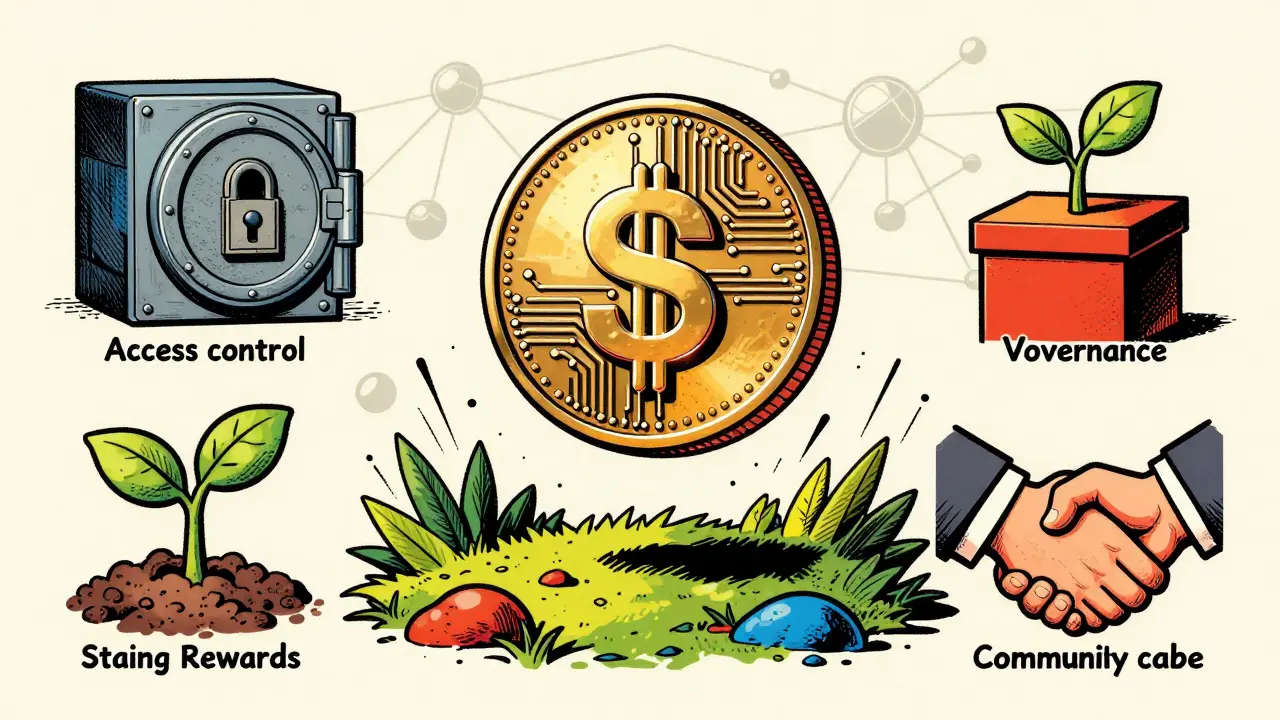
In the Web3 world, platforms often launch native tokens to power their ecosystems. The $GPT token serves several specific functions within the QnA3.AI ecosystem:
- Access Control: Basic features might be free, but advanced AI analysis, deep-dive reports, and premium strategy tools likely require holding or spending $GPT tokens.
- Governance: As with many decentralized projects, token holders may eventually vote on platform upgrades, feature additions, or treasury management.
- Staking Rewards: Users can lock up their $GPT tokens to earn passive income. This helps reduce the circulating supply and incentivizes long-term holding over quick selling.
- Ecosystem Incentives: Content creators or data providers who contribute high-quality information to the knowledge base can be rewarded with $GPT.
Price History and Market Performance
Let’s look at the hard numbers, because they tell a different story than the marketing materials. The $GPT token launched publicly on exchanges like OKX and BitMart in early 2024. Like many new crypto assets, it experienced extreme volatility.
| Metric | Value / Context |
|---|---|
| All-Time High (ATH) | $0.79 (Reached March 9, 2024) |
| Current Price Range | Highly volatile, often trading below $0.01 |
| Total Supply | 1.00 Billion $GPT |
| Circulating Supply | Approx. 161.87 Million (as of late 2023/early 2024 data) |
| Blockchain | Binance Smart Chain (BSC) |
Why Binance Labs Incubation Matters
One of the strongest credentials for QnA3.AI is its selection for Binance Labs' sixth incubation program in September 2023. Binance Labs is the venture capital arm of Binance, the world’s largest cryptocurrency exchange by volume. Being accepted into their incubator means the project passed a rigorous due diligence process. It signals that industry experts saw technical merit in the team’s approach to AI-driven knowledge sharing. It also provides access to mentorship, network connections, and potentially early funding. However, incubation is not a guarantee of success. Many projects graduate from accelerators and fail to gain traction. The key question remains: Can QnA3.AI convert this initial validation into sustained user growth and revenue?
Roadmap and Future Development
The project has outlined a three-phase roadmap to evolve from a simple Q&A bot to a comprehensive trading ecosystem:
- Version 1.0 (Foundation): Launch of the Web3 QA Engine and Investment Assistant. This phase focused on basic search functionality and providing straightforward answers to crypto-related questions.
- Version 2.0 (Expansion): Introduction of Intent-centric Trading Tools. This includes more sophisticated analysis, such as predicting market movements based on social sentiment and on-chain activity. It also involves API integrations for developers.
- Version 3.0 (Community): Creation of a Token-driven Investor Community. This phase aims to build a social layer where users can share strategies, follow top analysts, and collaborate on trades, all secured by smart contracts.

Competitive Landscape: Who Else Is Doing This?
QnA3.AI does not operate in a vacuum. The intersection of AI and Crypto is one of the most crowded sectors in Web3. Here is how it compares to established players:
- Fetch.ai (FET): Focuses on autonomous AI agents that can perform tasks like trading or booking services. It has a much larger market cap and broader utility beyond just knowledge sharing.
- SingularityNET (AGIX): A marketplace for AI algorithms, allowing developers to create, share, and monetize AI services. It is more developer-focused than QnA3.AI.
- Ocean Protocol (OCEAN): Specializes in data sharing and monetization, enabling AI models to access high-quality data without compromising privacy.
Risks and Considerations for Investors
Before buying $GPT, you must weigh the following risks:
- Extreme Volatility: As shown by its price history, the token can swing wildly. It is considered a high-risk, speculative asset.
- Low Liquidity: With a relatively small market cap, large buy or sell orders can significantly impact the price. Exiting a position quickly without slippage may be difficult.
- Dependency on Binance Ecosystem: Operating on BSC and being backed by Binance Labs ties its fate closely to the health and regulatory status of Binance. Any major issues for Binance could negatively impact QnA3.AI.
- User Adoption Uncertainty: Despite the tech, there is limited public evidence of massive daily active users. Without widespread adoption, the token’s utility remains theoretical.
- Regulatory Scrutiny: AI-generated financial advice is a gray area legally. If regulators decide that QnA3.AI’s outputs constitute unlicensed financial advice, the platform could face legal challenges.
How to Use QnA3.AI Practically
If you want to test the platform before investing, here is how you typically interact with it:
- Connect Your Wallet: Since it is a Web3 platform, you’ll need a compatible wallet like MetaMask or Trust Wallet connected to the Binance Smart Chain.
- Ask Questions: Use the natural language interface to query specific coins, protocols, or market trends. Try asking for comparative analysis between two similar tokens.
- Analyze Insights: Look for features that highlight sentiment shifts or on-chain anomalies. Compare these insights with your own research.
- Explore Staking: If you hold $GPT, check third-party platforms like Bitget or the official staking portal to see if locking your tokens yields attractive rewards.
Is QnA3.AI related to OpenAI or ChatGPT?
No, QnA3.AI is not affiliated with OpenAI. The name "GPT" in the token ticker refers to the general technology category of Generative Pre-trained Transformers, which is used by many AI projects. QnA3.AI is an independent Web3 project focused on cryptocurrency knowledge.
Where can I buy $GPT tokens?
$GPT tokens have been listed on exchanges such as OKX, BitMart, and Gate.io. Availability may vary by region and time. Always verify the contract address on official channels to avoid scams.
What blockchain does QnA3.AI use?
QnA3.AI operates on the Binance Smart Chain (BSC), now known as BNB Chain. This allows for low transaction fees and fast processing times, which is ideal for frequent interactions with the platform.
Is the $GPT token a safe investment?
No cryptocurrency is guaranteed to be safe. $GPT is considered a high-risk, speculative asset due to its low market capitalization, high volatility, and dependence on user adoption. Only invest what you can afford to lose.
How does QnA3.AI generate revenue?
Revenue likely comes from premium subscriptions for advanced AI features, transaction fees on staking or trading integrations, and potentially licensing its API to other platforms. Token holders may benefit from profit-sharing mechanisms.