
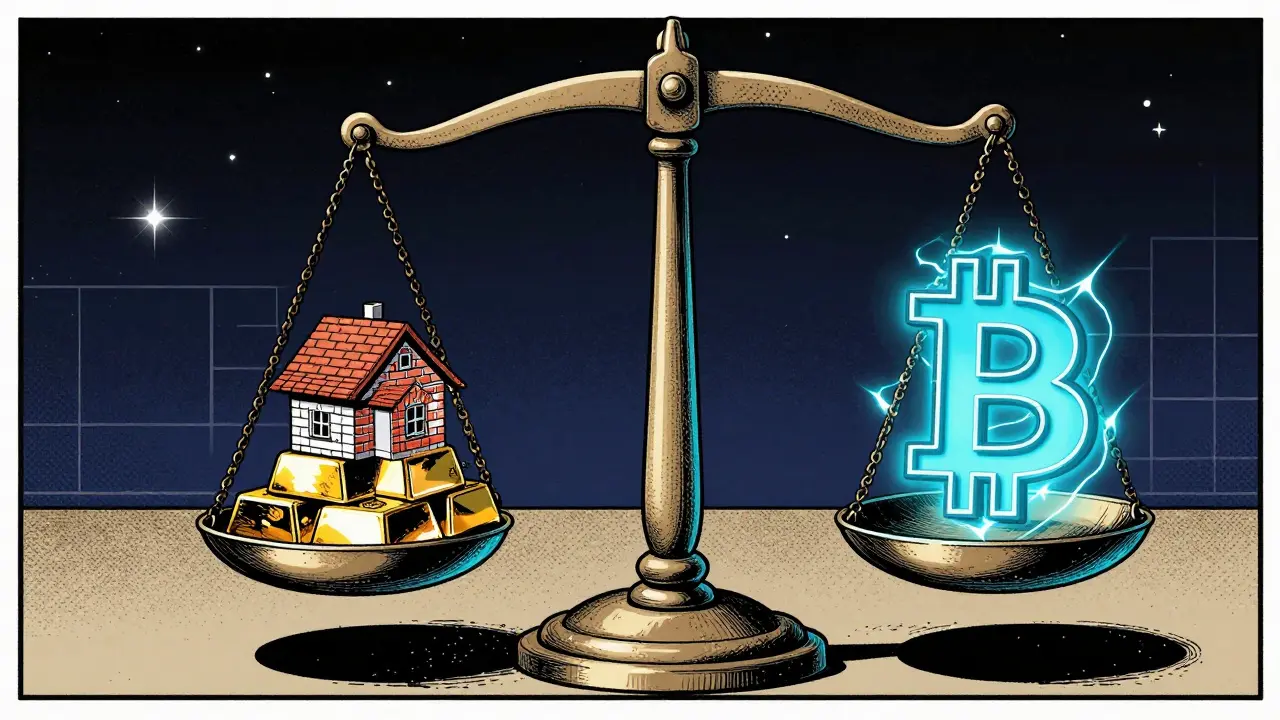
The Reality of Digital Assets Under US Law
Many people assume cryptocurrencies function like money. You spend them, you receive them, and you hold them just like dollars in your wallet. However, the United States government does not view them that way. When it comes to filing taxes, Bitcoin is classified as property, not currency. This distinction changes everything regarding how you report your digital asset activity to the authorities. If you treat your transactions casually, the Internal Revenue Service (IRS) considers that negligence.
This rule isn't new legislation written last week. It stems from a foundational ruling issued nearly two decades ago. In March 2014, the agency released a specific document that set the tone for the industry. That document determined that virtual currencies were subject to established tax principles applicable to property transactions. Even as we move through 2026, with new regulatory frameworks like the GENIUS Act passed in mid-2025, this core definition remains unchanged. Regardless of political shifts or technological advancements, the tax code sees your Bitcoin as a commodity, similar to land or gold, rather than legal tender.
Why Property Status Matters for Your Taxes
Understanding the property classification is critical because it dictates exactly when you owe money. With normal currency, swapping one dollar for another dollar generates no tax event. If you sell something for cash, you calculate the profit once. Cryptocurrency works differently. Every time you exchange a digital asset, you trigger a taxable event.
This applies even if you aren't converting your assets into US dollars. Swapping Bitcoin for Ethereum creates a gain or loss. Paying for groceries with Litecoin counts as a disposal. Receiving payment for services in Dogecoin establishes ordinary income. The logic follows standard property rules: you acquired an asset at a certain cost basis, and now you have disposed of it at a different value. The difference between those two numbers is either taxable income or a deductible loss.
| Transaction Type | Tax Consequence | Event Triggered? |
|---|---|---|
| Selling Bitcoin for USD | Capital Gain or Loss | Yes |
| Swapping Bitcoin for Ethereum | Capital Gain or Loss | Yes |
| Paying rent with Crypto | Capital Gain or Loss | Yes |
| Mining Income | Ordinary Income | Yes |
| Holding in Wallet | No Event | No |
Determining Your Cost Basis and Holding Period
To calculate your liability accurately, you need precise records of your acquisition. The amount you paid for your Bitcoin, including fees and commissions, becomes your Cost Basis. This figure subtracts from the sale price to determine your net gain. Without proper documentation, the IRS assumes your costs were zero, leading to the maximum possible tax bill on your proceeds.
When you own multiple batches of assets purchased at different times, identifying which unit you sold matters significantly. Taxpayers can use the Specific Identification method, allowing them to pick which coins they are selling to optimize their tax outcome. However, this requires rigorous accounting where every lot is tagged and tracked from the moment of purchase. If you cannot prove which specific coins left your wallet, the default assumption is First-In, First-Out (FIFO).
FIFO forces you to tax the oldest coins first. Since many early adopters purchased assets at very low values, the gains on those units might be massive. Alternatively, you might prefer Last-In, First-Out (LIFO) or average cost methods depending on your specific portfolio strategy, though LIFO is rarely advantageous when prices rise. For accurate calculation, you must know the exact date of every transaction. The duration you held the asset determines whether the gain is short-term or long-term.
Navigating Capital Gains Rates and Income Brackets
If you classify your assets correctly, you benefit from preferential tax rates. The US tax system rewards long-term patience. Assets held for more than 365 days qualify for long-term capital gains treatment. These rates are generally lower than the rates applied to regular wages or short-term trading profits. In contrast, short-term gains-those from assets held for a year or less-are taxed as ordinary income.
For the 2024 tax year, single filers paying federal taxes saw a tiered structure based on total taxable income. Income up to $47,025 incurred a 0% long-term capital gains rate. Between $47,026 and $518,900, the rate rose to 15%. Above that threshold, the highest bracket of 20% applied. Married couples filing jointly enjoyed doubled thresholds, effectively delaying higher tax burdens until combined income reached significantly higher levels. While 2026 filings are still emerging, these structural brackets provide the framework for current planning.
Short-term gains, however, fall into the standard income tax brackets. For high earners, this means your digital asset profits could push your entire taxable income into a bracket as high as 37%. This disparity highlights why timing your sales is just as important as the trade itself. Strategic holding periods can transform a heavily taxed windfall into a partially tax-free event.
Handling Complex Scenarios: Hard Forks and Airdrops
Not all asset movements involve manual trades. Sometimes, the blockchain itself creates new value. Hard forks occur when a network splits into two separate ledgers. This often happens due to protocol disagreements among developers. From a tax perspective, the mere occurrence of a fork does not generate a tax event. You simply own the original asset on the new chain. The complexity arises when the fork results in an airdrop.
An airdrop gives you free coins of the new network. If you possess these new tokens and have control over them, the IRS treats the fair market value of those tokens as ordinary income in the year you received them. You cannot ignore these funds. Even if you do not immediately sell them, their value at the moment of receipt becomes part of your gross income. Your basis for those new tokens is then equal to that income amount. If you sell them later, you compare the sale price to that initial basis to calculate any secondary gain.
Control is the keyword here. You are considered to have dominion and control when you can transfer, sell, or dispose of the asset. This usually means the transaction is recorded on the distributed ledger, and the private keys are accessible. Many users fail to report airdropped income because they never move the tokens, assuming inactivity equals non-existence. The IRS guidance clarifies that ownership alone is sufficient to trigger the reporting requirement.

Regulatory Shifts and the GENIUS Act
The regulatory landscape shifted noticeably in mid-2025 with the enactment of the GENIUS Act. This legislation aimed to modernize oversight of digital assets and clarify the role of various financial agencies. Despite these significant legislative changes, the fundamental tax classification remained steady. The House of Representatives also passed the CLARITY Bill, further defining the boundaries between securities and commodities.
Importantly, the tax treatment did not revert to a "currency" model under these acts. The IRS maintained its stance established in 2014. Even if the SEC categorizes a specific token as a security for regulation purposes, that designation does not automatically change how the IRS taxes the asset. Unless the token clearly falls into another specific provision of the Internal Revenue Code, it remains property. This divergence creates a unique situation where an asset might be regulated as a security but taxed as property, requiring careful navigation by compliance teams.
Compliance and Reporting Requirements
You cannot file your annual return without addressing digital assets. Starting in 2020, Form 1040 included a mandatory checkbox asking if you engaged in any transaction involving digital assets during the tax year. Ignoring this question carries significant penalties, including potential perjury charges since tax returns are sworn documents under penalty of law. If you mined, traded, bought, or spent any crypto, you must answer yes and file the accompanying forms.
Form 8949 is the primary tool for reporting these gains and losses. It requires you to list every sale, exchange, or disposal event individually or aggregated by transaction type. The form demands the date acquired, date sold, proceeds, cost basis, and the resulting gain or loss. Because the data requirements are granular, manual entry is prone to error. Errors can trigger audits. Consequently, relying on comprehensive transaction logs is non-negotiable for serious holders.
Does using cryptocurrency to buy goods trigger a tax event?
Yes. Exchanging Bitcoin for goods or services is treated as selling the property. You must calculate the difference between your cost basis and the fair market value of the goods purchased at the time of the transaction. Any increase in value is taxable as a capital gain.
What happens if I lose my private keys and lose access to my Bitcoin?
Currently, there is no direct write-off for lost private keys unless you can prove the asset is worthless beyond recovery. Generally, you cannot claim a loss deduction for assets that remain unsold but inaccessible, making secure storage essential.
How do I report staking rewards?
Staking rewards are taxable as ordinary income in the year they are received, not when you sell them. You report the fair market value of the reward tokens at the moment they become available for withdrawal in your wallet.
Is donating cryptocurrency taxed?
Donating appreciated cryptocurrency to a qualified charity is generally not a taxable event, meaning you don't pay capital gains tax. Instead, you may claim a charitable deduction based on the fair market value, provided you have held the asset for more than one year.
Do DeFi earnings require immediate reporting?
Earnings from Decentralized Finance (DeFi) protocols, such as yield farming rewards or lending interest, are reported as income upon receipt. You should track the value of rewards when they enter your wallet, as this constitutes a realization of income.
Maintaining Records for Future Audits
Given the scrutiny surrounding digital assets, keeping records is not optional. You need a log that captures the date, wallet address, transaction hash, and the value in USD at the time of the event. Relying on memory is a failed strategy. Specialized software exists to scrape transaction histories and automate the calculation of basis and gains. While the IRS has not endorsed specific commercial tools, third-party platforms help bridge the gap between complex blockchain data and standard tax forms.
As you look toward future years, anticipate stricter enforcement. The property classification system, while established, creates an administrative burden unlike traditional investing. Active traders with thousands of swaps face immense paperwork challenges compared to simple "buy and hold" investors. Planning around this reality helps mitigate risk. By understanding that your Bitcoin is property, you align your habits with federal expectations and protect yourself from unnecessary penalties.



There are 16 Comments
Shubham Maurya
Seriously 😤 why does the gov hate us so much 💀 taxes are literally killing crypto progress 🔥 just let us trade freely instead of taxing every breath 🚫
Katrina Tate
The data suggests compliance is extremely difficult for many retail investors without professional accounting help.
Liam Robertson
Just track your coins well and follow the rules. You can handle the paperwork if you focus on accuracy. Being prepared is half the battle won already.
Justin Garcia
The entire regulatory framework ignores market reality completely.
Alex Kuzmenko
I alway forget about cost basis when i swap tokens lol its a real pain in teh neck to figure out wich coin was bought when.
Elizabeth Akers
just hold it dont sell until a year passes so you save cash on fees
keeping it simple works best for me personally
Alex Lo
Taxes are really annoying for everyone involved in crypto trading honestly. I feel like we spend too much time filling out boring forms every single year. It would be great if the government just understood digital assets better soon. Many regular people lose sleep over their wallet tracking logs deeply. We have to track every single penny spent on exchanges carefully daily. This creates so much unnecessary stress for normal investors doing this hobby. You cannot just forget about old trades forever easily anymore. The penalties seem way too high for innocent mistakes sometimes unfortunately. People often get scared to move their coins anywhere now due to fear. Holding actually becomes safer than selling anything really for safety. But selling eventually happens for everyone seeking profit later anyway. We all need good software to help us track things right precisely. Automation is the only true saving grace here for sure today. Without tools you will likely make costly errors quickly sadly. Just remember to stay patient with the whole tax process always. Keep your head up because you can manage this burden together.
Beverly Menezes
It is nice to know the rules before you start buying bitcoin seriously. Understanding helps prevent big problems later on.
Ronald Siggy
You got this. Tracking your assets builds discipline for future wealth growth. Stay strong and organized.
Addy Stearns
The nature of value shifts constantly yet the law remains static and rigid. This tension defines the modern investor experience profoundly.
Raymond K
taxes feels heavy like carrying wet sand through a desert but we walk forward slowely. the journey matters more than the destination perhaps.
Leah Lara
Sounds boring and complicated so i probably wont bother reading deeper into it really.
Jay Starr
Silence often speaks louder than the noise made by regulations sometimes.
Matt Bridger
Regulatory frameworks dictate financial obligations regardless of personal sentiment regarding asset class utility or value perception.
Joy Crawford
:( feeling drained by all these requirements but hope others find peace :)
Michael Nadeau
Freedom requires adherence to structure which creates boundaries around our choices and actions ultimately. Compliance is the price paid for security in the system.
Write a comment
Your email address will not be published. Required fields are marked *