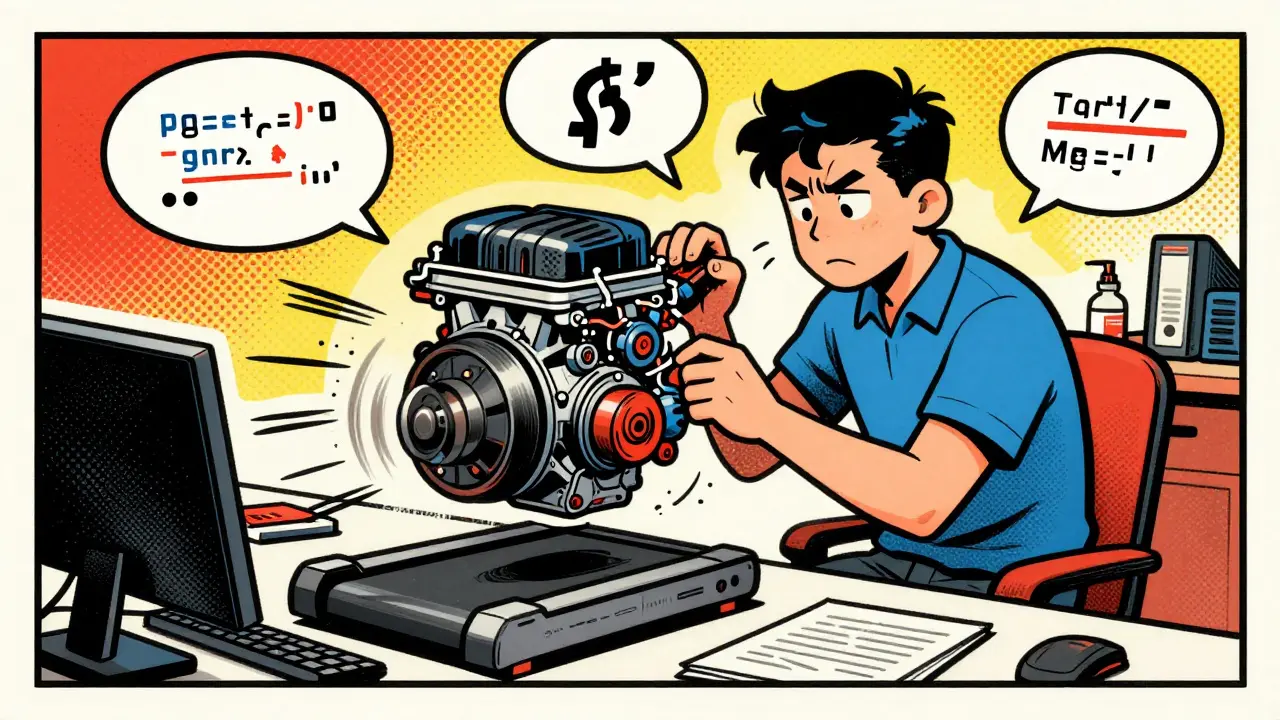
Building a decentralized application feels like trying to assemble a car engine while the car is moving. You have smart contracts that need to be secure, user interfaces that need to load fast, and a blockchain network that charges you for every mistake you make. This is why dApp development frameworks are specialized software tools designed to streamline the creation, testing, and deployment of blockchain-based applications. They act as your safety net, reducing development time by up to 60% compared to writing raw code from scratch.
In 2026, the landscape has settled into distinct camps. If you are building on Ethereum or compatible chains, you are likely choosing between Hardhat and Truffle. If you want to build your own blockchain, Substrate is the heavyweight champion. For enterprise private networks, Hyperledger Fabric remains the standard. Choosing the wrong one can cost you weeks of debugging or thousands in failed gas fees. Let’s break down which framework fits your specific project needs.
The Public Chain Giants: Hardhat vs. Truffle
For most developers starting out, the debate boils down to two JavaScript-based frameworks: Hardhat and Truffle. Both run on Node.js and interact with the Ethereum Virtual Machine (EVM). However, their philosophies differ significantly.
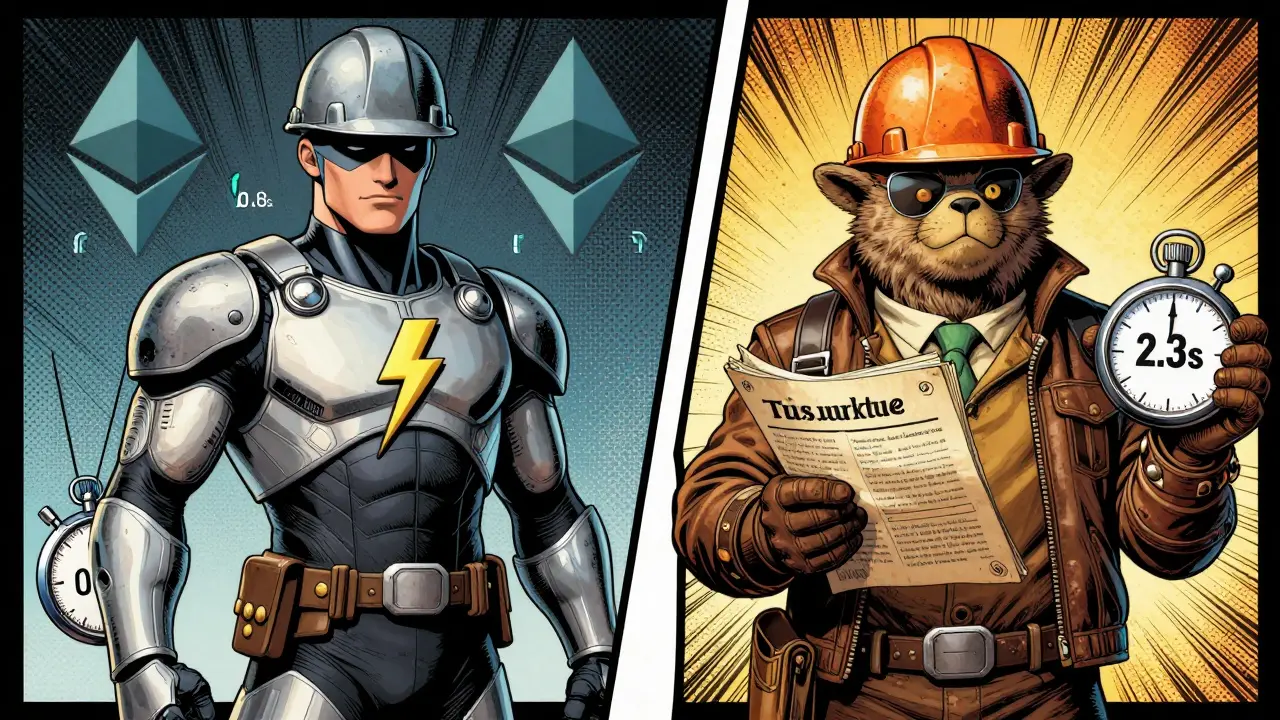
Hardhat is a prominent Ethereum development environment launched in 2019 by Tenderly, known for its TypeScript-first approach and superior debugging capabilities. As of late 2025, it powers roughly 58% of new Ethereum projects. Its killer feature is the built-in local Ethereum network, which executes test transactions in about 0.8 seconds-significantly faster than Truffle’s average of 2.3 seconds. If you value speed and precise error tracing, Hardhat is the modern choice. Developers report that its stack traces alone save hours when hunting down gas limit issues.
Truffle is an older, established development framework released in 2015, offering automated contract testing and strong beginner-friendly documentation. While slightly slower in performance, Truffle excels in legacy system integration and has a massive library of tutorials. In Q1 2025, 42% of new developers still chose Truffle for their first project because its migration scripts feel more intuitive for beginners. However, be aware that Truffle requires additional configuration for non-Ethereum EVM chains, whereas Hardhat handles them more natively.
| Feature | Hardhat | Truffle |
|---|---|---|
| Primary Language | TypeScript / JavaScript | JavaScript |
| Test Speed (Avg) | 0.8 seconds per transaction | 2.3 seconds per transaction |
| Learning Curve | Moderate (6.5/10) | Low (Beginner Friendly) |
| Debugging Tools | Advanced Stack Traces | Basic Console Logs |
| Market Share (2025) | 58% of Eth Devs | Declining but stable |
Building Custom Blockchains: Substrate
If your goal isn’t just to deploy an app on Ethereum but to create an entirely new blockchain with custom consensus mechanisms, you need Substrate is a modular blockchain development framework created by Parity Technologies, written in Rust, enabling custom chain creation with high throughput.
Substrate is not for the faint of heart. It uses Rust, a language known for its steep learning curve but exceptional memory safety. The difficulty rating for mastering Substrate is around 8.7 out of 10. However, the payoff is immense. Optimized Substrate chains can handle up to 100,000 transactions per second. It powers 92% of the Polkadot ecosystem, making it the go-to for interoperable parachains. If you are building a specialized ledger for supply chain or identity verification where you control the validators, Substrate gives you granular control that Ethereum simply cannot match.
Enterprise Privacy: Hyperledger Fabric
When transparency is bad for business, companies turn to permissioned blockchains. Hyperledger Fabric is an Apache-licensed enterprise framework developed by the Linux Foundation, focusing on privacy, scalability, and modular architecture for private networks.
Fabric dominates the corporate world, holding a 73% market share in permissioned solutions. It allows organizations to keep data private among selected peers using channels. The trade-off is complexity. Setting up a Fabric test network can take 2-3 days due to Docker container configurations. It supports chaincode in Go, Java, or Node.js, but expect to spend $15,000-$50,000 monthly on infrastructure for serious deployments. It is the right choice if you are a Fortune 500 company needing GDPR compliance and audit trails, but a terrible choice for a public-facing DeFi app.
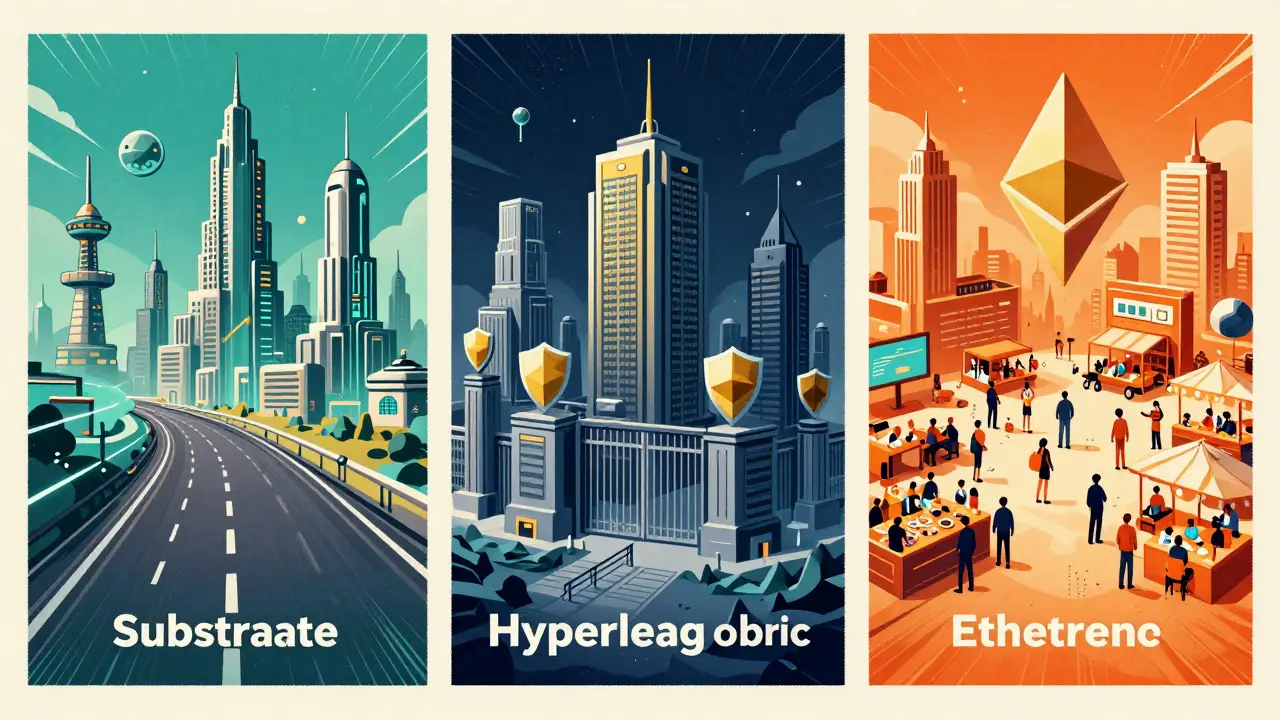
Performance and Cost Considerations
Your choice of framework directly impacts your bottom line. Hardhat’s recent version 3.0 update introduced gas optimization tools that reduced deployment costs by 18% in internal tests. Truffle, while free, often leads to higher gas costs during development due to less efficient testing loops, causing developers to pay for more failed transactions on testnets.
Substrate requires significant upfront engineering time. Proficient Rust developers charge premium rates, and the initial setup can take 8-12 weeks. Hyperledger Fabric’s hidden cost is training; Linux Foundation data suggests teams need 12-16 weeks of dedicated training to become productive. Factor these human resource costs into your budget before committing.
Future-Proofing Your Stack
The dApp framework space is evolving rapidly. By 2027, industry analysts predict that 65% of frameworks will incorporate AI-assisted development features. Hardhat has already released experimental AI plugins that automate 30% of routine smart contract tasks. Truffle is integrating deeper with MetaMask and Infura following its acquisition by ConsenSys.
Interoperability is also key. Standardization efforts around EIP-3085 and WalletConnect 2.0 are reducing the risk of being locked into a single framework’s quirks. When choosing a tool today, ensure it supports these emerging standards to avoid costly migrations in three years.
Is Hardhat better than Truffle for beginners?
Not necessarily. While Hardhat is more powerful and faster, Truffle offers more comprehensive beginner tutorials and simpler migration scripts. If you are new to Solidity, Truffle’s documentation might ease your entry, but switching to Hardhat later is highly recommended for professional projects.
Can I use Substrate for simple Ethereum apps?
No, that would be overkill. Substrate is designed for creating entire blockchains, not just deploying smart contracts. For simple dApps on Ethereum, stick to Hardhat or Truffle. Use Substrate only if you need custom consensus or high-throughput private chains.
What are the hardware requirements for Hyperledger Fabric?
For development environments, Hyperledger Fabric requires a minimum of 4GB RAM and 2 CPU cores, along with Docker version 24.0 or higher. Enterprise deployments require significantly more robust infrastructure to handle node replication and privacy channels.
Which framework is best for DeFi projects in 2026?
Hardhat is the dominant choice for DeFi, powering 51% of Ethereum-based DeFi projects. Its superior debugging tools and gas optimization features are critical for financial applications where security and efficiency are paramount.
Does Truffle support TypeScript?
Truffle primarily supports JavaScript. While you can integrate TypeScript with some effort, Hardhat was built with TypeScript-first philosophy, offering native support and better type checking out of the box.