
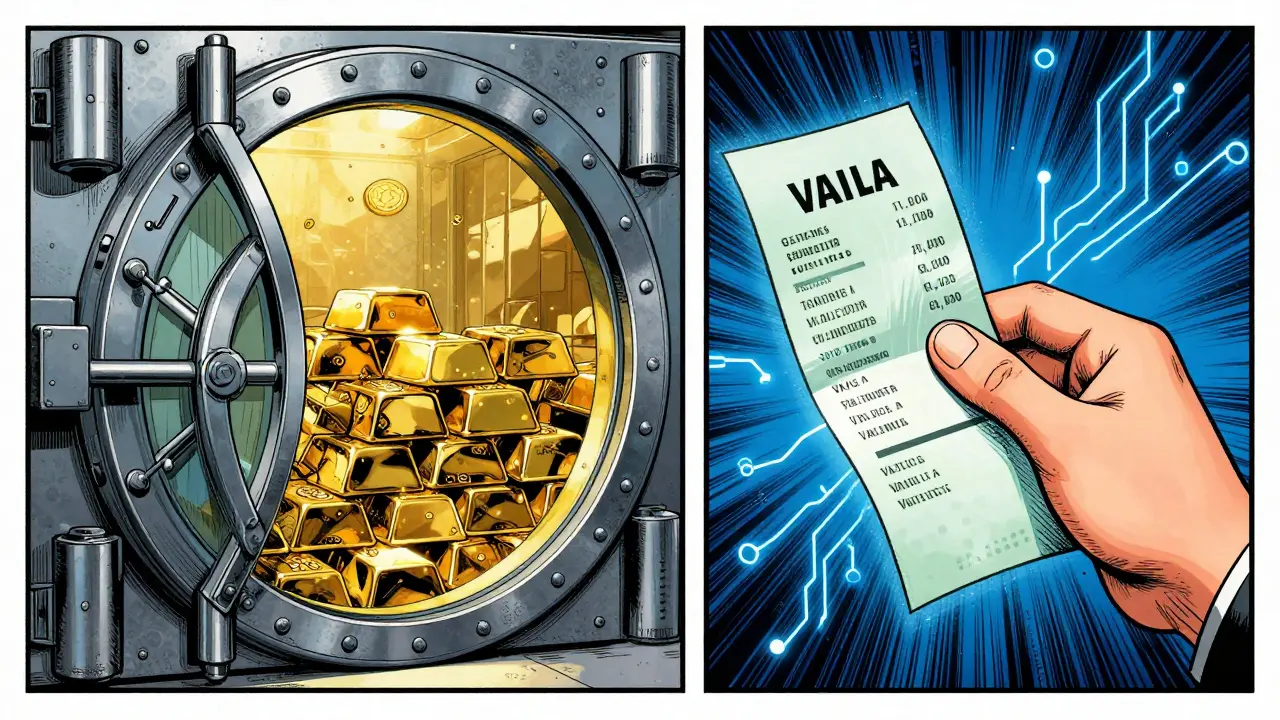
Imagine locking your gold bars in a vault and receiving a paper receipt that you can trade or spend anywhere. That receipt is essentially a "wrapped asset." In the blockchain world, Wrapped Asset Bridges is a critical infrastructure component that allows assets from one blockchain to be represented as tokens on another while maintaining a 1:1 backing relationship . While this unlocks massive liquidity-like bringing Bitcoin's value into Ethereum's DeFi ecosystem-it introduces a massive security trade-off: you are no longer just trusting the blockchain, but the people holding the keys to that vault.
| Feature | Security Impact | Risk Level |
|---|---|---|
| Multi-Sig / MPC | Eliminates single point of failure for keys | Medium-Low |
| Single-Sig Custody | High vulnerability to theft or loss | High |
| Proof of Reserves | Verifies 1:1 backing transparency | Critical (for trust) |
| Cold Storage | Protects majority of assets from online attacks | Low |
How Wrapped Asset Bridges Actually Work
To understand the security, you have to understand the plumbing. When you bridge an asset, you aren't actually "moving" the coin from Chain A to Chain B. Instead, the bridge locks the original asset in a vault on the source chain and mints an equivalent "wrapped" token on the target chain. For example, Wrapped Bitcoin (WBTC) was pioneered around 2019 to let Bitcoin holders participate in Ethereum apps without selling their BTC.
The security of this system rests entirely on the integrity of the lock-and-mint process. If the bridge mints 100 wrapped tokens but only has 50 real tokens in the vault, the system is insolvent. If the vault is hacked, the wrapped tokens become worthless pieces of code because there is no underlying asset to redeem them for. This is why the wrapped asset bridges security model is fundamentally a custodial one, even if it happens on a decentralized network.
The Custody Battle: MPC vs. Multi-Sig
The biggest vulnerability in any bridge is the private key. If one person holds the key to the vault, that's a single point of failure. If they get phished or go rogue, the money is gone. To fix this, professional bridges use layered protections.
Many top-tier providers now use MPC (Multi-Party Computation), a technology provided by firms like Fireblocks. Unlike a traditional key, MPC breaks the cryptographic operation into shards distributed across multiple parties. No single entity ever holds the full key, meaning an attacker would need to compromise multiple independent systems simultaneously to steal the assets.
Alongside MPC, bridges often employ Gnosis Safe, an audited multi-signature wallet. This ensures that any transaction moving assets out of the vault requires a majority of signers to approve. Security researchers at Trail of Bits have noted that multi-sig custody is significantly safer (rated 6.2/10 risk) compared to single-signature models, which they rate as high risk (8.5/10).
The Transparency Gap and Proof of Reserves
Here is the uncomfortable truth: most users have no way of knowing if their wrapped tokens are actually backed. You see the balance in your wallet, but you can't see the vault. This lack of transparency is a primary driver of retail user anxiety.
To solve this, the industry is moving toward Proof of Reserves. This is where a bridge provides cryptographic proof that the assets exist in the vault. Some bridges use monthly attestations from accounting firms, but that's basically a "trust me" note. The gold standard is now shifting toward zero-knowledge proofs, which allow a bridge to prove it has the funds without revealing the exact location or private details of the vault.
Data from Immunefi shows a worrying trend: only about 37% of wrapped asset bridges actually publish regular proof-of-reserves documentation. Without this, you are essentially gambling that the custodian is honest and competent.
Wrapped Assets vs. Liquidity Pools
It's easy to confuse wrapped bridges with liquidity-based bridges (like THORChain). The difference is where the money lives. In a liquidity pool, you swap your native asset for another one already available in a pool. There is no "vault" in the same sense, but you face "slippage" and liquidity risks.
Wrapped assets offer a direct 1:1 provenance, which is cleaner for accounting and institutional use. However, the risk is concentrated. If a liquidity pool has a bug, you might lose some value; if a wrapped bridge vault is emptied, the wrapped token value can crash to zero instantly because the redemption mechanism is broken.
Modern Threats and Regulatory Pressure
Bridge hacks are not a thing of the past. While losses from wrapped asset bridges dropped from 45% of all bridge hacks in 2022 to 28% in 2023, they still represent hundreds of millions of dollars in lost funds. The attack surface has shifted from simple smart contract bugs to more complex social engineering and custodial failures.
Regulators are finally stepping in. The European Union's MiCA regulations, which became effective in June 2024, now mandate that bridge operators keep 100% liquid reserves. This moves the security burden from "hope the developer is good" to "the law requires the money to be there." Similarly, the SEC has begun classifying some wrapped tokens as securities, which forces operators to adhere to stricter financial auditing standards.
How to Evaluate Bridge Security Before Using
If you're moving significant capital, don't just look at the UI. You need to act like a risk manager. Look for these specific markers:
- Custody Method: Does the bridge use MPC and Multi-sig? If they only mention a "secure vault" without explaining the technology, be wary.
- Audit History: Have they been audited by reputable firms like OpenZeppelin or Quantstamp? A single audit from two years ago isn't enough; look for recent, recurring audits.
- Reserve Verification: Do they have a real-time dashboard or a monthly attestation? If you can't verify the 1:1 backing, you're taking on custodial risk.
- Asset Distribution: Check if they use a hybrid model where only a small fraction of assets are in "hot" contracts while the rest are in "cold" storage.
What happens if the bridge custodian disappears?
If the custodian loses the keys or vanishes, your wrapped tokens effectively become unredeemable. Since the value of a wrapped token is derived solely from the ability to claim the original asset, the token's price would likely collapse, as there is no one to honor the 1:1 redemption request.
Is MPC safer than a standard multi-sig wallet?
Generally, yes. While multi-sig requires multiple signatures to be submitted to the blockchain, MPC (Multi-Party Computation) ensures that the private key never exists in one piece at any time. This removes the "single point of failure" and makes it much harder for an attacker to steal the key through a single compromised server.
Can I verify that my wrapped BTC is actually backed 1:1?
Unless the bridge provides a public Proof-of-Reserves (PoR) or a real-time cryptographic proof (like zero-knowledge proofs), you cannot verify this personally. You must rely on third-party attestations or the bridge's transparency reports. Always check if the bridge uses decentralized oracles like Chainlink's CCIP for real-time verification.
Are wrapped assets considered securities?
According to recent SEC enforcement actions in 2024, some wrapped asset bridges have been flagged. The argument is that because the token represents a claim on an asset held by a third party, it may function like a security. This varies by jurisdiction, but the regulatory trend is moving toward tighter oversight.
What is the difference between a hot and cold vault in bridging?
A hot vault is connected to the internet to facilitate quick bridging transactions. It is a high-risk area because it's exposed to attacks. A cold vault is offline and stores the bulk of the assets. A secure bridge keeps only a small percentage (e.g., 5-10%) in the hot vault and the rest in cold storage to minimize the impact of a potential hack.

There are 25 Comments
Ian Chait
Typical. They talk about MPC and multi-sig but ignore the fact that these 'independant' parties are usually just shell companies run by the same cabal of globalist bankers. It's just a fancy way to hide the backdoors. The whole 'wrapped' system is a psyop to get people to move their real BTC into a trap where the custodians can just flip a switch and freeze everything. Don't trust the 'audits' either because most of those firms are paid off by the very entities they're supposed to be checking. It's all a game of musical chairs and the music is about to stop. Keep your keys offline or you're just handing your wealth to the new digital lords. The centralization is hidden in plain sight while they preach decentralization. Absolute joke.
Abhinav Chaubey
It is honestly pathetic that people still need these basic explanations in 2024. Anyone with a shred of intellect knows that custodial bridges are a ticking time bomb. India is leading the way in tech infrastructure, and if we applied the same rigor we use in our national digital stacks to these bridge protocols, we wouldn't be worrying about 'trusting the vault.' The failure here is a lack of fundamental engineering discipline in the West. You can't just slap a multi-sig on a broken business model and call it 'secure.' Get your act together or get out of the way.
Nishant Goyal
Good breakdown!
Sandeep Bhoir
Oh great, another guide telling us to trust the 'audited' firms. Because as we all know, audits are completely infallible and have never missed a critical bug before. It's almost heartwarming that people still believe a PDF from a security firm is a guarantee of safety. I'm sure the hackers are shaking in their boots knowing the bridge was audited two years ago.
siddharth narula
One must ponder the ethical vacuum in which these systems operate. We seek financial liberation yet we tether our souls to the promises of anonymous custodians. ॐ Is this not the ultimate irony? We trade the sovereignty of our assets for the convenience of a digital ghost. ⚖️ The moral imperative should be a total return to self-custody, for any bridge that requires a 'trust me' is merely a gilded cage for the unwary.
Gaurav Undirwade
It is profoundly disappointing to see the masses gravitate towards these shortcuts. The discipline of true asset management requires a fortitude that most of you lack. You speak of 'liquidity' as if it were a virtue, but it is merely a mask for your impatience. If you cannot bear the burden of securing your own private keys, you do not deserve the wealth those keys unlock. This reliance on MPC is a symptom of a decaying intellectual rigor in the modern age.
Alex Long
This is all just a mess. Why even bother bridging if it's this risky? Everything just feels like a scam anyway.
Andrew Southgate
I really appreciate the depth of this post! For those who are new to this, it's helpful to remember that while the risks are real, the innovation happening here is incredible. If you're looking into MPC, maybe check out some of the open-source implementations first to see how the shards actually work. It's a bit of a learning curve, but once you get the hang of it, you realize that the layering of security-cold storage, multi-sig, and MPC-actually creates a very robust defense-in-depth strategy that is far superior to the old ways of doing things. Just keep learning and stay curious!
Sean Douglas
The sheer audacity of these bridge operators is absolutely breathtaking! They basically ask us to hand over our life savings and then say, 'Oops, our vault got leaked, sorry about your money!' It is a gothic horror story written in Solidity code. I am physically vibrating with anxiety just thinking about the 63% of bridges that don't even bother with proof of reserves. It's a digital wasteland of negligence!
Trudy Morse
Actually, the ZK-proof approach is the only way this scales. Simple attestations are just outdated. It's basically math vs trust.
Kim Smith
im just thinkin bout how these things are basically just digital versions of the old gold standard but without the actual gold sometimes lol... its wild how we just accept these risks cause the UI looks clean... i reckon the real shift happens when the law finally catches up and forces them to actually show the money in the vault like the EU is trying to do with MiCA... feels like we're just in a big beta test for the global economy and we're the guinea pigs.
Mark Pfeifer
The distinction between liquidity pools and wrapped assets is a crucial point that often gets ignored in these discussions. I'd argue that the concentration of risk in a vault is a more systemic threat than slippage in a pool. We need to be more assertive about demanding real-time cryptographic proofs before we move any more capital into these systems. Trust is not a security feature.
Keri Pommerenk
thanks for sharing this info it really helps clarify the risks for people who just want to get started without losing everything
Yuhan Mo
The implementation of MPC provides a significant mitigation of the single point of failure risk. I find the transition toward zero-knowledge proofs for reserve verification to be a very elegant solution for maintaining privacy while ensuring solvency. It's a great way to handle the transparency gap.
Sean Mitchell
The prose here is acceptable, but the conclusion is painfully obvious. The bridge model is a failure of imagination.
Thomas Jewett
Tthis is exactly why we need to bring all this back to US standards and stop relying on these vague international protocols that don't have any real accountability!! Its a joke how some of these bridges are run by people who wouldnt know a real audit if it hit them in the face and the SEC is right to be coming down hard on them because we cant have our economy based on 'trust me' notes from some dev in a basement!! We need real American oversight and real laws to proteckt the investors from these scams!!
Luke George
Notice how the post mentions the SEC? That's just the first step in the centralization play. They want us on 'regulated' bridges so they can track every single satoshi and then tax it into oblivion. The 'security' they're selling is just a leash. I've seen the patterns and this is just how they move the goalposts to maintain control over the financial system.
Michael Harms
Hey everyone! Just wanted to say that it's totally normal to feel a bit overwhelmed by all the technical jargon here. If you're just starting out, maybe try bridging very small amounts first to see how it feels. We're all learning together, and the community is here to help you figure out the safest paths!
Anna Grealis
probablly just another way to lose money... i dont even trust the MPC stuff... it sounds like a way to hide who actually has the keys
Karen Mogollon Gutierrez
The level of risk described here is absolutely abhorrent. To think that an individual's entire portfolio could be rendered worthless due to a custodial failure is a tragedy waiting to happen. This is not merely a technical glitch; it is a systemic failure of fiduciary responsibility!
Tracy Sperandio
Let's turn this fear into action! Instead of just worrying about the vault, let's push for more bridges to adopt ZK-proofs right now! We have the tech, so let's demand the transparency. It's time to evolve the infrastructure to match the ambition of the DeFi world. Let's get loud about Proof of Reserves!
Vicky Duffala
I love the analogy of the gold bars! It really simplifies a complex topic. I think the real lesson here is about the evolution of trust. We went from trusting banks, to trusting code, and now we're back to trusting people who manage code. It's a full circle moment that forces us to ask what 'decentralization' even means anymore. 🌟 Keep questioning everything!
Adam Mann
I've always found that the best way to handle these risks is to diversify across different bridging solutions. I mean, if you have a large amount of assets, why put them all in one vault? You could split your wrapped BTC across three different providers, and that way, even if one bridge has a catastrophic failure, you've only lost a fraction of your holdings. It's a bit more work to manage, but the peace of mind is totally worth it. Also, always remember to check the latest audit reports every few months, not just once. It's all about staying proactive and not letting your guard down just because the UI looks pretty. Happy bridging, everyone!
Prachi Bhadarge
Imagine actually believing that a 'monthly attestation' from an accounting firm means anything. That's like asking a fox to vouch for the safety of the chickens. Just keep the money in the native chain and stop chasing the 2% extra yield in DeFi. But hey, keep gambling with your 'wrapped' tokens if you enjoy the adrenaline rush of potentially waking up to zero.
Andrew Southgate
That's a great point about diversifying bridges! It really adds another layer of security that doesn't rely on the bridge operator themselves. For anyone wondering, this is essentially 'risk sharding' at the user level. Combine that with the MPC and cold storage mentioned in the post, and you've actually got a very professional risk management strategy. I highly recommend it for anyone moving significant capital.
Write a comment
Your email address will not be published. Required fields are marked *