Imagine being able to borrow money, trade assets, or earn interest without ever talking to a banker, filling out a form, or waiting for business hours. That is the promise of Decentralized Finance (DeFi), which is a financial system built on blockchain technology that operates without traditional intermediaries like banks or brokers. Instead of trusting a corporation with your funds, you trust code. Specifically, self-executing programs called smart contracts handle everything from lending to trading.
But how does it actually work? And more importantly, is it safe enough for your money? As we move through 2026, DeFi has matured significantly. It’s no longer just a playground for crypto enthusiasts; it’s becoming infrastructure for global finance. This guide breaks down the core mechanics, the major players, and the real risks involved so you can navigate this space with confidence.
What Exactly Are DeFi Protocols?
To understand DeFi, you first need to understand the protocol. In traditional finance, a bank is the protocol-it sets the rules, holds the ledger, and enforces agreements. In DeFi, the protocol is a set of open-source software rules deployed on a blockchain. These rules are immutable, meaning they cannot be changed once deployed unless the community votes to upgrade them via governance tokens.
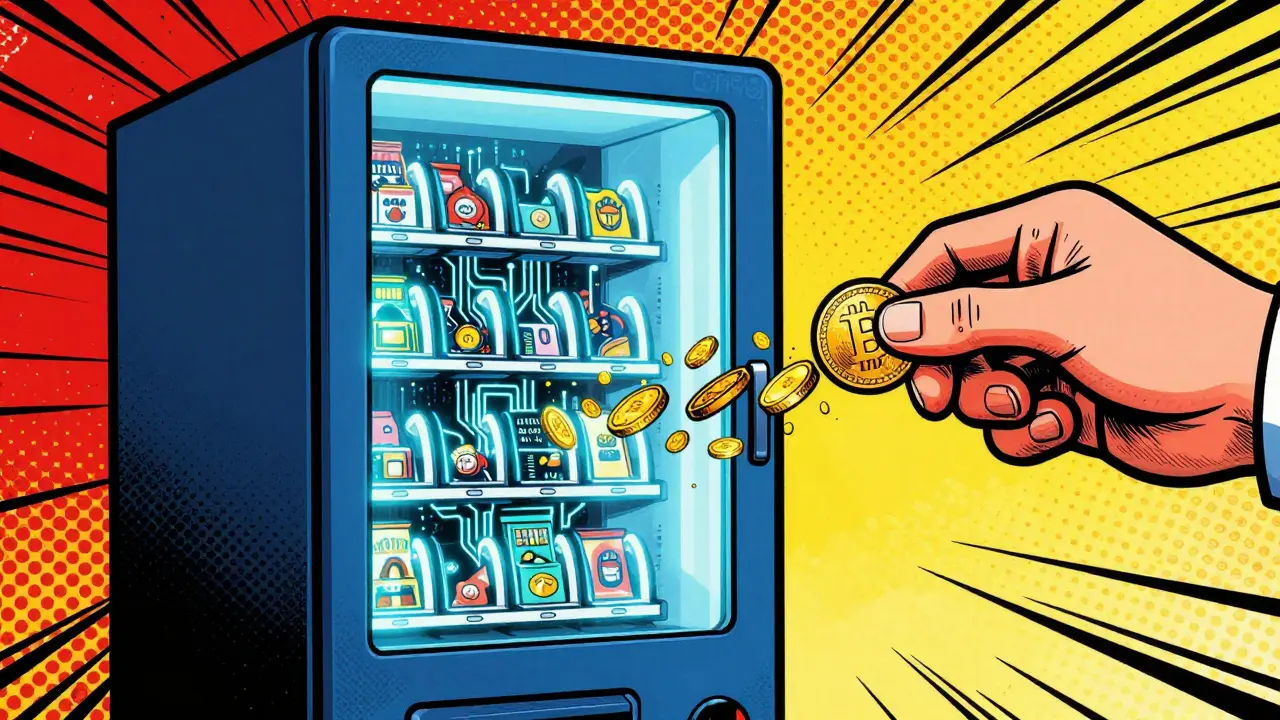
The central entity here is the Smart Contract, which is a self-executing program stored on a blockchain that automatically executes actions when predetermined conditions are met. Think of it as a vending machine. You put in money (crypto), press a button (execute transaction), and get your product (tokens/interest) automatically. No human intervention is needed. If the code says you’re eligible for a loan, you get it instantly. If you miss a payment, the contract liquidates your collateral automatically. It’s cold, efficient, and transparent.
These protocols run primarily on Ethereum, which currently hosts about 58% of all DeFi activity. However, due to Ethereum’s high fees and slower speeds, many users now interact with Layer 2 solutions like Optimism and Arbitrum, which handle over 23% of DeFi transactions. Other chains like Polygon, Avalanche, and Solana also play significant roles, offering faster and cheaper alternatives.
The Core Building Blocks: Lending, Trading, and Stablecoins
DeFi isn’t one single thing; it’s an ecosystem of different applications. Most fall into three main categories: lending/borrowing, decentralized exchanges (DEXs), and stablecoins. Understanding these helps you decide where to put your capital.
| Category | Function | Top Example (2025-2026) | Key Metric |
|---|---|---|---|
| Lending & Borrowing | Earn interest by supplying assets; borrow against collateral | Aave | $18.7B outstanding loans |
| Decentralized Exchange (DEX) | Swap tokens directly with other users via liquidity pools | Uniswap | $1.2T annual trading volume |
| Stablecoin Issuance | Create pegged digital currencies backed by crypto or fiat | MakerDAO | $6.2B DAI circulating |
Lending and Borrowing Platforms
Protocols like Aave allow you to lend your crypto to others and earn interest. Unlike a bank, there’s no credit check. Instead, you must over-collateralize. If you want to borrow $1,000 worth of USDC, you might need to lock up $1,500 worth of Ethereum. If the value of your Ethereum drops too low, the protocol automatically sells it to repay the loan. This is called liquidation. Aave leads this sector with variable and fixed interest rates, plus innovative features like flash loans-loans you take and repay within the same transaction block.
Decentralized Exchanges (DEXs)
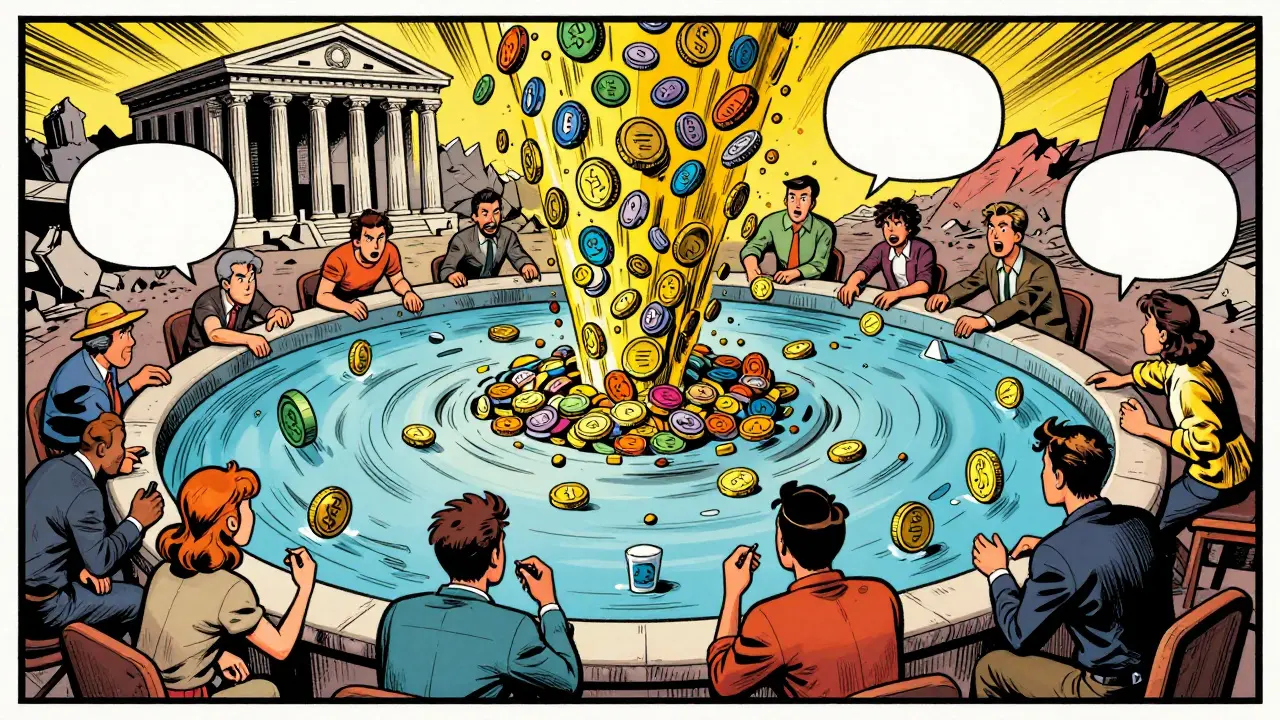
Traditional exchanges like Coinbase hold your funds. DEXs don’t. Uniswap is the largest DEX, using an Automated Market Maker (AMM) model. Instead of matching buyers and sellers order-by-order, Uniswap uses liquidity pools. Users deposit pairs of tokens (e.g., ETH/USDC) into a pool. When you want to swap ETH for USDC, you trade against this pool. The price adjusts algorithmically based on supply and demand. Uniswap v3 introduced concentrated liquidity, allowing providers to earn higher fees by narrowing their price range, though this increases risk.
Stablecoins: The Anchor of DeFi
Crypto is volatile. Stablecoins solve this by maintaining a steady value, usually pegged to the US Dollar. MakerDAO issues DAI, a decentralized stablecoin backed by over-collateralized crypto assets. While centralized stablecoins like USDC (issued by Circle) dominate market cap, DAI remains crucial for pure DeFi interactions because it doesn’t rely on a corporate issuer. In 2025, DAI maintained a 99.87% peg accuracy, showing robustness even during market stress.
How to Get Started: A Practical Guide
Entering DeFi requires a few technical steps. Don’t worry-it’s easier than setting up online banking, but it demands more caution. Here is the standard path for beginners in 2026:
- Set Up a Non-Custodial Wallet: Download a wallet like MetaMask or Trust Wallet. This gives you control over your private keys. Never share your seed phrase (the 12-24 word recovery phrase) with anyone. Not even support staff.
- Acquire Network Tokens: To interact with Ethereum-based protocols, you need ETH to pay for gas fees (transaction costs). For Layer 2s like Arbitrum, you need ETH bridged to that network. Start with small amounts ($10-$20) to test.
- Connect to a Protocol: Go to a reputable interface like Uniswap.org or Aave.com. Connect your wallet by clicking “Connect.” Double-check the URL to avoid phishing sites.
- Approve Tokens: Before swapping or lending, you must approve the smart contract to spend your specific token. This is a critical security step. Always revoke approvals for unused apps regularly.
- Execute Your First Transaction: Start with a simple swap or deposit. Monitor the gas fee and slippage tolerance settings. Slippage determines how much the price can change before the transaction fails.
According to Consensys’ 2025 user study, most users grasp the basics within 3-5 hours. Advanced strategies like yield farming require 20-40 hours of study. Take your time.
Risks and Challenges: What Could Go Wrong?
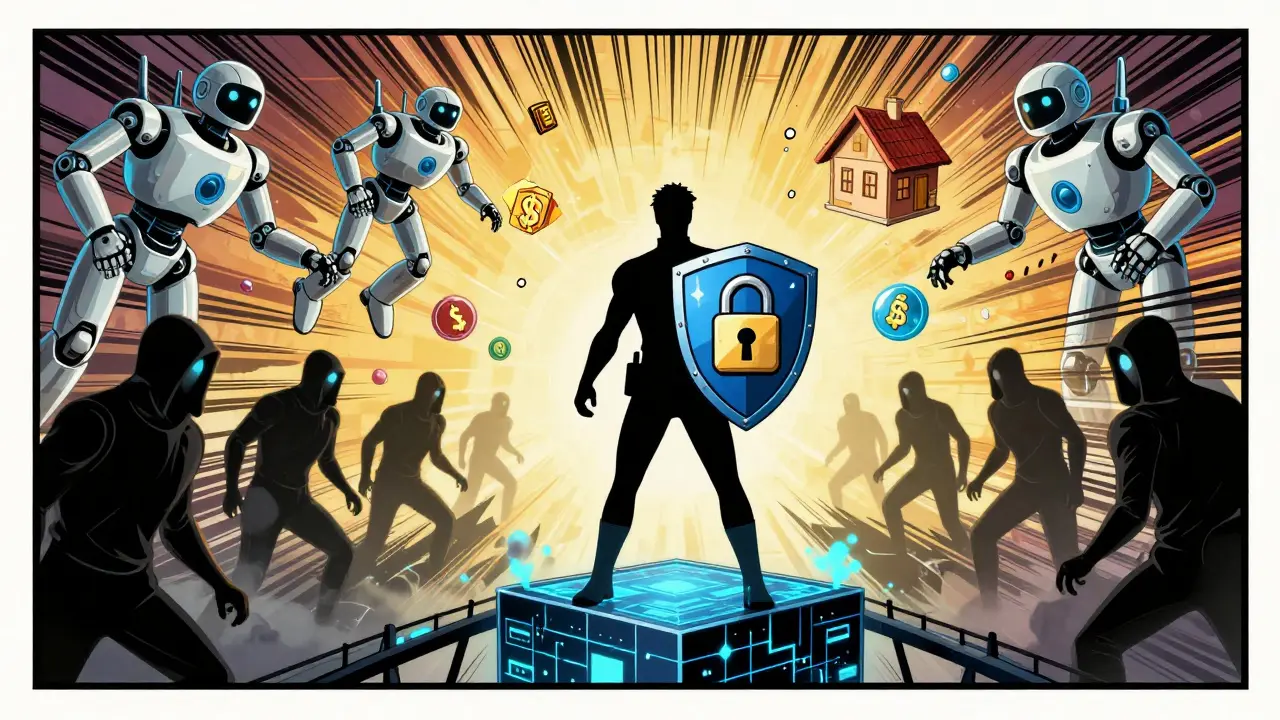
DeFi offers freedom, but freedom comes with responsibility. There is no customer service line to call if things go wrong. Here are the primary risks you must manage:
- Smart Contract Vulnerabilities: Code can have bugs. In 2024, hackers stole $1.2 billion from DeFi protocols due to exploits. While audits by firms like OpenZeppelin help, no code is perfect. Always use well-established protocols with long track records.
- Impermanent Loss: If you provide liquidity to a DEX like Uniswap, you may lose value compared to just holding the tokens. This happens when the price ratio of the two tokens changes significantly. During high volatility, losses can reach 30-40%. Calculate this risk before providing liquidity.
- Gas Fee Volatility: Ethereum mainnet fees can spike dramatically during congestion. In July 2025, some users paid $47 in fees for a $200 loan on Aave. Using Layer 2 solutions mitigates this, reducing fees by up to 97%.
- Regulatory Uncertainty: Laws vary by country. The EU’s MiCA framework requires KYC for stablecoin issuers, while the US lacks federal clarity. Regulatory shifts could impact protocol access or functionality in certain jurisdictions.
- Phishing and Scams: Social engineering attacks target wallets. In 2025, 47% of MetaMask users reported phishing attempts. Always verify links, use hardware wallets for large amounts, and never click suspicious links in DMs.
The Future of DeFi: AI, Real-World Assets, and Institutional Adoption
DeFi is evolving rapidly. Three trends will define the next few years:
1. Integration with Artificial Intelligence: AI is optimizing DeFi. Algorithms now assess risk more accurately, reducing arbitrage opportunities by 63% in 2025. Protocols are beginning to use AI for dynamic interest rate adjustments and fraud detection. By Q2 2026, 87% of top protocols plan to implement AI-driven risk management.
2. Tokenization of Real-World Assets (RWA): Traditional assets like real estate, bonds, and commodities are moving on-chain. The World Economic Forum projects RWA tokenization will grow from $10 billion to $160 billion by 2027. Protocols like Ondo Finance and Maple Finance are leading this charge, bringing institutional capital into DeFi.
3. Institutional Adoption: Giants like BlackRock and JPMorgan are entering the space. In August 2025, Bloomberg reported that institutions deployed $8.7 billion into DeFi protocols through tokenized funds. This brings credibility but also increases regulatory scrutiny.
Despite challenges, DeFi’s trajectory points toward becoming a foundational layer for global finance. By 2030, experts predict DeFi could capture 15-20% of traditional finance’s $100 trillion market. The key to success lies in interoperability, security, and user-centric design.
Is DeFi legal?
Legality depends on your jurisdiction. In the EU, DeFi activities are regulated under MiCA, especially for stablecoins. In the US, regulations are fragmented across states. Generally, interacting with DeFi protocols is not illegal for individuals, but tax obligations apply. Always consult local laws.
Can I lose all my money in DeFi?
Yes. Risks include smart contract hacks, impermanent loss, rug pulls (scam projects), and user error (sending funds to wrong addresses). Never invest more than you can afford to lose. Use audited, established protocols and secure your wallet properly.
What is the difference between CeFi and DeFi?
CeFi (Centralized Finance) involves intermediaries like Binance or Coinbase that hold your funds and manage accounts. DeFi (Decentralized Finance) uses smart contracts on blockchains, giving you full custody of your assets. DeFi is permissionless and transparent, but CeFi often offers better customer support and ease of use.
Do I need a lot of money to start using DeFi?
No. You can start with small amounts. Many protocols allow minimal deposits. However, consider gas fees. On Ethereum mainnet, fees can exceed $10, making small transactions uneconomical. Using Layer 2 networks like Arbitrum or Optimism reduces fees to pennies, making small-scale participation viable.
How do I protect my DeFi wallet from hackers?
Use a hardware wallet (like Ledger or Trezor) for large holdings. Enable two-factor authentication wherever possible. Never share your seed phrase. Be wary of phishing links and unauthorized app approvals. Regularly audit connected apps using tools like Revoke.cash.