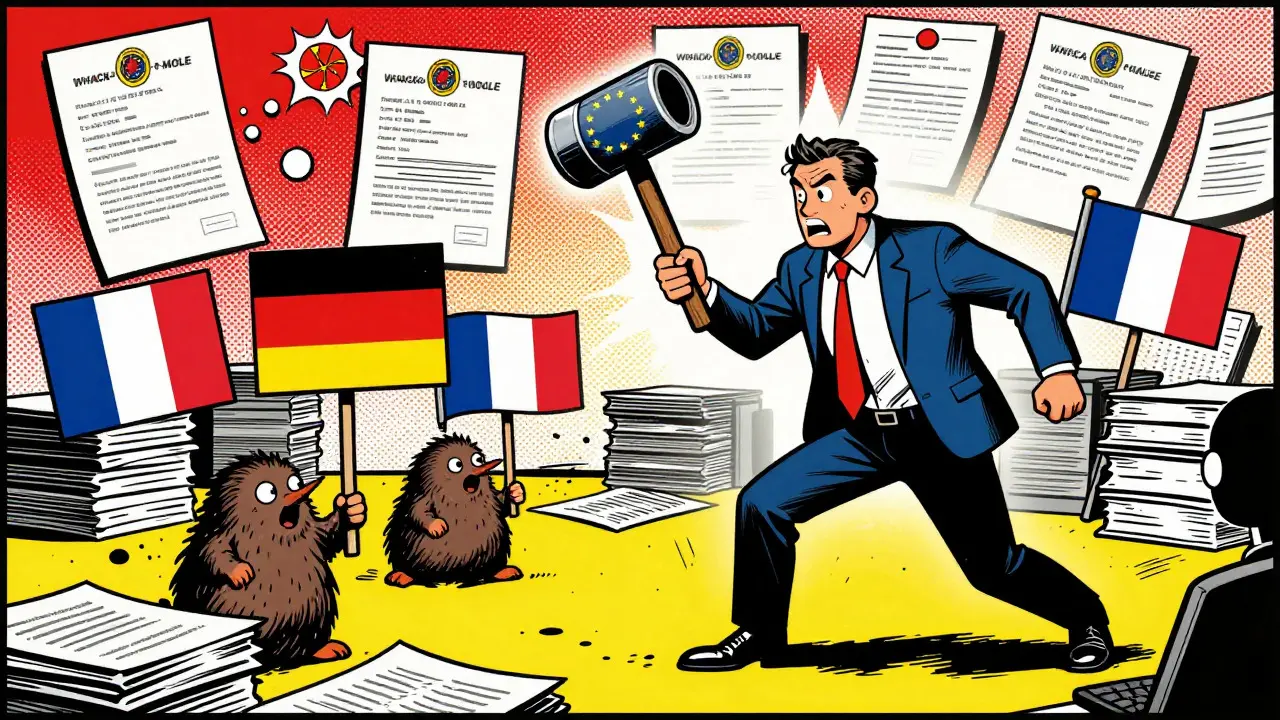
Running a crypto business in Europe used to mean playing whack-a-mole with regulators. You’d get licensed in one country, only to find out you needed another license to serve customers just across the border. That era ended on December 30, 2024. The Markets in Crypto-Assets Regulation (MiCA) is now fully enforceable across all 27 EU member states.
If you are looking to operate as a Crypto-Asset Service Provider (CASP)-whether you run an exchange, offer custody services, or provide trading advice-you need a single EU license. This guide cuts through the legal jargon to show you exactly how to get authorized, what it costs, and where the traps lie in 2026.
Who Needs a CASP License Under MiCA?
MiCA defines a CASP as any legal person whose business is providing crypto-asset services to clients professionally. If you do any of the following, you fall under this umbrella:
- Custody and administration of crypto-assets for third parties.
- Operating a trading platform for crypto-assets.
- Exchanging crypto-assets for fiat currencies (like EUR or USD).
- Executing orders on behalf of clients.
- Placing crypto-assets (acting as principal).
- Providing investment advice on crypto-assets.
The key shift here is clarity. Before MiCA, definitions varied wildly between Germany’s BaFin and France’s AMF. Now, the definition is uniform. If you fit these criteria, you must be authorized by a National Competent Authority (NCA) in an EU member state. There are no more "grey zones" for centralized entities.
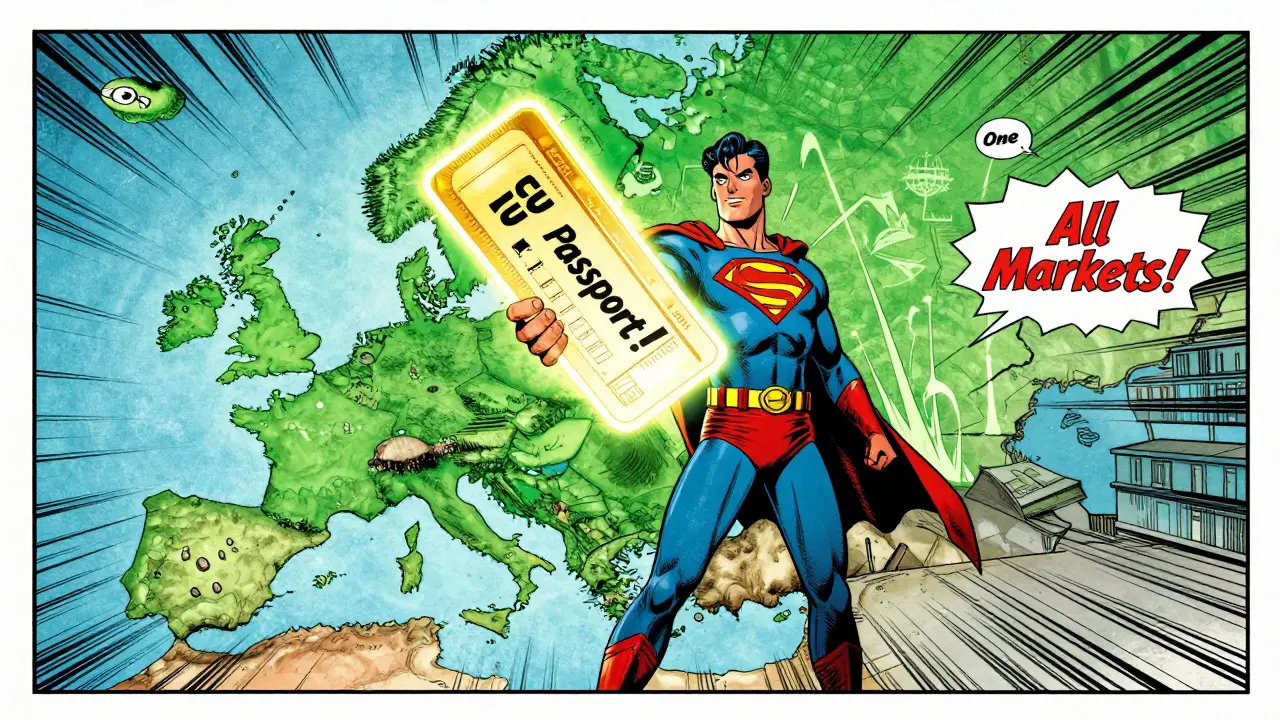
The Golden Ticket: EU Passporting
The biggest selling point of MiCA is the passporting mechanism. Once your NCA grants you authorization, you can operate throughout the entire European Union without needing separate licenses in each country.
You can expand via two methods:
- Right of Establishment: Setting up branches in other EU countries.
- Freedom to Provide Services: Offering cross-border services directly from your home jurisdiction.
This eliminates the nightmare of navigating 27 different regulatory regimes. According to KPMG’s 2023 analysis, this single-market approach reduces compliance costs by an estimated 40-60% compared to the pre-MiCA landscape. For example, Kraken secured authorization through France’s AMF in March 2025 and expanded to all EU markets within 30 days. Bitstamp, authorized by the Czech National Bank in February 2025, hit 15 new markets in three weeks. That is the power of the passport.
Capital Requirements: How Much Cash Do You Need?
You cannot start a CASP without skin in the game. Article 52 of MiCA sets strict minimum operational capital requirements based on the services you offer. These funds must be held in liquid assets.
| Service Type | Minimum Capital (EUR) |
|---|---|
| Custody and Administration | €125,000 |
| Exchange Services (Crypto-Fiat) | €150,000 |
| Trading Platform Operation | €730,000 |
Note that if you offer multiple services, you generally need to meet the highest capital requirement among them. For instance, if you run a trading platform that also offers custody, you need the €730,000 for the platform, plus additional buffers depending on risk assessments. This is significantly higher than some lighter-touch regimes, such as Switzerland’s FINMA guidelines, exceeding them by 25-30%.
Becoming a "Significant" CASP (sCASP)
Not all CASPs are created equal. If your user base grows large enough, you graduate to a stricter tier. You are automatically classified as a significant CASP (sCASP) if you exceed an average annual user base of 15 million EU residents.
Being an sCASP means heightened supervision. You will face:
- Quarterly stress testing.
- Mandatory third-party audits.
- Real-time transaction monitoring systems.
- Joint oversight by your national NCA and ESMA.
As of August 2025, the threshold hasn't been widely crossed yet, but major players like Binance or Coinbase would likely trigger this status if they fully localized their EU operations under MiCA. Prepare for this early; retrofitting real-time monitoring later is expensive and technically complex.
The Application Process: What to Expect in 2026
The transitional period ended on July 1, 2026. Any firm still operating under old national regimes has been forced into MiCA compliance or shut down. If you are applying now, here is the reality on the ground.
Timeline: The law mandates a 6-month processing time. However, ESMA’s data shows significant variance. Germany’s BaFin processes applications in about 6 months, while Spain’s CNMV takes closer to 9 months. Smaller jurisdictions like Estonia have seen backlogs pushing times to 11 months. Plan for at least 9-12 months of preparation before you even submit.
Costs: Don’t underestimate the burn rate. PwC’s August 2025 benchmarking study found that average authorization costs range from €750,000 for basic custody services to €2.5 million for full trading platforms. This includes legal fees, tech upgrades for AML/KYC, and hiring dedicated compliance staff. Most successful applicants hire 5-7 full-time compliance officers specifically for MiCA.
Documentation: Your application must include a detailed business plan, governance structure, risk management framework, and proof of technical standards. The Luxembourg CSSF requires all this within 120 days of submission. Incomplete files are the #1 reason for delays.
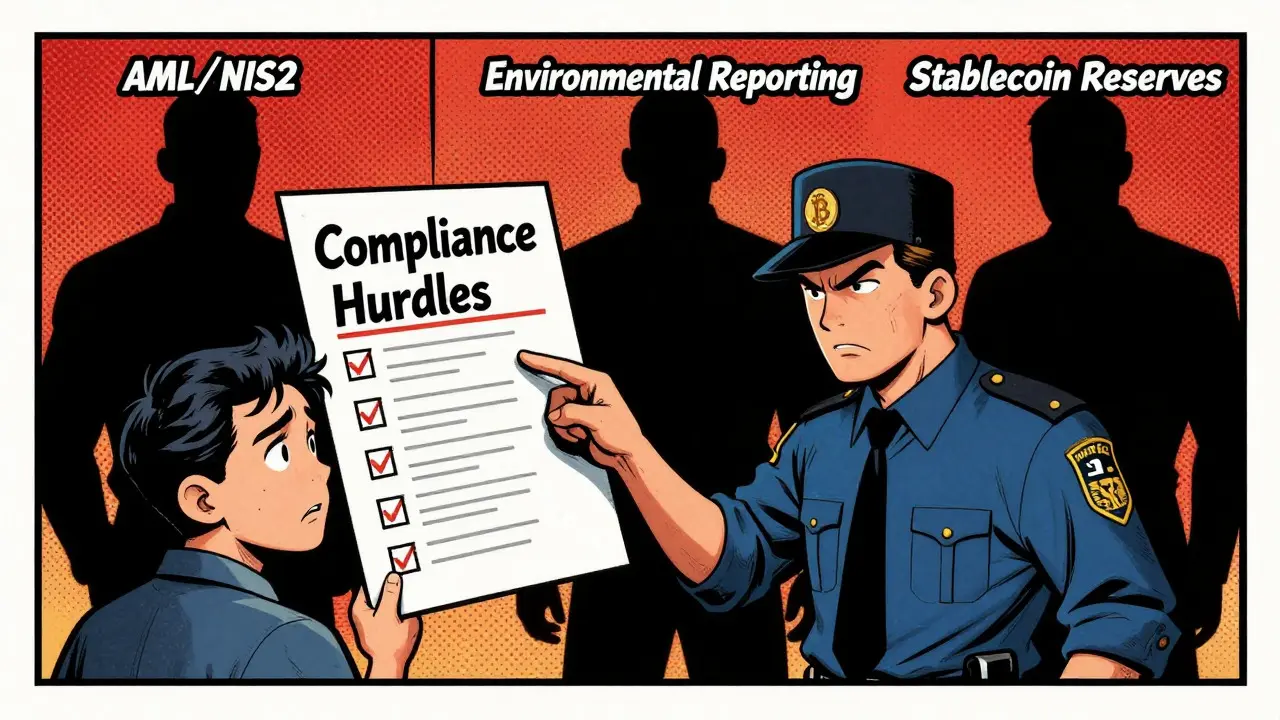
Key Compliance Hurdles
Getting the license is step one. Keeping it is harder. Three areas trip up most firms:
1. Anti-Money Laundering (AML) & NIS2
Your AML procedures must comply with the 6th AML Directive. But more importantly, your data security must meet the NIS2 Directive standards. This isn’t just about firewalls; it’s about incident reporting timelines and supply chain security. Firms are spending an average of €1.2 million on transaction monitoring systems alone to meet EBA’s 2024 technical standards.
2. Environmental Impact Reporting
This is a controversial new requirement. CASPs must disclose energy consumption metrics using the EU’s Blockchain Observatory methodology. Professor Angela Walch criticized this in her 2025 paper, arguing it ignores Proof-of-Stake advancements. Regardless of your opinion, you need a framework. Mid-sized exchanges estimate this adds €200,000-€500,000 annually to compliance costs. If you list high-energy PoW coins, expect scrutiny.
3. Stablecoin Reserves
If you issue or manage asset-referenced tokens (stablecoins), you face strict reserve requirements. The EBA warned in March 2025 that the 1:1 reserve rule might fail during market stress, citing the USDC depegging in 2023. Issuers must hold reserves in cash or short-term government bonds, audited monthly.
Choosing Your Jurisdiction
Where you apply matters. While the license is pan-European, the quality of your regulator affects your reputation and processing speed. As of July 2025, the leaders are:
- France (AMF): Processed 42 applications, approved 15. Known for clear guidance.
- Germany (BaFin): Processed 38 applications, approved 12. Highest marks for documentation quality (4.5/5 in KPMG surveys).
- Lithuania (Bank of Lithuania): Processed 29 applications, approved 8. Historically friendly to crypto, but facing resource constraints.
Avoid jurisdictions with inconsistent interpretations. Malta’s MFSA ranked lowest (2.8/5) for clarity. If you want a smooth ride, Germany or France are currently the safest bets, despite higher initial administrative hurdles.
DeFi and the "Identifiable Entity" Problem
If you run a decentralized protocol, MiCA is a headache. The regulation requires an identifiable legal entity responsible for the service. This effectively excludes pure DeFi protocols where governance is distributed. A University of Zurich study found that 68% of DeFi protocols avoid the EU market entirely because of this. Unless you centralize governance behind a DAO wrapper with a legal representative, you likely don’t qualify for a CASP license-and operating without one is illegal.
Next Steps for Your Business
If you are serious about entering the EU market in 2026, stop guessing. Start with a gap analysis against Article 52 (capital) and Article 72 (sCASP thresholds). Hire local counsel in your target jurisdiction (preferably Germany or France) to draft your business plan. Budget for €1.2 million in tech upgrades for AML/NIS2 compliance. And remember: the transition period is over. There is no grace period left.
What happens if I operate a crypto exchange in the EU without a MiCA license?
You are operating illegally. Since the transitional period ended on July 1, 2026, NCAs have full enforcement powers. Penalties can include fines up to 10% of total annual turnover, bans on marketing activities, and forced cessation of services. Banks may also cut off your fiat rails due to reputational risk.
Can a non-EU company get a CASP license?
Yes, but you must establish a registered office within the EU and employ at least one director resident in the member state of authorization. Many US firms are setting up subsidiaries in Dublin or Frankfurt specifically to meet this residency requirement.
How does MiCA affect stablecoins?
MiCA introduces strict rules for Asset-Referenced Tokens (ARTs) and E-Money Tokens (EMTs). Issuers must hold 1:1 reserves in high-quality assets, publish monthly attestation reports, and ensure redeemability. Algorithmic stablecoins not backed by reserves are largely excluded unless they meet stringent stability mechanisms approved by the ECB.
Is MiCA compatible with Decentralized Finance (DeFi)?
Poorly. MiCA targets centralized intermediaries. Pure DeFi protocols without a legal entity face ambiguity. While the Commission proposed a "functional approach" in MiCA 2.0 drafts, current enforcement focuses on identifiable providers. Most DeFi projects choose to stay outside the EU or use centralized front-ends to gain access.
Which EU country is best for obtaining a CASP license?
Germany and France are currently preferred due to regulatory clarity and robust infrastructure. Germany’s BaFin offers detailed guidance, reducing approval risks. France’s AMF has processed the highest volume of approvals. Avoid smaller jurisdictions with staffing shortages, as processing times can exceed 12 months.