You are tired of waiting three business days for a wire transfer. You are even more tired of paying $45 fees to send money across borders. That is exactly why USD Coin (USDC) is a digital dollar that settles instantly on the blockchain. Receiving these payments straight into your own wallet cuts out the middleman. It puts the funds directly under your control.
This is not just about saving a few dollars. It is about speed and sovereignty. When you accept USDC directly, you bypass traditional banking rails entirely. The transaction happens on-chain. Once it confirms, the money is yours. No account freezes. No hidden holds. Just pure, liquid value sitting in your address.
Understanding the Mechanics of Self-Custody
To receive USDC, you need a destination. In the crypto world, that destination is your public wallet address. Think of this like an email address. Anyone can see it, but only you have the private key-the password-to access the funds inside.
When someone sends you USDC, they are triggering a smart contract function. This function updates a ledger entry associated with your public address. The network validates this change. Within seconds or minutes, depending on the chain, your balance updates. You do not need a bank account. You do not need to verify your identity with a payment processor to receive the initial transfer. You just need the right tool to hold the keys.
The most common tools fall into two categories:
- Software wallets: Apps like MetaMask or Phantom run on your phone or browser. They are convenient and easy to set up.
- Hardware wallets: Devices like Ledger or Trezor store your keys offline. They offer much higher security against hacks.
If you are running a business or freelancing, hardware wallets are usually the safer bet. If your computer gets compromised, the attacker cannot steal your funds without physically accessing the device.
Picking the Right Blockchain Network
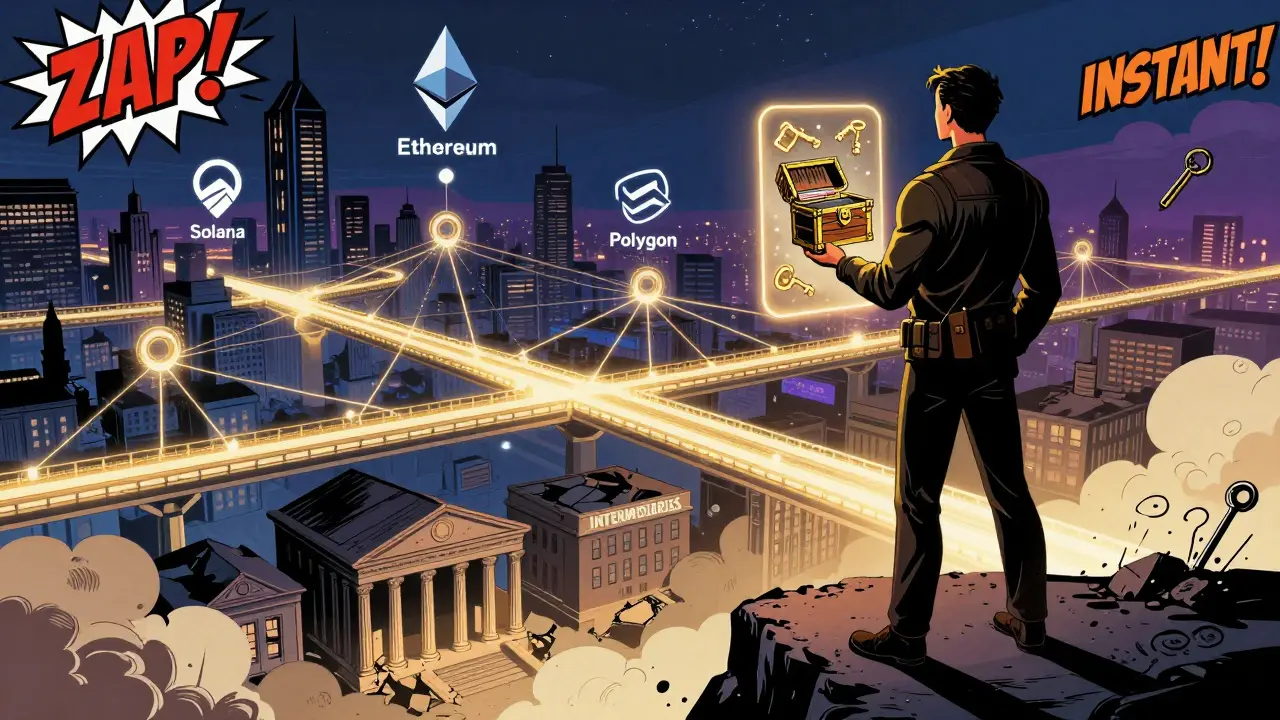
Here is where things get tricky. USDC exists on many different blockchains. It is not one single token. It is a token that lives on Ethereum, Solana, Polygon, Base, and others. Each version is distinct.
You must match networks. If your sender uses Ethereum, you must give them an Ethereum-compatible address. If you give them a Solana address, the funds will likely be lost forever. Always double-check the network selection before sharing your address.
| Network | Speed | Average Fee | Best For |
|---|---|---|---|
| Ethereum (ERC-20) | 15-30 seconds | $2 - $15+ | Large institutional transfers |
| Solana (SPL) | < 1 second | < $0.01 | High-frequency micro-payments |
| Polygon PoS | 2-5 seconds | < $0.01 | Freelance payouts and e-commerce |
| Base | 2-5 seconds | < $0.01 | Modern app integrations |
For most individuals and small businesses, low-fee Layer 2 networks like Polygon or Base are the sweet spot. You get the stability of the USDC peg with transaction costs that are practically zero. Ethereum mainnet is secure but expensive during peak congestion.
Setting Up Your Wallet for Receipts
Let's walk through the setup. I'll use MetaMask as an example since it supports multiple EVM chains.
- Install the extension: Download MetaMask from their official site. Never install extensions from third-party stores.
- Create a new wallet: Follow the prompts. You will be given a 12-word seed phrase. Write this down on paper. Store it in a safe place. If you lose this phrase, you lose your money. There is no "forgot password" button.
- Add a network: By default, MetaMask shows Ethereum. Go to settings and add Polygon or Base if you plan to receive on those chains. You can find the RPC details on community resources like Chainlist.
- Copy your address: Click the address at the top of the interface. Copy it. This is what you share with payers.
Before you ask anyone to send you thousands of dollars, test the flow. Ask a friend to send you $1 worth of USDC. Verify that it appears in your wallet. Check the transaction hash on a block explorer like Etherscan or Polygonscan. This step builds confidence and ensures you haven't made a configuration error.
Integrating USDC into Your Business Flow
If you are a merchant, manually copying addresses for every customer is inefficient. You need automation. This is where payment gateways come in.
Platforms like Shopify and Stripe now support USDC. Shopify allows merchants to accept USDC at checkout. You can choose to have these funds converted to fiat automatically, or you can claim them to your own crypto wallet. The latter option keeps you in control of the assets.
Stripe has re-entered the space with stablecoin payouts. Express account users can link a wallet on Base or Polygon. Payouts land directly in that wallet. This bypasses the traditional banking delay. For creators in countries with slow local banks, this is a game-changer.
However, these platforms still act as intermediaries. They handle the KYC (Know Your Customer) checks. They manage the compliance risk. If you want true direct-to-wallet integration without a platform holding your hand-or your feet-you might look at non-custodial gateways.
Tools like TxNod allow solo founders and indie hackers to integrate crypto payments using their own hardware wallets. You connect your Ledger or Trezor via extended public keys. The gateway generates unique invoice addresses derived from your keys. Funds settle straight to your wallet. There is no custodian balance. There are no payout holds. The architecture makes chargebacks and account freezes structurally impossible because the platform never touches the private keys.
This approach requires a bit more technical setup than clicking a button in Shopify. But it gives you total sovereignty over your revenue stream.
Tax Implications and Record Keeping
Receiving USDC is not tax-free. In the United States, the IRS treats cryptocurrency as property. When you receive USDC as payment for services, it is ordinary income. You must report the fair market value in USD at the time of receipt.
If you hold the USDC and its value changes, you generally don't trigger a taxable event until you sell or swap it. But the initial receipt is taxable income.
You need to track:
- Date and time of receipt.
- Amount of USDC received.
- USD value at the moment of receipt.
- Transaction ID (hash).
Most accounting software does not natively import crypto data easily. You may need to export your wallet history and use specialized crypto tax tools to calculate your liability accurately. Do not ignore this step. Audits happen.
Risks and Mitigation Strategies
Self-custody comes with responsibility. Here are the main risks and how to handle them.
Loss of Keys: If you lose your seed phrase or hardware device, your funds are gone. There is no customer support to call. Mitigation: Make multiple copies of your seed phrase. Store them in different secure locations. Consider a metal seed plate for fire/water protection.
Scams and Phishing: Attackers will try to trick you into revealing your keys or signing malicious transactions. Mitigation: Never enter your seed phrase into any website or app. Only type it into your hardware device screen. Verify URLs carefully. Use bookmark bars for critical sites.
Smart Contract Risks: While USDC itself is highly regulated and transparent, interacting with other DeFi protocols to move or yield-farm your USDC carries risk. Mitigation: Stick to reputable bridges and exchanges. Audit contracts if possible. Start small.
Regulatory Changes: Governments are tightening rules around stablecoins. Circle, the issuer of USDC, complies with sanctions lists. If your address is blacklisted, you could lose access to your funds. Mitigation: Ensure your source of funds is clean. Avoid mixing services that obscure transaction trails.
Converting USDC to Fiat
Eventually, you probably need to pay rent or buy groceries. Converting USDC back to local currency involves an "off-ramp."
The standard method is using a centralized exchange like Coinbase or Binance. You deposit USDC, sell it for USD, EUR, or your local currency, and withdraw to your bank account. This process usually takes 1-3 business days and incurs withdrawal fees.
Newer services are trying to bridge this gap. Platforms like Spritz Finance allow users to pay bills directly from their USDC holdings on Polygon. You connect your utility accounts, select USDC, and the service handles the conversion and fiat transfer behind the scenes. This reduces friction significantly.
Another option is using debit cards linked to crypto wallets. Some wallets allow you to spend crypto directly at merchants who accept Visa or Mastercard. The conversion happens at the point of sale. Be aware that these conversions often carry high spreads and fees.
Why Direct Wallet Receipt Matters
We are moving toward a financial system where code replaces intermediaries. Receiving USDC directly to your wallet is a practical step in that direction. It offers speed, lower costs, and global accessibility.
Whether you are a freelancer in New Zealand getting paid by a client in New York, or a small e-commerce shop selling globally, USDC provides a reliable medium of exchange. It maintains its peg tightly. It is backed by cash and short-term U.S. Treasuries. It is audited regularly.
The technology is mature. The risks are manageable. The benefits are clear. Take control of your finances. Set up your wallet. Share your address. Get paid instantly.
Is it safe to receive large amounts of USDC in a software wallet?
It depends on your threat model. Software wallets like MetaMask are convenient but vulnerable to malware on your computer. For large sums, always use a hardware wallet like Ledger or Trezor. Keep significant balances offline to protect against remote attacks.
What happens if I send USDC to the wrong network address?
If you send ERC-20 USDC (Ethereum) to a Solana address, the funds are likely lost permanently. The networks are incompatible. Always verify the network matches the address format. Ethereum addresses start with '0x'. Solana addresses are base-58 strings.
Do I need to pay gas fees to receive USDC?
No. The sender pays the network gas fee. However, you will need a small amount of the native token (like ETH or POL) in your wallet to move the USDC later. Without it, your wallet is locked.
Can I reverse a USDC payment if it was sent by mistake?
No. Crypto transactions are irreversible once confirmed on the blockchain. Unlike credit cards, there are no chargebacks. You must rely on the sender to send another transaction back to you voluntarily.