

The Invisible Asset Gap
You might think you have your life sorted out by your mid-twenties. You've got your student loans under control, maybe you're starting to invest, and perhaps you have some Bitcoin or Ethereum tucked away on a hardware wallet. It feels small right now-maybe a few hundred or a few thousand dollars-but ignoring how those assets will be accessed after you pass away creates a massive vulnerability. As of 2026, estimates suggest that roughly $6 trillion in crypto assets will change hands through inheritance by 2045. With over 420 million crypto users worldwide, yet less than 6% having any form of inheritance plan, the gap between ownership and preparation is staggering.
Cryptocurrency estate planning is the strategic process of ensuring digital assets can be legally and technically accessed by beneficiaries after an account holder's death. It involves navigating legal frameworks, securing private credentials, and choosing technical solutions that survive probate.Most people underestimate this issue until it's too late. A family member cannot log into a bank account using a dead person's password if they don't know the PIN. With centralized exchanges, customer support can sometimes help next-of-kin with documentation. However, if your Bitcoin sits in a self-custodied wallet, there is no customer support number to call. There is no forgotten password reset button. The math of public-key cryptography means that without the private key, that money remains locked forever. This is why planning isn't just for the wealthy; it is essential for anyone holding significant value.
Why Traditional Wills Fail with Crypto
Writing a standard will feels like checking a box, but when it comes to digital assets, standard wills often create more risk than they solve. When you die, your will typically goes into probate-a legal process where a court validates your document before distributing assets. The problem is that wills are public records. In many jurisdictions, anyone can walk into a courthouse and read the contents of your estate filing.
If you were to write down your Seed Phrasea sequence of 12-24 words used to regenerate cryptocurrency wallets and access funds directly in your will, that information becomes accessible to hackers and bad actors once the document enters the public domain. Furthermore, executors named in wills often have zero knowledge of blockchain technology. Handing someone a USB drive or a piece of paper with complex instructions during their most stressful moment leads to errors.
Many young adults assume their holdings are "too small to matter." But consider the volatility factor. What looks like a $500 portfolio today could look like a $500,000 inheritance in a decade due to market cycles. Without a plan established early, the mechanism to access these grown assets is missing precisely when it is needed most. Additionally, while federal estate tax thresholds are high-indexed at around $15 million per individual in 2026-states still impose their own estate taxes at much lower levels. Proper planning ensures that even modest assets aren't eroded by avoidable delays or administrative fees.
The Technical Paradox of Security
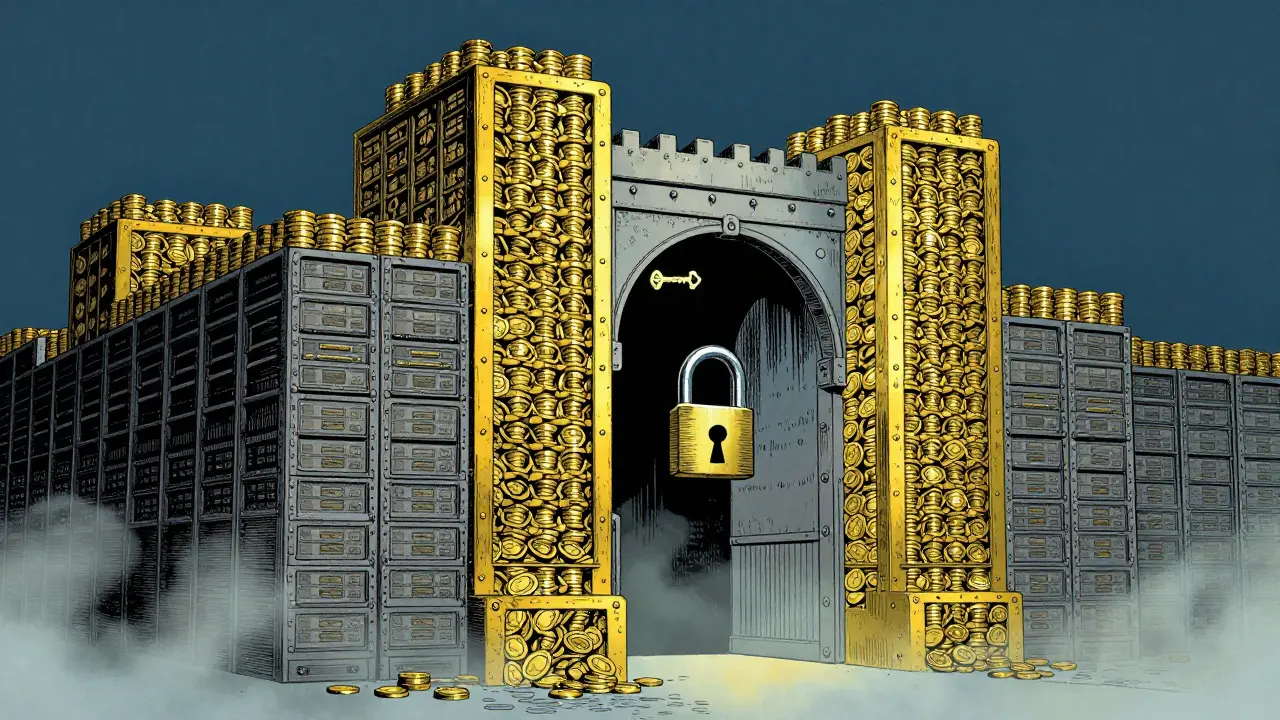
The core challenge of crypto inheritance lies in the conflict between security and accessibility. To keep your Bitcoin safe, you hide the keys. To let your children get the Bitcoin, you must reveal the keys. This is the paradox you must solve before anything else happens.
Self-custody offers freedom and sovereignty while you are alive. It means no bank can freeze your funds, and no government can track every transaction. However, decentralization removes the safety net. If you pass away and your heirs do not know the location of the seed phrase, or if the file containing the recovery key is encrypted with a password they don't know, those assets effectively cease to exist economically. Statistics suggest that between 2.3 and 4 million Bitcoins are already permanently lost, representing 11% to 18% of the total supply, likely due to lost keys or deceased owners.
Documentation strategy requires precision. You should maintain an inventory of your assets: which coins, which tokens, on which chains. However, you must never store the seed phrase itself in a document that becomes public via probate. Instead, you need a succession plan that provides the "how" without exposing the "what." For example, using a secure service that holds encrypted shares of the key, waiting for a trigger event to release them, can bridge this gap effectively.
Tax Implications and Benefits of Early Planning
One of the most misunderstood aspects of crypto inheritance is the concept of step-up in basis. When an asset is inherited, its cost basis is adjusted to its fair market value on the date of the original owner's death. This is crucial for capital gains taxes. If you bought Bitcoin at $20,000 ten years ago, and you sell it yourself, you pay tax on the profit. If you hold it until you pass away, and the price is $150,000, your beneficiary inherits it at the new $150,000 baseline. If they sell immediately, they owe no capital gains tax on the appreciation.
This benefit only applies if the asset transfers through a valid estate plan. Gifting crypto while you are alive can trigger gift taxes, and doing so manually increases the risk of miscommunication regarding key ownership. By formalizing the transfer through a trust or a specialized inheritance tool, you lock in that stepped-up basis, potentially saving heirs thousands of dollars in taxes.
Furthermore, state laws vary significantly regarding intangible property. Some states view cryptocurrencies as personal property subject to state-level taxation, regardless of federal exemptions. Early planning allows you to understand the liability in your specific jurisdiction and structure your assets accordingly. Waiting until you have a large family or significant net worth means missing years of compounded interest on those tax savings.
Digital Legacy Tools and Platforms
Because traditional methods have security flaws, specialized tools have emerged to handle the heavy lifting. These tools generally fall into two categories: hardware-based multi-signature setups and software-based digital legacy platforms. Each has its pros and cons depending on your technical skill level and budget.
| Solution | Type | Primary Mechanism | Pros | Cons |
|---|---|---|---|---|
| Vaulternal | Blockchain Platform | Encrypted File + Oracle Triggers | Zero-knowledge, supports non-crypto files, automated triggers | Requires learning interface, subscription model |
| Casa | Hardware Multisig | 3-of-5 Key Control | Highly secure, social recovery network | Expensive ($250+/yr), hardware dependent, Bitcoin-focused |
| Safe Haven / Inheriti | Web App + Hardware | Shamir Secret Sharing | Gated approval workflow | Proprietary hardware required, centralized gateways |
| Vault12 | Guardian Network | Offline PGP Vaults | No proprietary tech, quantum-resistant claims | Depends on human guardians, manual checks |
Platforms like Vaulternal offer a different approach compared to hardware-heavy solutions. They utilize zero-knowledge encryption to store files client-side, meaning the platform provider cannot see the contents. The system uses decentralized storage networks like Arweave, which promises over 200 years of data persistence, solving the risk of company bankruptcy taking your vault down. Unlike Sarcophagus, which requires a token staking mechanism, Vaulternal operates on a freemium model allowing basic setup for free, scaling up to paid plans with more complex triggers.
A major advantage of this type of architecture is the use of oracle-based triggers. Instead of relying solely on humans to notify the system, independent guardians monitor conditions such as lack of login activity or blockchain transactions. If you stop checking your email or your wallet balance hits zero, the system automatically prepares to release the encrypted keys to your designated recipients. This "dead man's switch" functionality is critical for young adults who may suffer sudden accidents rather than gradual aging.
In contrast, hardware vaults like those offered by Casa provide immense security for purely on-chain assets. They use multi-signature technology, meaning three out of five distinct keys are needed to move funds. While excellent for long-term cold storage inheritance, they can be less flexible for handling off-chain documents, passwords, or NFT metadata that also require transfer. Understanding your mix of assets dictates which solution fits best.
Steps to Build Your Plan Now
Don't wait until you accumulate millions. Start with a clear audit of what you actually own. Follow this step-by-step guide to get started:
- Inventory Everything: List every exchange account, hardware wallet, browser wallet address, and NFT marketplace. Note approximate values and the device locations (e.g., "Ledger Nano X in home safe", "MetaMask extension on laptop").
- Choose Your Fiduciary: Select an executor or trustee who understands technology or is willing to hire a professional. This might be a sibling, partner, or trusted friend. Avoid naming only your parents if you live abroad, as cross-border issues complicate access.
- Select a Transfer Method: Decide if you will use a Will, Revocable Trust, or a specialized digital legacy tool. Trusts generally bypass probate, keeping details private.
- Secure the Keys Separately: Never keep the physical seed phrase in the same place as the electronic access instructions. Consider splitting shares using Shamir Secret Sharing if using a platform that supports it.
- Set Up the Tool: If using a service like Vaulternal, upload encrypted copies of your documents and set your trigger rules. Ensure the recipient's contact info is verified.
- Review Annually: Crypto changes fast. New tokens appear, old addresses expire, and regulations shift. Update your plan yearly.
For young professionals, utilizing a Revocable Living Trust is often superior to a simple Will. It provides immediate liquidity without the months-long delay of probate. Since crypto markets move rapidly, a six-month delay in accessing assets can result in massive opportunity costs or liquidation during a bear market dip.
Legal Frameworks You Need to Know
While technology is evolving, the law is catching up. In the United States, the Revised Uniform Fiduciary Access to Digital Assets Act (RUFADAAA standardized legal framework enacted in most US states granting executors authority to manage digital assets) provides the statutory authority for fiduciaries to access online accounts. However, RUFADAA does not override terms of service agreements that forbid sharing passwords.
Some companies, specifically crypto exchanges like Coinbase, allow you to designate a beneficiary directly within their platform settings. This is different from transferring assets held in a wallet. Always check if your primary exchange supports beneficiary designation. For self-custody assets, however, the onus falls entirely on you to leave a roadmap. Courts cannot force the blockchain to release funds, so the legal instruction must point to the existing cryptographic proof.
International considerations are vital for expats or those with global families. If you live in Wellington, New Zealand, but your heirs are in the UK, different stamp duty rules apply. Some jurisdictions treat crypto as currency, others as property. Cross-border inheritance tax can eat away at a significant portion of smaller estates. Engaging an attorney familiar with cross-border digital assets is highly recommended to navigate these complexities.
Mindset Shift: Treat Wealth Like Code
Finally, the biggest barrier is psychological. At 25, talking about death feels morbid and unnecessary. But treating your estate plan like code deployment is the right analogy. You wouldn't deploy a smart contract without testing it for vulnerabilities. You shouldn't launch your retirement or investment journey without testing your exit strategy.
Start the conversation with your trusted contacts today. Tell them you have a plan. Give them the keys to the plan without giving them the vault. This reassurance reduces anxiety for everyone involved. When you realize that proper planning is the ultimate act of care for your future generations, it stops being about "taxes" and starts being about love. A 25-year-old plan protects a 45-year-old reality. Don't leave your legacy to chance.
Can I put my crypto seed phrase directly in my Will?
No, you should not put seed phrases in a standard Will. Wills become public records during probate proceedings, exposing your private keys to the general public, which puts your assets at extreme risk of theft.
What is step-up in basis for cryptocurrency?
Step-up in basis means the value of inherited crypto is reset to the market price on the date of death for tax purposes. This eliminates capital gains tax on any appreciation that occurred before the inheritance was claimed.
Is Vaulternal better than a Hardware Wallet for inheritance?
They serve different purposes. Hardware wallets secure the assets themselves. Vaulternal secures the access credentials and documents. Using both-storing assets in a hardware wallet and storing the backup plan in Vaulternal-is the ideal hybrid strategy.
How much does crypto estate planning cost?
Costs vary widely. Basic legal trusts run from $500 to $2,000 depending on complexity. Specialized platforms range from free tiers to monthly subscriptions around $10-$100. Custom legal counsel for complex estates can cost significantly more.
Does RUFADAA cover crypto everywhere?
RUFADAA has been adopted by most US states, but adoption varies internationally. It grants legal standing to fiduciaries to access digital assets, but it cannot override technical barriers like lost private keys without prior preparation.


There are 25 Comments
Jay Starr
Ignoring digital inheritance feels reckless. My grandfather's letters survived wars. Can we afford digital obsolescence?
Joy Crawford
crypto lost forever sounds scary 😱 family deserves better than locked vaults 💔
Michael Nadeau
Digital sovereignty demands thoughtful preparation. Neglecting inheritance protocols risks erasing generational wealth. Security measures must accommodate human transition periods.
Ronald Siggy
Take action now. Create a backup system today. Your future self will thank you.
Zackary Hogeboom
The hybrid approach with Vaulternal and hardware wallets shows promising innovation. Community support during probate processes remains essential.
Shaira Vargas
This whole thing scares me what if my bf dies and cant find my coins 😩💥
Cara Boyer
Globalist agendas manipulate inheritance systems 🤯 They want your crypto keys 🧐👁️
Raymond K
You're doing great taking steps forward 🌟 Even small plans grow into massive legacies someday!
Jamie Riddell
Empathy drives better planning. Understanding heir's perspectives matters deeply.
Justin Smith
Wills become public records exposing seed phrases to malicious actors.
Shubham Maurya
Your laziness causes billions in losses 😡📉 Stop procrastinating NOW 🔥
Katrina Tate
Incomplete documentation perpetuates systemic failure patterns.
Liam Robertson
Start small with inventory lists. Consistency builds resilient systems.
Justin Garcia
Trustworthy platforms dont exist yet. Relying on third parties invites risk.
athalia georgina
Why share access with siblings? Personal keys stay personal...typo
joshua kutcher
Collaborate with trusted individuals familiar with technology nuances gently.
Ashley Stump
Bureaucrats always complicate simple solutions. Avoid government traps.
Disha Patil
Crying thinking about lost coins 💀😭 Hope someone figures it out soon...
Callis MacEwan
Multisig architectures solve cold storage vulnerabilities effectively. Traditional trusts fail blockchain integration protocols.
Sean Carr
Pick a tool matching your technical comfort level. Regular audits prevent errors.
Samson Abraham
Estate planning honors familial obligations. Maintain clear communication channels with designated fiduciaries.
Tiffany Selchow
Foreign laws dont apply here. US citizens protect domestic assets properly.
Addy Stearns
Consider the philosophical implications of ownership in a digital age. We cling to material possessions yet ignore the ephemeral nature of digital currency. The true value lies not in accumulation but in legacy. What does it mean to leave behind a portfolio rather than memories. Are we reducing love to transactional codes. This paradox defines modern succession. One must weigh security against accessibility. Isolationism protects wealth but alienates heirs. True stewardship requires foresight beyond profit motives. Technology evolves faster than legal frameworks adapt. Our ancestors planned generations ahead. Why do we neglect the future's beneficiaries. The blockchain is immutable yet inheritance remains precarious. Perhaps immortality is less about coins and more about guidance. Every wallet address tells a story waiting to be told. Future-proofing demands courage over caution. Legacy transcends mere asset transfer protocols.
Markus Church
Exploring decentralized legacy tools enhances transparency. Incremental adoption reduces implementation risks significantly.
Leah Lara
Most people ignore warnings until irreversible losses occur inevitably.
Write a comment
Your email address will not be published. Required fields are marked *