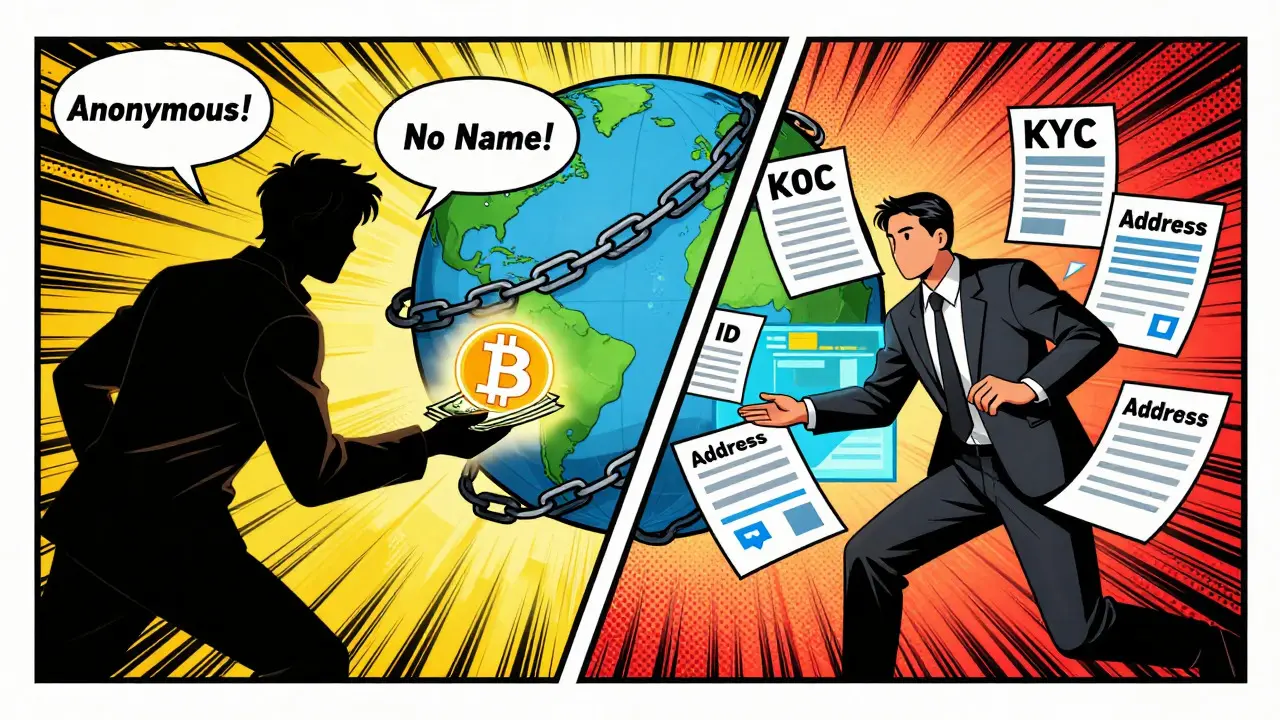
Remember when sending Bitcoin felt like handing cash to a friend? You typed an address, hit send, and the transaction vanished into the blockchain’s ether. No name, no phone number, just code. That era is effectively over.
In 2026, moving significant amounts of cryptocurrency requires you to attach your digital identity to the transfer. This isn't a rumor or a distant threat; it is the reality of the FATF Travel Rule, which is a global regulatory standard requiring Virtual Asset Service Providers (VASPs) to share originator and beneficiary data for transactions above specific thresholds. Originally designed for wire transfers in the 1990s, this rule now governs how billions of dollars move across borders in crypto.
If you are trying to send funds between exchanges, book travel with crypto, or simply understand why your transaction got stuck, you need to know how this rule works today. The landscape has shifted dramatically since 2024, with major economies enforcing stricter controls and new technologies attempting to balance privacy with compliance.
What Exactly Is the FATF Travel Rule?
The Financial Action Task Force (FATF) is the global money laundering watchdog. In June 2019, they updated their recommendations to include virtual assets. Recommendation 16 (R.16), commonly known as the Travel Rule, mandates that any business acting as a bridge between fiat currency and crypto-known as a Virtual Asset Service Provider or VASP-must collect and share specific customer information.
When you send crypto from one regulated platform to another, the sending exchange must pass along:
- The sender's full name
- The sender's account number or unique ID
- The sender's physical address, date of birth, or national ID number
- The recipient's name and account number
This data travels alongside the transaction metadata. It does not appear on the public blockchain ledger, but it sits in the private databases of the exchanges involved. The goal is simple: if illicit funds move, authorities can trace who sent them and where they went.
For the average user, this means that "anonymous" crypto transfers between centralized platforms are a myth. If both your sending and receiving platforms are compliant, your identity is attached to that movement of value.
Global Implementation: Where Do You Stand in 2026?
The Travel Rule is not a single law with one set of rules for everyone. Instead, it is a framework that each country interprets differently. As of mid-2026, the implementation varies wildly depending on where you live and where your money is going.
| Region/Country | Threshold Amount | Regulatory Body/Framework | Enforcement Status |
|---|---|---|---|
| European Union | €1,000 | MiCA / Transfer of Funds Regulation (TFR) | Full Harmonization (Strict) |
| United States | $3,000 USD | FinCEN Guidance / EO 14712 | Fragmented (Federal + State) |
| Japan | ¥100,000 (~$700 USD) | Japan FSA | Active Monitoring |
| United Kingdom | £1,000 | FCA / Transfer of Funds Regulations | Comprehensive |
| Australia | AUD 1,000 (~$650 USD) | AUSTRAC | Active |
| South Korea | KRW 1,500,000 (~$1,100 USD) | Financial Intelligence Unit | Real-time Monitoring Required |
The European Union has taken the most aggressive stance. Under the Markets in Crypto-Assets (MiCA) framework, which fully kicked in during 2024, all 27 member states follow the same rules. If you hold an account on a German exchange and want to send €1,001 to a friend in Spain, the data exchange is mandatory and automated.
In contrast, the United States remains complicated. While the Financial Crimes Enforcement Network (FinCEN) sets the federal threshold at $3,000, state-level regulations add layers of confusion. Recent executive orders in early 2025 established working groups on digital assets, signaling tighter oversight, but the lack of a unified federal statute means compliance costs remain high for US-based platforms.
The Impact on Your Wallet: Delays and Rejections
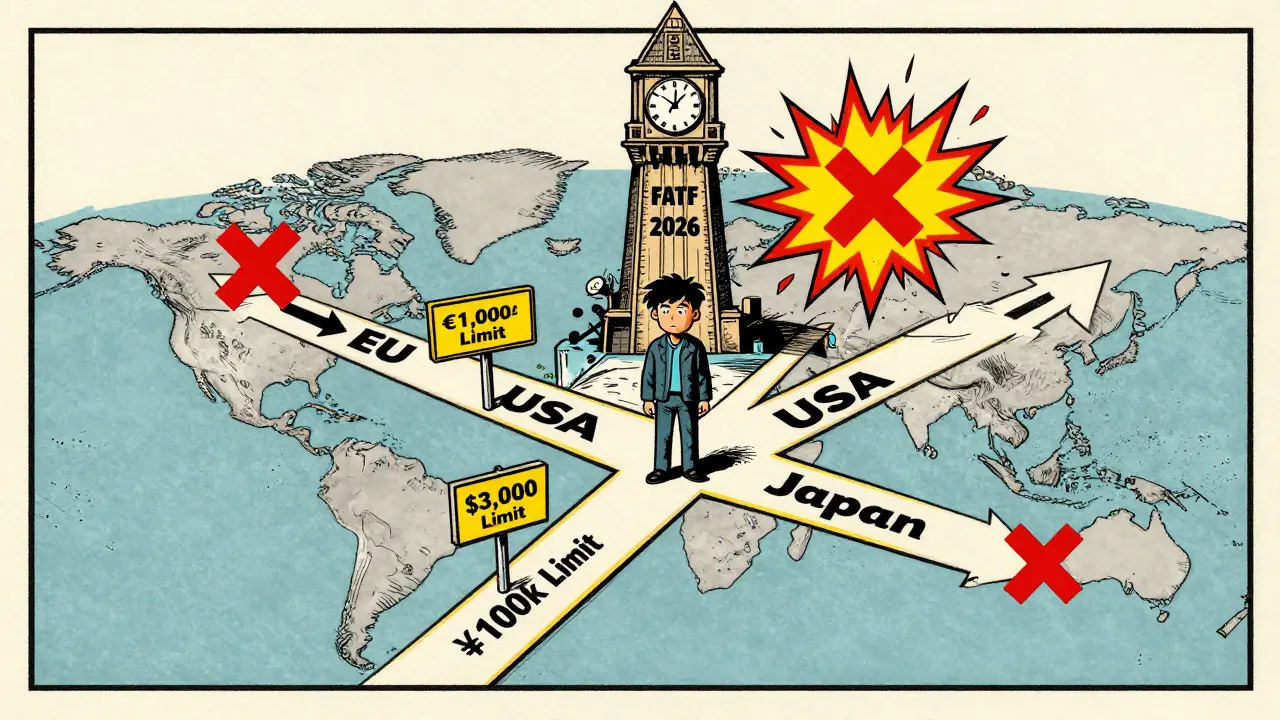
You might think, "I'll just keep my transactions under the limit." But here is the catch: limits vary. If you send $2,900 from a US exchange to a Japanese exchange, you are under the US limit ($3,000) but over the Japanese limit (~$700). The receiving exchange may reject the deposit because they didn't receive the required Travel Rule data from the sender.
This mismatch causes real-world friction. Users report transactions sitting in "pending" status for days while support teams manually verify identities. In some cases, funds are returned entirely, costing you network fees twice.
Consider this scenario: You try to send ETH from Coinbase to a Korean exchange. The Korean regulator demands strict real-time monitoring. If Coinbase’s system doesn’t automatically tag your transaction with the correct beneficiary data format required by Seoul, the transfer blocks. You aren't being penalized for crime; you're hitting a technical interoperability wall.
How Exchanges Are Adapting: Technology vs. Cost
Virtual Asset Service Providers hate the Travel Rule. It adds complexity, cost, and liability. Implementing the necessary infrastructure costs medium-sized exchanges nearly half a million dollars upfront, plus annual maintenance fees exceeding $180,000. Yet, they have no choice but to comply or lose their licenses.
To solve the interoperability nightmare, the industry has rallied around standards like the Travel Rule Protocol (TRP). By late 2025, about 63% of compliant VASPs adopted TRP to automate data sharing. This technology allows exchanges to talk to each other securely without exposing sensitive data to the public internet.
The result for users? Faster processing. Early implementations added seconds or minutes to transaction times due to manual checks. Today, modern compliance tech adds less than one second to the process. For most people, the experience feels seamless-until it doesn't. When systems fail to connect, the fallback is manual verification, which brings us back to those frustrating delays.
Decentralized Finance (DeFi) and the Privacy Paradox
The Travel Rule was built for centralized companies with CEOs and compliance departments. It struggles to apply to Decentralized Finance (DeFi), where smart contracts replace intermediaries. Who do you send the data to when there is no company to receive it?
In 2025, the FATF clarified its stance: decentralized applications that effectively act as custodians or gateways could be classified as VASPs. This puts pressure on DeFi protocols to integrate compliance tools, potentially undermining the permissionless nature of blockchain.
Privacy advocates argue this erodes the core benefit of crypto. Dr. Richard Turrin, a noted critic of financial surveillance, warned that broad implementation could kill innovation by forcing unnecessary data collection on small, legitimate transactions. However, proponents argue that without these rules, crypto remains a haven for illicit finance, keeping traditional institutions away.
We are seeing a split emerge. Centralized exchanges (CEXs) are becoming highly regulated, bank-like entities. Meanwhile, users seeking true anonymity are migrating to self-custody wallets and peer-to-peer swaps, bypassing VASPs entirely. But even here, the exit ramps-where you convert crypto back to fiat-are heavily monitored.
Future Outlook: What Comes After 2026?
The regulatory clock is ticking toward 2027, when the FATF aims for near-total implementation among significant markets. Expect two major shifts:
- Stablecoin Scrutiny: Special reports targeting stablecoins will likely impose stricter issuer responsibilities, ensuring that every dollar-backed token moves with full transparency.
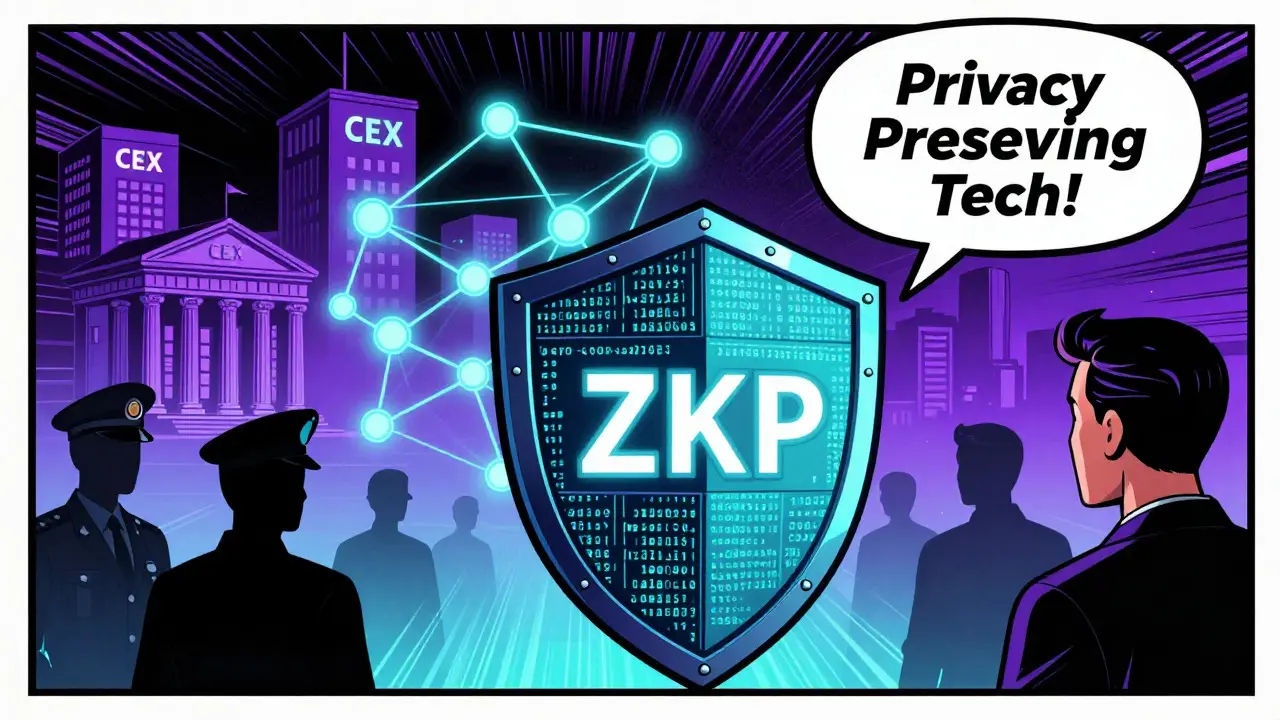
- Privacy-Preserving Tech: To address privacy concerns, expect wider adoption of zero-knowledge proofs (ZKPs). These cryptographic methods allow exchanges to prove a transaction is compliant without revealing the underlying personal data to third parties, potentially reducing compliance costs by over 60%.
For now, the message is clear: assume your crypto movements are visible to regulators if you use centralized platforms. Plan your transactions accordingly, check the thresholds of both sending and receiving jurisdictions, and keep your KYC documents up to date.
Does the Travel Rule affect small transactions?
It depends on your location. In the EU, transactions over €1,000 trigger the rule. In the US, it is $3,000. Transactions below these thresholds generally do not require data sharing between exchanges, though exchanges may still collect your data for internal Anti-Money Laundering (AML) purposes.
Will my data be public on the blockchain?
No. The Travel Rule data is exchanged privately between the sending and receiving Virtual Asset Service Providers (VASPs). It is stored in their secure databases and shared with regulators only upon request, not broadcast to the public blockchain.
What happens if I send crypto to an unregulated wallet?
If you send funds from a regulated exchange to a private, non-custodial wallet (like MetaMask), the exchange usually requires you to declare that the recipient is not a VASP. They may flag the transaction for higher scrutiny, especially if the amount is large, but no Travel Rule data is sent to the recipient since there is no entity to receive it.
Why did my transaction get rejected?
Rejections often occur due to mismatched thresholds or incompatible compliance systems. For example, if you send from a jurisdiction with a high threshold to one with a low threshold, the receiving exchange might reject the deposit because it lacks the required originator data. Contacting support to manually verify your identity is the usual fix.
Is DeFi exempt from the Travel Rule?
Currently, pure peer-to-peer DeFi interactions are hard to regulate directly. However, the FATF has indicated that interfaces or aggregators that provide custody or control over assets may be classified as VASPs. Additionally, when you enter or exit DeFi through a centralized exchange, the Travel Rule applies to those entry and exit points.