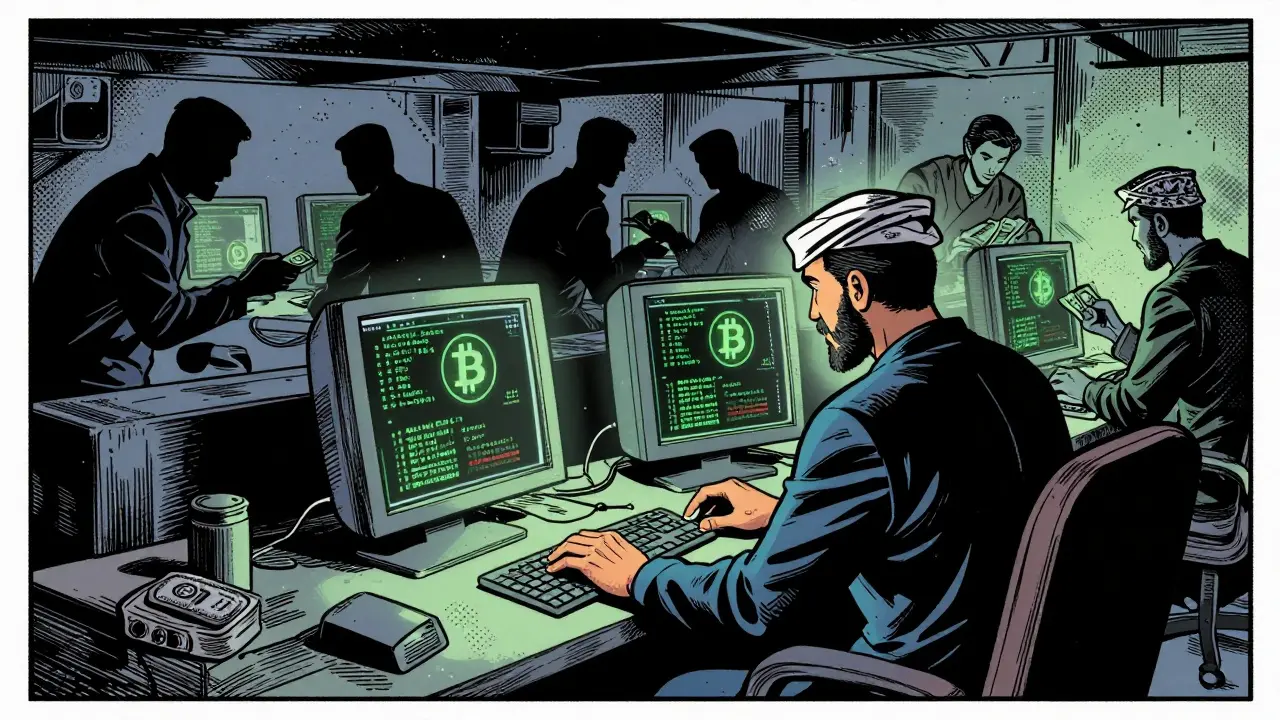
For years, if you wanted to buy Bitcoin in Amman, you couldn't just log into a local exchange and click 'buy.' The Central Bank of Jordan (CBJ) had made its stance clear: cryptocurrencies were banned from the formal financial system. Banks would block transactions to known exchanges, and accounts could be frozen for suspicious activity. Yet, despite these heavy restrictions, crypto adoption didn't stop-it went underground.
So, how did ordinary Jordanians trade digital assets when the doors were locked? They used peer-to-peer (P2P) networks, informal cash deals, and offshore platforms. But the landscape changed dramatically on September 14, 2025, with the enactment of Law No. 14 of 2025, also known as the Virtual Assets Transactions Regulation Law. This legislation transformed Jordan from a restrictive outlier into one of the first MENA countries to offer a comprehensive regulatory framework for virtual assets.
This article breaks down exactly how Jordanians navigated the pre-2025 restrictions, the risks they took, and what the new legal reality looks like today in mid-2026.
The Pre-2025 Reality: Trading in the Shadows
Before the summer of 2025, Jordan was part of a group of Middle Eastern nations-including Kuwait, Egypt, and Iraq-that maintained prohibitive stances toward virtual assets. The CBJ issued repeated warnings, citing high risks of fraud, money laundering, and capital flight. For the average citizen, this meant no direct bank transfers to Binance or Coinbase were allowed.
However, demand for crypto remained strong. Why? Because many Jordanians saw digital assets as a hedge against currency devaluation and inflation. When traditional banking channels closed, people found workarounds.
- Peer-to-Peer (P2P) Markets: This was the primary method. Platforms like Binance P2P or LocalBitcoins allowed users to find each other directly. A buyer would transfer JOD via a local payment app (like MyFatoorah or a bank transfer to a personal account), and the seller would release the crypto from their escrow wallet. It bypassed institutional blocks but relied entirely on trust between strangers.
- Cash-in-Hand Deals: In neighborhoods across Amman and Irbid, informal networks existed where individuals would meet to exchange cash for crypto sent to a mobile wallet. This was risky, slow, and often involved inflated premiums due to the scarcity of liquidity.
- Offshore Exchanges: Tech-savvy traders used international platforms that didn't require strict local KYC (Know Your Customer) checks initially, funding them through prepaid cards or third-party services. These methods were fragile; one chargeback or flagged transaction could lead to account bans.
Talal Tabbaa, Co-Founder and CEO of CoinMENA, noted that this lack of clarity caused a significant "brain drain." Many talented Jordanian developers and fintech entrepreneurs left the country because they couldn't build legitimate businesses at home. They moved to hubs like Dubai or London, taking their skills-and potential tax revenue-abroad.
The Risks of Unregulated Trading
Trading outside the law wasn't just inconvenient; it was dangerous. Without regulatory oversight, Jordanian crypto users faced several critical vulnerabilities:
| Risk Type | Description | Impact on User |
|---|---|---|
| Fraud & Scams | No recourse if a P2P counterparty disappears after receiving funds. | Total loss of capital; no legal protection. |
| Bank Account Freezes | Banks monitoring for crypto-related keywords or unusual patterns. | Loss of access to daily finances; lengthy dispute processes. |
| Legal Uncertainty | Ambiguous laws meant traders operated in a gray zone. | Fear of prosecution or asset seizure. |
| Premium Costs | Scarcity drove up the price of Bitcoin/Ethereum in JOD. | Paying 5-15% more than global market rates. |
The absence of licensed Virtual Asset Service Providers (VASPs) meant there was no safety net. If an exchange hacked your funds, or if a P2P seller scammed you, you had nowhere to go. This environment stifled innovation and kept retail participation low compared to neighbors like the UAE, which hosted over 500,000 daily crypto traders under a robust legal framework.
The Turning Point: Law No. 14 of 2025
The game changed with the signing of Law No. 14 of 2025 by His Majesty King Abdullah II Ibn Al Hussein. Effective September 14, 2025, this law did not ban crypto-it regulated it. This was a strategic pivot, acknowledging that prohibition was ineffective and driving talent away.
The law defines Virtual Assets as a digital representation of value that can be traded, transferred, or used for payment or investment purposes. This includes Bitcoin, Ethereum, stablecoins (not issued by central banks), and NFTs representing economic value. Crucially, it excludes digital securities already regulated by the Jordan Securities Commission (JSC) and CBDCs (Central Bank Digital Currencies).
Here’s what the new law enables:
- Licensing for VASPs: Companies can now apply for licenses to operate as crypto exchanges, payment providers, or custodians within Jordan.
- Mandatory Compliance: All providers must have a registered office in Jordan and adhere to strict AML (Anti-Money Laundering) and KYC standards.
- Legal Clarity for Users: Promoting unlicensed services is prohibited, protecting consumers from shady operators.
- Payment Integration: Virtual assets can legally be used for payments and investments, opening doors for merchants and startups.
The Jordan Securities Commission (JSC) is the primary regulator overseeing this space. They are tasked with issuing licenses and ensuring compliance. This shift aligns Jordan with regional leaders like Bahrain and the UAE, learning from their successes rather than starting from scratch.
How Jordanians Trade Today (Mid-2026)
As we move through 2026, the transition is well underway. The 90-day implementation period following the law's publication has passed, and the ecosystem is maturing. Here is how the process works now versus before:
1. Using Licensed Local Exchanges
New local platforms have emerged, holding JSC licenses. You can now link your Jordanian bank account directly to these exchanges. Transactions are transparent, taxed appropriately, and protected by consumer regulations. This eliminates the need for risky P2P cash handoffs.
2. International Access with Confidence
Jordanians can still use global exchanges, but now they do so through compliant channels. Some international firms have partnered with local entities to offer services to Jordanian residents, ensuring that cross-border trades meet both local and international standards.
3. Institutional Investment
With the legal framework in place, wealth management firms in Amman are beginning to offer crypto-as-a-service products. High-net-worth individuals can invest in diversified crypto portfolios managed by licensed custodians, reducing security risks associated with self-custody.

Why This Matters for Jordan’s Economy
The impact goes beyond individual traders. By legitimizing crypto, Jordan is positioning itself as a fintech hub in the MENA region. Talal Tabbaa and others who left previously are now returning or expanding operations locally. The goal is to retain top talent, foster innovation, and unlock new economic opportunities.
Moreover, regulation brings transparency. The government can track flows, prevent illicit activities, and potentially tax digital asset gains. This creates a sustainable model for growth, unlike the volatile, hidden economy of the past.
For the average Jordanian, the change is simple: less fear, lower costs, and greater security. You no longer have to worry about your bank freezing your account for buying Bitcoin. Instead, you engage in a market that is monitored, regulated, and designed to protect your interests.
Challenges Ahead
Despite the progress, challenges remain. Educating the public about safe practices is crucial. Many older generations still view crypto with suspicion, associating it with scams. Financial literacy campaigns led by the JSC and private sector players will be essential to build trust.
Additionally, infrastructure needs to keep pace. Payment gateways, banking APIs, and customer support systems must be robust to handle increased volume. As more users enter the space, technical glitches or slow processing times could frustrate early adopters.
Finally, global regulatory shifts will affect Jordan. If major economies like the US or EU tighten rules, Jordanian exchanges may need to adapt quickly to maintain cross-border compatibility. Staying agile is key.
Is cryptocurrency legal in Jordan in 2026?
Yes. Since September 14, 2025, the Virtual Assets Transactions Regulation Law (Law No. 14 of 2025) has legalized and regulated cryptocurrency trading, investment, and payments in Jordan. Users must interact with licensed Virtual Asset Service Providers (VASPs) overseen by the Jordan Securities Commission.
Can I still use P2P markets in Jordan?
While P2P trading is not explicitly banned for individuals, promoting unlicensed virtual asset services is prohibited. Most users now prefer licensed exchanges for security and ease of use. However, informal P2P networks may still exist for those avoiding KYC requirements, though this carries higher risk.
Which banks in Jordan allow crypto transactions?
Major Jordanian banks now facilitate transactions with licensed crypto exchanges. Previously, banks blocked all such transfers. Today, look for partnerships between local banks and JSC-licensed VASPs to ensure smooth deposits and withdrawals in JOD.
What happens to my old crypto holdings?
Your existing holdings are not confiscated. The law regulates future transactions and service providers. You can continue to hold your assets, but moving them through licensed channels is recommended for security and potential tax compliance.
Are there taxes on crypto profits in Jordan?
The specific tax implications depend on current Income Tax Law interpretations regarding capital gains. Generally, profits from trading may be subject to taxation. Consult a local tax advisor or refer to announcements from the Jordan Income and Sales Tax Department for precise obligations.