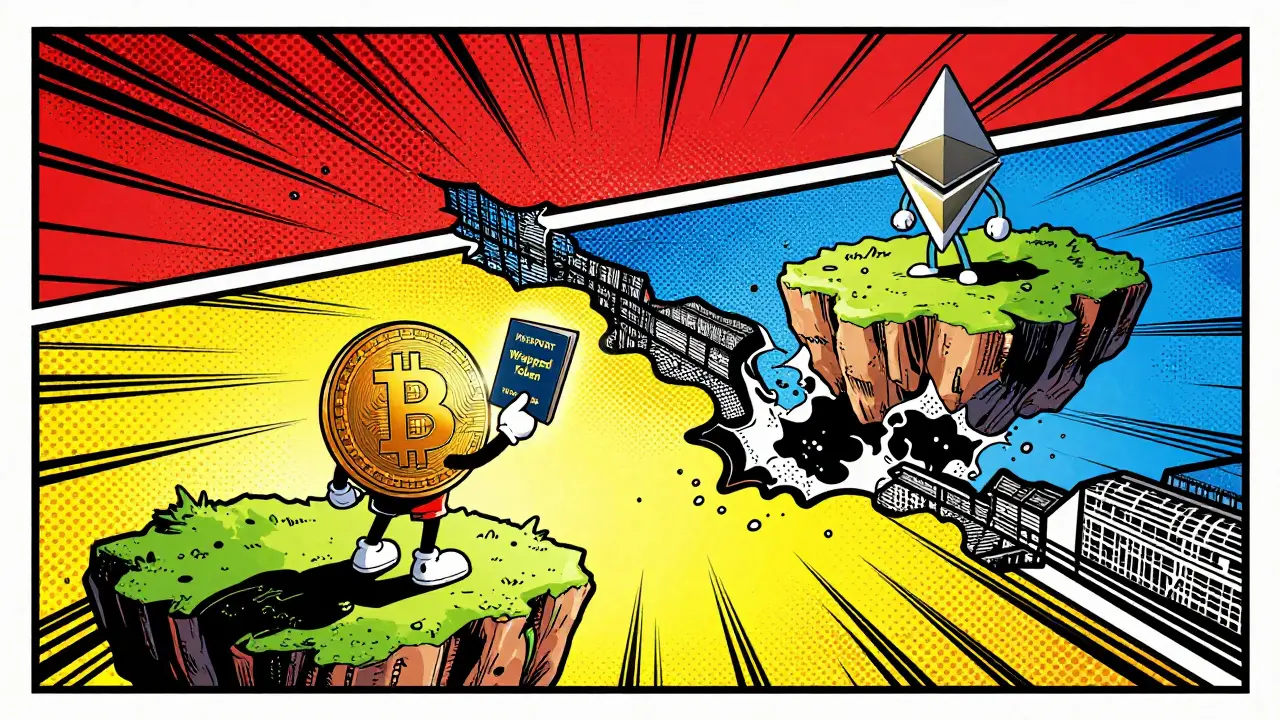
Imagine trying to spend your Bitcoin at a coffee shop that only accepts Ethereum. It’s impossible because blockchains are like isolated islands. They don’t talk to each other natively. This is the fundamental problem wrapped tokens solve. They act as digital passports, allowing assets from one blockchain to travel and function on another. Without them, the decentralized finance (DeFi) ecosystem would be fragmented, limiting liquidity and utility for billions of dollars in crypto assets.
In this guide, we’ll break down exactly how wrapped tokens work, why they are essential for cross-chain trading, and what risks you need to watch out for. We will look at the mechanics behind the scenes, compare different bridging methods, and help you understand if wrapping your assets is safe.
What Are Wrapped Tokens?
A wrapped token is a cryptocurrency asset that has been "locked" on its native blockchain and represented by an equivalent token on a different blockchain. Think of it like getting a casino chip. You hand over your cash (the native asset), and the casino gives you chips (the wrapped token) that you can use within their specific games or venues. When you leave, you trade the chips back for your original cash.
The most famous example is Wrapped Bitcoin (WBTC). Bitcoin itself cannot run smart contracts, which means it can't interact with lending protocols or decentralized exchanges on Ethereum. By wrapping BTC into WBTC, holders can use their Bitcoin value within the Ethereum ecosystem. As of late 2023, WBTC held over $11 billion in total value locked (TVL), proving its critical role in the market.
Other common examples include wETH (wrapped Ether used on chains like Binance Smart Chain) and renBTC (a decentralized alternative to WBTC). These tokens typically follow the ERC-20 standard on Ethereum, ensuring they are compatible with wallets like MetaMask and platforms like Uniswap.
How the Wrapping Process Works
The mechanism behind wrapped tokens relies on a precise sequence of steps involving custodians, smart contracts, and minting. Here is the step-by-step process:
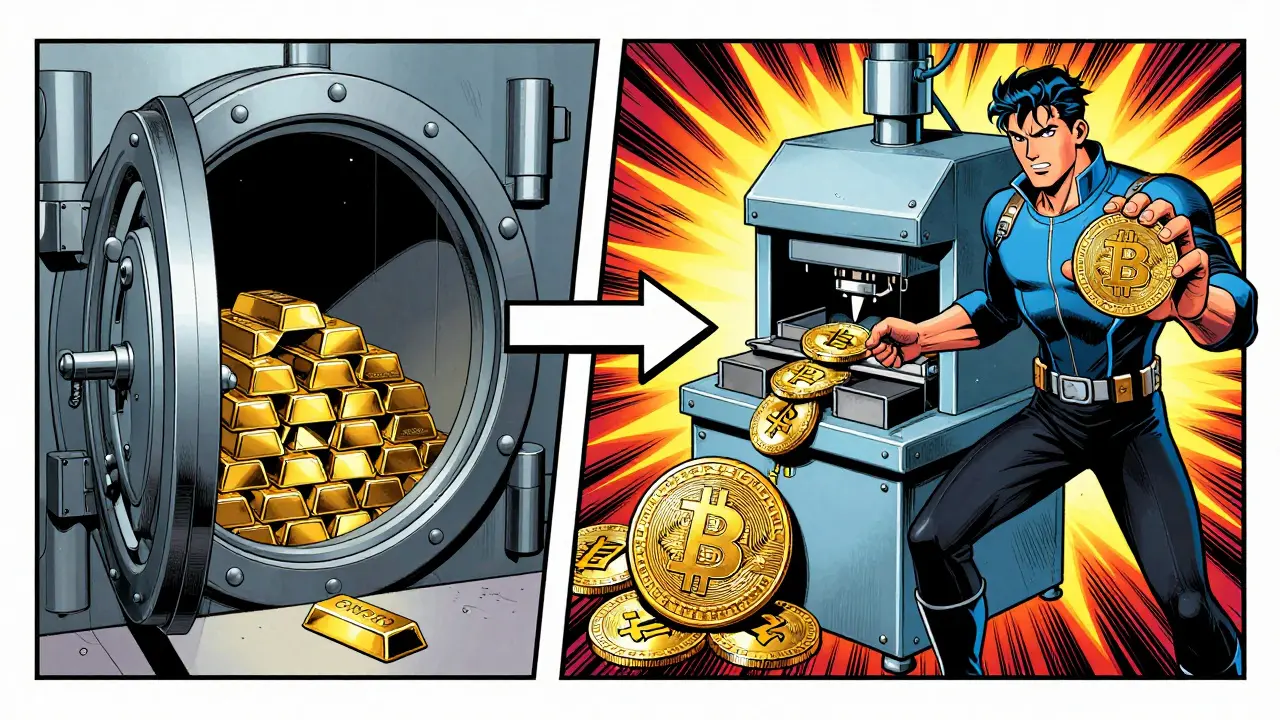
- Deposit: You send your native asset (e.g., BTC) to a custodian or a locking smart contract on the source chain.
- Minting: Once the deposit is confirmed, an equivalent amount of the wrapped token (e.g., WBTC) is created, or "minted," on the target chain (e.g., Ethereum).
- Usage: You now hold the wrapped token in your wallet on the new chain. You can lend it, swap it, or provide liquidity just like any other native token on that network.
- Burning & Redemption: To get your original asset back, you send the wrapped token to a burn address. The system destroys the wrapped token and releases the corresponding native asset from the reserve back to you.
This 1:1 peg is maintained through arbitrage. If WBTC trades below the price of BTC, traders will buy cheap WBTC, redeem it for real BTC, and sell the BTC for a profit. This pressure keeps the prices aligned. However, this system requires trust in the entities managing the reserves.
Lock-and-Mint vs. Burn-and-Mint Bridges
Not all cross-chain transfers work the same way. There are two primary technical architectures for moving assets between chains, each with distinct security profiles.
| Feature | Lock-and-Mint | Burn-and-Mint |
|---|---|---|
| Process | Assets are locked in a vault; new tokens are minted on the destination chain. | Original tokens are burned on the source chain; new tokens are minted on the destination chain. |
| Custody Risk | d>High. Requires a trusted custodian or multi-sig wallet holding the original assets. | Low. No central pool of assets to hack; relies on oracle networks for verification. |
| Capital Efficiency | Lower. Capital is tied up in reserves. | Higher. No idle reserves required. |
| Example Protocols | WBTC, Binance Bridge | Chainlink CCIP, Axelar |
| Market Share | Dominant (~63% of volume) | Growing rapidly (~47% quarterly adoption growth) |
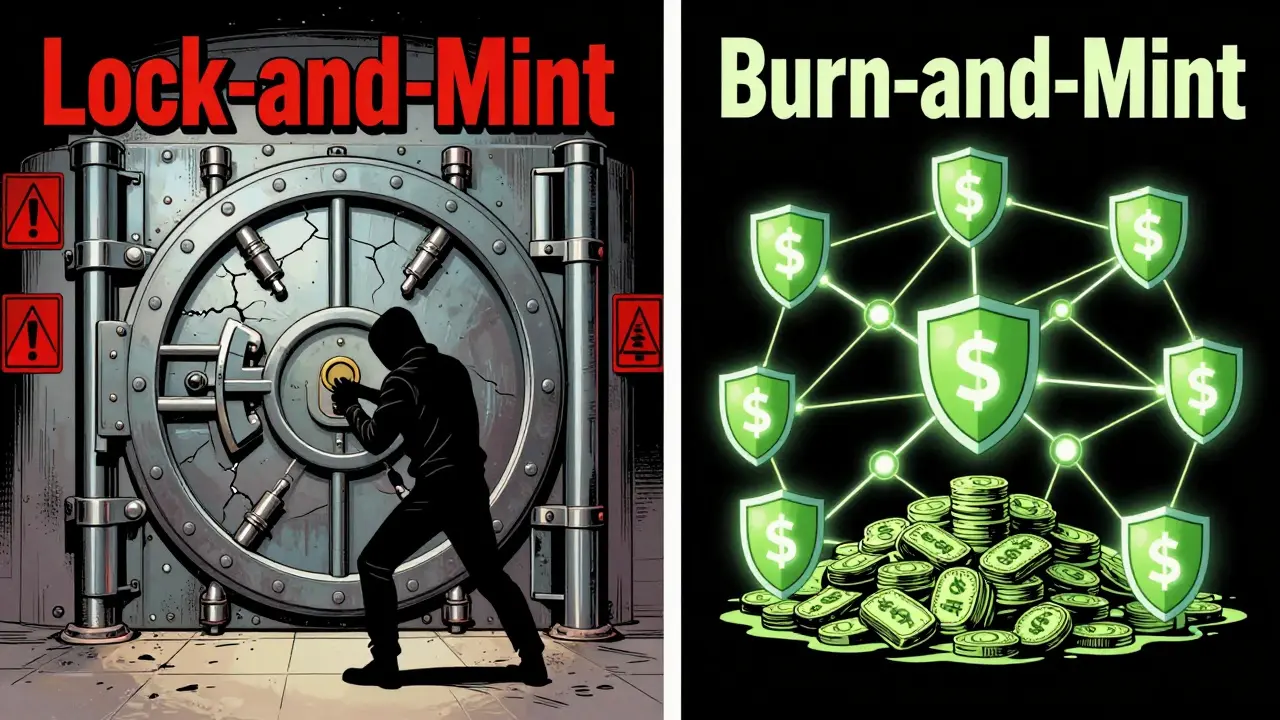
The traditional "lock-and-mint" model, used by WBTC, creates a large pool of locked assets. While simple, these pools become attractive targets for hackers. In 2022, cross-chain bridges suffered over $2.3 billion in exploits. The newer "burn-and-mint" approach, pioneered by protocols like Chainlink’s Cross-Chain Interoperability Protocol (CCIP), eliminates the need for a central reserve. Instead, it uses decentralized oracles to verify that tokens were burned on one chain before minting them on another. This reduces the attack surface significantly but requires more complex infrastructure setup across all supported chains.
Benefits of Using Wrapped Tokens
Why go through the trouble of wrapping? The benefits are substantial for both retail users and institutional players.
- Access to DeFi Ecosystems: Bitcoin holders can participate in lending, borrowing, and yield farming on Ethereum. Before WBTC, BTC was largely dormant outside of its own network. Now, it contributes to over 23% of Ethereum’s DeFi liquidity.
- Increased Liquidity: By bringing assets from multiple chains into a single environment, wrapped tokens deepen liquidity pools. This reduces slippage for traders and provides better pricing.
- Interoperability: They enable seamless interaction between disparate blockchains. You can earn yield on Solana and move those profits to Ethereum without selling your underlying position.
- New Utility: Assets that were previously limited to store-of-value functions gain active utility. For example, wrapped ETH allows users to engage with dApps on Layer 2 solutions or alternative L1s that support ERC-20 standards.
According to Dune Analytics data from late 2023, wrapped assets facilitate approximately $15.7 billion in daily cross-chain transactions. This volume highlights how integral these tokens have become to the crypto economy.
Risks and Security Concerns
Despite their utility, wrapped tokens introduce significant risks. Understanding these is crucial before you wrap your assets.
Custodial Risk: In centralized models like WBTC, a group of merchants and custodians (such as BitGo) holds the underlying Bitcoin. If these entities are hacked, go bankrupt, or act maliciously, your wrapped tokens could lose value. Although BitGo publishes monthly proof-of-reserves reports audited by Armanino LLP, the reliance on third parties contradicts the non-custodial ethos of crypto.
Smart Contract Vulnerabilities: The bridges themselves are complex pieces of code. Bugs or logic errors can lead to exploits. The Wormhole bridge hack in February 2022 resulted in the loss of $320 million in wETH. Users who had deposited funds faced delays and uncertainty while the protocol worked to stabilize.
Peg Instability: During periods of extreme market volatility, the 1:1 peg can break. For instance, during the March 2023 banking crisis, WBTC traded at a discount of nearly 5% against BTC due to panic selling and redemption bottlenecks. If you needed to exit quickly, you might have accepted a loss.
Regulatory Uncertainty: Regulators like the SEC are scrutinizing wrapped tokens. If a wrapped token is deemed a security because of the control exerted by the custodian, it could face legal challenges that restrict its availability or usage in certain jurisdictions.
Choosing the Right Wrapped Token
Not all wrapped tokens are created equal. When selecting a wrapped asset, consider the following factors:
- Audits and Transparency: Look for protocols that undergo regular audits by firms like CertiK or Trail of Bits. Check if they publish proof-of-reserves.
- Decentralization: Prefer decentralized wrapping mechanisms (like renBTC or THORChain) if you want to minimize counterparty risk, even if fees are slightly higher.
- Liquidity Depth: Ensure the wrapped token has sufficient liquidity on your target platform. Low liquidity can make it difficult to unwrap or trade without significant slippage.
- Bridge Reputation: Use well-established bridges. Avoid new, unaudited cross-chain protocols unless you fully understand the technology and are willing to take high risks.
For example, while WBTC offers deep liquidity and wide acceptance, renBTC provides a more decentralized alternative. However, renBTC has seen declining market share due to past security concerns and higher complexity for average users.
The Future of Cross-Chain Trading
Wrapped tokens are currently the backbone of cross-chain interoperability, but the landscape is evolving. Industry experts predict that daily wrapped token volume will grow to $42 billion by 2025. However, the long-term solution may not rely on wrapping at all.
Native interoperability protocols like Polkadot’s XCMP (Cross-Consensus Messaging) and Cosmos’ IBC (Inter-Blockchain Communication) aim to allow chains to communicate directly without needing wrapped intermediaries. These systems are gaining traction, with Cosmos handling 17% of cross-chain volume in 2023. Additionally, Ethereum’s proposed EIP-3664 seeks to standardize token wrapping, potentially reducing fragmentation and improving security.
Until native interoperability becomes mainstream, wrapped tokens will remain essential. They bridge the gap between isolated blockchains, enabling a unified, liquid, and functional decentralized economy. Just remember: always verify the bridge, check the audits, and never wrap more than you can afford to risk.
Are wrapped tokens safe?
Wrapped tokens carry inherent risks, primarily custodial risk and smart contract vulnerabilities. While major projects like WBTC are audited and have proof-of-reserves, no system is immune to hacks or operational failures. Always assess the reputation of the bridge and custodian before wrapping significant amounts.
What is the difference between WBTC and BTC?
BTC is the native Bitcoin cryptocurrency on the Bitcoin blockchain. WBTC is an ERC-20 token on the Ethereum blockchain that represents 1 BTC. You use WBTC to interact with Ethereum-based DeFi applications, whereas BTC is used for payments and storage on the Bitcoin network.
How do I unwrap my tokens?
To unwrap tokens, you typically send the wrapped token to a designated burn address or use a bridge interface to initiate a redemption. The protocol then burns the wrapped tokens and releases the underlying native asset to your wallet on the source chain. This process can take anywhere from minutes to days depending on the network congestion and bridge efficiency.
Why does WBTC sometimes trade at a discount?
During market panics or high volatility, demand for native Bitcoin may surge, causing WBTC to trade below its peg. This happens because unwrapping takes time, and traders may sell WBTC quickly to avoid delays. Arbitrageurs usually correct this discrepancy by buying discounted WBTC and redeeming it for BTC.
Is Chainlink CCIP safer than traditional bridges?
Chainlink CCIP uses a "burn-and-mint" mechanism with decentralized oracles, eliminating the need for a central pool of locked assets. This reduces the attack surface compared to traditional "lock-and-mint" bridges, which hold large reserves that hackers target. However, no system is entirely risk-free, and smart contract bugs can still occur.