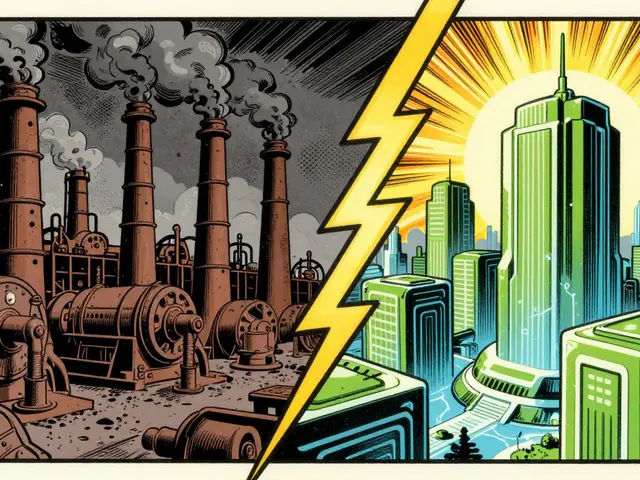

You bought Bitcoin when it was cheap. You held through the volatility. Now it’s worth millions, and you’re staring at a tax bill that could wipe out half your profit. If you live in Germany, the US, or the UK, that nightmare is real. But if you move to the United Arab Emirates, that tax bill disappears. Completely.
As of 2026, the UAE remains one of the few places on Earth where personal income tax on cryptocurrency gains is strictly zero. There is no capital gains tax. There is no wealth tax. There is no inheritance tax. If you are a tax resident of the UAE, the government does not care how much Ethereum you stake or how many NFTs you flip. It is all yours.
This isn’t a loophole. It is the law. And thousands of high-net-worth individuals are already using it. But there is a catch: you cannot just open a bank account and claim residency. You have to actually live there. And with new international reporting rules kicking in soon, "hiding" your assets is no longer an option. You need to be compliant, visible, and present.
The Reality of 0% Tax for Individuals
Let’s get the big picture straight first. In most developed nations, crypto is treated as property or income. When you sell, you pay capital gains tax. When you earn rewards, you pay income tax. The rates vary, but they are steep. In the US, top earners face up to 37% plus a 3.8% net investment income tax. In Germany, short-term profits can be taxed at up to 42%. In the UK, it’s up to 28%.
In the UAE, the rate is 0%.
This applies to every form of personal crypto activity:
- Trading Profits: Buying low and selling high. If you buy BTC for $100,000 and sell for $1,000,000, you keep the full $900,000.
- Staking Rewards: Passive income from proof-of-stake networks like Ethereum or Solana.
- Mining Income: Rewards from hobby-level mining operations.
- NFT Sales: Profits from digital art or collectibles.
- DeFi Yields: Interest from lending protocols or liquidity pools.
The key word here is individual. This zero-tax rule applies to natural persons who are tax residents. It does not automatically apply to companies. If you run a crypto trading firm or a mining farm as a business entity, different rules kick in. We will cover that next, because mixing personal and business assets is the fastest way to trigger an audit.
Business vs. Personal: The 9% Corporate Trap
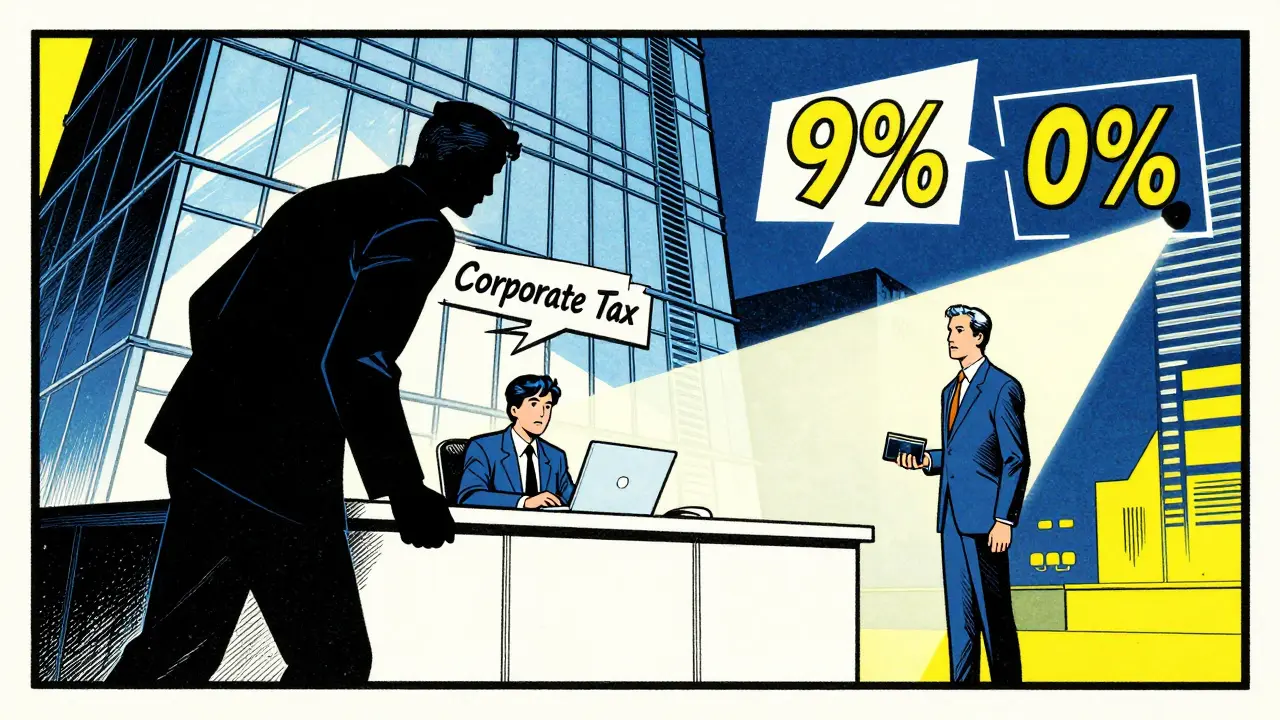
Many investors make the mistake of thinking "no personal income tax" means "no tax at all." That is false. The UAE introduced a corporate tax regime in 2023, and it is fully active in 2026.
If you operate a crypto business-whether it’s a fund, an exchange, a consultancy, or a large-scale mining operation-you are subject to corporate tax. The standard rate is 9% on taxable profits exceeding AED 375,000 (approximately $102,000 USD). Profits below this threshold are taxed at 0%.
So, how do you stay in the 0% zone? By keeping your activities personal. If you trade from your own wallet, using your own capital, for your own benefit, it is considered personal investment. The moment you start taking clients’ money, offering managed services, or operating a structured enterprise, you cross into business territory.
There is a potential escape hatch for businesses: Free Zones. Companies located in designated free zones may qualify as Qualifying Free Zone Persons (QFZPs) and enjoy a 0% corporate tax rate on qualifying income. However, this comes with strict conditions:
- You must maintain adequate substance in the free zone (office space, employees).
- You must meet de minimis limits on non-qualifying income.
- Your transactions must be with other QFZPs or outside the UAE.
For most individual investors, the simplest path is to remain an individual. Do not incorporate unless you have a clear commercial reason beyond tax avoidance. The compliance costs for maintaining a QFZP status often outweigh the benefits for solo traders.
Becoming a Tax Resident: It’s Not Just About Money
You cannot pay 0% tax in the UAE if you are not a tax resident. And you cannot become a tax resident by simply buying a visa. You must physically live there.
The golden rule is the 183-day rule. To be considered a tax resident of the UAE, you must spend at least 183 days per calendar year within the country. This is not a suggestion; it is a legal requirement for tax purposes.
Here is what that looks like in practice:
- Obtain a Residency Visa: You need a valid UAE residency visa. Options include investor visas, professional talent visas, or the popular 10-year Golden Visa for high-value investors and specialists.
- Establish Physical Presence: Rent an apartment. Get a local phone number. Open a bank account. Spend more than half the year in the country.
- Sever Ties with Your Old Home: This is critical. If you leave your house in Canada, keep your driver’s license in France, or maintain significant economic ties to your home country, their tax authorities may still claim you as a resident. You need to formally renounce tax residency in your home country if possible.
The process takes time. Visa processing, setting up banking, and finding housing typically take 3 to 6 months. Costs range from $10,000 to $50,000 depending on the visa type and legal assistance. But once established, the financial upside is massive.
Consider this: A trader making $2 million in annual crypto profits pays roughly $700,000 in taxes in the US. In the UAE, they pay $0. That $700,000 stays in their pocket, compounding annually. Over ten years, that difference is life-changing.
The New Rules: CARF and Transparency
Here is where things get complicated. The era of total secrecy is over. While the UAE does not tax your crypto gains, it does report them to the world.
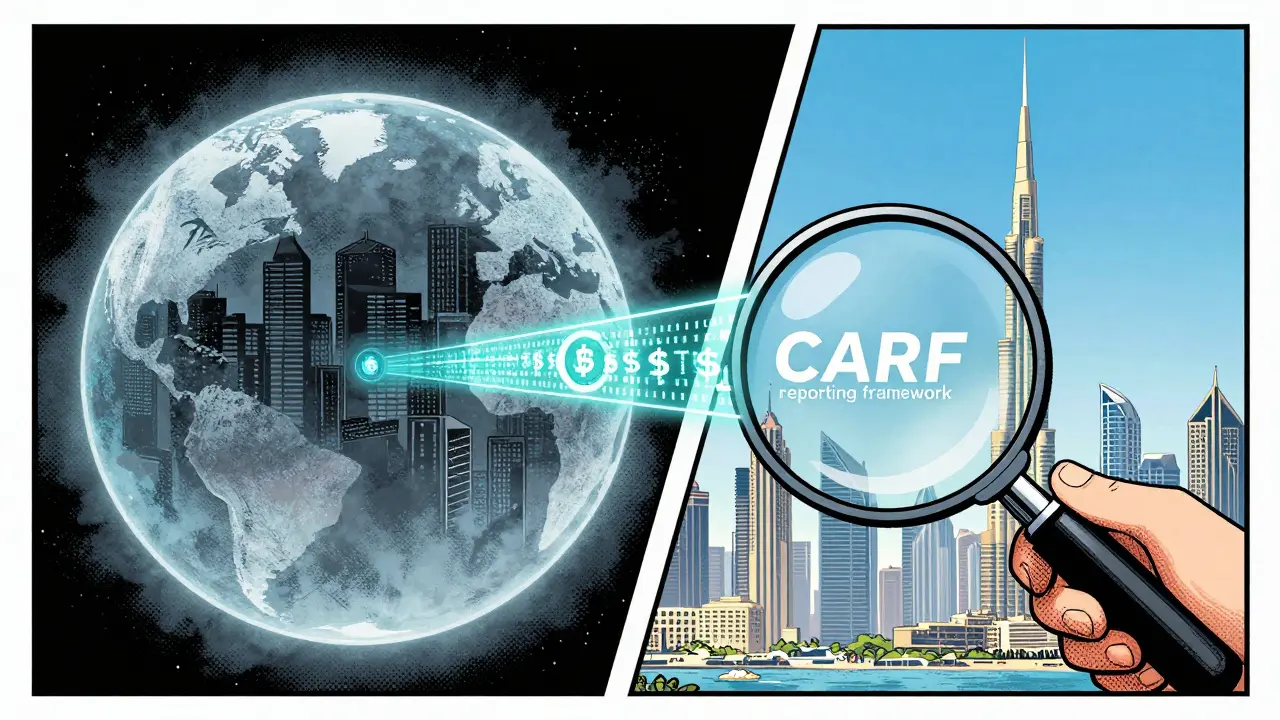
In September 2025, the UAE Ministry of Finance announced the adoption of the Crypto-Asset Reporting Framework (CARF). This is an international standard designed to crack down on offshore crypto hiding. Under CARF, crypto service providers-including exchanges, brokers, custodians, and even some wallet providers-must collect detailed data on your holdings and transactions.
Here is the timeline you need to know:
- 2026: Final regulations are published. Public consultation ends. Service providers begin preparing systems.
- January 1, 2027: Full implementation begins. Providers must start reporting data to the UAE Federal Tax Authority (FTA).
- 2028: The first automatic exchange of data occurs. The UAE shares your crypto data with tax authorities in other countries that are part of the Multilateral Competent Authority Agreement (MCAA).
What does this mean for you? It means you cannot hide your assets. If you hold crypto on Binance, Coinbase, or any regulated exchange, your balance and transaction history will be shared with your home country’s tax authority if you are still considered a tax resident there.
This is why severing ties with your old home country is so important. If you are truly a UAE tax resident, the UAE reports your data to itself. No harm done. But if you are a German citizen living in Dubai but still legally a German tax resident, Germany will receive your data via CARF and charge you tax anyway.
CARF focuses on transparency, not taxation. The UAE is not changing its 0% tax rate. It is ensuring that only legitimate residents benefit from it.
VAT and Other Hidden Costs
While income tax is zero, other taxes exist. The most common is Value Added Tax (VAT), which is set at 5% in the UAE.
Does VAT apply to crypto? Generally, no. The transfer of cryptocurrencies themselves is exempt from VAT. However, certain crypto-related services are taxable:
- Commercial Mining: Large-scale mining operations may be subject to VAT on electricity and equipment purchases, though specific exemptions are under review.
- Consulting Services: If you hire a crypto advisor, you pay 5% VAT on their fees.
- Exchange Fees: Some platforms may add VAT to service charges.
For individual investors, VAT impact is minimal. You won’t see it on your PnL. But if you are running a business, factor it into your cost structure.
Real-World Challenges: Beyond the Tax Rate
Moving to the UAE is not just about signing papers. It involves navigating a complex ecosystem of banking, compliance, and lifestyle adjustments.
Banking Can Be Tough. UAE banks are notoriously cautious about crypto customers. Due to Anti-Money Laundering (AML) regulations, opening a personal bank account can take weeks or even months. You will need to provide proof of source of funds, transaction history, and sometimes audited statements. Cash deposits are heavily scrutinized. Digital wallets and stablecoins are often easier to use than traditional fiat banking for daily expenses.
Property Purchases Require Documentation. Want to buy a villa in Palm Jumeirah with Bitcoin? You can. But the developer and the bank will require extensive documentation proving the origin of your crypto wealth. You cannot just send coins from an anonymous wallet. Every transaction must be traceable and clean.
Lifestyle Costs Are High. Dubai and Abu Dhabi are expensive cities. Rent, schooling, and healthcare can consume a significant portion of your income. While you save on taxes, you spend more on living. Calculate your net savings carefully before moving.
Who Should Move? Who Should Stay?
Not everyone should relocate to the UAE for crypto tax benefits. Here is a quick decision framework:
| Scenario | Recommendation | Reason |
|---|---|---|
| High Net Worth ($1M+ portfolio) | Strong Consider | Tax savings exceed relocation costs within 1-2 years. |
| Active Trader (High Volume) | Consider | Zero tax on frequent trades maximizes compounding. |
| HODLer (Low Activity) | Moderate | If gains are long-term, home country tax may be low anyway. |
| Small Portfolio (<$100k) | Probably Not | Relocation costs ($10k-$50k) outweigh tax savings. |
| Emotional Attachment to Home Country | Stay | Quality of life matters more than marginal tax gains. |
If you have a small portfolio, the hassle and cost of moving are not worth it. Save the energy. If you have millions, the math is undeniable. But remember: residency is a commitment. You must live there. If you plan to fly back to your home country for six months every year, you risk losing your UAE tax status and triggering double taxation.
Next Steps for Serious Investors
If you are ready to explore this path, do not act alone. Hire professionals who specialize in UAE tax residency and crypto compliance. Here is your checklist:
- Consult a Tax Advisor: Find an expert who understands both your home country’s exit tax rules and UAE residency requirements.
- Audit Your Crypto Holdings: Ensure all your transactions are documented. Clean up any messy DeFi interactions or unreported income.
- Choose Your Visa Path: Decide between a Golden Visa, investor visa, or employment visa based on your profile.
- Plan Your Move: Secure housing and banking early. Expect delays.
- Monitor CARF Updates: Keep track of the final regulations expected in 2026 to ensure your service providers are compliant.
The UAE is not a magic bullet. It is a strategic tool. Used correctly, it preserves your wealth. Used incorrectly, it creates compliance nightmares. The 0% tax rate is real, but the responsibility to maintain it is entirely yours.
Is crypto really tax-free in the UAE?
Yes, for individual tax residents. There is 0% personal income tax on crypto gains, including trading, staking, and mining. However, businesses face a 9% corporate tax on profits above AED 375,000.
How do I become a tax resident in the UAE?
You must obtain a residency visa and spend at least 183 days per year in the UAE. You also need to sever significant economic and residential ties with your home country to avoid being taxed there.
What is CARF and how does it affect me?
CARF is the Crypto-Asset Reporting Framework. Starting in 2027, crypto exchanges and custodians in the UAE will report your holdings to the tax authority. This data will be shared internationally in 2028, ensuring transparency for tax residents.
Can I keep my home country citizenship and live in the UAE?
Yes, you can keep your citizenship. However, tax residency is different from citizenship. You must legally change your tax residency to the UAE to avoid paying taxes in your home country. Consult a tax expert to handle the exit process correctly.
Are there any hidden taxes on crypto in the UAE?
The main hidden cost is VAT (5%), which may apply to certain crypto-related services like consulting or commercial mining. There is no wealth tax, inheritance tax, or capital gains tax for individuals.