
Most crypto airdrops feel like a lottery where you connect your wallet, follow a Twitter account, and hope for the best. The Phala Network (PHA) airdrop is different. It demands actual work. You have to run a node. You have to deal with hardware requirements. And yes, it pays out. If you are looking for a free lunch, this isn't it. But if you want to understand how privacy-preserving blockchain infrastructure rewards its participants, this guide breaks down exactly what the PHA airdrop is, how much it’s worth, and whether the technical hassle is actually worth your time in 2026.
What Is the Phala Network (PHA) Airdrop?
To get the value right, you first need to understand what you’re holding. Phala Network is a privacy-preserving protocol designed for data protection and blockchain smart contracts. Unlike standard blockchains that broadcast everything publicly, Phala uses Trusted Execution Environments (TEEs). This means smart contracts run in secure enclaves on miner nodes, keeping data secret while ensuring reliable execution. The network launched its Token Generation Event (TGE) back in September 2020, but the ecosystem has evolved significantly since then.
The "airdrop" most people talk about today isn’t a random distribution of tokens to old wallets. It is a reward mechanism for active participants. Specifically, it targets users who successfully run Phala miner nodes. When you operate a node that meets the network’s security standards, you earn PHA tokens. This model shifts the incentive from passive speculation to active network support. You are literally securing the privacy layer of the network, and the token is your payment for that service.
How Much Is the PHA Airdrop Worth?
Let’s talk numbers, because that’s usually why you clicked here. The core distribution structure allocates exactly 30 PHA tokens to participants who successfully complete the required tasks. To put that in perspective, we need to look at current market conditions.
| Metric | Value |
|---|---|
| Token Allocation | 30 PHA |
| Current Price (Approx.) | $0.10 - $0.11 USD |
| Estimated Base Value | $3.00 - $3.30 USD |
| Referral Bonuses | Variable (Based on invites) |
| Daily Trading Volume | ~$16.5 Million USD |
At first glance, $3 seems small. In the world of crypto airdrops, where some projects drop hundreds of dollars per wallet, this looks modest. However, you must factor in the effort-to-reward ratio. Many high-value airdrops require complex bridging, liquidity providing, or massive capital investment. The Phala airdrop requires technical setup and time, but minimal financial risk. Additionally, referral bonuses can stack up. If you invite other miners to join the network, your total payout increases. For a project focused on privacy and security, a lower barrier to entry financially makes sense, even if the technical barrier is higher.
Technical Requirements: Can Your Hardware Run It?
This is where most people hit a wall. Phala doesn’t just ask you to click a button. It requires your computer to have specific capabilities. The core technology relies on Intel SGX or equivalent Trusted Computing hardware. This is not a feature found on every laptop or desktop.
- CPU Support: Your processor must support Intel Software Guard Extensions (SGX) or AMD’s equivalent confidential computing features. Most modern business-grade laptops and servers have this, but many consumer gaming PCs do not prioritize it.
- Operating System: Linux is generally preferred for stability and performance when running blockchain nodes. Windows support exists but may require more configuration.
- Internet Connection: A stable, always-on connection is crucial. Downtime means missed blocks and reduced rewards.
- Storage: While not extremely heavy, you need sufficient disk space for the node software and historical data verification.
If you don’t have compatible hardware, you cannot participate in the mining aspect of the airdrop. There is no workaround. This requirement filters out casual speculators and ensures that the network’s privacy guarantees are backed by real, verifiable hardware. It’s a deliberate design choice to maintain the integrity of the Trusted Execution Environment.
Step-by-Step: How to Claim Your PHA Rewards
Assuming your hardware checks out, here is the practical path to getting those 30 PHA tokens. This process has evolved since the early days, so make sure you are following the latest documentation from official channels.
- Download the Miner Software: Visit the official Phala Network developer portal. Download the latest version of the Phala miner client. Never download binaries from unofficial sources-this is a privacy network, after all. Security is paramount.
- Configure Your Node: Open the command line interface (CLI). You will need to initialize your node and link it to your wallet address. This step binds your computational power to your identity for reward distribution.
- Run Verification Commands: Execute the specific commands provided in the current campaign guidelines. These commands prove that your TEE is functioning correctly and that your node is online.
- Submit Proof: Take screenshots of your successful terminal outputs. Some campaigns require uploading these proofs to a designated dashboard or Discord channel. Ensure the timestamp and your wallet address are visible.
- Wait for Distribution: Rewards are not instant. They are distributed based on network milestones. Historically, payouts were tied to the activation of pre-mainnet versions like "Darth Vader." Keep an eye on official announcements for the next distribution window.
The entire setup process typically takes between 2 to 4 hours for someone familiar with command-line interfaces. If you are new to Linux or CLI tools, expect to spend longer troubleshooting. Community forums and Discord servers are helpful, but remember: never share your private keys.
The Big Shift: Polkadot to Ethereum Layer 2
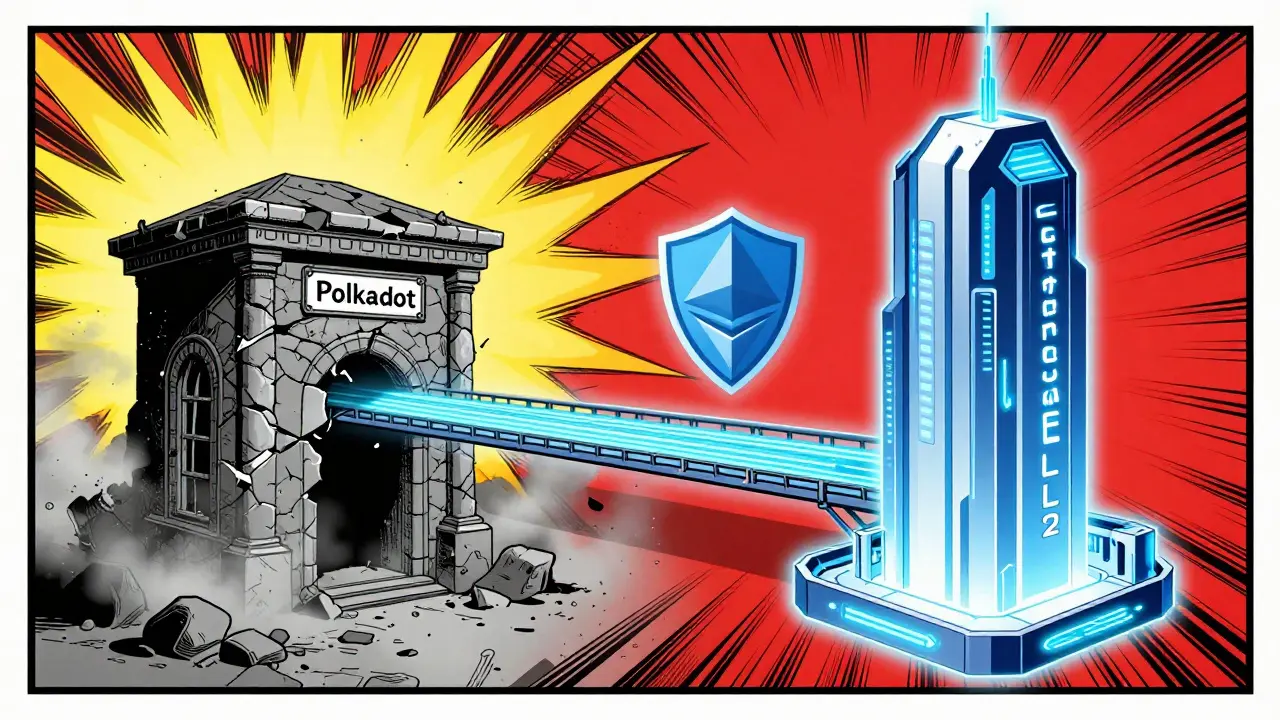
You can’t talk about Phala in 2026 without addressing the elephant in the room: the migration. Phala Network originally launched as a parachain on Polkadot. However, its parachain slot expired in November 2025. This was a critical juncture. Instead of fading away, Phala made a strategic pivot.
The network has fully migrated to Ethereum Layer 2 infrastructure. This move aligns Phala with the broader Ethereum ecosystem, which dominates smart contract development and user activity. By launching a new L2 rollup in early 2025, Phala positioned itself to offer privacy solutions to millions of Ethereum users, rather than staying niche within the Polkadot ecosystem.
Why does this matter for the airdrop? It changes the long-term utility of the PHA token. Previously, PHA was used primarily for staking and governance within the Polkadot context. Now, it plays a role in securing Ethereum-compatible privacy contracts. This expansion could drive demand for the token beyond just miner rewards. Developers building private DeFi apps or confidential NFTs on Ethereum may need to stake or burn PHA to access these features. This potential shift from a "miner reward token" to a "utility gas token" is a key factor in its future valuation.
Is the Phala Airdrop Safe? Risks and Red Flags
No crypto participation is without risk. Here is what you need to watch out for.
- Hardware Wear and Tear: Running a node 24/7 puts load on your CPU and cooling systems. Ensure your machine is well-maintained.
- Scam Impersonators: Because Phala deals with privacy and TEEs, scammers often create fake "miner" software that steals data. Only use software from the official GitHub repository or website.
- Price Volatility: The value of your 30 PHA reward depends on the market price. If PHA drops to $0.05, your reward is worth $1.50. If it rises to $0.20, it’s worth $6. Don’t assume the dollar value stays static.
- Migration Uncertainty: While the move to Ethereum L2 is strategic, transitions can introduce bugs or temporary downtime. Monitor official status pages during major upgrades.
Despite these risks, Phala Network maintains a strong reputation in the privacy sector. With $1.43 million raised across four funding rounds and backing from reputable investors, it is not a fly-by-night operation. The team has consistently delivered on technical milestones, even when market sentiment turned bearish.
Future Outlook: What Lies Ahead for PHA?
Looking past the immediate airdrop, what is the trajectory for Phala Network? Industry analysts project conservative growth. Price prediction models suggest a gradual increase, with estimates ranging from $0.09 to $0.12 over the next few years. This isn’t a "get rich quick" asset. It’s infrastructure.
The real value lies in adoption. As regulations around data privacy tighten globally, blockchain projects that can offer genuine confidentiality without sacrificing transparency will become essential. Phala’s TEE technology provides exactly that. If Ethereum-based applications start integrating Phala for private computation, the demand for PHA could surge organically.
For now, the airdrop serves as a gateway. It introduces technically savvy users to the network. These users become miners, developers, and advocates. The 30 PHA reward is less about the cash value and more about onboarding the right kind of community. If you enjoy tinkering with code, care about digital privacy, and want to support decentralized infrastructure, the Phala airdrop is a worthwhile experiment. If you just want free money with zero effort, look elsewhere.
Do I need expensive hardware to participate in the Phala airdrop?
You don’t need enterprise-grade servers, but you do need a CPU that supports Trusted Execution Environments (like Intel SGX). Many modern laptops and desktops have this capability. Check your system specifications before starting. If your device lacks TEE support, you cannot mine PHA through this method.
When will the PHA airdrop rewards be distributed?
Distribution timelines depend on network milestones. Historically, rewards were tied to pre-mainnet launches like "Darth Vader." Currently, payouts are managed through the active miner node program. Check the official Phala Network dashboard or Discord for the latest distribution schedule, as dates are not fixed in advance.
Can I claim the Phala airdrop if I only hold POLKADOT (DOT)?
No. Holding DOT does not automatically qualify you for the current Phala miner airdrop. The current campaign rewards active node operators. Past airdrops may have had different criteria, but the ongoing distribution is strictly for those running compliant miner nodes.
Is Phala Network still part of Polkadot?
No. Phala’s parachain slot on Polkadot expired in November 2025. The network has since migrated to Ethereum Layer 2 infrastructure. This shift allows Phala to serve the larger Ethereum ecosystem while maintaining its focus on privacy-preserving smart contracts.
How do I verify my node is working correctly?
After installing the miner software, run the verification commands provided in the official documentation. Successful execution will display specific logs in your terminal. You may need to screenshot these logs and submit them via the designated platform to prove your node is active and compliant.