
You’ve probably seen the ticker DUCATO is a utility and governance token for the Ducato Finance ecosystem on the KAIA blockchain. pop up in a list of low-cap coins or perhaps in a discussion about decentralized finance (DeFi) alternatives. The promise is usually straightforward: a token that helps power a lending protocol, offers governance rights, and facilitates cross-border transfers. But if you are looking at DUCATO in mid-2026, the picture is far more complicated than a simple definition.
The core question isn't just "what is it?" but "is it worth your attention?" To answer that, we need to look past the marketing gloss and examine the actual mechanics, the market reality, and the significant red flags surrounding liquidity and transparency. This guide breaks down what Ducato Finance claims to be versus what it actually delivers in the current crypto landscape.
The Core Concept: What Is Ducato Finance?
Ducato Finance is a decentralized finance protocol built on the KAIA blockchain, designed to offer lending services and stablecoin issuance. Launched around 2022, the project positions itself as part of the "Hybrid DeFi 2.0" movement. In plain English, this means they want to bridge the gap between traditional financial stability and the flexibility of blockchain technology.
The ecosystem revolves around two main assets:
- DUCATO: The native governance and utility token. You use it to vote on protocol changes, pay certain fees, and participate in the network's direction.
- KRWD: An algorithmic stablecoin pegged to the US Dollar. Users can generate KRWD by locking up other digital assets as collateral within the Ducato smart contracts.
The theory is sound. By allowing users to leverage their assets to create stablecoins, Ducato aims to solve the friction of cross-border payments without relying on banks. However, the execution of this theory relies heavily on trust in the code and the depth of the liquidity pools, which brings us to the critical issues facing the token today.
Tokenomics and Supply Dynamics
Understanding the supply structure is essential for any investor. Here are the key figures associated with the DUCATO token:
| Metric | Value |
|---|---|
| Total Supply | 49,000,000 - 50,000,000 tokens |
| Circulating Supply | ~8.52 million tokens (self-reported) |
| Blockchains Supported | KAIA (formerly Klaytn) |
| Primary Utility | Governance, Fee Payment, Collateral for KRWD |
A total supply of roughly 50 million tokens is relatively small compared to giants like Bitcoin or Ethereum, but large enough to cause volatility if a significant portion is dumped. The circulating supply of 8.52 million suggests that over 80% of the tokens are locked, held by the team, or reserved for future incentives. This concentration of supply can lead to centralized control over price action, especially when trading volume is low.
The Liquidity Crisis: Why Price Data Doesn't Make Sense
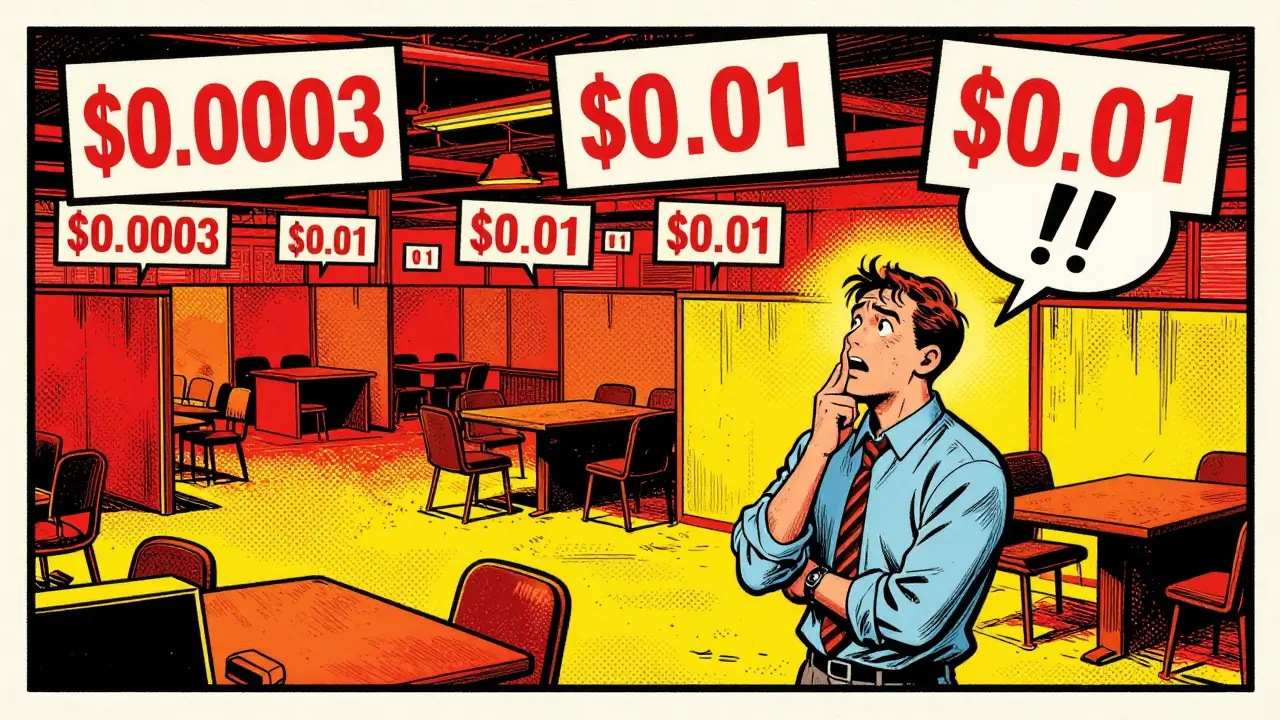
If you check different crypto data aggregators for the price of DUCATO, you will likely see confusing results. One source might show $0.0003, while another shows $0.01. This discrepancy is not a glitch; it is a symptom of severe illiquidity.
Liquidity refers to how easily an asset can be bought or sold without affecting its price. For major coins like Solana or Cardano, high liquidity means you can sell thousands of dollars worth instantly. For DUCATO, the reported 24-hour trading volume often hovers near zero-sometimes as low as $1 USD per day. When volume is this thin, even a tiny trade can swing the price wildly, creating unreliable price charts.
Furthermore, DUCATO is notably absent from major tier-1 exchanges like Binance or Coinbase Pro. While it may appear on smaller platforms or decentralized exchanges (DEXs), the lack of listing on reputable venues limits accessibility and increases counterparty risk. If you hold DUCATO, exiting your position could be difficult, time-consuming, or result in significant slippage (getting a much worse price than expected).
Security and Transparency Concerns
In the world of DeFi, security is paramount. Protocols handle millions of dollars in user funds, so robust audits and transparent teams are non-negotiable. Unfortunately, Ducato Finance falls short in several areas:
- Lack of Audit Details: Publicly available information does not highlight comprehensive, recent security audits from top-tier firms like CertiK or Trail of Bits. Without verified audit reports, users must trust the code blindly, which is a dangerous gamble in smart contract environments.
- Anonymous or Obscure Team: There is limited verifiable information about the founding team’s identities or their track records in previous projects. In crypto, doxxed (publicly identified) teams build more trust because they are accountable.
- Minimal Community Engagement: Active development is usually reflected in vibrant communities on Discord, Telegram, or GitHub. Ducato’s online presence appears muted, with few updates, technical discussions, or user testimonials from established forums.
This opacity makes it hard to assess whether the project is actively maintained or if it has stalled. In the fast-moving crypto sector, silence often signals abandonment.
How DUCATO Compares to Established DeFi Protocols
To understand where DUCATO stands, let’s compare it to mature lending protocols like Aave or Compound. These competitors have been operating for years, have undergone multiple audits, and are listed on all major exchanges.
| Feature | DUCATO | Aave / Compound |
|---|---|---|
| Exchange Listings | Limited / Small DEXs | Binance, Coinbase, Kraken, etc. |
| Trading Volume | Near Zero ($0-$1/day) | Millions daily |
| Security Audits | Not publicly prominent | Multiple audits by top firms |
| Team Transparency | Low | High (Public founders) |
| User Base | Minimal | Global, institutional adoption |
The contrast is stark. While DUCATO offers a similar theoretical product (lending and stablecoins), it lacks the infrastructure, trust, and market depth to compete effectively. For most users, established protocols offer safer, more liquid, and more reliable experiences.

Who Should Consider DUCATO? (And Who Shouldn't)
Given the risks, who is this token for?
Do NOT buy DUCATO if:
- You are a beginner looking for safe investments.
- You need liquidity to sell your assets quickly.
- You prioritize security and audited code.
- You are looking for long-term growth based on fundamental utility.
You might only consider DUCATO if:
- You are an experienced trader comfortable with extreme risk and potential total loss.
- You have done deep, independent due diligence beyond public summaries.
- You specifically need exposure to the KAIA ecosystem niche and believe in the "Hybrid DeFi 2.0" narrative despite current metrics.
Final Thoughts on Ducato Finance
Ducato Finance Token (DUCATO) represents a ambitious concept in the DeFi space, aiming to simplify lending and cross-border payments on the KAIA blockchain. However, as of mid-2026, the project struggles with critical viability issues: negligible liquidity, lack of major exchange listings, and insufficient transparency regarding security and team identity.
In cryptocurrency, ideas are cheap; execution and trust are expensive. Until DUCATO demonstrates active development, secure audits, and genuine market adoption, it remains a high-risk speculative asset rather than a functional financial tool. Proceed with extreme caution, and never invest more than you can afford to lose entirely.
Is DUCATO listed on Binance or Coinbase?
No, DUCATO is not currently listed on major tier-1 exchanges like Binance or Coinbase. It may be available on smaller decentralized exchanges (DEXs) or lesser-known platforms, but this limits accessibility and increases trading risks.
Why is the price of DUCATO different on various websites?
The price discrepancies (e.g., $0.0003 vs $0.01) are due to extremely low liquidity. With near-zero trading volume, small trades can drastically change the price on different exchanges, leading to inconsistent data aggregation across tracking sites.
What is the KAIA blockchain?
KAIA (formerly known as Klaytn) is a public blockchain platform focused on enterprise and consumer applications, particularly in Asia. Ducato Finance operates on this network, utilizing its infrastructure for smart contracts and transactions.
Is DUCATO a safe investment?
No, DUCATO is considered highly risky. Factors such as low liquidity, lack of major exchange listings, and limited transparency regarding audits and team identity make it unsafe for conservative investors. There is a significant risk of losing capital.
What is the purpose of the KRWD token?
KRWD is an algorithmic stablecoin pegged to the US Dollar within the Ducato ecosystem. Users can generate KRWD by providing collateral (other crypto assets) to Ducato's smart contracts, enabling them to access stable value without selling their holdings.

There are 23 Comments
Tracy Marshall
the silence from the team is deafening and suspicious. they are hiding something big behind that anonymous facade :(. i trust no one in this space anymore.
Guy Davis
this whole project is a scam. pure greed. stay away.
KEITH WONG
look at the charts 📉 its a death spiral. nobody wants it. simple as that 😂
Natalie Lucas
i just think its sad really. people put so much hope into these tokens and then nothing happens. its okay to move on tho! dont let it get u down ✨
Curtis Johnson
we need more transparency in crypto. if they cant show us who they are how can we trust them with our money?? its a valid concern for everyone involved.
Steven Briggs
i see what you mean. it feels empty.
Hamza k
absolute garbage dump of a token. throw it in the trash where it belongs!!
Kim Kay
please be careful out there friends. scams are everywhere and its hard to spot them until its too late. look for red flags like low volume.
Brad Semp
The lack of institutional interest speaks volumes about the inherent flaws in their model. It is not merely bad luck; it is poor design and execution by amateurs pretending to be innovators.
Korn Arrieta
stop buying dip. its a trap. you are feeding the whales who will rug pull you eventually. wake up.
Jackie D
i wonder if they ever planned to actually launch the stablecoin or if it was just hype? seems like a lot of promises and zero delivery 🤔
Ruth Williams
This article correctly identifies the fundamental issues. The absence of audits is negligent. One should not engage with such reckless financial instruments under any circumstances.
Sophie Nakasako
it makes me wonder about the future of DeFi. do we really need more projects like this or do we need better regulation? lets discuss!
Kristy Morrow
you all are sheep. maybe it will moon tomorrow. who knows? stop listening to fear mongers.
John Harman
lol yeah right. kaia is dead anyway. why bother with a token on a dead chain?
Antony Lopez
american investors deserve better than this foreign tech garbage. keep your money in real assets here at home.
Kat Barr
its okay if you lost some money!! mistakes happen to everyone 💖 just learn from it and try again later. you got this!!!
Logan Edmison
the philosophy of decentralization is lost when teams hide. it contradicts the very ethos of blockchain technology imo.
Michelle Walker
idiots. total waste of time. burn it.
Shay Thomson
can we just agree to leave this project alone? fighting over scraps isnt worth the energy. peace out.
DJ Maleko
who is holding the bag now? probably the early insiders dumping on retail 🤡 typical story.
Erika Pozzetto
It is imperative that we consider the broader implications of such opaque financial structures within the global economic framework, as they undermine the foundational principles of trust and accountability that are essential for sustainable market growth and investor protection in the long term.
Russ Fincham
the analysis is sound but the tone is too soft. this is a fraud plain and simple. prosecute them.
Write a comment
Your email address will not be published. Required fields are marked *