
You type "HOG" into a price tracker, expecting one answer. Instead, you get five different tokens, wildly varying prices, and a headache. Is it the pig-themed meme coin everyone on Twitter is joking about? Or is it a serious DeFi tool for hedging gas fees? The truth is, HOG isn't just one coin-it's a ticker shared by several unrelated projects, mostly living on the Solana blockchain. This article clears up the mess so you know exactly which HOG you're looking at.
The Core Problem: One Ticker, Many Tokens
In the crypto world, tickers aren't unique IDs like contract addresses. They're more like street names-multiple houses can share the same name if they're in different neighborhoods. For HOG, the neighborhood is usually Solana. When you search for this asset, you might encounter the pig-themed "Hog," the "Hog McCrankerson" meme token, the "Heart of Gold" social layer project, or even technical protocols like "Hand of God" and "Hedgehog." Each has its own contract address, supply, and purpose. Treating them as one entity leads to bad trading decisions.
| Project Name | Primary Use Case | Blockchain | Market Cap Range (USD) | Risk Profile |
|---|---|---|---|---|
| Hog (Pig Theme) | Meme / Speculation | Solana | $4k - $27k | High Volatility |
| Hog McCrankerson | Meme / Community | Solana | $243k - $550k | Very High (Safety Score 0/100) |
| Heart of Gold | Web3 Social Layer | Solana | ~$20k | Medium-High |
| Hand of God | Governance / Pegged Asset | EVM Compatible | Data Sparse | Algorithmic Risk |
| Hedgehog Protocol | Gas Fee Hedging | Base/Ethereum | Niche Utility | Technical Complexity |
The Pig-Themed "Hog" on Solana
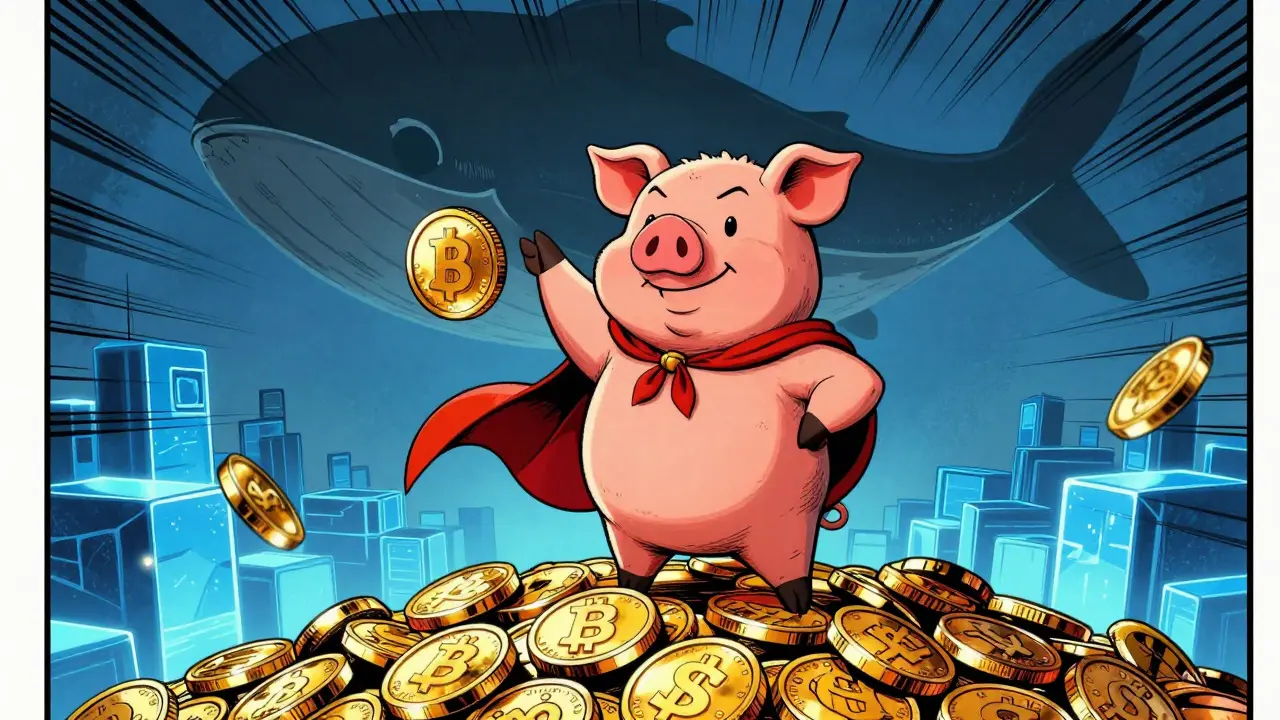
The most common search intent for "HOG crypto" points to the pig-themed meme coin on Solana. Platforms like Coinbase have labeled it "the first pig themed memecoin making waves on Solana." But here’s the catch: liquidity is thin. In early 2025, some trackers showed a market cap of nearly zero because circulating supply data was incomplete or self-reported without verification. By late 2025, aggregators like CoinStats reported a market cap around $27,500 with a circulating supply near 1 billion tokens.
Why does the price jump around so much? Because these are micro-cap assets. A single whale selling 1% of their bag can crash the price by double digits. If you see a price of $0.00000567 on one site and $0.000071 on another, it’s not a glitch-it’s fragmented liquidity across different decentralized exchanges (DEXs). You’re essentially buying into a niche community experiment rather than a established financial instrument.
Hog McCrankerson: The Liquidity Leader
If you want the version of HOG with actual volume, look for Hog McCrankerson. According to analytics platforms like SolanaCompass, this token often holds the title of "strongest $HOG match" due to higher liquidity and active trading. As of mid-2026, it boasted a market capitalization between $240,000 and $550,000, with daily trading volumes hitting thousands of dollars. That’s significant for a meme coin.
However, high activity doesn’t mean safety. Solyzer, a risk-assessment tool, gave Hog McCrankerson a safety score of 0 out of 100, flagging it as "High Risk." Why? Likely due to concentrated ownership or unverified smart contracts. With only around 800 holders, the community is small. If those top 10 wallets decide to exit, the price could vanish overnight. It’s a classic case of high reward potential paired with extreme downside volatility.
Beyond Memes: Heart of Gold and Web3 Social
Not all HOGs are jokes. There’s a token called Heart of Gold, also on Solana, which aims to be a foundational social layer for Web3 creators. It has a similar supply structure to the pig meme coin-around 998 million tokens-but a slightly lower market cap of roughly $20,000. The project pitches itself as empowering communities, but as of 2025, it lacked major exchange listings and had minimal trading volume. It’s effectively dormant or in very early stages compared to its meme counterparts.
Then there’s the Hand of God protocol. This isn’t a meme; it’s a complex DeFi system using HOG as a medium of exchange and governance token. It uses an algorithmic soft peg to maintain value stability, similar to how some stablecoins work but without direct collateral. If you’re interested in DeFi mechanics rather than internet humor, this is the HOG you should study. Just be aware that algorithmic pegs are historically fragile under market stress.
How to Buy and Store HOG Safely
Since most HOG variants live on Solana, you won’t find them on major centralized exchanges like Binance or Coinbase for direct trading. You need a non-custodial workflow. Here’s the step-by-step process:
- Get a Solana Wallet: Install Phantom or Solflare. These are browser extensions or mobile apps that let you control your private keys.
- Fund with SOL: Buy Solana (SOL) on any major exchange and withdraw it to your wallet address. You’ll need SOL to pay for transaction fees (gas).
- Find the Correct Contract Address: This is critical. Copy the specific contract address for the HOG you want (e.g., Hog McCrankerson vs. Heart of Gold). Do not rely on the ticker alone.
- Swap on a DEX: Go to a decentralized exchange like Jupiter Aggregator or Raydium. Connect your wallet, paste the contract address, and swap your SOL for HOG.
- Verify Slippage: Because liquidity is low, set your slippage tolerance higher (maybe 1-5%) to ensure the trade goes through, but watch out for front-running bots.
Key Risks and Red Flags
Before you buy, understand what you’re risking. First, ticker confusion is your biggest enemy. Buying the wrong HOG means you’re holding an illiquid asset you didn’t intend to own. Second, liquidity crunches are common. You might buy easily, but selling a large position could move the market against you significantly. Third, smart contract risks are real. Many of these tokens haven’t undergone rigorous third-party audits. A bug in the code could freeze funds or allow minting exploits.
Always check the holder distribution. If the top 10 wallets hold more than 50% of the supply, you’re at the mercy of a few individuals. Tools like Solscan or DexPaprika can show you this data instantly. Don’t trust a pretty logo; trust the on-chain data.
Is HOG a good investment?
It depends entirely on which HOG you mean. Most are micro-cap meme coins with high volatility and no guaranteed utility. They are speculative plays, not long-term investments. Only invest money you can afford to lose completely.
Which blockchain is HOG on?
The majority of popular HOG tokens, including Hog and Hog McCrankerson, are SPL tokens on the Solana blockchain. However, other projects like Hedgehog Protocol may operate on Ethereum or Base networks. Always verify the network before sending funds.
Why do price trackers show different values for HOG?
Different trackers aggregate data from different sources. Some use stale data, others pull from low-volume pools, and some may confuse separate tokens with the same ticker. Always cross-reference multiple sources and check the contract address.
Can I buy HOG on Coinbase?
Generally, no. Most HOG variants are not listed for direct trading on Coinbase. You typically need to buy SOL on Coinbase, transfer it to a self-custody wallet like Phantom, and then swap for HOG on a decentralized exchange.
What is the total supply of HOG?
Supply varies by project. The pig-themed Hog and Heart of Gold often report supplies near 1 billion tokens. Hog McCrankerson may have a different supply structure. Check the specific token's explorer page for accurate circulating and max supply figures.