
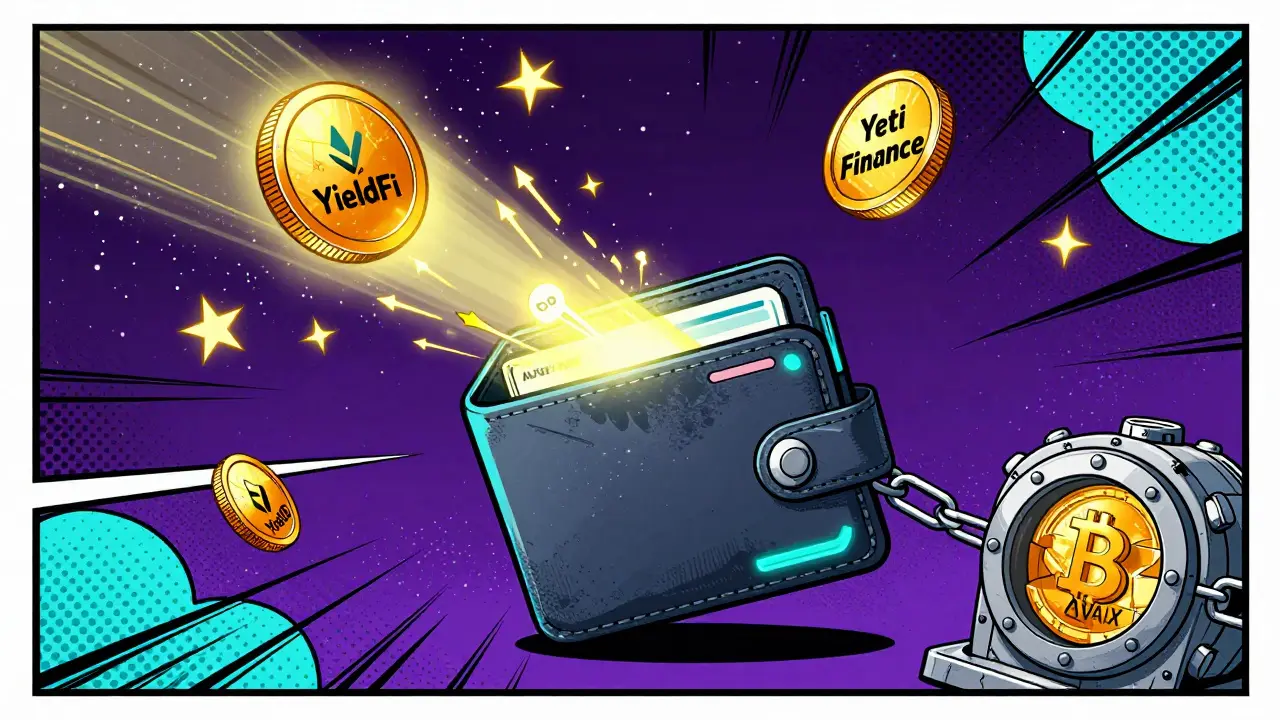
When you think of stablecoins, you probably think of USDT or USDC-digital dollars that stay pegged to the U.S. dollar. But there’s a newer kind of stablecoin that doesn’t just sit there. It earns you money just by holding it. That’s YUSD.
YUSD isn’t one single coin. It’s two different projects using the same name, both trying to solve the same problem: how do you keep a stable value in crypto and make it useful? One version, from YieldFi, turns your stablecoin into a savings account. The other, from Yeti Finance, works like DAI-backed by locked crypto. Neither is perfect. But both are worth understanding if you’re using DeFi at all.
YUSD from YieldFi: A Stablecoin That Pays You
The YieldFi version of YUSD is designed to be more than a store of value. It’s a yield engine. Every time you hold YUSD in your wallet, the protocol automatically moves a portion of the backing assets into other DeFi protocols-like lending platforms or liquidity pools-to generate returns. Those returns? They get distributed back to you, automatically.
Unlike USDC, which earns you nothing, YUSD from YieldFi gives you passive income just by holding it. This isn’t a gimmick. The protocol uses smart contracts to diversify where that yield comes from: Aave, Compound, Curve, and others. If one platform dips in performance, the system shifts funds to keep returns steady.
But here’s the catch: this system only works if the underlying assets are secure. The YieldFi team has built in safeguards-smart contract audits, insurance pools, and automatic rebalancing-to protect against hacks or crashes. Still, you’re trusting complex code with your money. It’s not FDIC-insured. If something breaks, you lose.
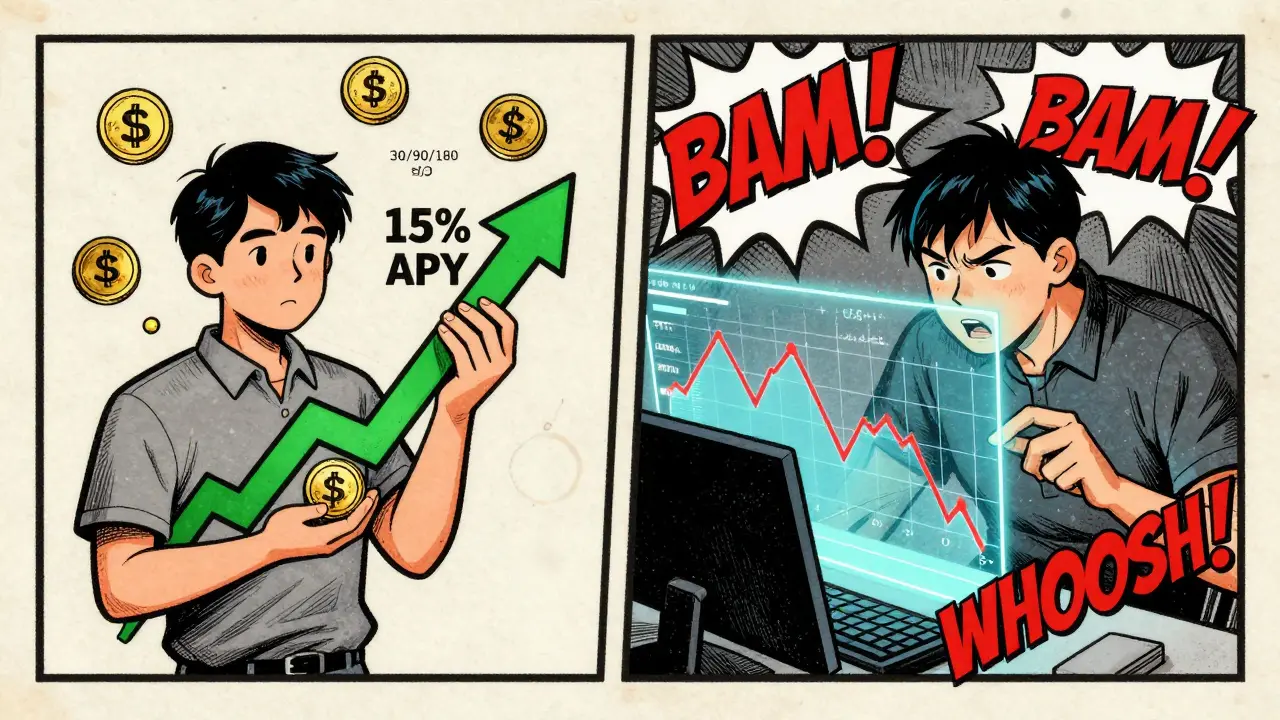
There’s also staking. If you lock your YUSD for longer periods (say, 30, 90, or 180 days), you get extra rewards. These come in both YUSD and the YieldFi governance token. The longer you lock, the higher your APY. Some staking pools have offered over 15% APY in the past. That’s far higher than any bank, but it comes with DeFi risks.
YUSD from Yeti Finance: Overcollateralized Like DAI
The Yeti Finance version of YUSD works differently. It’s built on the Avalanche blockchain and follows the same model as DAI: you lock up more crypto than you borrow. For example, if you want 100 YUSD, you might need to deposit $150 worth of AVAX or another asset as collateral.
This overcollateralization means YUSD stays stable even if the market crashes. If the value of your collateral drops too much, the system automatically liquidates part of it to cover the loan. It’s a proven system-DAI has survived multiple crypto winters using this method.
Yeti Finance also has a Stability Pool. Think of it as a community emergency fund. Users can deposit YUSD into this pool, and in return, they earn fees from liquidated loans. If someone’s position gets liquidated, the pool covers the debt, and the depositors get a cut. It’s a clever incentive to keep the system solvent.
But Yeti’s YUSD has a warning label. It’s a low-market-cap project. Its total value locked (TVL) is small. That means less liquidity and higher risk. If a big withdrawal happens, the system could struggle. Some analysts rate it as "Watch out"-not because it’s broken, but because it’s untested at scale.
Market Numbers: How Big Is YUSD Really?
As of February 2026, YUSD’s total market cap hovers around $11.8 million. That’s tiny. Compare that to USDT ($112 billion) or DAI ($4.5 billion). YUSD isn’t competing with giants-it’s carving out a niche.
Here’s what the numbers show:
- Price: $0.997 (slightly under $1, but still stable)
- Circulating supply: ~11.8 million YUSD
- Total supply (Avalanche C-Chain): 218 million YUSD
- 24-hour trading volume: $0.55-$2 (very low)
- Rank on CoinGecko: #1633
That low volume tells you something: YUSD isn’t widely traded. Most people aren’t buying and selling it. They’re holding it for yield or using it inside DeFi apps.
The price is close to $1, but not perfect. 1 USD = 1.0047 YUSD. That tiny drift is normal for decentralized stablecoins. It’s not a bug-it’s a feature. The market adjusts the price through incentives, not central control.
How Do You Get YUSD?
Getting YUSD depends on which version you want.
For YieldFi YUSD:
- Buy it on decentralized exchanges like Uniswap or SushiSwap
- Swap other stablecoins for it
- Earn it by providing liquidity to YUSD trading pairs
For Yeti Finance YUSD:
- Borrow it by locking collateral on the Yeti Finance platform
- Swap for it on Trader Joe or Curve
- Use the Avalanche C-Chain bridge to move it from another network
Both versions are available on major DeFi platforms. But you’ll need a wallet like MetaMask or Rabby, and you’ll need to connect to the right blockchain (Ethereum for YieldFi, Avalanche for Yeti).
Why Use YUSD Instead of USDC or DAI?
USDC is simple. It’s backed by real dollars. But you earn nothing holding it.
DAI is decentralized, but again-no yield.
YUSD gives you something neither does: income or decentralized collateralization with a twist.
If you’re tired of your stablecoin sitting idle, YieldFi’s YUSD lets you earn while you wait. If you want a truly decentralized alternative to USDC that doesn’t rely on a company holding cash reserves, Yeti’s version gives you DAI-like security with a modern twist.
But neither is risk-free. YieldFi’s yield depends on DeFi protocols that can fail. Yeti’s system is small and could be vulnerable to sudden withdrawals.

Is YUSD Safe?
Safety in crypto isn’t black and white. Here’s the reality:
- Smart contract risk: Both versions rely on code. Bugs happen. Audits help, but they don’t guarantee safety.
- Liquidity risk: With low trading volume, slippage can be high. Don’t try to move large amounts quickly.
- Regulatory risk: Stablecoins are under scrutiny. If regulators target DeFi yield products, YUSD could be affected.
- Market risk: If crypto crashes hard, collateral values drop, and liquidations spike. That’s when stability mechanisms are tested.
YUSD isn’t for beginners. It’s for users who understand DeFi mechanics and are comfortable with risk. If you’re just trying to avoid Bitcoin’s swings, stick with USDC. If you want to turn your stablecoin into an asset that works for you, YUSD might be worth exploring.
What’s Next for YUSD?
Both projects have roadmaps.
YieldFi wants to expand cross-chain bridges so YUSD can move between Ethereum, Polygon, and BNB Chain. They’re also testing new yield sources, like staking derivatives and options protocols.
Yeti Finance is focused on growing its Stability Pool and adding more collateral types. They’re also planning governance upgrades to let YETI token holders vote on risk parameters.
The big question: Can YUSD grow beyond a niche product? Right now, it’s a curiosity. But in a world where people are tired of earning 0.5% in savings accounts, a stablecoin that pays 8-15% could be the next big thing.
It’s not guaranteed. But if you’re active in DeFi, it’s worth keeping an eye on.
Is YUSD really pegged to $1?
Yes, but not perfectly. As of February 2026, YUSD trades at around $0.997, which is very close to $1. This slight deviation is normal for decentralized stablecoins. The market adjusts it through economic incentives-like rewards for buying or selling-to keep it stable over time.
Which blockchain does YUSD run on?
It depends on the version. YieldFi’s YUSD runs on Ethereum and other EVM chains, with bridges to Polygon and BNB Chain. Yeti Finance’s YUSD is only on Avalanche C-Chain. You need to know which one you’re using before sending or swapping.
Can I stake YUSD for more rewards?
Yes, but only with the YieldFi version. Staking YUSD locks your tokens for a set period (30 to 180 days) and boosts your yield. You earn both YUSD and the YieldFi governance token. The Yeti Finance version doesn’t offer staking-it’s designed for borrowing and liquidity provision.
Is YUSD safer than DAI?
No, not yet. DAI has been around for years, survived multiple crashes, and has over $4 billion in TVL. Yeti’s YUSD uses a similar model but has far less backing and lower liquidity. YieldFi’s version adds yield, but that introduces more complexity and potential failure points. Neither is as safe as DAI today.
Why does YUSD have such a low market cap?
Because it’s new and niche. Most users stick with USDT, USDC, or DAI because they’re familiar and widely accepted. YUSD appeals to a smaller group-DeFi enthusiasts who want yield or decentralized collateral. It hasn’t reached mainstream adoption yet, but it has room to grow if its mechanisms prove reliable.





There are 15 Comments
Dianna Bethea
YUSD from YieldFi is actually kinda brilliant if you're already deep in DeFi. I've been holding it for 6 months and the auto-compounding is smooth as butter. No need to manually stake or harvest rewards - it just happens. The diversification across Aave and Curve really helps when one protocol dips. I lost 2% in a week when Compound had that glitch, but the system rebalanced and made it back in 3 days. Not perfect, but way better than letting my USDC sit there like a brick.
KingDesigners &Co
Felicia Eriksson
lori sims
YUSD from Yeti feels like the underdog nobody talks about but everyone should. The Stability Pool is genius - it turns liquidations from a panic into a community win. I’ve been depositing into it for months and the fees are steady. Plus, no one’s screaming about it on Twitter, which means it’s probably still under the radar. That’s where the real alpha hides.
Also, low TVL isn’t a bug, it’s a feature. Less noise, less manipulation. The market cap is tiny because most people are still chasing shiny coins. But the ones who stick? They’re building something real.
Kaitlyn Clark
christopher luke
Mary Scott
Shannon Holliday
I love how YUSD is basically crypto’s version of a side hustle. You’re not just holding money - you’re working it. I’ve been using the YieldFi version to fund my weekend trips. The yield covers my coffee, my Netflix, even my dog’s vet bills. I don’t need a bank. I need a wallet.
Also, the fact that it’s not pegged perfectly? That’s freedom. No central bank telling you what your money is worth. Let the market breathe.
Jeremy buttoncollector
The ontological underpinnings of algorithmic stability in YUSD reveal a post-scarcity epistemology of value generation. The yield mechanisms aren't merely economic - they're semiotic performances of trust in decentralized governance. When you stake YUSD, you're not depositing capital - you're participating in a distributed ontological consensus that reconfigures the Hegelian dialectic of liquidity.
Yeti's overcollateralization model is a Hegelian negation of the fiat paradigm. The Stability Pool is the Aufhebung of systemic risk. The low TVL? A necessary condition for ontological purity. You can't commodify sovereignty.
Michelle Xu
Ryan Burk
Sriharsha Majety
Tabitha Davis
Don B.
Arya Dev
Write a comment
Your email address will not be published. Required fields are marked *