
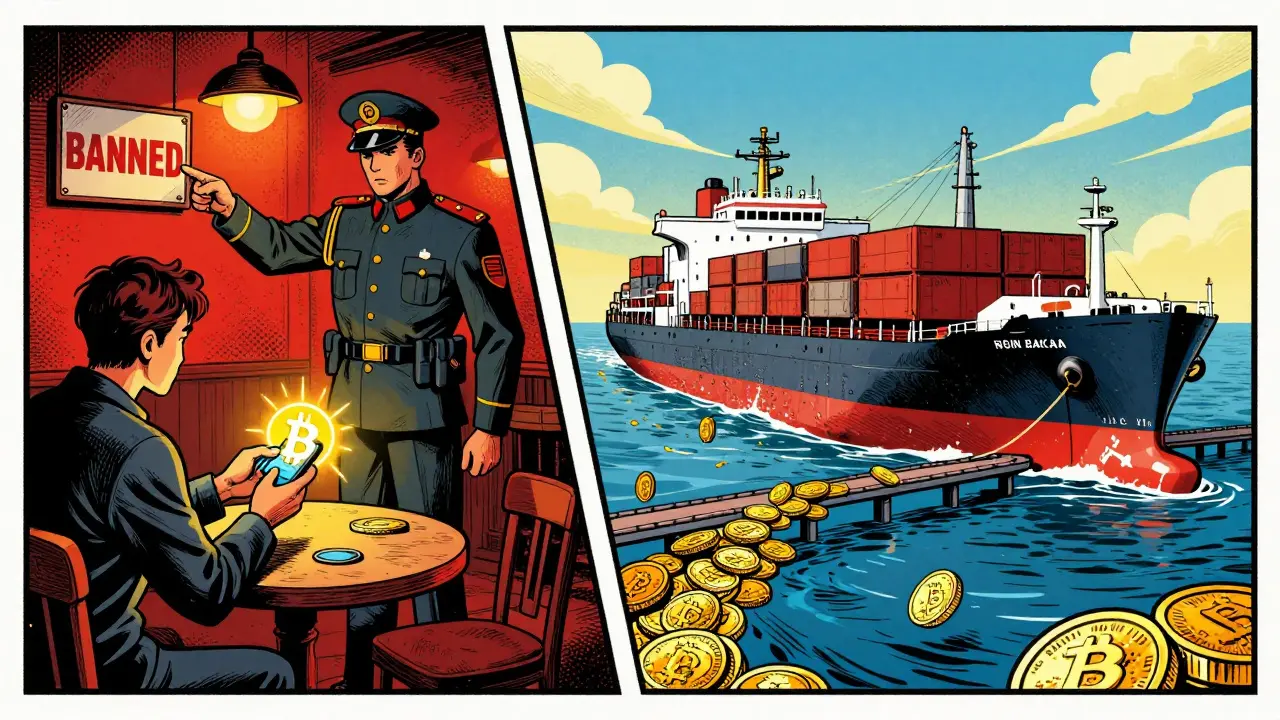
Imagine waking up to find that your digital wallet is perfectly legal to own, but using it to buy a coffee at a local cafe could land you a 200,000 ruble fine. That is the current reality in Russia. The country has created a strange, split-screen legal world where
Bitcoin is
a digital asset that can be used for global trade but is strictly forbidden as a means of payment for domestic goods and services
. If you are navigating this landscape, you need to understand that the rules change completely depending on whether your transaction crosses a national border.
Quick Summary
- Domestic Use: Absolutely banned as payment. You can own, mine, and trade crypto, but you cannot pay a Russian merchant with it.
- International Use: Permitted for trade under a strict "Experimental Legal Regime" (EPR) to bypass sanctions.
- Taxation: Crypto is officially recognized as property with a 13% capital gains tax.
- Penalties: New fines starting January 2026 range from 100,000 to 1 million rubles depending on if you are an individual or a company.
The Great Divide: Domestic Ban vs. International Access
To get why this is happening, we have to look at the laws. Back in July 2020, Federal Law No. 114-FZ set the stage. It basically said, "Yes, you can own crypto, but no, you cannot use it to pay for things inside Russia." This ban kicked in on January 1, 2021. The government's logic, championed by Elvira Nabiullina is the Governor of the Bank of Russia who views cryptocurrencies as too volatile to be legal tender , is that crypto isn't guaranteed by any state and is too risky for the general public to use for daily shopping.
However, the geopolitical climate changed everything in 2024. Faced with Western sanctions, Russia passed Law No. 382-FZ. This law created a loophole: digital currencies can now be used for international trade. Essentially, the government decided that while Bitcoin is too dangerous for a grocery store in Moscow, it is a vital tool for a factory exporting goods to China or Iran.
Navigating the Experimental Legal Regime (EPR)
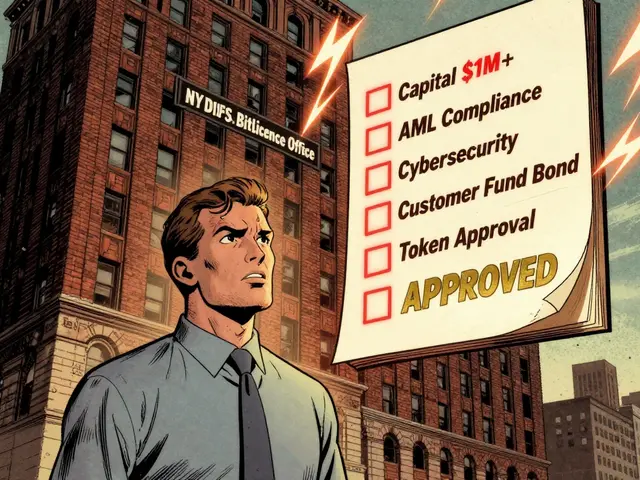
You can't just start accepting Bitcoin for your exports tomorrow. To do it legally, you have to enter the Experimental Legal Regime is a controlled regulatory sandbox allowing registered entities to use crypto for cross-border payments . This is not a "light" registration; it's a bureaucratic marathon.
If you are a business, the requirements are steep. You need to implement real-time monitoring systems that can handle at least 1,000 transactions per second. You also have to screen your partners against 15 different sanctioned jurisdictions. According to reports from consultants at BitLegal, companies are spending about 1.8 million rubles and over 200 staff hours just to get compliant. It's no wonder that while the government hoped for 10,000 entities to join, only about 1,842 have actually registered-and most of those are just financial institutions.
| Feature | Domestic Use | International Use |
|---|---|---|
| Payment for Goods/Services | Strictly Banned | Permitted (via EPR) |
| Ownership & Mining | Legal | Legal |
| Tax Treatment | 13% Capital Gains | 13% Capital Gains |
| Entry Barrier | None (for ownership) | High (EPR Registration) |
The "Oligarch Rule": Who Can Actually Trade?
One of the most controversial parts of this system is the investor qualification. The Bank of Russia doesn't want just anyone playing with high-stakes crypto trading. To be an "especially qualified investor," you need to prove you have financial assets exceeding 100 million rubles (roughly $1.2 million) or an annual income above 50 million rubles.
This has created a massive gap. Dr. Ivan Sidorov from HSE University pointed out that this rule effectively locks out 87% of the 18 million crypto owners in Russia. In simple terms, if you aren't wealthy, you're essentially pushed into the "gray market." This is why so many Russians use non-custodial wallets-they want to avoid the KYC (Know Your Customer) checks that would reveal they aren't "qualified" investors.
Taxes, Mining, and the Cost of Breaking the Law
Since January 1, 2025, the Tax Code of the Russian Federation is the legal framework that officially recognizes cryptocurrency as property and mandates taxation on its gains has made things clear: if you make money from crypto, the state wants its cut. There is a 13% capital gains tax that you must report quarterly.
For those in the mining industry, the rules are even more specific. You must register your operation with Roskomnadzor is the federal executive body responsible for monitoring and controlling the use of the media and communications and stick to energy limits of 150 MW per facility. Russia has become a global mining powerhouse (ranking 8th globally), largely because the government allows it as long as it doesn't crash the local power grid.
But what happens if you ignore the domestic payment ban? Starting January 1, 2026, the government is getting aggressive. Individuals caught using crypto for domestic payments face fines between 100,000 and 200,000 rubles. For companies, the hit is much harder: fines up to 1 million rubles, plus the mandatory confiscation of the cryptocurrency involved. The goal here is clear: stop the "gray area" and force all activity into the regulated, taxed, and monitored channels.
Real-World Struggles: The User Perspective
On paper, the law is clear. In practice, it's a mess. If you browse forums like r/CryptoRussia, you'll see a recurring theme: bank freezes. Many users report that when they try to convert their crypto back into rubles, their bank accounts get flagged or frozen. This is because the Bank of Russia has ordered financial institutions to implement enhanced AML (Anti-Money Laundering) monitoring on P2P transactions exceeding 600,000 rubles.
Business owners are feeling the pinch too. One IT exporter reported abandoning crypto payments entirely because the EPR registration required 17 different documents and took two months to process. For a fast-moving tech company, that kind of bureaucracy is a deal-breaker. Instead of a streamlined digital economy, many are finding a system that feels like it was designed in the 1980s.
Comparing Russia to the Rest of the World
Russia's approach is a strange hybrid. It's not a total ban like China is a sovereign state that implemented a comprehensive ban on all cryptocurrency transactions and mining in 2021 , but it's nowhere near as open as El Salvador, where Bitcoin is legal tender.
When you compare Russia to the EU's MiCA framework, the difference is stark. MiCA focuses on consumer protection and allows crypto payments. Russia, meanwhile, focuses on state control and sanction-evasion. Even compared to India, which has a high 30% crypto tax, Russia's barriers are higher not because of the tax rate (which is lower at 13%), but because of the insane wealth requirements to be a "qualified investor." Russia isn't trying to build a retail crypto market; it's trying to build a strategic tool for the state and the ultra-wealthy.
Can I legally own Bitcoin in Russia?
Yes, owning cryptocurrency is legal in Russia. It is recognized as property under the Tax Code. However, you cannot use it as a means of payment for goods or services within the country.
What happens if I pay for a service in crypto inside Russia?
As of January 2026, you could face fines from 100,000 to 200,000 rubles as an individual, or up to 1 million rubles as a legal entity. Additionally, the cryptocurrency used in the transaction can be confiscated by the state.
How can a company legally use crypto for international trade?
Companies must register under the Experimental Legal Regime (EPR) with the Central Bank of Russia. This requires submitting extensive documentation, implementing real-time transaction monitoring, and complying with strict AML screening.
What is the tax rate on cryptocurrency gains in Russia?
The capital gains tax rate is 13%. This is applied to profits made from trading or selling cryptocurrency, and it requires mandatory quarterly reporting to the Federal Tax Service.
Who qualifies as an "especially qualified investor"?
To be considered an especially qualified investor, an individual must possess financial assets exceeding 100 million rubles or demonstrate an annual income of over 50 million rubles.
Next Steps for Users and Businesses
If you are an individual living in Russia, the safest bet is to keep your holdings in non-custodial wallets and avoid using crypto for any domestic payments to steer clear of the 2026 fine structure. If you are converting to fiat, be prepared for your bank to ask questions about the source of funds for any amount over 600,000 rubles.
For businesses looking to export, the EPR is your only legal path, but you should budget at least $20,000 and 3 months for the compliance process. Given the low registration rate (only 8% of EPR participants are commercial enterprises), you might find it easier to partner with one of the registered financial institutions that already have the infrastructure in place rather than building your own monitoring system from scratch.




There are 17 Comments
Caiaphas Konkol
Of course they want the ultra-wealthy to have a legal backdoor while the average person gets hammered with fines. It is a classic play to centralize power under the guise of stability. This isn't about volatility, it's about the state maintaining a stranglehold on capital movement so they can track every single cent while the oligarchs move billions through the EPR sandbox. Just look at the requirements for those "qualified investors" and tell me this isn't a curated system for the elite. They're basically creating a digital caste system where only the upper crust gets the benefit of borderless currency. The rest of us are just pawns in a game of geopolitical chess and financial surveillance. Honestly, the transparency of this move is almost insulting. It's just another layer of the great reset happening in real-time.
Kathleen Bergin
It is just common sense. You can't have a currency that goes up and down 10% in a day being used to buy bread.
Candace Sherrard
There is something profoundly surreal about the way we conceptualize value in the modern era, especially when a state decides to bifurcate the very nature of a currency based on where a physical border lies. It makes me wonder if the concept of a "global" currency was ever truly possible or if we are simply destined to see these digital tools subsumed by the same Westphalian sovereignty that has governed us for centuries. The tension between the decentralized promise of Bitcoin and the rigid, bureaucratic reality of the EPR suggests that we are entering an era of fragmented digitalization. One could argue that this is not a failure of crypto, but rather a revelation of how desperately states fear any medium of exchange they cannot calibrate or tax at will. It's a fascinating, if somewhat bleak, reflection of our current sociopolitical trajectory where the freedom of the individual is perpetually traded for the perceived security of the collective, or more accurately, the security of the regime.
Kyle Bush
GET RID OF ALL THIS CRYPTO NONSENSE! 🇺🇸 USA all the way! Let them struggle with their weird rules while we dominate the world economy! 🚀💰🔥
Mike Krasner
everyone acting like this is a shock lol. the government always wins. they just want their 13 percent and the rest is just noise
Miranda Jamieson
Imagine thinking a
Alex Hunter
For anyone starting out, it's important to realize that these kinds of regulatory shifts are common in emerging markets. If you're looking to stay compliant, focusing on non-custodial solutions as mentioned is a solid move. Just be careful with the P2P stuff because banks are definitely watching those larger transfers.
Gloris Young
Keep it safe and stay aware!
Ellie Drews
It sounds like a really stressful situation for the people living there. I hope they can find a way to manage their finances without getting into trouble with the law.
Jagdish Sutar
This is quite similar to some of the hurdles we've seen in India with crypto taxes. It's always a learning curve for both the government and the users to find a balance between innovation and regulation.
Matthew Morse
why would anyone bother with the EPR when you can just use an offshore exchange
Doc Coyle
It's simply a matter of ethics. Using a volatile asset for daily trade is irresponsible. The state is just doing the right thing by protecting the poor from losing their savings in a crash.
Jennifer L
Oh my goodness, the fines are just terrribly high! I can't even imagine the panic of accidentally paying someone and then losing 200,000 rubles!! It's absolutely heart-breaking for the small business owners!!
Charlie Queen
Hope everyone finds a way to keep their assets safe! 🌍✨ It's wild how different countries handle this stuff!
Paige Raulerson
Honestly the bureaucracy described here is just tedious. Why do we even act like this is a "modern" system? It's basically just a digital version of a Soviet ledger with more steps.
praveen subbiah
The scale of mining in Russia is actually impressive! It shows that even with strict rules, the infrastructure for digital assets is growing rapidly. India is also making huge strides in this area!
Guy Bianco
One must exercise extreme caution when dealing with P2P transactions in such a volatile legal environment. :)
Write a comment
Your email address will not be published. Required fields are marked *