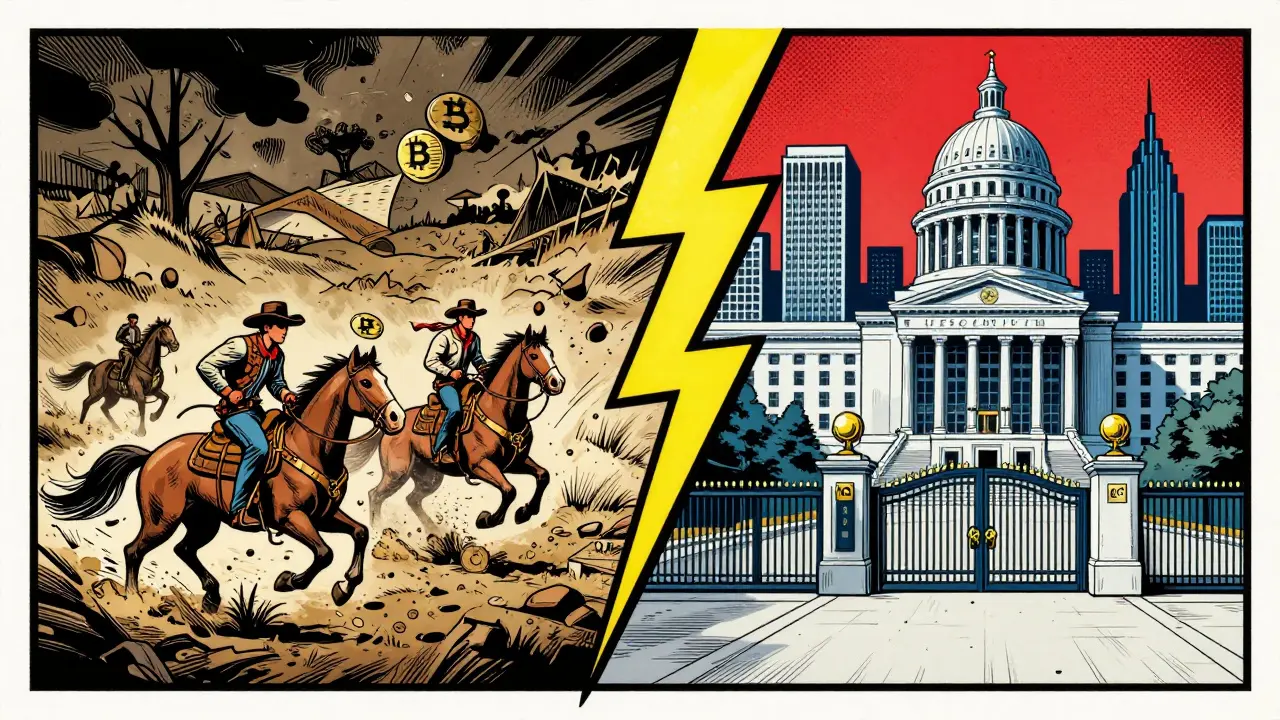
For years, if you lived in Vietnam and wanted to buy Bitcoin or Ethereum, you operated in a legal gray area. You knew the government frowned upon it, but there was no clear law telling you exactly what you could or couldn't do. That ambiguity ended abruptly in September 2025. The Vietnamese government introduced a strict new framework that draws a sharp line between crypto trading as a regulated financial activity and the use of digital assets for everyday payments.
This shift isn't just about allowing people to trade; it's about control. By separating trading from payment functions, authorities aim to keep capital flows within the Vietnamese dong (VND) while preventing cryptocurrencies from replacing the national currency in daily commerce. If you are an investor, a business owner, or simply a user holding digital assets in Vietnam, understanding this distinction is critical. Getting it wrong doesn't just mean a fine-it means your transactions could be deemed illegal.
The Legal Foundation: From Gray Area to Strict Regulation
To understand the current rules, we have to look at two major legislative moves that happened in quick succession during 2025. First, the National Assembly passed the Digital Technology Industry Law, which officially recognized cryptocurrencies, NFTs, and virtual currencies under Vietnamese law. This law took full effect on January 1, 2026. It gave crypto assets civil protection, meaning they can now be owned, traded, and inherited like any other property.
However, recognition is not the same as permission to do whatever you want with those assets. Enter Resolution No. 05/2025/NQ-CP. Signed by Deputy Prime Minister Ho Duc Phoc on September 9, 2025, this resolution launched a five-year pilot program. It fundamentally restructured how digital assets can be traded and used. The Ministry of Finance was designated as the primary regulator, tasked with licensing and overseeing all market activities. This marked the end of the "wild west" era for crypto in Vietnam.
The key takeaway here is that while the Digital Technology Industry Law defines what crypto is, Resolution 05/2025 defines what you can do with it. And the distinction between trading and paying is where the most significant restrictions lie.
Crypto Trading: A Highly Controlled Environment
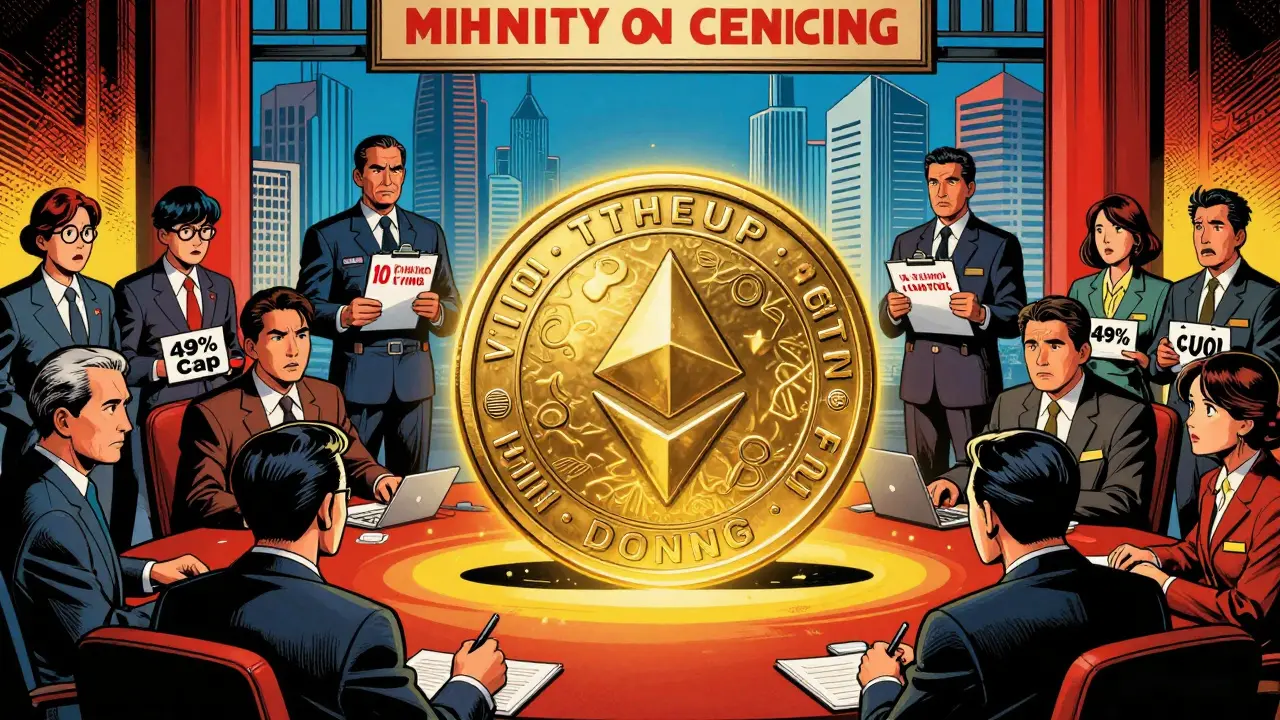
Under the new framework, trading crypto is allowed, but only under extremely strict conditions. The government wants to ensure that trading platforms are stable, secure, and fully compliant with anti-money laundering standards. To achieve this, they raised the barrier to entry so high that only well-capitalized institutional players can participate.
If you want to operate a cryptocurrency exchange in Vietnam, you must meet specific capital requirements. The minimum capital required is 10 trillion VND (approximately USD 379 million as of late 2025). Furthermore, at least 65 percent of this capital must come from institutional investors. Foreign ownership in these licensed platforms is capped at 49 percent. This ensures that domestic entities maintain control over the infrastructure.
Crucially, all crypto transactions on these licensed platforms must be conducted exclusively in Vietnamese dong (VND). This creates a mandatory fiat pairing requirement. You cannot trade Bitcoin for Ethereum directly on a licensed Vietnamese platform; you must convert BTC to VND, and then VND to ETH. This mechanism allows the state to monitor the flow of value and prevents capital flight through direct crypto-to-crypto swaps.
| Requirement | Detail |
|---|---|
| Minimum Capital | 10 trillion VND (~USD 379 million) |
| Institutional Investor Share | At least 65% of total capital |
| Foreign Ownership Cap | Maximum 49% |
| Trading Currency | Vietnamese Dong (VND) only |
| Regulator | Ministry of Finance |
This structure effectively limits the number of licensed exchanges to a small group of large, established financial institutions. For users, this means fewer choices but higher security standards. However, it also means that unlicensed platforms-many of which are popular among retail investors-are now operating illegally.
The Payment Distinction: Why You Can't Pay Your Barista with Bitcoin
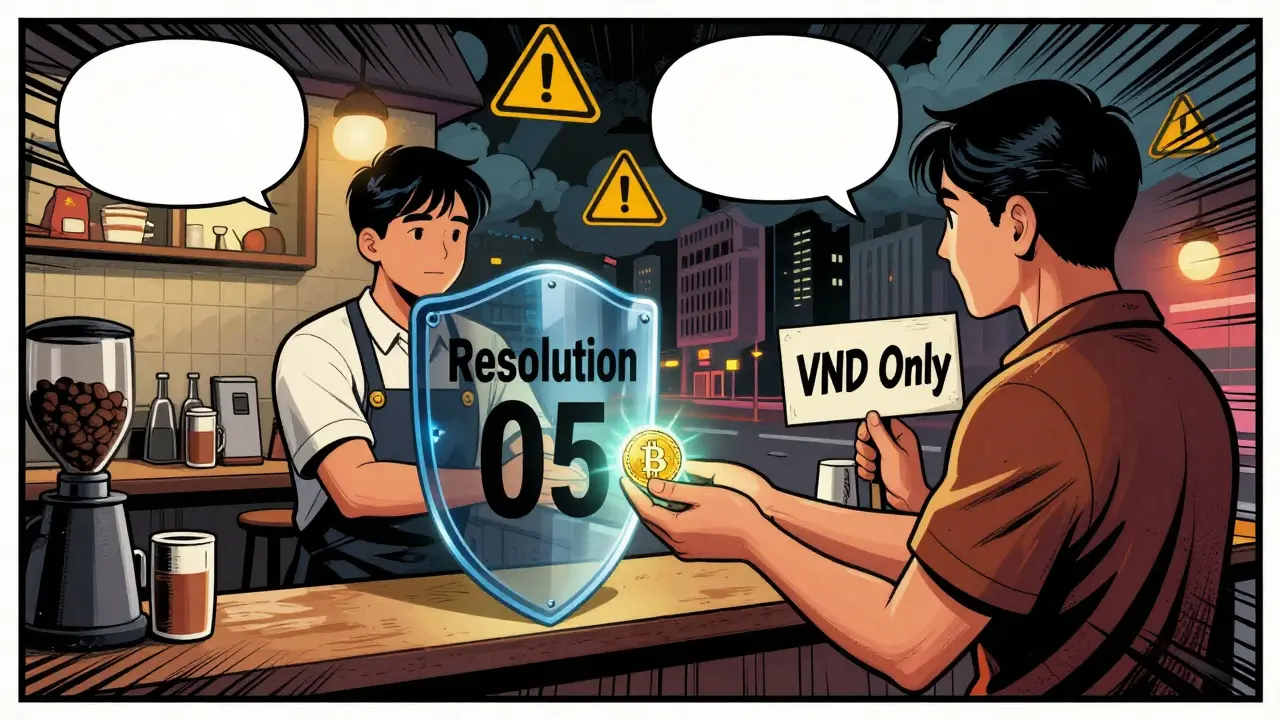
This is where the distinction becomes most critical for everyday users. While trading is permitted under strict licensing, the use of crypto for payments remains heavily restricted. Resolution 05/2025 addresses payment functionality as a distinct regulatory category, but the operational rules are designed to prevent crypto from becoming a medium of exchange.
The requirement that all transactions must be conducted in VND suggests that direct cryptocurrency-to-cryptocurrency payments are restricted. More importantly, the law does not explicitly permit businesses to accept crypto as payment for goods and services. In practice, this means you cannot walk into a store in Hanoi or Ho Chi Minh City and pay for coffee using Bitcoin. The merchant would not be able to process this transaction legally without converting it to VND first, and even then, the tax implications are unclear.
The absence of explicit payment use case regulations creates uncertainty. There are no comprehensive tax regulations for crypto assets yet, with the Ministry of Finance expected to release detailed guidance before the law takes full effect. Until then, using crypto for commercial transactions, peer-to-peer payments, or remittances outside of licensed exchange platforms carries significant legal risk.
Why does the government care so much about payments? Because allowing crypto to function as money undermines monetary policy. If people start hoarding Bitcoin instead of VND, it affects inflation, interest rates, and the stability of the national economy. By restricting payments, the government ensures that VND remains the sole legal tender for daily commerce.
Who Qualifies as a Crypto Asset?
Not all digital tokens are treated equally. The legal definition established under Resolution 5 characterizes crypto assets as a specific category of digital assets authenticated through encryption or similar digital technologies. This definition excludes securities, fiat currency in digital form, and other financial instruments already regulated under Vietnam's existing civil and financial laws.
The Digital Technology Industry Law categorizes digital assets into three types:
- Virtual Assets: Such as in-game currencies or loyalty points. These are generally not considered crypto assets.
- Crypto Assets: Like Bitcoin, Ethereum, or stablecoins. These are the focus of the new regulations.
- Other Digital Assets: Including NFTs and utility tokens with broader use cases.
This categorization is important because it determines whether your asset falls under the strict trading and payment rules. For example, an NFT might have different legal protections than a Bitcoin token, depending on its utility and underlying technology.
The Transition Period: What Happens Next?
The implementation timeline is compressed. Certain provisions of the Digital Technology Industry Law took effect on July 1, 2025, focusing on funding and investment incentives. But the real crunch comes after January 1, 2026. Companies seeking to operate exchanges must undergo a multi-step registration and licensing process beginning on this date.
Once the first license is issued, a six-month grace period begins. After this window, trading on unlicensed platforms will be considered illegal for Vietnamese investors. This creates a massive challenge for the estimated 20 million crypto users in Vietnam. They must switch to licensed platforms within six months or face administrative or criminal penalties.
Industry observers note that this transition will likely reduce competition in the trading space. With such high capital requirements, only a handful of large Vietnamese financial institutions will be able to offer exchange services. This may lead to reduced innovation and higher fees for users, but it will bring the market under strict state oversight.
Risks and Penalties for Non-Compliance
While specific penalties have not been fully detailed by the government as of late 2025, the language of Resolution 5 signals a zero-tolerance approach to non-compliance. Trading on unlicensed platforms after the grace period could result in frozen assets, fines, or even criminal prosecution for money laundering violations.
Businesses should monitor announcements from the Ministry of Finance closely. The forthcoming rules on enforcement, sanctions, and payment functionality will clarify the boundaries further. Until then, caution is advised. Do not assume that because you bought crypto on an international platform, you are safe. The new laws apply to Vietnamese residents regardless of where the platform is hosted.
The five-year pilot program running from September 2025 through September 2030 will test these frameworks. Authorities intend to evaluate effectiveness and may make adjustments based on market responses. This means the rules could change again, but the direction is clear: tighter control, stricter licensing, and a firm separation between trading and payment uses.
Can I use Bitcoin to pay for goods in Vietnam?
No, not directly. Under Resolution 05/2025, all crypto transactions must be conducted in Vietnamese dong (VND). Businesses cannot legally accept crypto as direct payment for goods or services. Any payment must be converted to VND first, and even then, specific regulations for commercial acceptance are still being developed by the Ministry of Finance.
Is it legal to trade crypto in Vietnam?
Yes, but only on licensed platforms. As of January 1, 2026, trading must occur on exchanges that have received approval from the Ministry of Finance. These exchanges must meet strict capital requirements (minimum 10 trillion VND) and foreign ownership caps (max 49%). Trading on unlicensed platforms after the six-month grace period is illegal.
What happens to my crypto if I don't move it to a licensed exchange?
If you continue to trade on unlicensed platforms after the six-month grace period following the issuance of the first license, your activities may be deemed illegal. This could lead to administrative fines, frozen assets, or criminal penalties for violating anti-money laundering laws. Holding crypto in a personal wallet is generally protected under the Digital Technology Industry Law, but trading it on unauthorized platforms is risky.
When does the new crypto law take full effect?
The Digital Technology Industry Law takes full effect on January 1, 2026. However, Resolution 05/2025, which governs the pilot program for trading and payments, was signed in September 2025. The licensing process for exchanges begins after January 1, 2026, followed by a six-month grace period for users to migrate to compliant platforms.
Can foreigners own crypto exchanges in Vietnam?
Yes, but with limitations. Foreign ownership in licensed crypto exchanges is capped at 49 percent. This ensures that domestic entities maintain majority control over the trading infrastructure. Additionally, the exchange must have a minimum capital of 10 trillion VND, with at least 65 percent coming from institutional investors.