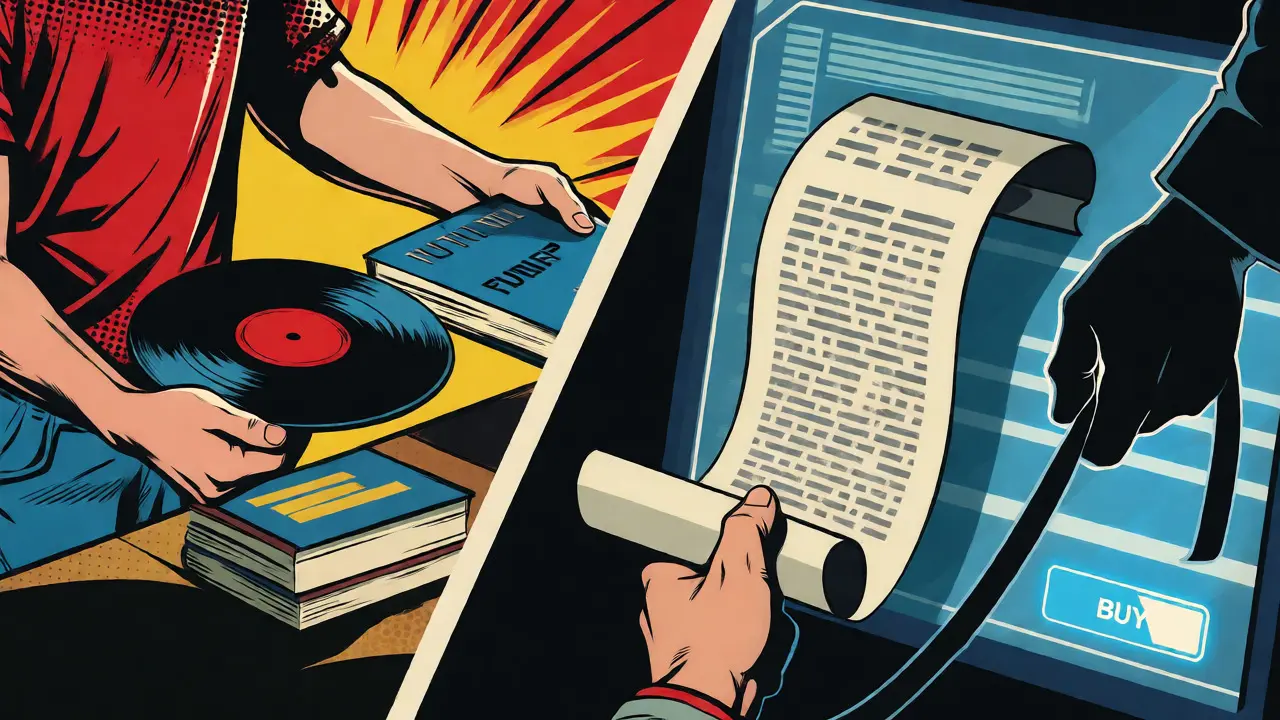
You clicked "Buy" on that new video game, downloaded a blockbuster movie, or minted an expensive NFT. You paid real money, so you own it, right? Not exactly. In the digital world, digital ownership is often a legal illusion. What you actually hold is a license to use the content, subject to rules written in fine print that most people never read. This distinction matters more than ever as our lives migrate online. From Steam libraries to Spotify playlists, the assets we think we own are increasingly rented, revocable, and fragile.
The Great Shift from Property to License
Think back to buying a vinyl record or a paperback book. If you got tired of them, you could sell them at a garage sale, lend them to a friend, or leave them to your kids. That’s traditional property law. The moment you bought the item, the seller’s control over that specific copy ended. This is known as the first-sale doctrine.
Digital goods broke this rule. When software companies like Autodesk started shifting from selling boxes to distributing files in the 1980s and 90s, they needed a way to stop users from copying and reselling software indefinitely. They turned to End User License Agreements (EULAs). Instead of selling you the code, they licensed it to you. A landmark case, Vernor v. Autodesk (2010), confirmed that these restrictive licenses are enforceable. Essentially, if the license says you can’t resell it, you can’t.
This created a fragmented landscape where consumers often don’t know what they have. A 2023 survey by Morgan Lewis found that 78% of digital platform users mistakenly believe they own their purchased content outright. In reality, you’re usually just a tenant in someone else’s digital house.
What You Actually Get: The Bundle of Rights
To understand the gap between expectation and reality, look at the "bundle of rights." Physical ownership gives you four main sticks: transfer, exclusion, use, and enjoyment. Digital licensing typically strips away the first two. You get the right to use, but rarely the right to transfer (sell) or exclude others (if the platform shuts down, everyone loses access).
Digital Rights Management (DRM) is the technological enforcement of these limits. It’s the encryption and access control systems that prevent you from playing a Netflix download on an unsupported device or copying a Kindle book to another reader. But there’s also "verbal DRM," a term coined by legal scholar Pamela Samuelson. This refers to the complex legalese in EULAs that restricts your behavior without any technical barrier. Sometimes, the contract is stricter than the technology.
| Feature | Physical Goods | Standard Digital License | Blockchain/NFT Model |
|---|---|---|---|
| Transferability | Full resale rights (First Sale Doctrine) | Usually prohibited; non-transferable | Programmable; often allows resale with royalties |
| Longevity | Indefinite (until physical decay) | Tied to platform existence/account status | Tied to blockchain network survival |
| Control | User controls the medium | Platform controls access via DRM | Smart contract controls permissions |
| Inheritance | Can be bequeathed easily | Often lost upon account death/ban | Transferable via private key |
Why Platforms Prefer Licensing
It’s not just about greed; it’s about business models. For platforms like Amazon or Apple, retaining control means recurring revenue and ecosystem lock-in. If you truly owned your e-books, you might take them to a competitor’s store. By keeping them under license, they keep you engaged.
There’s also the issue of piracy. Without strict licensing, digital copies are perfect clones. Copyright holders argue that tight control is necessary to protect creator income. The Copyright Alliance notes that independent artists see significant revenue boosts when using controlled licensing platforms versus open distribution. However, critics argue this power imbalance hurts consumers who lose access to media they’ve already paid for.
Legal Protections Are Catching Up
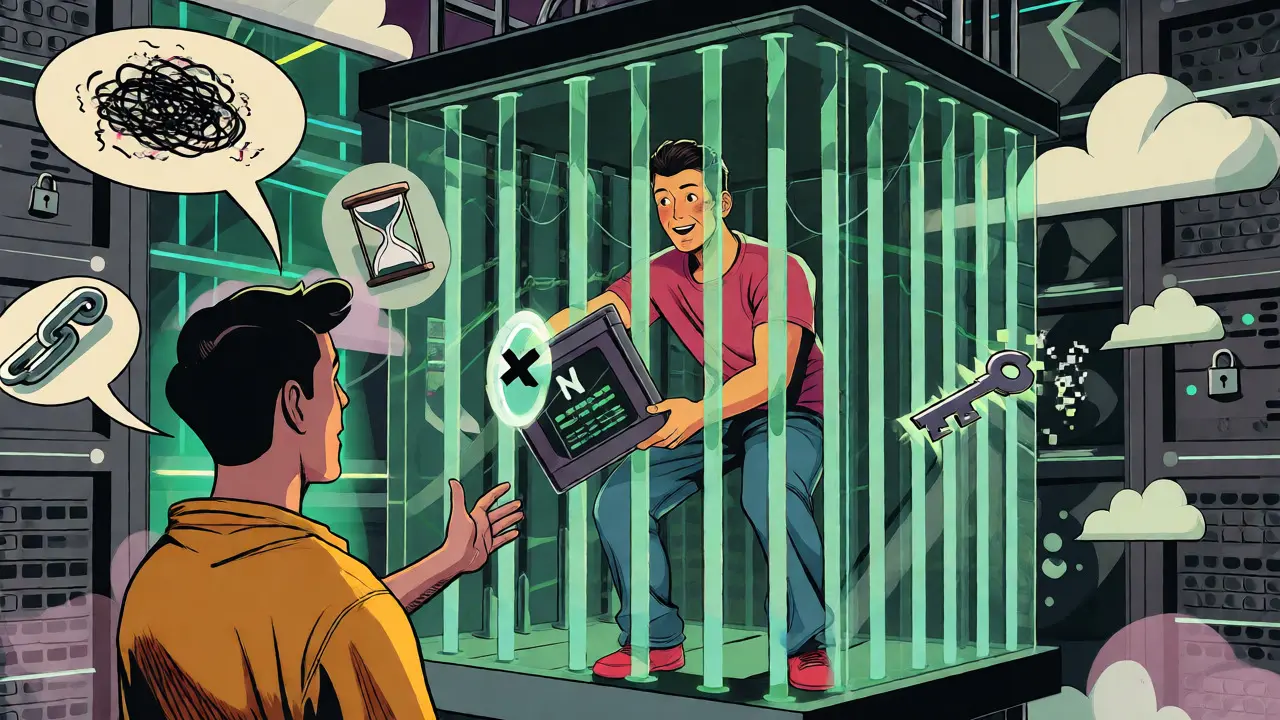
For years, the law lagged behind technology. Consumers felt powerless against giant tech firms. But recently, regulators have stepped in. California passed AB 2426, effective January 1, 2024. This was the first U.S. law requiring explicit disclosure that digital "purchases" are actually licenses. Before you click buy, you must see clear, conspicuous language stating you are acquiring a limited right to use, not full ownership.
The European Union is going further. Their Digital Markets, Competition and Consumers Bill aims to grant "equivalent rights" for digital and physical goods, potentially forcing platforms to allow resale markets. Meanwhile, in the U.S., the Digital Goods Ownership Act has gained bipartisan support, signaling that federal attention is rising. These moves acknowledge that the current system creates too much confusion and risk for ordinary buyers.
The Blockchain Alternative: True Ownership?
This is where blockchain technology enters the conversation. Proponents argue that Non-Fungible Tokens (NFTs) and decentralized identifiers restore true digital ownership. Unlike a centralized database entry that a company can delete, a token on Ethereum exists on a public ledger.
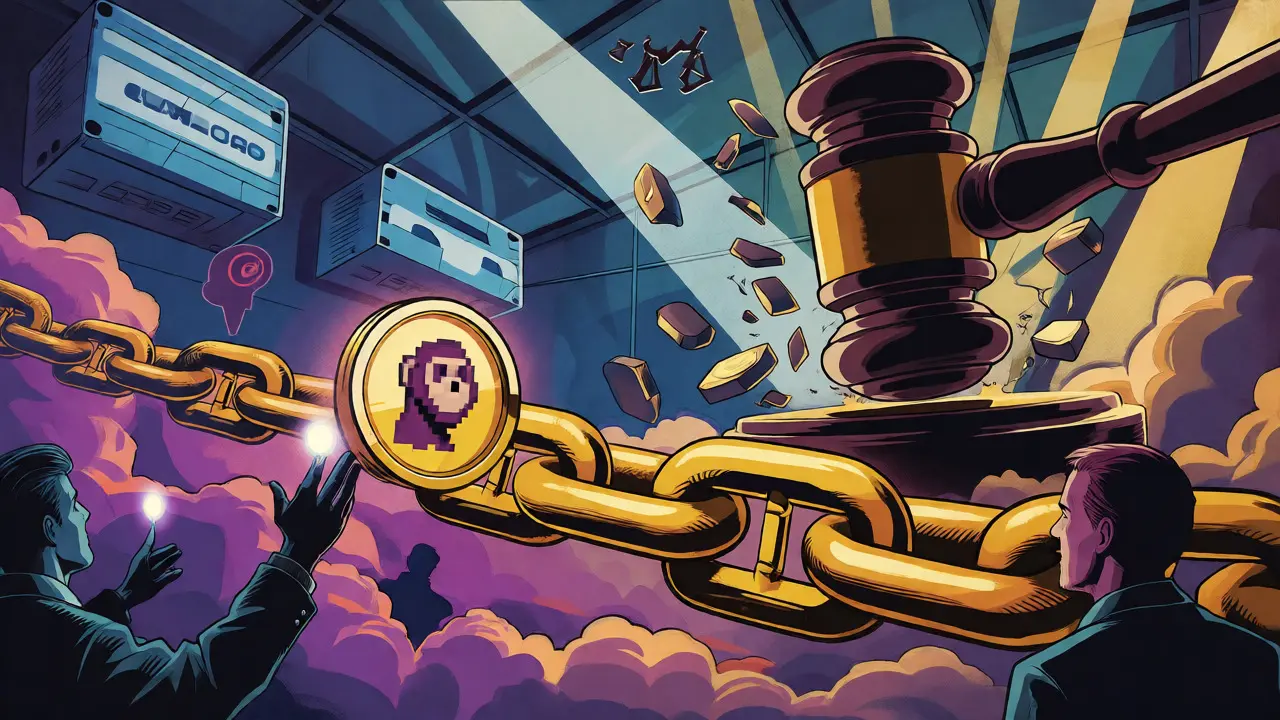
Consider the Bored Ape Yacht Club. Owning one isn’t just about having a JPEG; it’s about holding a cryptographic proof of ownership that grants commercial usage rights. Similarly, domain names like .eth require annual renewals, mimicking a lease, but other projects offer perpetual ownership encoded in smart contracts.
However, blockchain isn’t a magic fix. If the website hosting your NFT art goes offline, the token remains, but the image might disappear unless stored on decentralized storage like IPFS. Furthermore, courts haven’t fully tested how smart contracts interact with traditional copyright law. While the potential for transferable, verifiable ownership is huge, the legal framework is still catching up to the code.
Consumer Risks and Real-World Failures
The biggest risk of licensing is platform dependency. Remember when Amazon shut down its Cloud Drive? Millions of users lost access to music they had "bought." Or consider EA Games, which removed access to classic titles from Origin after changing licensing terms. Users who had owned Command & Conquer since 1995 suddenly couldn’t play their original purchase.
Account bans are another threat. If Steam bans your account for a violation-even an unrelated one-you lose your entire library. Since you only held a revocable license, the platform can revoke it. A Reddit user famously noted losing $60 worth of games because of a ban, highlighting the fragility of digital assets.
How to Protect Your Digital Assets
You can’t change the law overnight, but you can adjust your habits. Here is a checklist to navigate the murky waters of digital licensing:
- Read the Fine Print: Look for words like "revocable," "non-transferable," and "limited license." If you see them, you don’t own the asset.
- Check Platform Stability: Before investing heavily in a platform, ask yourself: What happens if this company fails? Does it have a track record of honoring past purchases?
- Download When Possible: If a service allows local downloads (like some music stores or e-book platforms), do it. Local files are harder to revoke than streaming links.
- Understand DRM Restrictions: Know if your content is tied to a specific device or account. Some formats, like EPUB without DRM, offer more freedom than proprietary formats.
- Consider Blockchain for High-Value Assets: For collectibles or art, NFTs may offer better transferability, but ensure the metadata is stored decentrally.
The Future of Digital Ownership
We are at a tipping point. Gartner predicts a "hybrid ownership" model emerging by 2027, where blockchain verification allows limited resale rights even within closed ecosystems. The tension between corporate control and consumer rights will define the next decade of digital commerce.
Ultimately, transparency is key. As regulations like California’s AB 2426 spread, platforms will have to be honest about what you’re buying. Until then, assume you are renting, not owning. Treat your digital library with the same caution you’d treat a rental apartment-don’t renovate, don’t sublet, and hope the landlord doesn’t kick you out.
Do I own my digital movies and books?
Generally, no. Most major platforms like Amazon, Apple, and Steam grant you a revocable, non-transferable license to use the content. You do not have the right to resell or gift it, unlike physical copies.
What is the First Sale Doctrine and why doesn't it apply to digital goods?
The First Sale Doctrine allows owners of physical copies of copyrighted works to resell or lend them without permission. Courts have ruled it does not apply to digital transmissions because transferring a digital file involves creating a new copy rather than moving the original, which infringes on the copyright holder's reproduction rights.
Does buying an NFT mean I own the underlying artwork?
Not necessarily. An NFT proves you own a unique token on the blockchain linked to the artwork. It does not automatically grant copyright or commercial usage rights unless explicitly stated in the project's license agreement, such as with Bored Ape Yacht Club.
What is DRM?
DRM stands for Digital Rights Management. It refers to technologies used by publishers and copyright holders to limit the use of proprietary hardware and copyrighted works. Examples include encryption that prevents copying e-books or region-locking DVDs.
Can I inherit my digital purchases?
It depends on the platform's terms of service. Many licenses are personal and terminate upon the user's death. Some services, like Apple and Google, have introduced legacy contact features allowing family members to access accounts, but this varies significantly by provider.