Have you ever looked for a way to invest in cryptocurrency without staring at charts all day? You probably stumbled across CoTrader. It promises something different from the usual exchange experience. Instead of just buying Bitcoin or Ethereum and hoping for the best, CoTrader positions itself as a marketplace where you can allocate your capital to professional traders. They call it "The Uber of hedge funds." That sounds convenient, but is it actually safe? And more importantly, does it work?
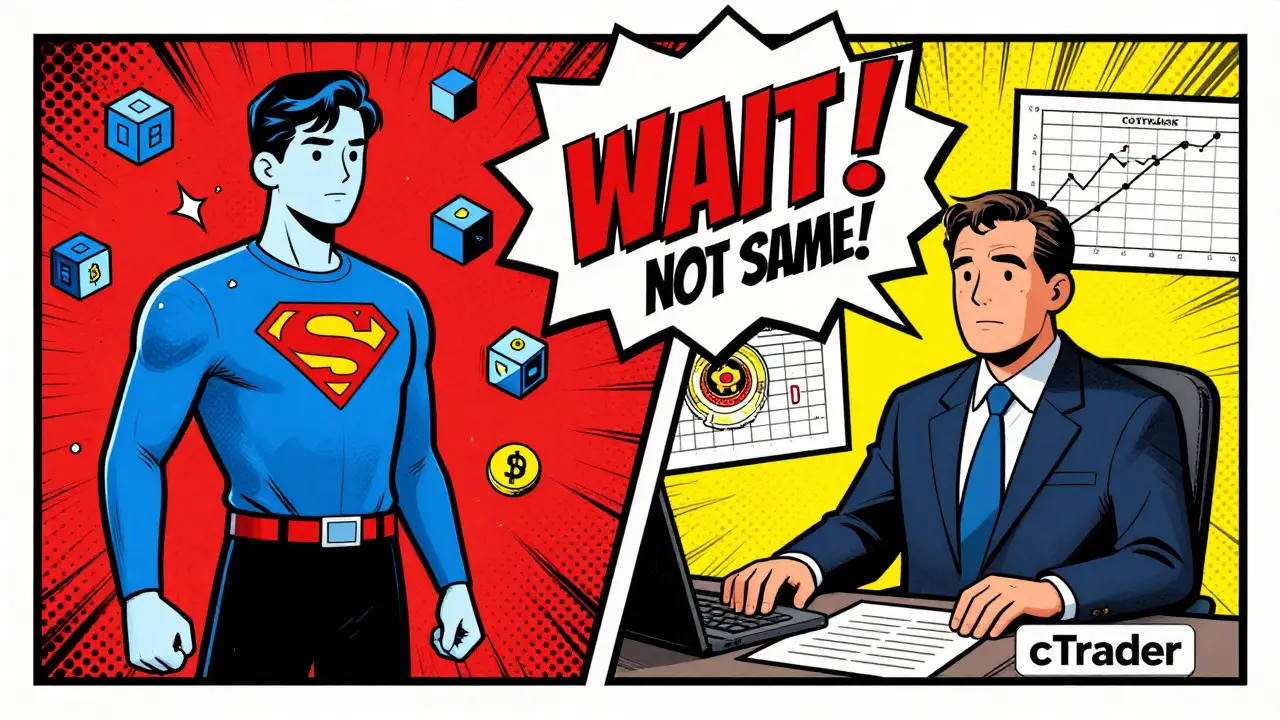
Before we dig into the details, there is a massive trap you need to avoid right now. Do not confuse CoTrader with cTrader. These are two completely different entities. cTrader is a well-known, regulated forex and multi-asset trading platform established in 2011. It serves millions of users and is headquartered in Cyprus. CoTrader, on the other hand, is a blockchain-based decentralized platform launched much later. Mixing them up could lead you to the wrong website, the wrong expectations, and potentially lost funds. This review focuses strictly on CoTrader and its native token, COT.
What Exactly Is CoTrader?
CoTrader is a decentralized investment platform that enables peer-to-peer fund management and investment allocation among cryptocurrency investors and professional traders. Unlike traditional centralized exchanges like Binance or Coinbase, where you trade against an order book or the house, CoTrader operates on a matching model. Think of it as a bridge between two groups of people: those who have money but no time to trade (investors, or "cotraders") and those who have trading skills but want more capital to manage (professional traders).
The core idea is simple. You deposit your crypto into the platform's smart contracts. Then, you choose a trader based on their verified performance history. The trader manages that portion of your funds according to their strategy. If they make a profit, they take a cut. If they lose, you bear the loss. The platform facilitates this connection without holding your assets in a central bank account, which is a key selling point for decentralization advocates.
This model attempts to solve a major pain point in crypto: accessibility. Traditional hedge funds often require minimum investments of $100,000 or more and come with long lock-up periods. CoTrader aims to democratize this by allowing smaller allocations and offering withdrawal flexibility. According to data from May 2026, cotraders can withdraw their invested funds from any trader at any point. There are no mandatory lock-in periods. This feature alone sets it apart from many traditional financial structures.
How the Platform Works: The Investor Experience
If you decide to use CoTrader, here is what the process generally looks like. First, you connect your wallet to the mainnet interface. You aren't creating an account with email and password verification in the traditional sense; you are interacting with a decentralized application (dApp). Once connected, you browse the list of available traders.
Transparency is supposed to be the platform's strongest asset. Before you allocate funds, you should see verified proof of funds and historical return on investment (ROI) metrics for each trader. This allows you to make informed decisions. Are you looking for high-risk, high-reward strategies? Or do you prefer steady, low-volatility growth? The platform’s performance tracking system categorizes traders so you can filter them based on your risk tolerance.
- Browse Traders: Look at their historical ROI, win rate, and current open positions.
- Allocate Capital: Send your desired amount of cryptocurrency to the specific trader's smart contract pool.
- Monitor Performance: Track how your allocated funds perform in real-time through the dashboard.
- Withdraw Anytime: If you lose confidence or need liquidity, you can pull your funds out without waiting for a monthly settlement period.
This flexibility is crucial in the volatile crypto market. If a trader starts making reckless moves, you don't have to wait weeks to exit. However, remember that "verified" data in decentralized systems relies on smart contract accuracy and oracle reliability. Always double-check the source of the data you are seeing.
The COT Token: Utility and Market Reality
Every decentralized platform needs a native token to function, and for CoTrader, that is the COT token. But what does COT actually do? In most DeFi platforms, tokens serve several purposes: governance (voting on changes), fee discounts, or staking for security. While the exact utility of COT within the CoTrader ecosystem isn't fully detailed in public mainstream reports, its market behavior tells us a lot about investor sentiment.
As of May 2026, the COT token trades primarily on decentralized exchanges. The main venue listed is Bancor (V2), where it pairs with the BNT token. Let's look at the numbers. On May 15, 2026, Bancor showed a spread of 0.72%. The depth was relatively shallow, with approximately $36 available at +2% price impact and $41 at -2%. This indicates moderate liquidity. For a serious institutional investor, this might be too thin. For a retail investor moving hundreds or low thousands of dollars, it is manageable.
The 24-hour trading volume on this pair was only $32.00, representing 92.22% of the total volume. This suggests that Bancor is the primary, if not exclusive, liquidity source for COT at this time. Low volume can mean two things: either the community is small and tight-knit, or the token lacks broad interest. In terms of price action, COT rose 1.40% over the seven days leading up to mid-May 2026. This outperformed the broader crypto market, which gained 0.60%, but significantly underperformed the Ethereum Ecosystem category, which surged 12.70% in the same period.
| Metric | COT Token | Broad Crypto Market | Ethereum Ecosystem |
|---|---|---|---|
| 7-Day Price Change | +1.40% | +0.60% | +12.70% |
| Primary Trading Venue | Bancor (V2) | N/A | N/A |
| Liquidity Depth (Approx.) | $36-$41 | High | Very High |
This underperformance relative to Ethereum suggests that while COT holders were profitable, they missed out on larger gains elsewhere. It raises questions about the token's speculative appeal versus its fundamental utility. If you hold COT, ask yourself: am I holding it because I believe in the CoTrader platform's future, or just because it went up slightly?

Safety and Security: What You Need to Know
When dealing with decentralized finance (DeFi), safety is not guaranteed by a regulatory body. It is guaranteed by code. So, how secure is CoTrader? Here is the hard truth: public information regarding CoTrader's security audits is scarce. Most reputable DeFi projects publish their smart contract audit reports from firms like CertiK, OpenZeppelin, or Trail of Bits prominently on their homepage. CoTrader's official site mentions the technology, but independent third-party validation is not widely cited in mainstream reviews as of mid-2026.
This lack of transparency is a red flag for conservative investors. Smart contract bugs can lead to drained funds. Since CoTrader operates on the Ethereum ecosystem, it inherits the security standards of Ethereum, but the specific implementation of its fund-matching logic must be flawless. Without published audit results, you are trusting the development team's internal testing.
Another aspect of safety is the counterparty risk. Even if the platform is secure, the trader you choose might not be. Just because a trader has a good past ROI doesn't mean they won't blow up your account tomorrow. CoTrader provides historical data, but it cannot predict the future. Diversification is your best friend here. Don't put all your eggs in one trader's basket.
CoTrader vs. cTrader: Clearing the Confusion
We mentioned this earlier, but it bears repeating because the confusion is rampant. Many users searching for "crypto exchange review" end up comparing apples to oranges. Let's break down the differences clearly.
| Feature | CoTrader | cTrader |
|---|---|---|
| Type | Decentralized Investment Marketplace | Centralized Forex/Multi-Asset Brokerage |
| Founded | Recent (Mainnet launch context) | 2011 |
| Regulation | Unclear / Unregulated DeFi | Regulated (CySEC, etc.) |
| Assets | Cryptocurrencies via Smart Contracts | Forex, Crypto, Indices, Metals, Stocks |
| User Base | Niche DeFi Investors | 8+ Million Traders Globally |
| Execution Model | P2P Fund Allocation | ECN-style Execution |
If you are looking for a regulated environment with customer support, insurance schemes, and access to traditional markets like stocks and gold, cTrader is likely what you need. If you are a crypto-native user comfortable with self-custody, smart contract risks, and wanting to delegate trading to others, CoTrader is the experimental path. They serve fundamentally different purposes.

Pros and Cons of Using CoTrader
To help you make a decision, let's summarize the strengths and weaknesses based on the available data.
Pros:
- Accessibility: Lowers the barrier to entry for managed crypto portfolios.
- Flexibility: No lock-in periods; withdraw anytime.
- Transparency Potential: On-chain data allows for verifiable performance metrics (if audited properly).
- Decentralization: Non-custodial nature means you retain control of your keys until delegation.
Cons:
- Limited Liquidity: The COT token has very low trading volume and depth.
- Security Opacity: Lack of publicly available third-party smart contract audits.
- Counterparty Risk: Trader performance is not guaranteed; past ROI does not ensure future profits.
- Confusion: Frequent mix-ups with the unrelated cTrader platform.
- Underperformance: COT token lagged behind broader Ethereum trends in recent months.
Who Should Use CoTrader?
CoTrader is not for everyone. It is best suited for experienced crypto users who understand DeFi risks. If you are new to cryptocurrency, stick to established centralized exchanges or simple self-custody wallets. CoTrader requires you to trust the code and the traders. It is ideal for someone who has idle crypto assets and wants passive income potential without actively trading themselves. However, you must be willing to accept the higher risk associated with unregulated, niche platforms.
If you are a professional trader, CoTrader offers a way to scale your influence. By attracting capital from cotraders, you can amplify your returns without needing personal deep pockets. But you also face scrutiny. Your performance is public. One bad month could dry up your funding quickly.
Final Thoughts
CoTrader represents an interesting experiment in democratizing hedge fund-like strategies for the crypto world. The concept of peer-to-peer fund allocation with instant withdrawal is powerful. However, the execution faces challenges. Low liquidity for its token, limited public security validation, and significant brand confusion with cTrader are hurdles that need addressing. As of August 2026, it remains a niche platform. Proceed with caution, start small, and always verify the smart contract addresses before connecting your wallet.
Is CoTrader the same as cTrader?
No, they are completely different. cTrader is a regulated, centralized forex and multi-asset trading platform founded in 2011. CoTrader is a decentralized blockchain-based investment marketplace for cryptocurrencies. Do not confuse the two.
Can I withdraw my money from CoTrader anytime?
Yes, according to platform data from May 2026, cotraders can withdraw their invested funds from any trader at any point. There are no mandatory lock-in periods, which is a key feature of the platform.
Where can I buy the COT token?
The COT token primarily trades on decentralized exchanges. As of mid-2026, the main venue is Bancor (V2), where it pairs with BNT. Liquidity is moderate, so large orders may impact the price.
Is CoTrader safe to use?
Safety in DeFi depends on smart contract security. Public information about third-party security audits for CoTrader is limited as of 2026. Users should exercise caution, verify contract addresses, and consider the counterparty risk of individual traders.
What is the minimum investment on CoTrader?
Unlike traditional hedge funds with high minimums, CoTrader aims for accessibility. Specific minimums depend on the individual trader's settings, but generally, it allows for smaller allocations compared to institutional funds.
How does CoTrader make money?
While specific fee structures vary, platforms like CoTrader typically charge a service fee or take a percentage of the profits generated by traders. The COT token may also play a role in fee discounts or governance, though its primary utility details are sparse in public records.