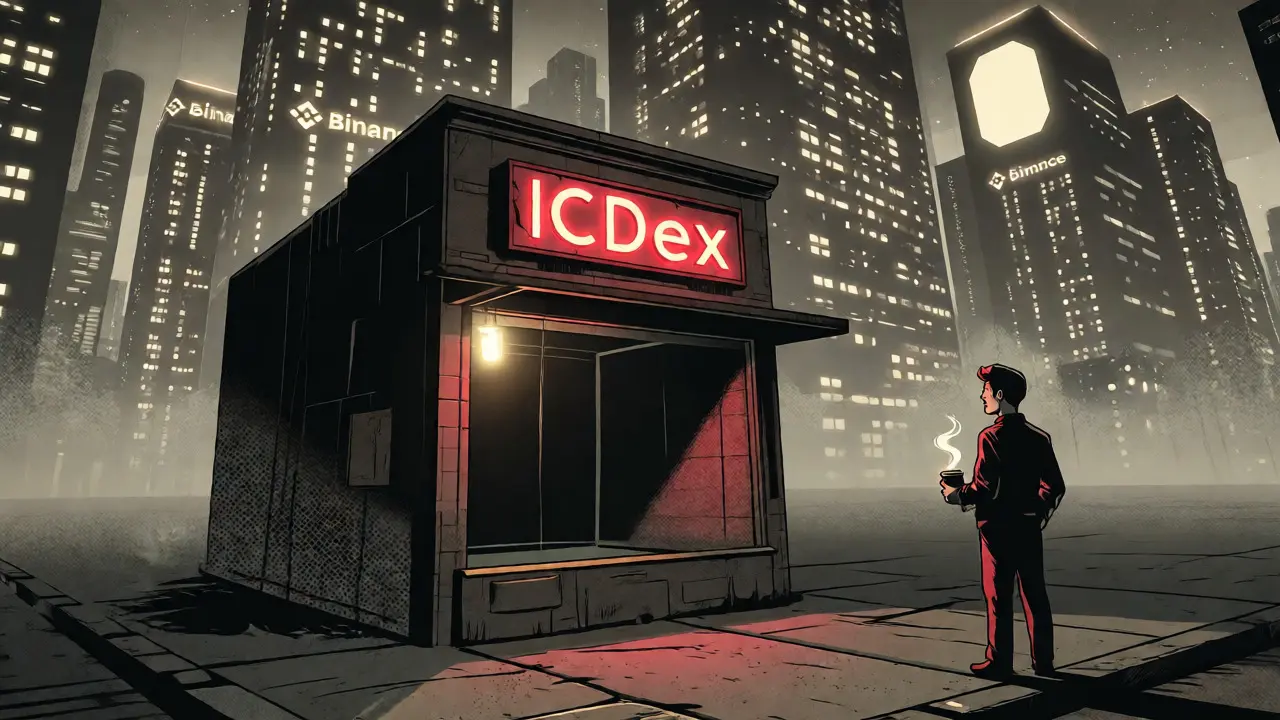
Imagine trying to buy a coffee with a credit card that only works in one specific town, and that town has almost no shops. That is the current reality for ICDex. It is a fully decentralized cryptocurrency exchange built on the Internet Computer (IC) blockchain, designed to offer centralized exchange features without holding your keys. But here is the kicker: as of late 2023, its 24-hour trading volume hovered around $93.79. Yes, ninety-three dollars. If you are hunting for a mainstream trading platform, you might want to keep scrolling. But if you are deep in the Internet Computer ecosystem and crave true self-custody, this review breaks down exactly what you are getting into.
The Core Concept: Decentralization Done Differently
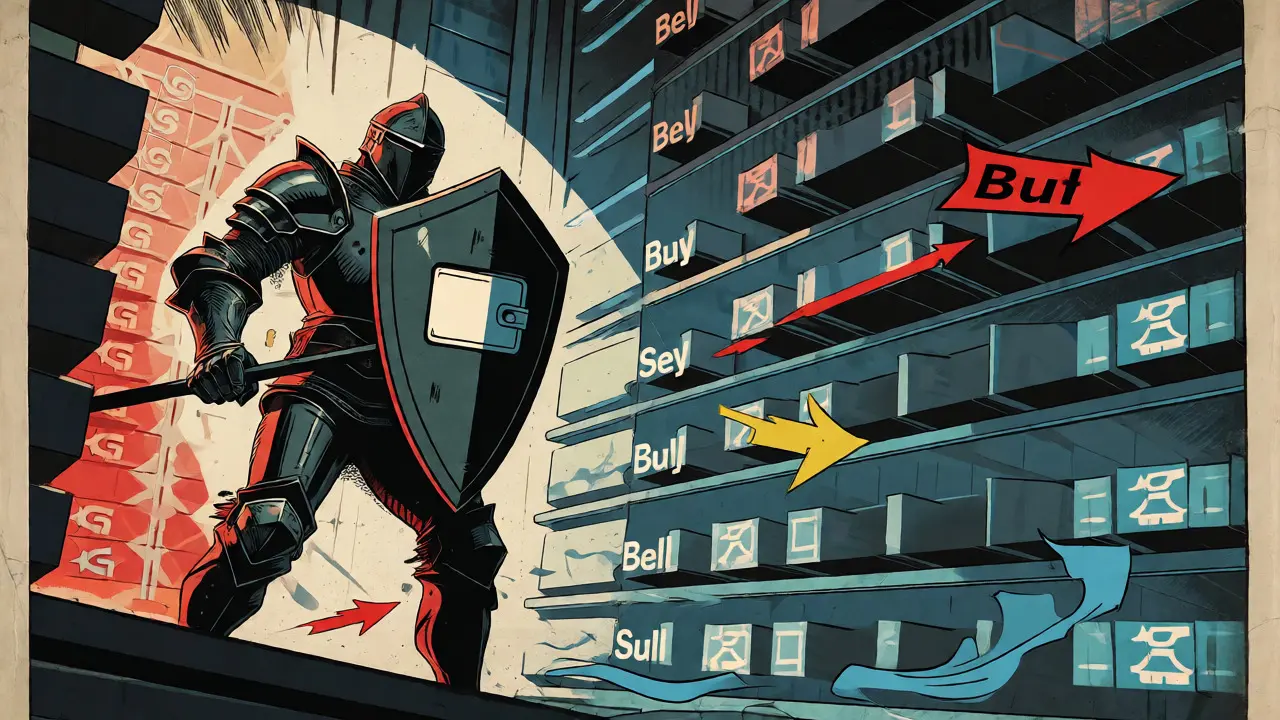
Most people confuse "decentralized" with "automated market maker" (AMM). Platforms like Uniswap use liquidity pools where you swap tokens against a smart contract balance. ICDex takes a different route. It uses a genuine on-chain order book. This means when you place a limit order, it sits on the blockchain waiting for a counterparty, just like on Binance or Coinbase, but without the company holding your money. You connect a wallet, sign transactions, and trade peer-to-peer via smart contracts. The appeal? You never trust an exchange with your funds. If the site goes down tomorrow, your assets are still safe in your wallet.
This architecture was developed by the team behind the Internet Computer Protocol ecosystem, closely tied to the DFINITY Foundation. The goal was to bridge the gap between the user experience of centralized exchanges (CEXs) and the security principles of DeFi. They wanted to offer advanced tools-like stop orders and fill-or-kill functionality-that are usually missing from AMMs, all while keeping users in full control.
Liquidity: The Elephant in the Room
Let’s talk numbers, because they matter more than code here. CoinGecko data places ICDex in the bottom quartile of tracked exchanges. With only 8 coins and 8 trading pairs listed, the selection is tiny. The most active pair is typically ICL/ICP, but even that sees negligible movement. When daily volume drops below $100, slippage becomes your worst enemy. If you try to sell a meaningful amount of tokens, you will likely move the price against yourself significantly because there are barely any buyers on the other side.
This creates a classic "chicken-and-egg" problem. Traders avoid the platform because there is no liquidity. Liquidity providers avoid it because there are no traders to earn fees from. Consequently, ICDex serves a hyper-niche audience: people who specifically need to trade Internet Computer native tokens using a non-custodial order book model. For anyone else, the friction outweighs the benefits.
Fees and Trading Mechanics
One bright spot is the fee structure. ICDex operates on three order book categories: MAIN, SECOND, and THIRD Boards. Generally, maker fees are 0%, meaning you pay nothing if you add liquidity to the order book. Taker fees vary by board, ranging from 0.2% to 0.5%. While these rates are competitive compared to centralized exchanges, they become irrelevant if you cannot execute trades at a fair price due to thin order books.
| Feature | ICDex | Uniswap (V3) | PancakeSwap |
|---|---|---|---|
| Blockchain | Internet Computer (IC) | Ethereum / L2s | BNB Chain |
| Architecture | On-Chain Order Book | Automated Market Maker (AMM) | Automated Market Maker (AMM) |
| Token Selection | Tiny (8 pairs) | Huge (Thousands) | Large (Hundreds) |
| Typical Volume | <$100/day | $1B+/day | $500M+/day |
| Custody | Non-Custodial | Non-Custodial | Non-Custodial |
User Experience and Accessibility
If you are new to crypto, ICDex will feel hostile. There are no fiat on-ramps. You cannot link a bank account or buy crypto with a credit card directly on the platform. You must already hold Internet Computer tokens (ICP) or related assets in a compatible wallet. This immediately disqualifies beginners who prefer the simplicity of buying Bitcoin with Apple Pay.
The interface itself is functional but sparse. Because traffic is so low (estimated at under 300 monthly visits), there is little community feedback to drive UX improvements. You won’t find active Discord servers buzzing with support questions or Twitter threads discussing new listings. The learning curve is steep not because the tech is complex, but because the ecosystem surrounding it is quiet. You are largely on your own to troubleshoot issues.
Security and Regulation
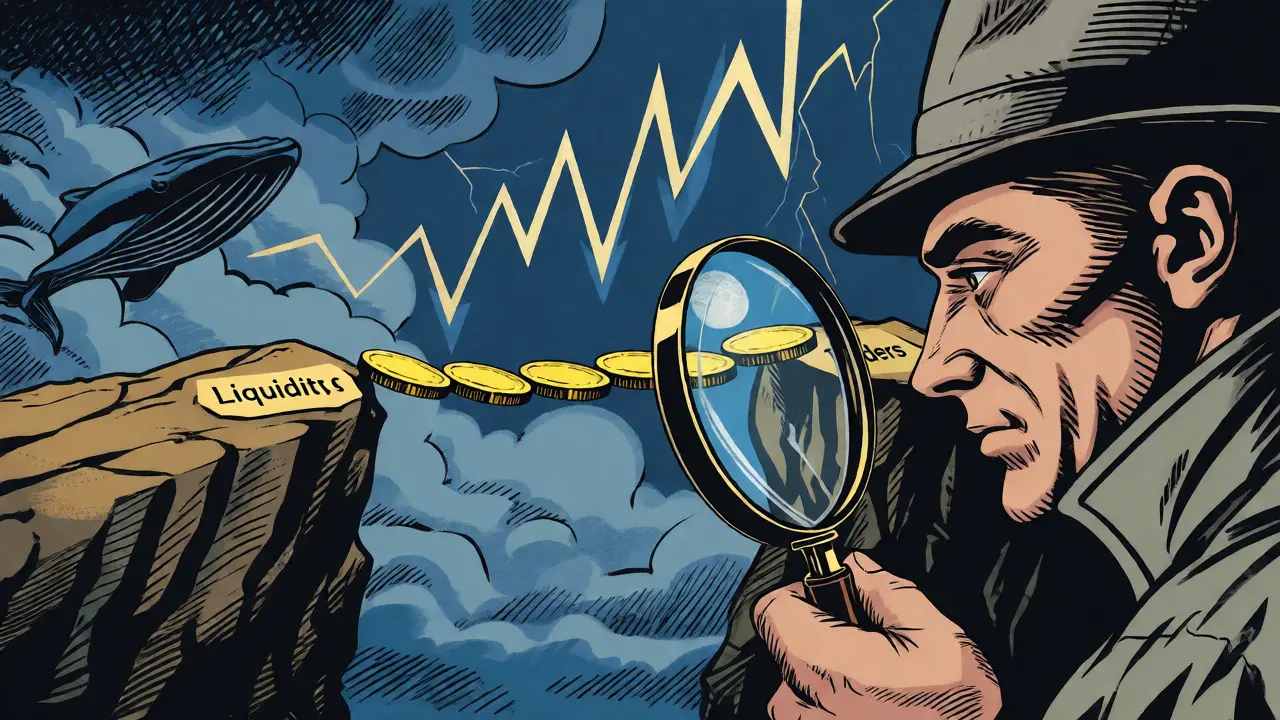
From a technical standpoint, the security model is sound. Since it is non-custodial, the risk of a hack draining user deposits from the exchange hot wallet is eliminated. The smart contracts have undergone audits, which adds a layer of confidence. However, low usage introduces a different kind of risk: manipulation. In thin markets, a single whale can artificially pump or dump prices, catching retail traders off guard.
Regulatory status is murky. ICDex is incorporated in Singapore but does not appear to be regulated by any government authority. For most DeFi users, this is standard. But if you value legal recourse or consumer protection, this lack of oversight is a significant downside. Unlike centralized exchanges that may comply with KYC/AML laws, ICDex operates purely on code.
Who Should Actually Use ICDex?
So, why would anyone use this? Three specific scenarios come to mind:
- The IC Maximalist: You believe in the Internet Computer protocol and want to trade its native tokens without ever trusting a centralized entity.
- The Privacy Advocate: You refuse to submit ID documents (KYC) and want a truly permissionless trading venue.
- The Developer/Tester: You are experimenting with on-chain order books and want to see how they perform in a live, albeit small, environment.
For everyone else-especially those looking for high-volume trading, diverse altcoins, or easy fiat access-I recommend sticking to major players like Uniswap, dYdX, or centralized giants like Bybit.
Final Verdict: A Technical Curiosity
ICDex is a fascinating experiment in decentralized finance. It proves that you can build a CEX-like experience entirely on-chain. But as a practical trading tool, it struggles. The severe lack of liquidity makes it unusable for serious capital deployment. It remains a niche utility for a tiny subset of the crypto market. Unless the Internet Computer ecosystem experiences explosive growth that drives demand for non-custodial order books, ICDex will likely remain a ghost town.
Is ICDex safe to use?
Yes, in terms of custody. Since it is non-custodial, you retain control of your private keys. However, the smart contracts should be treated with caution, and the thin liquidity poses market risks rather than security risks.
Can I buy crypto with a credit card on ICDex?
No. ICDex does not support fiat on-ramps. You must deposit cryptocurrency, specifically Internet Computer-based tokens, from another wallet or exchange.
What wallets work with ICDex?
You need a wallet compatible with the Internet Computer network. Common options include Plug Wallet or Bitfinity Wallet, which integrate directly with the IC blockchain.
Why is the trading volume so low?
ICDex serves a very narrow niche within the Internet Computer ecosystem. Most traders prefer larger exchanges with more token variety and higher liquidity, leaving ICDex with minimal activity.
Does ICDex require KYC verification?
No. As a decentralized exchange, ICDex does not require Know Your Customer (KYC) identity verification. You can trade anonymously using just your wallet.