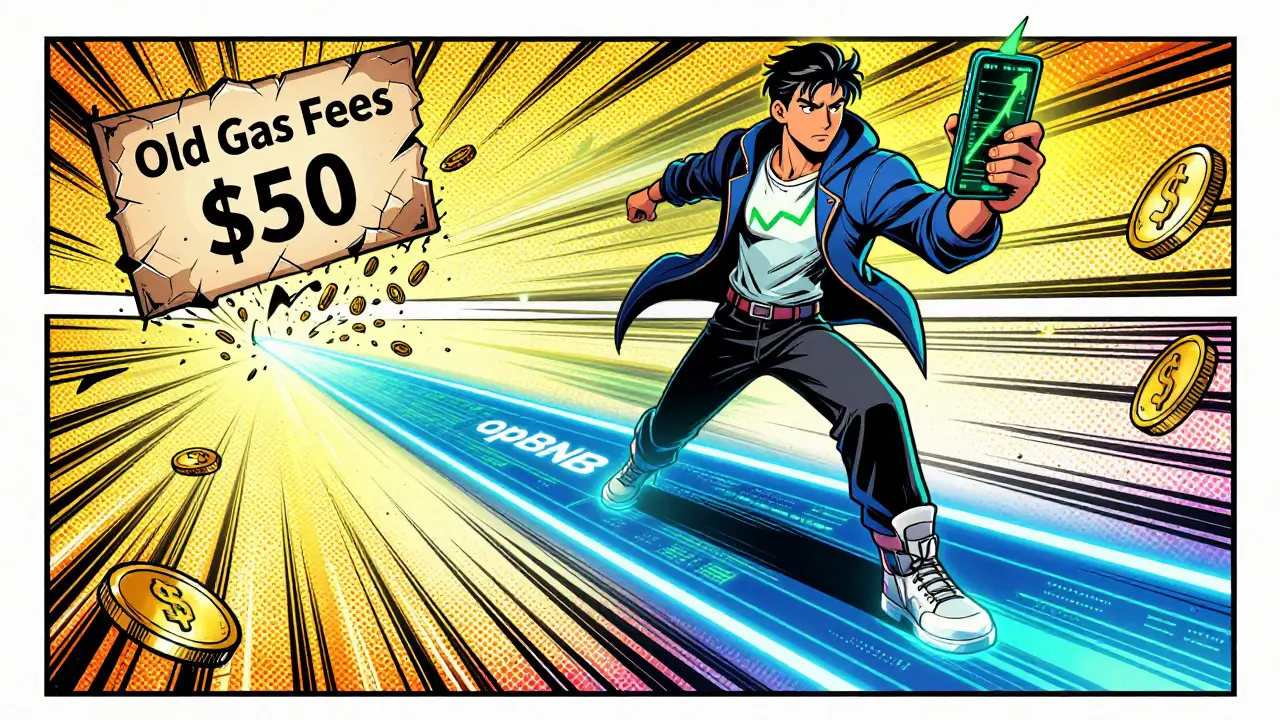
Remember the days when swapping tokens meant waiting ten minutes and paying $50 in gas fees? Those days are largely behind us, especially if you’re trading on PancakeSwap v2 via the optimized BNB (opBNB) network. In August 2026, speed and cost aren't just nice-to-haves; they are the baseline expectation for any serious trader. PancakeSwap has cemented its position not just as a Binance Smart Chain relic, but as a multi-chain powerhouse that processes billions in volume while keeping costs near zero.
If you are looking at PancakeSwap today, you aren’t just looking at a simple token swapper. You are looking at a mature decentralized finance ecosystem with nearly $10 billion locked inside it. But does the move to opBNB actually make it better for your wallet? Let’s break down the reality of using this platform right now, stripping away the hype to look at the mechanics, the risks, and the actual user experience.
What Exactly Is PancakeSwap v2 on opBNB?
To understand why people flock to this platform, we have to look at how it works under the hood. PancakeSwap is an Automated Market Maker (AMM) that uses smart contracts to facilitate trades without a central order book or intermediary. Unlike centralized exchanges like Coinbase or Binance, where a company holds your money, here you trade directly from your wallet. This means you never give up custody of your assets unless you explicitly choose to stake them.
The "v2" label refers to the current core protocol architecture. It introduced critical improvements over the original version, most notably the use of Uniswap V2-style math which drastically reduced slippage and improved capital efficiency for liquidity providers. When you combine this robust engine with opBNB a Layer 2 scaling solution for the BNB Chain that offers high throughput and low transaction costs, you get a trading environment that feels instant.
Why does this matter? Because on Ethereum mainnet, even small trades can be prohibitively expensive during peak hours. On opBNB, transactions settle in seconds for fractions of a cent. This makes micro-trading and frequent rebalancing viable strategies that simply don’t work on slower chains. The platform currently supports nine blockchains, but opBNB remains the heart of its operation due to its deep liquidity and heritage within the Binance ecosystem.
Trading Mechanics: Swaps, Limit Orders, and TWAP
Most users start with spot swaps. You connect your wallet-usually MetaMask, Trust Wallet, or the built-in PancakeSwap wallet-and select the token pair. The price is determined by the ratio of assets in the liquidity pool, not by matching buyers and sellers. This ensures there is always liquidity available, though large trades can still cause slippage.
However, calling PancakeSwap just a "swap button" would be selling it short. The platform has evolved significantly in its order execution capabilities:
- Limit Orders: You can set a target price for buying or selling. The smart contract monitors the market and executes the swap automatically when that price is hit. This is crucial because, unlike centralized exchanges, these orders don’t sit in an order book waiting for a counterparty. They trigger an AMM swap once the condition is met. Note that these stay open until executed or cancelled, so keep an eye on your active orders.
- TWAP Orders: For larger investors, moving the market is a real risk. Time-Weighted Average Price (TWAP) orders break a large trade into smaller chunks spread over time. This minimizes slippage and hides your intent from other traders who might front-run your transaction.
One caveat to remember: limit orders do not work for tokens that charge transfer taxes or fees. If a project takes a 5% cut on every send, the smart contract gets confused about the final amount, and the order fails. Stick to standard ERC-20/BEP-20 compliant tokens for these advanced features.
Fees and Costs: What Are You Actually Paying?
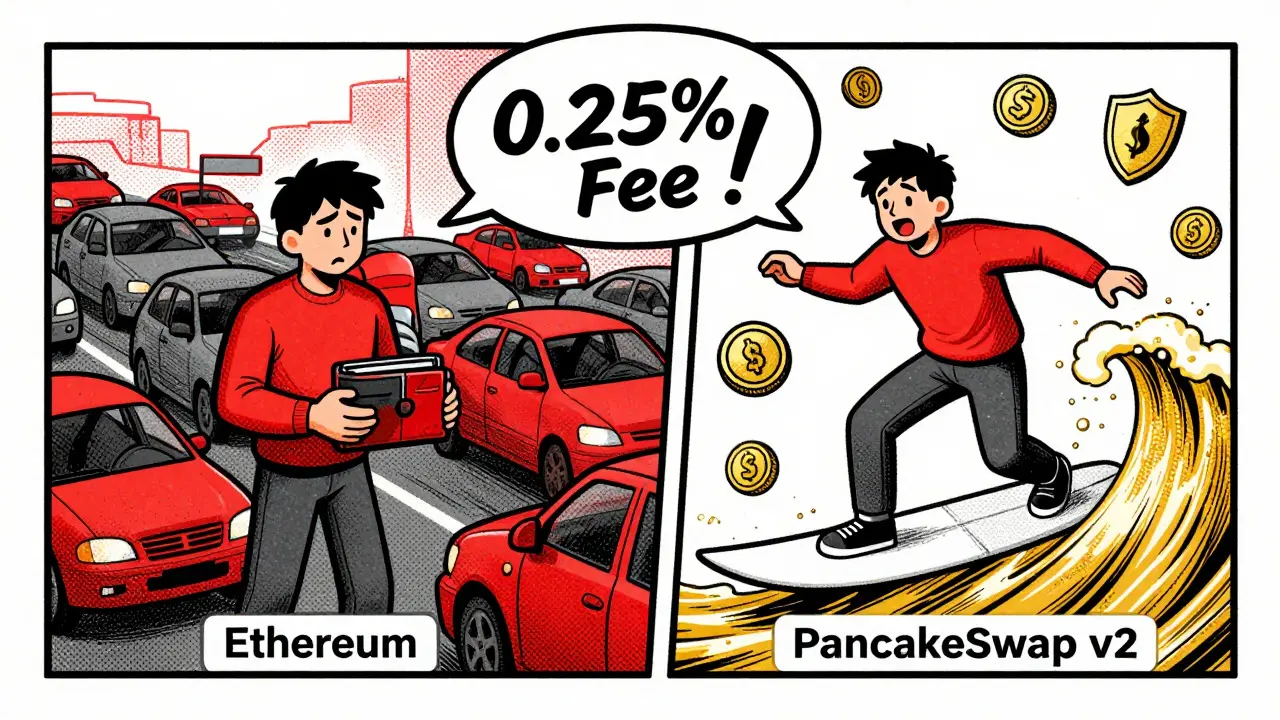
Let’s talk numbers, because that’s what keeps you up at night. The standard trading fee on PancakeSwap is 0.25% for both makers and takers. How does that stack up?
| Platform Type | Avg. Trade Fee | Network Gas Cost | Custody |
|---|---|---|---|
| PancakeSwap (opBNB) | 0.25% | < $0.01 | Non-Custodial (You) |
| Centralized Exchange (e.g., Binance) | 0.1% - 0.5% | $0 (Internal) | Custodial (Exchange) |
| Ethereum DEX (e.g., Uniswap) | 0.3% | $2 - $50+ | Non-Custodial (You) |
While 0.25% might seem higher than some aggressive centralized exchange rates, you have to factor in the gas. On Ethereum, a single swap could cost $20 in gas, which effectively raises your fee percentage massively for small trades. On opBNB, that gas cost is negligible. For a $100 trade, you pay $0.25 in fees and almost nothing in gas. That is hard to beat for retail traders.
Additionally, if you hold CAKE tokens, you can burn a portion of your trading fees. This isn’t just a gimmick; it provides tangible savings for frequent traders. However, remember that impermanent loss-the risk inherent in providing liquidity-can outweigh these fee discounts if the market moves sharply against your position.
Security and Trust: Who Holds Your Keys?
In the world of DeFi, trust is a dirty word. The goal is verification, not trust. PancakeSwap operates on full node validation systems, which are generally considered more secure than Simplified Payment Verification (SPV) methods used by some lighter bridges or wallets. This means the network fully validates transactions before they are finalized, reducing the chance of double-spending or fraud.
But let’s be realistic. Smart contracts are code, and code can have bugs. PancakeSwap undergoes regular security audits from reputable firms. These audits are public, and you should check them if you are locking up significant capital. The platform has a strong track record, having survived numerous market crashes and exploits that took down competitors.
The biggest security advantage, however, remains yours. Since you control your private keys via your wallet, no hacker can drain your account unless they steal your seed phrase or you approve a malicious contract interaction. Always verify URLs. Phishing sites pretending to be PancakeSwap are the number one way users lose funds, not protocol hacks.
User Experience: From Beginner to Pro
I’ve seen developers struggle with complex DeFi interfaces, but PancakeSwap manages to keep things surprisingly clean. The learning curve is gentle. New users can connect a wallet and execute their first swap in under two minutes. There is no KYC (Know Your Customer) process, no email registration, and no identity verification. You are anonymous by default.
For power users, the dashboard is packed. You have access to yield farming, staking pools, prediction markets, and NFT galleries all from one tab. The interface clearly separates simple swaps from complex liquidity provision, which helps prevent accidental clicks. However, the sheer number of options can be overwhelming. If you are new to DeFi concepts like impermanent loss or APY vs APR, take advantage of their educational resources before depositing large sums.
Customer support is another story. Because it is decentralized, there is no call center. If you mess up a transaction, there is no "undo" button. Support comes primarily through community forums, Discord, and Twitter. This requires a level of self-reliance that traditional banking users often find frustrating, but it is the price of freedom in crypto.
Risks You Cannot Ignore
No review is honest without discussing the downsides. Here is what you need to watch out for:
- Impermanent Loss: If you provide liquidity to earn rewards, and the price of one token changes significantly compared to the other, you may end up with less value than if you had just held the tokens in your wallet. This is a mathematical certainty in volatile markets, not a bug.
- Smart Contract Risk: While audited, no code is perfect. A future exploit could freeze funds or drain pools. Diversify your exposure across different protocols.
- Regulatory Uncertainty: DeFi exists in a gray area globally. Regulations in 2026 are tightening in many jurisdictions. While PancakeSwap is permissionless, future laws could impact tax reporting or accessibility in certain countries.
- Token Taxes: As mentioned, some meme coins or utility tokens charge fees on transfers. These can eat into your profits or break limit orders. Always check the token contract details before trading obscure assets.
Is PancakeSwap v2 Right for You in 2026?
If you want simplicity, low costs, and speed, PancakeSwap on opBNB is arguably the best option in the non-Ethereum space. It strikes a rare balance between being accessible enough for beginners and powerful enough for institutional-grade trading strategies like TWAPs. The multi-chain support means you aren’t locked into one ecosystem, but opBNB remains the sweet spot for cost-efficiency.
It is not for you if you hate responsibility. If you expect a customer service rep to fix your mistake, or if you are terrified of managing private keys, stick to centralized exchanges. But if you are ready to take control of your finances, understand the risks, and leverage technology to minimize fees, PancakeSwap delivers on its promise. Just remember: in DeFi, you are the bank. Act like one.
Is PancakeSwap safe to use in 2026?
Yes, PancakeSwap is considered safe due to its long track record, regular security audits, and non-custodial nature. However, safety also depends on user behavior. Always ensure you are connecting to the official website, verify smart contract approvals, and protect your private keys. No platform is immune to smart contract bugs, so diversification is key.
What is the difference between PancakeSwap v1 and v2?
V2 introduced significant improvements over V1, including better pricing algorithms (similar to Uniswap V2), reduced slippage, and enhanced capital efficiency for liquidity providers. V2 is the current standard and supports advanced features like limit orders and cross-chain functionality, whereas V1 was more basic and prone to higher losses.
How much does it cost to trade on opBNB?
The trading fee is 0.25% per swap. Network gas fees on opBNB are extremely low, typically less than $0.01 per transaction. This makes it much cheaper than Ethereum-based DEXs, where gas fees can range from $2 to $50 or more depending on network congestion.
Do I need to create an account to use PancakeSwap?
No, PancakeSwap is a decentralized exchange (DEX). You only need a compatible cryptocurrency wallet like MetaMask, Trust Wallet, or SafePal. There is no KYC (Know Your Customer) process, email registration, or password to manage. Your wallet address serves as your identity.
What is impermanent loss?
Impermanent loss is a risk associated with providing liquidity to a pool. It occurs when the price of the deposited tokens changes relative to each other. If the prices diverge significantly, you may end up with less total value than if you had simply held the tokens in your wallet. This loss becomes permanent if you withdraw your liquidity while the price difference persists.