
When you hear about Runesterminal (RUNI), it’s easy to think it’s just another crypto coin. But that’s not quite right. RUNI isn’t a currency you spend at the store. It’s not even meant to be a store of value like Bitcoin. Instead, it’s the fuel for something much bigger: a whole new layer of tools built directly on Bitcoin.
Runesterminal launched in early 2024 with one clear goal: to make Bitcoin more useful. Not by replacing it, but by adding features Bitcoin was never designed for-like creating tokens, launching projects, and letting communities fund new ideas-all without leaving Bitcoin’s network. This is where the Runes Protocol comes in. It’s a new way to embed data into Bitcoin transactions, turning Bitcoin into a platform for digital assets, not just money.
What exactly does Runesterminal do?
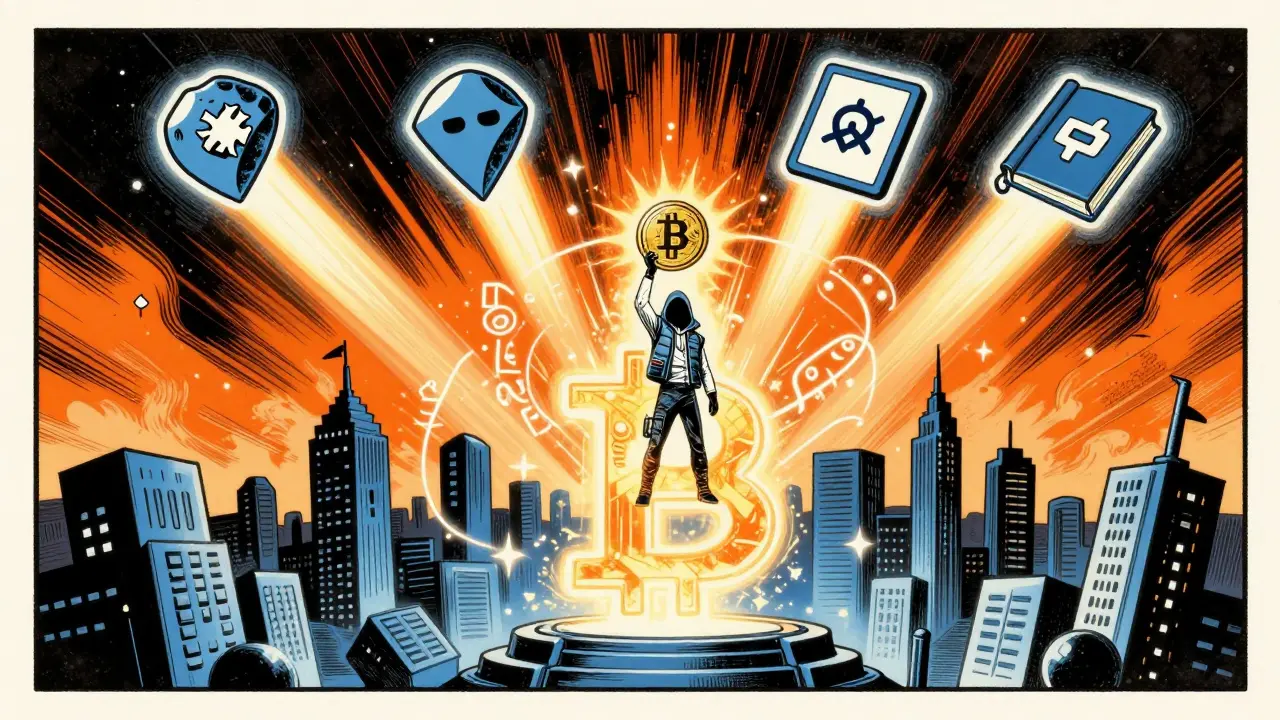
Runesterminal isn’t a coin that does anything on its own. It’s the key to accessing a suite of tools built by the team behind it. Think of it like a membership card to a tech hub for Bitcoin developers. The platform has four main tools:
- RunesScan: A blockchain explorer that lets anyone see every Runes token created, who made it, and how it’s being used. No more guessing-everything is public and traceable.
- RunesEtcher: A tool that lets anyone create their own token on Bitcoin in minutes. No coding needed. You pick a name, a symbol, a supply, and boom-you’ve launched a token on Bitcoin.
- RunesPad: This is the big one. It’s a launchpad where new projects can raise money directly from the Bitcoin community. Instead of going to venture capitalists, a dev team can launch a token, set funding goals, and let users invest in real time using Bitcoin.
- RunesBook: A directory of all active Runes tokens, ranked by popularity, volume, and community activity. It’s like a map for navigating the growing world of Bitcoin-based assets.
These tools are still in early stages. RunesScan and RunesEtcher are already live. RunesPad is in beta. But the idea is simple: make Bitcoin the most flexible place to build digital projects-not Ethereum, not Solana, not BSC. Just Bitcoin.
What is RUNI, really?
RUNI is the native token of the Runesterminal ecosystem. You can’t buy it to flip it like a meme coin. You need it to do anything meaningful on the platform. Here’s how it works:
- Access: To use RunesPad and participate in early project launches, you need RUNI. No RUNI? No access.
- Governance: Holders can vote on upgrades, new features, and how funds are allocated in the ecosystem. It’s not just about money-it’s about influence.
- Rewards: Users who help test tools, report bugs, or promote the platform earn RUNI as a reward. It’s designed to grow the community from the ground up.
The total supply of RUNI is capped at 21 million tokens-the same as Bitcoin. That’s not a coincidence. The team wants RUNI to mirror Bitcoin’s scarcity. But unlike Bitcoin, RUNI was never meant to be mined. All tokens were distributed through sales, team allocations, and community rewards.
How much is RUNI worth right now?
The price of RUNI has been wild. It launched in June 2024 with an IEO price of $0.945. That’s over 90% higher than where it trades today. By July 9, 2024, it hit an all-time high of $1.73. That’s a 91% surge in just a few weeks.
But then came the crash. By March 2025, RUNI dropped to $0.04739. As of February 2026, prices hover between $0.015 and $0.065, depending on the exchange. That’s a 96% drop from its peak.
Why such a big swing? Simple: hype. When Runes Protocol first went live, everyone thought Bitcoin was about to explode with tokens. Traders piled in. But as the novelty wore off and real usage didn’t immediately follow, money left. The market is now testing whether Runesterminal can deliver real utility-or if it’s just another speculative bubble.
Current trading volume is low. Most trading happens on Gate.io, with the RUNI/USDT pair being the most active. The market cap is around $40,000, which is tiny compared to even the smallest coins on major chains. It represents 0.00% of the entire crypto market.
Who’s behind Runesterminal?
The team hasn’t gone public with names, but they’ve raised funding from known players in crypto. Cogitent Ventures and CMS Holding are institutional backers. Charlie Shrem-a well-known figure from Bitcoin’s early days-also invested. That’s not just random money. These are people who understand Bitcoin’s long-term potential.
Their approach is different from most crypto projects. Instead of promising moonshots, they’re building tools. No flashy whitepapers. No celebrity endorsements. Just code, testing, and community feedback. That’s rare in crypto-and it might be exactly what’s needed.
Is Runesterminal the future of Bitcoin?
It’s too early to say. But here’s the thing: Bitcoin was never built for tokens, NFTs, or smart contracts. The Runes Protocol changes that. And Runesterminal is the first serious attempt to build a full ecosystem around it.
Compare it to Ethereum in 2015. Back then, Ethereum had a token (ETH) and a vision. But it took years before DeFi, NFTs, and DAOs took off. Runesterminal is at that same early stage. The tools exist. The community is growing. But real adoption? That’s still coming.
If developers start building on RunesPad. If everyday users start creating tokens for their blogs, podcasts, or local businesses. If Bitcoin holders start using RunesScan to track assets instead of just sending BTC-then RUNI could become essential.
If not? Then RUNI will fade into another forgotten crypto experiment.
Should you buy RUNI?
If you’re looking to make a quick profit? Probably not. The price has been volatile, and trading volume is thin. You could get stuck holding it if no one’s buying.
If you believe Bitcoin should be more than just digital gold? Then RUNI might be worth watching. It’s not a coin. It’s an infrastructure project. And infrastructure takes time.
Here’s what to watch over the next six months:
- Is RunesPad seeing real project launches? Not just hype, but actual funded tools.
- Are more developers using RunesEtcher? Check the number of new tokens created weekly.
- Is the community growing? Look at Discord, Twitter, and GitHub activity-not just price charts.
Runesterminal isn’t trying to replace Bitcoin. It’s trying to make it better. And that’s a lot harder than just creating a coin and hoping it goes up.
Is RUNI a good investment?
RUNI isn’t a typical investment. It doesn’t pay dividends or generate revenue. Its value depends entirely on whether people use the Runesterminal tools. If the ecosystem grows, RUNI could become necessary. If it doesn’t, the price will likely stay low or drop further. Only invest what you can afford to lose.
Can I create my own token with RUNI?
Yes, but you don’t need RUNI to create a token. You use RunesEtcher, which works with Bitcoin. RUNI is only required if you want to use RunesPad to fund your project or access governance features. Anyone can create a token on Bitcoin using Runes Protocol-it’s free. RUNI gives you extra tools.
Where can I buy RUNI?
RUNI is mainly traded on Gate.io, with the RUNI/USDT pair being the most active. It’s also listed on a few smaller exchanges, but liquidity is low. Avoid exchanges that don’t have clear trading volume-there’s a risk of fake activity.
Is Runesterminal only for Bitcoin users?
Yes. Everything Runesterminal does runs on Bitcoin. You need Bitcoin to pay for transactions, and all tokens are created using the Runes Protocol, which is built into Bitcoin’s blockchain. You can’t use Ethereum wallets or Solana addresses. It’s a Bitcoin-only ecosystem.
Why does RUNI have such a low market cap?
Because adoption is still very low. Only about 1.5 million RUNI are in circulation, and most are held by early investors or locked in vesting periods. Until real users start using RunesPad and creating tokens regularly, the market cap won’t grow. It’s not about supply-it’s about demand.
What’s next for Runesterminal?
The roadmap is simple: get more people using the tools. The team is focused on beta testing RunesPad, improving RunesScan’s speed, and adding analytics for token creators. They’re not rushing to list on major exchanges. They’re building.
The next big milestone? When a small business launches a token on RunesPad to fund a local product-and it actually works. That’s when Runesterminal stops being a crypto experiment and becomes a real tool for the real world.

There are 18 Comments
Danny Kim
Tanvi Atal
Brian Lemke
Mae Young
Colin Lethem
Cathy Sunshine
Kenneth Genodiala
Dee Resin
Sony Sebastian
Cory Derby
Cheryl Fenner Brown
Richard Cooper
Trenton White
kati simpson
Michael Rozputniy
Michael Teague
Shannon Black
Megan Lavery
Write a comment
Your email address will not be published. Required fields are marked *