
Imagine you’ve just bought Bitcoin on a beginner-friendly platform like Coinbase. You want to move it somewhere with lower fees and better tools for active trading. You hear about Coinlim, a Singapore-based exchange that promises flat 0.10% trading fees and built-in automation tools. Sounds good, right? But then you hit a wall: Coinlim doesn’t accept bank transfers or credit cards. If you don’t already own crypto, you’re stuck. This is the core dilemma of using Coinlim in 2026. It’s a powerful tool for experienced traders who already hold assets, but a dead end for newcomers trying to enter the market.
In this review, we’ll break down whether Coinlim fits your specific needs. We’ll look at its fee structure, which is genuinely competitive, but also expose its major limitations, like the lack of fiat on-ramps and limited language support. By the end, you’ll know exactly if this exchange belongs in your portfolio or if you should stick to industry giants like Binance or Kraken.
The Core Problem: No Fiat On-Ramp
Let’s get the biggest drawback out of the way first. Coinlim does not support traditional currency deposits. There are no bank wires, no Visa/Mastercard integrations, and no PayPal options. According to analysis from Cryptowisser, this restriction makes new crypto investors "restricted from trading here" because they must first purchase cryptocurrencies on another entry-level exchange before transferring funds to Coinlim.
This creates a two-step process that adds friction and cost. Here is how it works in practice:
- You buy Bitcoin on a regulated exchange like Coinbase or Kraken (paying their higher fees).
- You withdraw that Bitcoin to a personal wallet or directly to Coinlim.
- You wait for blockchain confirmations, which can take anywhere from 10 minutes to an hour depending on network congestion.
- Only then can you start trading on Coinlim.
For a casual investor, this is annoying. For a day trader looking to capitalize on immediate market moves, it’s a significant hurdle. This limitation suggests Coinlim is not designed as a primary gateway into crypto, but rather as a secondary hub for those who are already "crypto-native."
Fee Structure: Where Coinlim Shines
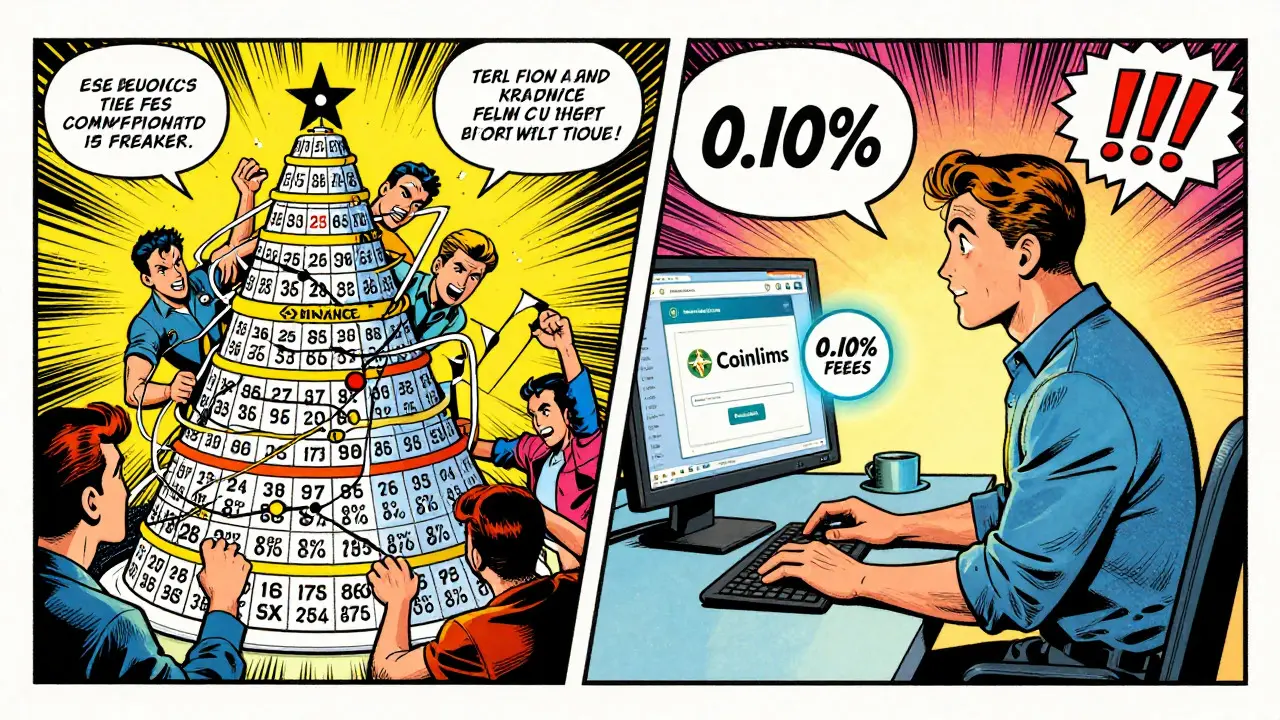
If you have already bridged the gap and deposited your assets, Coinlim becomes much more attractive. The platform operates on a flat trading fee model that is rare in today’s tiered landscape. Both makers (those who add liquidity by placing limit orders) and takers (those who remove liquidity by executing market orders) pay a flat rate of 0.10%.
To put this in perspective, the historical industry average for cryptocurrency exchanges has been around 0.25%. While major competitors like Binance US charge between 0.10% and 0.60% depending on volume, and Kraken charges between 0.16% and 0.26%, Coinlim keeps it simple. You pay 0.10% regardless of your monthly volume. For high-frequency traders, this predictability is valuable. You don’t need to calculate VIP tiers or worry about slipping into a higher bracket unexpectedly.
| Exchange | Maker Fee | Taker Fee | Fiat Deposit Support |
|---|---|---|---|
| Coinlim | 0.10% | 0.10% | No |
| Binance US | 0.10% - 0.40% | 0.10% - 0.60% | Yes |
| Kraken | 0.16% - 0.26% | 0.26% - 0.34% | Yes |
| Robinhood | 0% | 0% | Yes |
Notice Robinhood in the table above. They offer zero-fee trading, which beats Coinlim on price alone. However, Robinhood lacks advanced charting, API access, and the suite of automated tools that Coinlim offers. Coinlim sits in a middle ground: cheaper than most professional exchanges, but more expensive than retail-focused apps. The real value comes when you factor in withdrawals. Coinlim does not impose additional withdrawal fees beyond standard blockchain network costs. This is significantly more consumer-friendly than the global average, where users often face hidden service fees on top of gas costs.
Advanced Tools for Active Traders
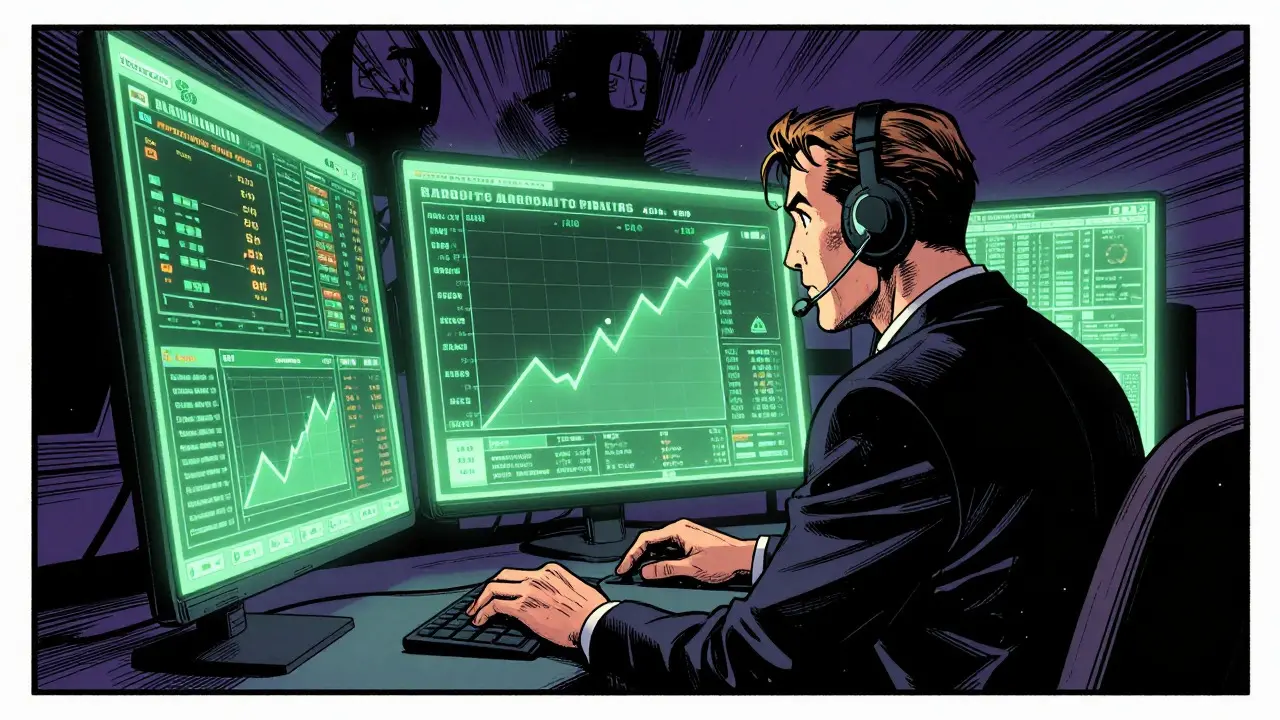
Why would someone endure the hassle of transferring crypto just to use Coinlim? The answer lies in its feature set. Founded in 2018 and headquartered in Singapore, Coinlim positions itself as an all-in-one trading platform. Unlike basic exchanges that just match buyers and sellers, Coinlim integrates several sophisticated tools directly into the interface.
- Automated Trading Bots: These algorithms execute trades based on predefined strategies, allowing you to trade 24/7 without staring at screens. This is crucial for capturing volatility in Asian markets while you sleep in Wellington or New York.
- Arbitrage Tools: These features help identify price differences for the same asset across different pairs or markets, enabling risk-free profit opportunities for quick execution.
- Trading Signals: Built-in indicators suggest potential entry and exit points, reducing the need for external technical analysis software.
- Demo Accounts: Before risking real capital, users can test strategies in a simulated environment. This is a critical feature for validating bot settings.
These tools transform Coinlim from a simple order book into a productivity suite. For a trader managing multiple portfolios, having these utilities native to the exchange saves time and reduces reliance on third-party APIs, which can sometimes be unstable or expensive.
User Experience and Accessibility
When evaluating any exchange, ease of use matters. Coinlim offers mobile applications for both iOS and Android, ensuring that active traders can manage positions on the go. The interface is available in English and Simplified Chinese. This bilingual support reflects its target demographic: primarily Asian and international crypto-native users.
However, this limited language support is a double-edged sword. If you are a Spanish, German, or Russian speaker, you will be navigating the platform entirely in English. Compare this to competitors like Changelly, which supports nine languages including Portuguese, Korean, and Hindi. Coinlim’s narrower linguistic reach restricts its global accessibility and may create barriers for non-English speakers who might otherwise benefit from its low fees.
User sentiment reflects this mixed bag. According to data aggregated by Cryptogeek, Coinlim holds a 3.9 out of 5 rating based on 222 user reviews. While this is a respectable score, it trails behind competitors like Changelly, which boasts a 4.4 rating. The lower score, despite a larger volume of reviews, hints at potential issues with customer support responsiveness or platform stability during peak traffic times. Users frequently praise the fee structure and mobile app functionality, but the absence of detailed positive testimonials suggests the experience is functional rather than exceptional.
Security and Trust Factors
Security is paramount in crypto. Unfortunately, public information regarding Coinlim’s backend security protocols is sparse. The platform does not explicitly detail its cold storage ratios, multi-signature wallet implementations, or insurance funds in the same transparent manner as industry leaders like Coinbase or Kraken. This lack of transparency is a red flag for conservative investors.
Furthermore, Coinlim is notably absent from major "best of" lists for regulated Western markets. It does not appear in Koinly’s top 10 US exchanges, nor in Cryptoninjas’ ranking of top trading platforms. This absence suggests that Coinlim has limited presence in heavily regulated jurisdictions like the United States or Europe. Operating out of Singapore provides a favorable regulatory environment, but it also means fewer consumer protections for users outside of Asia. If you are a US-based trader, you should verify current compliance status before depositing significant funds, as regulatory landscapes shift rapidly.
Who Should Use Coinlim?
Based on the evidence, Coinlim is not a one-size-fits-all solution. It serves a very specific niche. Here is a breakdown of who benefits and who should avoid it.
Coinlim is ideal for:
- Experienced Traders: Those who already hold crypto and want to minimize trading costs through a flat 0.10% fee.
- Algorithmic Traders: Users who want to deploy bots and arbitrage strategies without integrating complex third-party software.
- Asian Market Participants: Traders focused on volatility in Asian hours who benefit from the platform’s regional focus and Chinese language support.
Coinlim is NOT suitable for:
- Beginners: New investors who need to buy crypto with a credit card or bank transfer will find the platform inaccessible.
- US-Centric Investors: Those seeking maximum regulatory protection and fiat integration may prefer Kraken or Coinbase Pro.
- Non-English Speakers: Users requiring support in languages other than English or Simplified Chinese will face usability hurdles.
Final Verdict
Coinlim occupies a specialized position in the crowded crypto exchange market. Its strength is undeniable: a simple, competitive fee structure combined with robust automated trading tools. For the seasoned trader who already has assets and wants to optimize execution costs, Coinlim is a worthy contender. The absence of hidden withdrawal fees is a genuine plus in an industry rife with nickel-and-diming.
However, its weaknesses are equally clear. The lack of fiat on-ramps creates a barrier to entry that excludes the majority of new investors. Limited language support and opaque security disclosures prevent it from competing with global giants. In 2026, as the industry shifts toward even lower fees (with some platforms dropping to 0.075%), Coinlim’s margin of advantage is shrinking. It remains a viable option for a specific subset of traders, but it is unlikely to become your primary exchange unless you fit the "crypto-native" profile perfectly.
Can I deposit USD or EUR directly into Coinlim?
No. Coinlim currently accepts only cryptocurrency deposits. To fund your account, you must first buy crypto on another exchange that supports fiat currencies (like Coinbase or Kraken) and then transfer those assets to Coinlim.
Are Coinlim trading fees really 0.10% for everyone?
Yes. Coinlim uses a flat fee structure where both makers and takers pay 0.10% per trade, regardless of your trading volume. This is simpler than tiered systems used by many competitors.
Is Coinlim safe for large amounts of money?
While Coinlim has operated since 2018, it lacks the transparent security audits and insurance funds common among top-tier exchanges like Coinbase. It is advisable to keep only the amount needed for active trading on the platform and store long-term holdings in a private hardware wallet.
Does Coinlim have a mobile app?
Yes, Coinlim offers mobile applications for both iOS and Android devices, allowing users to trade and manage bots on the go.
What languages does Coinlim support?
The platform interface is available in English and Simplified Chinese. This limits accessibility for users who prefer other languages such as Spanish, German, or Russian.