

Imagine waking up to find your $190,000 startup suddenly needing $379 million in capital just to stay open. That is not a hypothetical nightmare for Vietnamese crypto entrepreneurs; it is the new reality under Directive 05/CT-TTg and its companion Resolution No. 05/2025/NQ-CP. For years, Vietnam’s 21 million crypto users operated in a legal gray zone, enjoying low fees and high adoption rates while regulators watched from the sidelines. Now, the government has slammed the door on ambiguity. If you are an investor, trader, or platform operator, understanding this shift is no longer optional-it is survival.
The End of the Wild West Era
Vietnam used to be the playground for unregulated crypto activity. Ranked second globally for adoption behind Ukraine, the country saw massive transaction volumes with minimal oversight. But the collapse of several local platforms during the 2022 "crypto winter," which wiped out savings for over 500,000 users, forced Hanoi’s hand. The introduction of Resolution No. 05/2025/NQ-CP, signed by Deputy Prime Minister Ho Duc Phoc in September 2025, marks the definitive end of that era. This isn't just another guideline; it is a five-year pilot program (2025-2030) that transforms cryptocurrency from a speculative toy into a regulated asset class. The goal? To capture value from a market estimated at $1.2 billion while preventing the chaos that plagued earlier unlicensed exchanges.
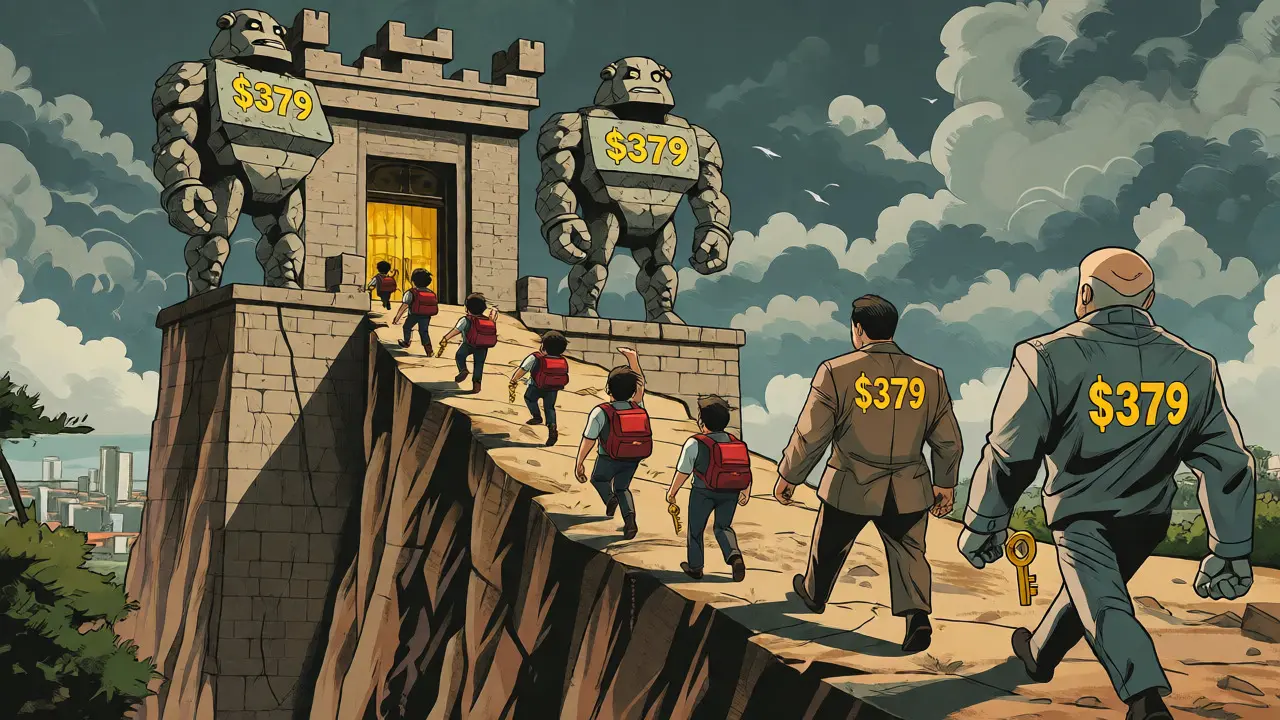
The High Cost of Entry: Who Can Actually Play?
If you thought running a crypto exchange was easy, think again. The new framework sets a barrier to entry so high that most existing players will be shut out. Here is what you need to know about the strict requirements designed to weed out fly-by-night operators:
- Minimum Capital: Exchanges must hold a charter capital of 10 trillion VND (approx. USD 379 million). This is roughly 27 times higher than Thailand’s requirement.
- Institutional Backing: At least 65% of this capital must come from institutional investors, not retail shareholders.
- Foreign Ownership Cap: Foreign entities can own no more than 49% of a licensed exchange. Vietnamese majority control is mandatory.
- VND-Only Settlements: All transactions must settle in Vietnamese Dong. Direct foreign currency settlements are prohibited.
These rules effectively create a state-controlled oligopoly. Blockchain specialist James Wo noted that this structure shuts out innovative startups, favoring large domestic conglomerates with deep pockets. For small-to-medium exchanges, the math doesn't add up. Many simply cannot raise nearly $400 million overnight, leading to a predicted consolidation where only 3-5 major players might survive the initial licensing round.
| Feature | Vietnam (New Framework) | Thailand | Singapore |
|---|---|---|---|
| Minimum Capital | ~USD 379 Million | ~USD 13.7 Million | Variable (Tier-based) |
| Foreign Ownership Limit | 49% | 100% allowed | 100% allowed |
| Settlement Currency | VND Only | THB / Foreign Allowed | SGD / Foreign Allowed |
| Regulatory Status | Pilot License (5 Years) | Full License | Full License |
The Stablecoin Problem
Here is the catch that keeps traders nervous: the ban on fiat-backed stablecoins. Under Article 5, Clause 3, crypto assets must be backed by "real underlying assets." This explicitly excludes USDT and USDC, which are backed by fiat currencies like the USD. Why does this matter? Because stablecoins account for nearly 64% of all crypto transactions in Vietnam. They are the lubricant of the market, allowing traders to park profits without converting back to volatile local currency or dealing with banking friction.
By banning these popular tokens, Vietnam risks pushing liquidity offshore. Traders who rely on USDT for quick arbitrage or hedging may migrate to international platforms that still accept them, despite the inconvenience of cross-border transfers. The Ministry of Finance argues this prevents exposure to unstable foreign reserves, but critics worry it stifles the very innovation they claim to support.

Compliance and Technology Standards
It’s not just about money; it’s about tech. Licensed exchanges must integrate with the State Bank of Vietnam’s transaction monitoring system and comply with the National Cryptography Standard (TCVN 13057:2025). This means every trade is visible to regulators in near real-time. Furthermore, platforms must use blockchain technology that meets specific national standards, likely favoring solutions compatible with NDAChain, the national blockchain platform launched in July 2025.
The compliance burden is heavy. Legal firm Duane Morris Vietnam estimates that full system overhaul costs between $1.9 million and $7.6 million per entity. This includes upgrading KYC/AML protocols to meet the 2023 Anti-Money Laundering Law amendments. For users, this means stricter identity verification-expect passport scans, proof of address, and potentially source-of-funds declarations before you can make significant withdrawals.
Taxation and Future Outlook
Money talks, and the taxman is listening. By late 2025, specific tax regulations were finalized, introducing a tiered capital gains tax. Transactions under 100 million VND face a 0.1% tax, while larger trades incur 0.3%. While these rates seem low compared to global averages, the administrative overhead of reporting each transaction could deter casual traders.
Looking ahead, the World Bank warns that the six-month grace period after the first license issuance may be too short. With an estimated 18-20 million users currently on unlicensed platforms, there is a risk of market displacement. However, if successful, this framework could position Vietnam as Southeast Asia’s third-largest regulated crypto market by 2028, projecting annual transaction volumes of $15-20 billion. The key question remains: Will the security provided by regulation outweigh the loss of accessibility and choice for the average Vietnamese user?
Is cryptocurrency illegal in Vietnam now?
No, cryptocurrency is not illegal. Instead, it is heavily regulated. Trading is permitted, but only through licensed exchanges that meet strict capital and operational requirements set by Resolution No. 05/2025/NQ-CP. Unlicensed platforms are being phased out.
Can I still use USDT or USDC in Vietnam?
Likely not on domestic licensed exchanges. The new framework prohibits assets backed by fiat currencies, which includes most stablecoins like USDT and USDC. You may need to convert to VND or other approved crypto assets when using local platforms.
What is the minimum capital required for a crypto exchange in Vietnam?
The minimum charter capital is 10 trillion VND, which is approximately USD 379 million. Additionally, at least 65% of this amount must come from institutional investors.
How long do existing exchanges have to comply?
There is a six-month grace period starting from the date the first license is issued. After this period, operating without a license becomes non-compliant, forcing smaller exchanges to either merge, acquire capital, or shut down.
Are foreign investors restricted from owning Vietnamese crypto exchanges?
Yes, foreign ownership is capped at 49%. A Vietnamese entity or individual must hold the majority stake (at least 51%) to obtain a license.


There are 1 Comments
Zach Evans
Look, I get it. Safety first and all that jazz, but $379 million to open a shop? That is absolutely insane.
We are talking about killing the entire startup ecosystem in one fell swoop. Who actually has that kind of cash lying around? Big banks? Maybe. But crypto was supposed to be for the little guys. Now it's just another playground for the elite who can afford to buy their way into the club while everyone else gets locked out.
It feels like they didn't just regulate the market; they strangled it before it could even breathe properly. The barrier to entry isn't high; it's a wall made of gold bars. Most innovative projects will simply pack up and move to Singapore or Dubai where they won't be treated like criminals for trying to build something new.
Write a comment
Your email address will not be published. Required fields are marked *