
You've probably scrolled past a token called Liberals Tears (TEARS) on your feed and wondered if it's the next big thing or just another joke. It’s a politically themed meme cryptocurrency that uses satirical commentary on liberal ideologies as its core narrative. But here’s the catch: depending on where you look, this token seems to live on two different blockchains, has wildly conflicting supply numbers, and trades in micro-cap obscurity. If you’re trying to figure out if TEARS is worth your SOL or ETH, you need to cut through the noise of hype and fragmented data.
The Political Satire Behind the Token
Liberals Tears isn’t trying to solve complex DeFi problems or revolutionize smart contracts. Its value proposition is purely cultural. Launched initially around 2021, the project positions itself not just as a speculative asset but as a "movement." The branding leans heavily into culture-war humor, specifically mocking progressive politics. Think of it as digital merchandise for those who want to wear their political stance on-chain. The team describes themselves as "dedicated builders" aiming to create a community around civic engagement and activism, though in practice, this mostly translates to sharing memes and betting on political outcomes.
This approach places TEARS in a specific niche alongside other politically charged tokens like Liberal Tears (LIB) and Lib Tears of X (LIBTEARS). These aren’t unique concepts; they monetize polarization. The idea is simple: turn the distress of one political side into entertainment-and hopefully profit-for the other. However, unlike established memes like Dogecoin, which have broad appeal, TEARS relies on a narrower audience that identifies with anti-progressive sentiment. This limits its viral potential but creates a dedicated, albeit small, user base.
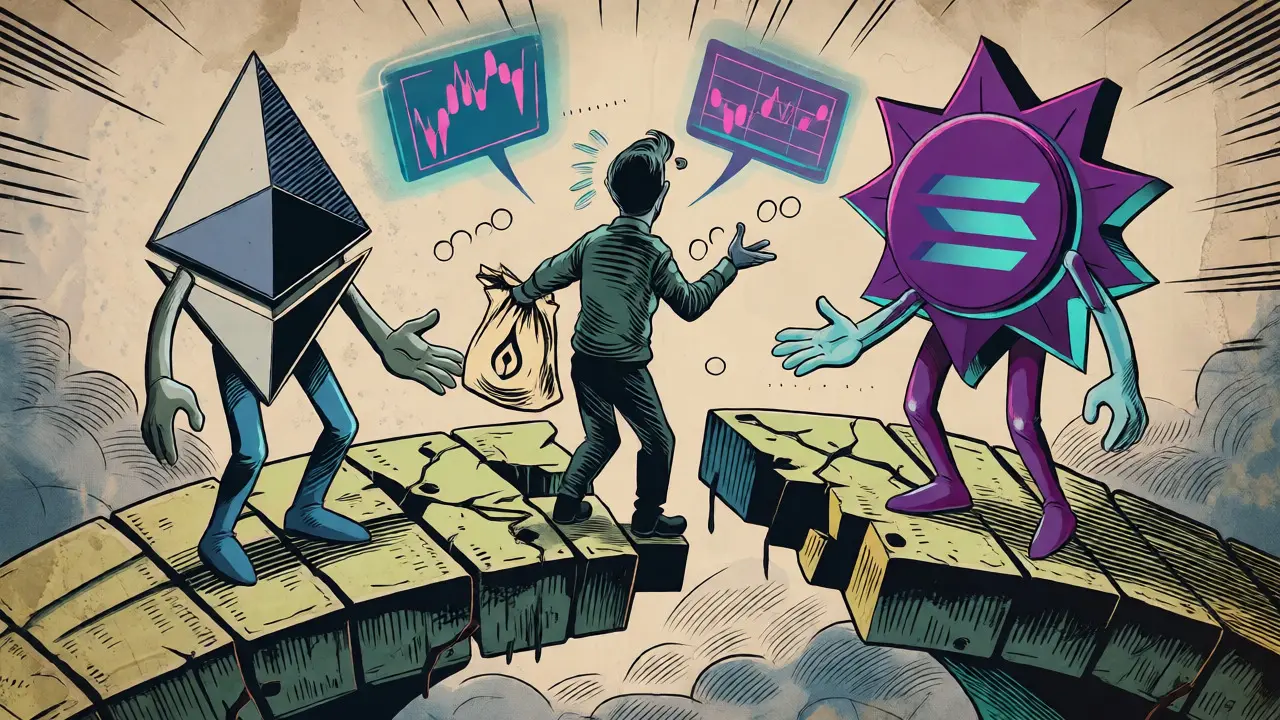
Chain Confusion: Ethereum vs. Solana
Here is where things get messy for investors. Data aggregators disagree on where TEARS actually lives. Some sources, like Coinpaprika, describe it as an ERC-20 token on Ethereum. Others, including major Solana trackers like Phantom and Dexscreener, list it as a Solana SPL token.
Why does this matter? Because liquidity is fragmented. If you buy TEARS on Ethereum, you might be holding a version of the token that has little to no trading volume compared to the Solana implementation. As of early 2026, the most active trading appears to be on Solana, specifically via the Meteora decentralized exchange. The Solana-based pair shows real transaction activity, whereas the Ethereum footprint seems largely dormant or mislabeled by older trackers. Always check the contract address before swapping. Buying the wrong chain version means you could end up with illiquid assets stuck in a wallet you can’t easily move.
| Token | Ticker | Primary Chain | Total Supply | Key Feature |
|---|---|---|---|---|
| Liberals Tears | TEARS | Solana (Active), Ethereum (Legacy) | ~1 Billion | Polyfi Betting & Memes |
| Liberal Tears | LIB | Solana | 100 Billion | Election Cycle Speculation |
| Lib Tears of X | LIBTEARS | Solana | Variable | Meme Drops |
Tokenomics: The Mystery of the Missing Inflation
Most trackers report a total supply of roughly 999,999,999 to 1,000,000,000 TEARS. On paper, this looks fully diluted, meaning all tokens are circulating. However, some platforms label the token as "inflationary," which contradicts the fixed max supply data. Without a clear whitepaper or on-chain governance documentation, we don’t know if new tokens are being minted for rewards or if this is just a data error.
More concerning is the lack of transparency regarding allocations. Who holds the majority of these billion tokens? Is there a team wallet? A marketing fund? None of the major aggregators break down the distribution between developers, treasury, and community. In meme coins, this opacity is a red flag. If a few wallets hold 50% of the supply, a single sell-off could crash the price by 90%. Until you see a verified holder distribution chart from a block explorer like Solscan, assume high concentration risk.
Market Performance and Volatility
Don’t let the low market cap fool you into thinking this is stable. TEARS operates in the micro-cap range, typically hovering between $72,000 and $1.3 million in total value. With such a small market cap, daily price swings of +240% or -50% are common. For example, Binance reported a +266% gain in a single day recently, while other snapshots show prices ranging from $0.00004 to $0.019 depending on the source and timing.
This volatility stems from thin liquidity. The primary Solana pool holds only about $20,000 in liquidity. That means a trade of just $1,000 could significantly impact the price due to slippage. If you plan to enter or exit a position larger than $500, you’ll likely pay a premium or receive less than the displayed spot price. This makes TEARS suitable for small, speculative bets rather than serious portfolio allocation.
Utility: Beyond Just Memes?
The project claims utility beyond speculation, highlighting integration with Polyfi betting. Polyfi allows users to wager on real-world events using crypto. By positioning TEARS as a currency for political prediction markets, the team tries to give holders a reason to keep the token rather than dumping it after a pump. They also emphasize "Best Liberal Mocking Memes on X" as a content strategy to drive engagement.
In January 2026, Dexscreener noted that a community group claimed ownership of the token. This suggests a shift toward decentralization, where the founding team may have stepped back in favor of community-led development. While this sounds positive, it often leads to slower decision-making and inconsistent updates unless the community is highly organized. Currently, there are no quantified metrics showing how many users actively use TEARS for betting versus simply holding it for price appreciation.
How to Buy TEARS Safely
If you decide to take the plunge, here’s the practical path forward. Since the main liquidity is on Solana, you’ll need a Solana-compatible wallet like Phantom or Solflare.
- Fund your wallet: Deposit SOL into your wallet. You’ll need SOL for both the purchase and transaction fees.
- Find the right pair: Go to a DEX aggregator like Jupiter or directly to Meteora. Search for the TEARS/SOL pair. Verify the contract address matches the one listed on Dexscreener or Phantom to avoid scam copies.
- Set slippage: Due to low liquidity, set your slippage tolerance higher than usual, perhaps 2-5%, to ensure your transaction goes through.
- Swap and track: Execute the swap. Monitor your position closely. Given the volatility, consider setting stop-loss alerts if your platform supports them, or manually monitor price movements.
Risks and Red Flags
Liberals Tears carries significant risks typical of micro-cap meme coins. First, the data fragmentation is alarming. When CoinCarp says it’s not listed on any exchanges while Binance shows volume, it indicates poor tracking and potential liquidity traps. Second, the reliance on political trends means the token’s relevance could fade quickly after election cycles or shifts in cultural discourse. Third, the lack of a public technical roadmap or audited smart contracts leaves room for rug pulls or code vulnerabilities.
Unlike Bitcoin or Ethereum, TEARS has no institutional backing or academic analysis supporting its long-term viability. It is purely a social experiment wrapped in a blockchain wrapper. If the community stops posting memes or the political climate changes, demand could evaporate overnight.
Is Liberals Tears (TEARS) on Ethereum or Solana?
It exists on both, but the active trading and liquidity are primarily on Solana. Older trackers may still reference an Ethereum ERC-20 version, but current volume is concentrated on Solana DEXs like Meteora. Always verify the contract address for the Solana network before buying.
What is the total supply of TEARS?
The reported maximum supply is approximately 1 billion tokens (specifically 999,999,999 to 1,000,000,000 depending on the tracker). Most of this supply is considered circulating, though exact holder distribution remains opaque.
Where can I buy Liberals Tears?
You can trade TEARS on decentralized exchanges within the Solana ecosystem, such as Meteora or Raydium. It is generally not available on major centralized exchanges like Coinbase or Binance for direct fiat purchases, so you will need to swap SOL for TEARS.
Is TEARS a good investment?
It is a high-risk speculative asset. With a market cap under $1.5 million and volatile price action, it is suitable only for money you can afford to lose. There is no fundamental utility beyond community engagement and potential betting integrations.
How is TEARS different from LIB?
While both are politically themed meme coins on Solana, they are distinct projects with different tickers, supplies, and communities. LIB has a much larger supply (100 billion) and different branding. Do not confuse the two when checking charts or buying.