Imagine owning a piece of the infrastructure that powers a major trading hub. That is essentially what happens when you hold WhiteBIT Coin is the native utility token of the WhiteBIT exchange, designed to streamline operations and provide holders with exclusive perks across its ecosystem. Also known as WBT, it acts as the fuel for the platform's services and the heartbeat of its own dedicated blockchain. If you have ever wondered why some exchanges launch their own coins, WBT is a textbook example of how a token can transform a user from a simple customer into a stakeholder with active benefits.
Key Takeaways for WBT Investors
- Multi-Chain Flexibility: WBT operates on Whitechain, Ethereum, and Tron networks.
- Limited Supply: A hard cap of 400 million tokens prevents infinite inflation.
- Utility-Driven: Used for transaction fees on Whitechain and reducing trading costs on the exchange.
- Passive Income: Holders can access staking rewards and interest bonuses via the Earn program.
Understanding the WBT Ecosystem and Whitechain
To get why WBT matters, you first have to understand Whitechain is a specialized blockchain network that uses the Proof-of-Authority (PoA) consensus algorithm to ensure high speed and efficiency. Unlike Bitcoin's energy-heavy mining, PoA relies on approved validators, making it much faster and more scalable for exchange operations.
WBT isn't just a chip for trading; it's the native currency of this network. When you move assets or interact with smart contracts on Whitechain, you pay your fees in WBT. This creates a constant, organic demand for the coin. By bridging the exchange (the marketplace) with the blockchain (the infrastructure), WhiteBIT has created a closed loop where the token's value is tied directly to the platform's growth and usage.
WBT Tokenomics: Supply, Burn, and Valuation
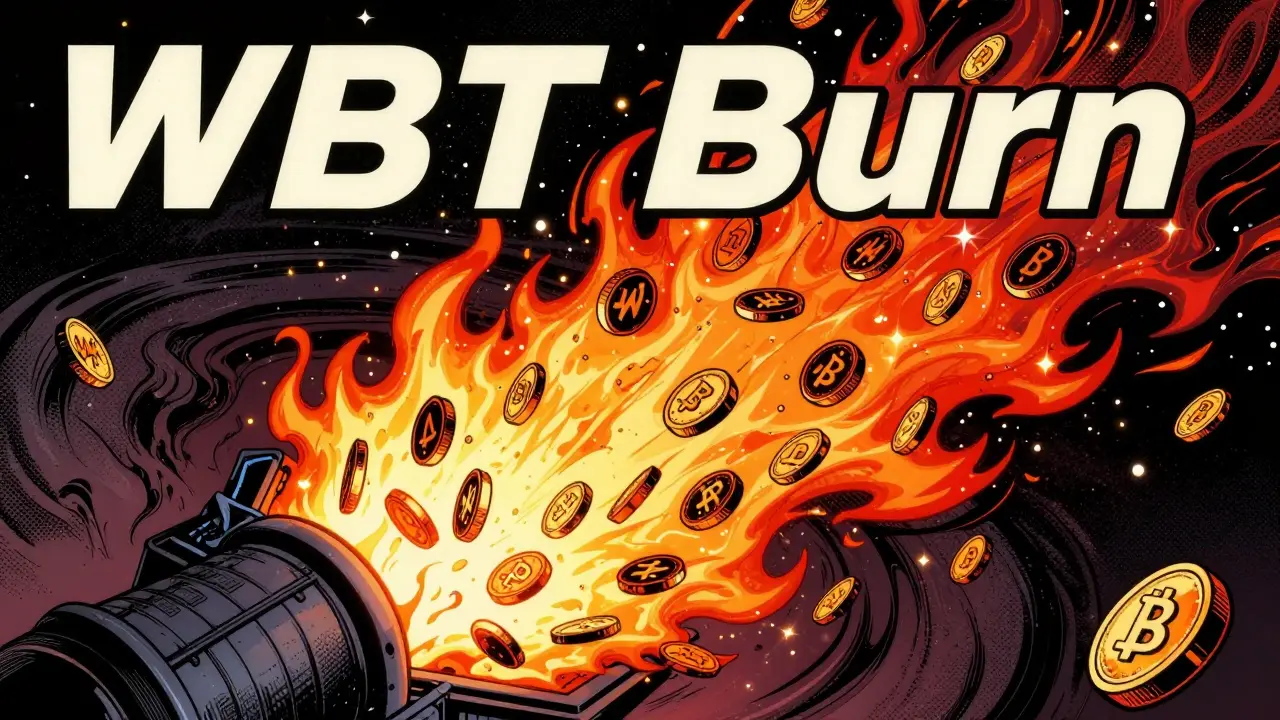
The economics of WhiteBIT Coin are built around scarcity. With a maximum supply of 400,000,000 WBT, the team has actively managed the token's value through "burn events." Burning is essentially sending coins to an inaccessible address, effectively deleting them from the supply to put upward pressure on the price. To date, over 100 million WBT have been burned, including a specific 25 million token chunk sent to a burn address.
When looking at the numbers, you will notice a gap between the market cap and the fully diluted valuation (FDV). For example, while some reports place the market cap around $4.67 billion, the FDV assumes all 400 million coins are in circulation. This suggests a deliberate emission schedule, meaning the exchange isn't dumping all tokens at once, which helps stabilize soon-to-be long-term price dynamics.
| Attribute | Value/Detail | Context |
|---|---|---|
| Max Supply | 400,000,000 WBT | Hard limit to prevent inflation |
| All-Time High | $52.27 USD | Peak market sentiment |
| All-Time Low | $3.06 USD | Historical floor price |
| Consensus Mechanism | Proof-of-Authority (PoA) | Powers the Whitechain network |
| Network Compatibility | Whitechain, Ethereum, Tron | Cross-chain versatility |
How to Use WBT to Make Passive Income
Holding WBT is more than just hoping the price goes up. The exchange has integrated the token into several wealth-building tools. The most prominent is the Earn program is a platform feature allowing users to earn interest bonuses and staking rewards on their cryptocurrency holdings. By locking your WBT, you receive a percentage return, effectively turning your portfolio into a yield-generating asset.
Beyond staking, WBT holders get "perks" that feel like a loyalty program. This includes daily checks (free rewards) and eligibility for specific bonuses tied to Tether is a stablecoin pegged to the US Dollar (USDT) used extensively in crypto lending and trading. If you combine WBT holdings with USDT lending plans, you can optimize your returns far beyond what a standard savings account would offer.
Step-by-Step: How to Get Started with WBT
If you're new to the platform, getting WBT is a linear process. You don't need to be a technical wizard to set it up. Here is the exact path to follow:
- Account Setup: Register on the WhiteBIT exchange and complete the KYC (Know Your Customer) verification. You can't trade effectively without verifying your identity.
- Funding: Top up your account. You can use a credit card or transfer existing crypto from another wallet.
- Purchase: Use your USDT (Tether) on the trading balance to buy WBT. Once the trade is executed, move the tokens to your main balance.
- Activation: Move your WBT into "holding." This is the critical step; if the coins just sit in your trading wallet, you won't activate the staking and bonus benefits.
For those who prefer decentralized options, you can also acquire WBT through the Binance Web3 Wallet is a self-custodial wallet integrated into the Binance ecosystem that allows users to interact with decentralized exchanges (DEXs) by connecting to compatible liquidity pools.

Trading WBT: Liquidity and Market Reach
One of the biggest risks with exchange tokens is "liquidity trap"-where you own a coin but can't find anyone to buy it from you. WBT avoids this by being listed on multiple platforms. While the highest volume is naturally on WhiteBIT (where WBT/USDT and WBT/USD pairs dominate), the coin is also available on Kraken is a major US-based cryptocurrency exchange known for high security and a wide range of trading pairs and Crypto.com is a global crypto platform offering an exchange, a mobile app, and a physical visa card for spending crypto.
The spread on WBT-the difference between the buy and sell price-is remarkably tight, especially on the WBT/USDT pair (around 0.01%). This means you aren't losing a significant chunk of your investment just to enter or exit a position. For advanced traders, the platform also offers margin trading with up to 10x leverage, though this significantly increases the risk of liquidation.
Is WBT a Good Long-Term Hold?
Whether WBT is a "good" investment depends on your view of the European crypto market. Because it is backed by a physical exchange infrastructure, it isn't a "meme coin" with no purpose. Its value is tied to how many people use WhiteBIT. If the exchange attracts more users, the demand for WBT for fees and perks increases.
However, be aware of the "unholding" period. There is a 14-day window required to move tokens out of holding, with a minimum amount of 0.1 WBT. This is a deliberate design choice to discourage day-trading of the staking rewards and encourage a long-term holding strategy. It adds a layer of friction that might annoy some but actually helps stabilize the token's price volatility.
What is the main purpose of WhiteBIT Coin (WBT)?
WBT serves as the native utility token for the WhiteBIT exchange and the native currency for the Whitechain blockchain. It is used to pay transaction fees on the network, reduce trading costs on the exchange, and grant users access to exclusive bonuses and staking rewards via the Earn program.
Which blockchains support WBT?
WBT is multi-chain and operates across three different networks: Whitechain (its own native blockchain), Ethereum, and Tron. This allows users to move and store their tokens based on their preferred network's speed and cost.
How does the WBT burn mechanism work?
A burn mechanism involves permanently removing tokens from the circulating supply by sending them to an unspendable address. By reducing the total number of WBT available, the exchange aims to create scarcity, which can potentially support the token's value over time.
Can I earn passive income with WBT?
Yes, through the WhiteBIT Earn program. Users can stake their WBT to receive interest bonuses. Additionally, holding WBT provides eligibility for other platform perks, such as daily free rewards and enhanced returns on certain lending plans.
What is the 14-day unholding period?
The unholding period is a security and stability feature. When you decide to move WBT out of the "holding" status (where it earns bonuses), there is a 14-day waiting period before the tokens become available for trading or withdrawal. This incentivizes long-term holding over short-term speculation.