Imagine waking up to find that your biggest cryptocurrency transaction from last week has vanished. Your wallet shows zero balance. The ledger says you never sent the coins. This isn't a glitch in your app; it’s the aftermath of a 51% attack. It sounds like science fiction, but for smaller blockchain networks, it is a recurring nightmare. The good news? Most blockchains have built-in mechanisms to survive this chaos. Understanding how these networks recover-and why they usually bounce back-is crucial for anyone holding digital assets.
The Anatomy of a 51% Attack
To understand recovery, we first need to grasp what breaks during an attack. In a Proof of Work (PoW) network like Bitcoin or Litecoin, miners compete to solve complex mathematical puzzles. The first one to solve it gets to add the next block to the chain and claim the reward. Security relies on the assumption that honest miners control more than half of the total computing power, or hashrate.
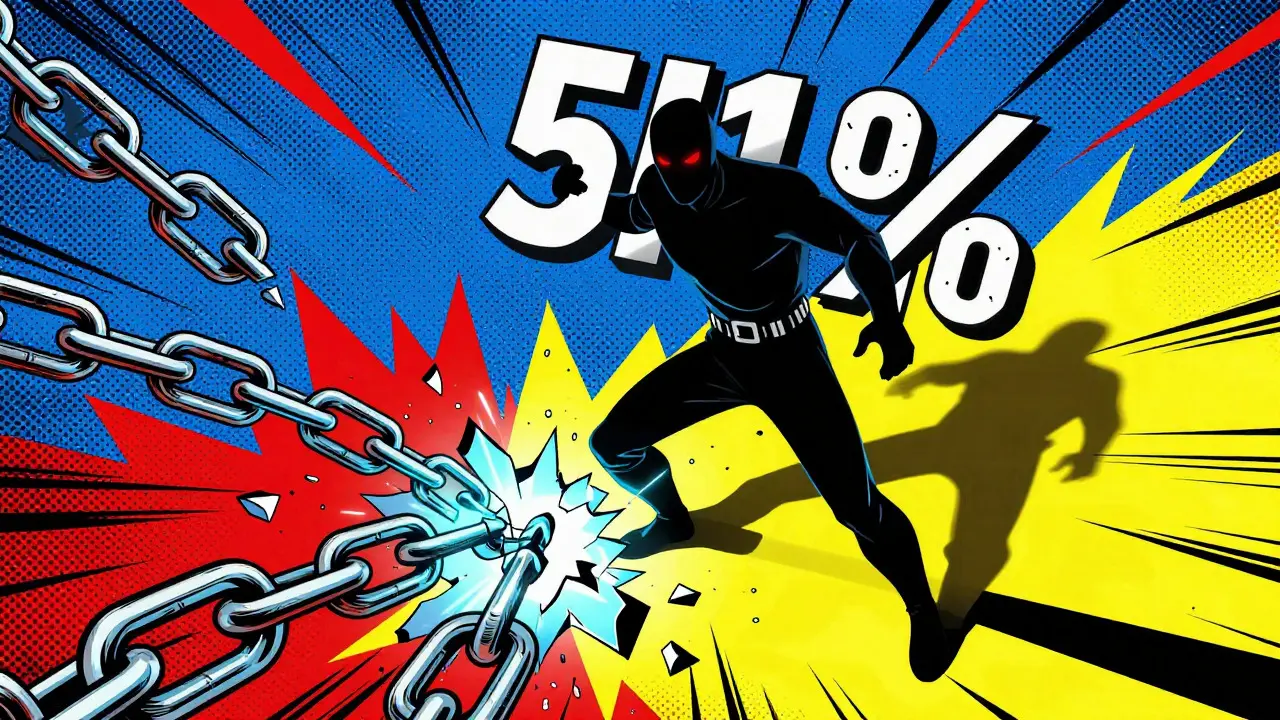
When a single entity or coalition controls over 50% of that hashrate, they can rewrite history. They don’t necessarily steal coins directly from wallets. Instead, they create a secret, longer version of the blockchain. Once their private chain is longer than the public one, they release it. The network accepts the longest chain as the truth. Suddenly, transactions that were confirmed are erased. This allows the attacker to spend the same coins twice-a move known as double spending.
| Hashrate Control | Attacker Capability | Network Status |
|---|---|---|
| < 50% | None (Honest majority wins) | Secure |
| > 50% | Double spending, transaction censorship | Vulnerable |
| ~43% (Chia/Pos) | Forking capability | At Risk |
The Self-Healing Mechanism
Here is the most important thing to know: blockchains are designed to be resilient. If the attacker loses control of the majority hashrate, the network begins to heal itself immediately. This process is driven by mathematics, not magic.
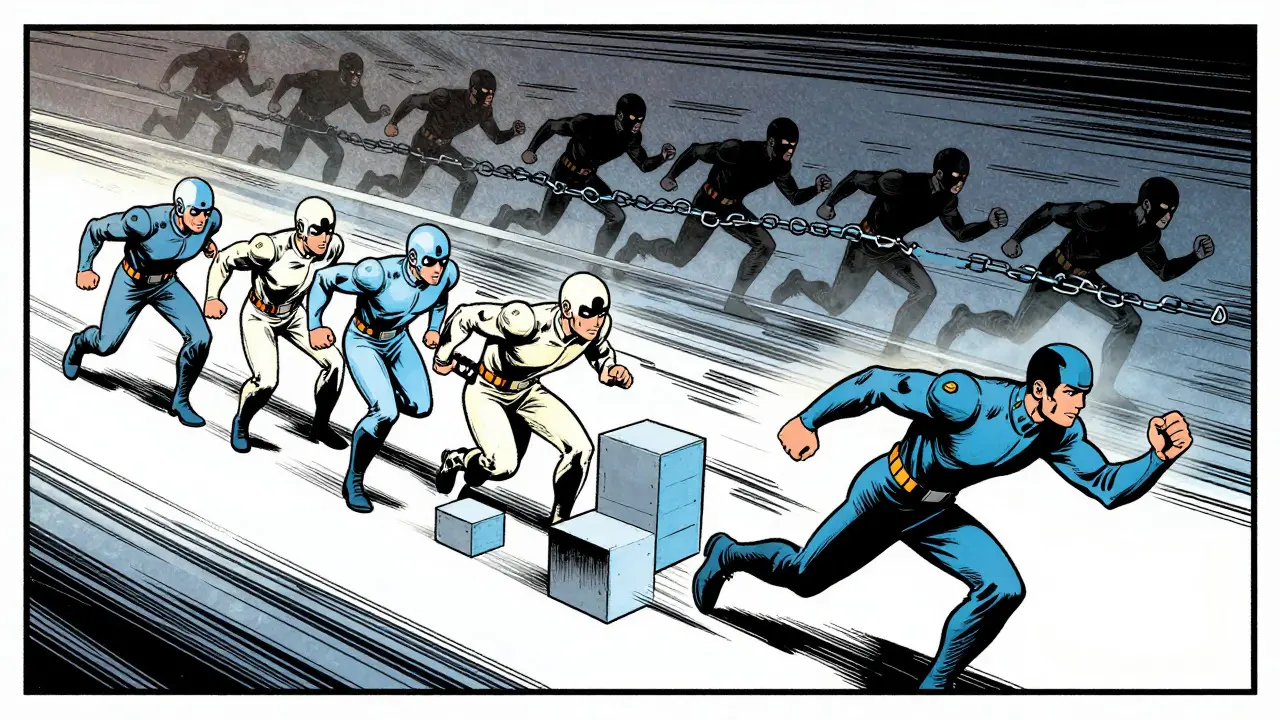
Think of the blockchain as two races running side by side. One race is led by honest miners; the other by the attacker. As long as the attacker has more runners (computing power), their chain grows faster. But once the honest miners regain the majority-perhaps because the attacker ran out of money to rent mining rigs-the honest chain starts pulling ahead.
The probability that the attacker’s shorter chain will ever catch up again drops exponentially with every new block added by honest miners. Researchers at the MIT Digital Currency Initiative have modeled this extensively. Their data shows that if honest computing power remains continuous and exceeds adversarial power, the network regains its security properties after a short delay. The older the blocks become, the more secure they are. A transaction buried under six blocks is significantly harder to reverse than one sitting at the tip of the chain.
Active Mitigation Strategies
While self-healing works, waiting around isn't always an option when millions of dollars are at stake. Protocol developers and exchanges often intervene actively. Here is how they stop the bleeding:
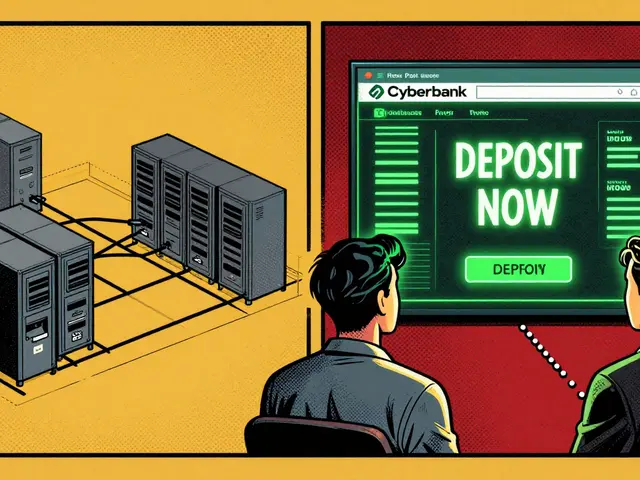
- Exchange Freezes: Exchanges act as the gatekeepers between crypto and fiat currency. When a 51% attack is detected, major exchanges may pause deposits for the affected coin. This prevents attackers from cashing out double-spent coins before the network recovers.
- Checkpoints: Some networks implement "checkpoints." These are specific blocks marked as immutable. Even if an attacker rewrites the recent history, they cannot go back beyond the checkpoint. This limits the window of vulnerability to only the most recent transactions.
- Difficulty Adjustments: Networks can temporarily increase mining difficulty. This makes it more expensive for the attacker to maintain their lead, potentially forcing them to abandon the attack due to high electricity costs.
Hard Forks: The Nuclear Option
In extreme cases, where the network is paralyzed or trust is completely broken, developers may resort to a hard fork. This is a permanent split in the blockchain protocol. By changing the rules-for example, switching the hashing algorithm entirely-developers can render the attacker’s specialized mining hardware useless overnight.
This strategy was considered during attacks on networks like Bitcoin Gold and Ethereum Classic. While effective at stopping the immediate threat, hard forks carry risks. They can fragment the community, cause price volatility, and require all nodes to upgrade software simultaneously. It is a drastic measure reserved for when self-healing fails.
Detection and Monitoring
You can’t recover from an attack you don’t see coming. Modern blockchain security relies on real-time monitoring systems. Tools track chain reorganizations, or "reorgs," which occur when blocks are discarded and replaced. A sudden spike in reorg depth is a red flag.
Monitoring services analyze several metrics:
- Block Confirmation Times: Are blocks appearing slower than usual?
- Orphaned Blocks: Is there an unusually high number of blocks being rejected?
- Hashrate Volatility: Has the total network power dropped suddenly?
By combining these signals, analysts can estimate the cost of the attack based on current hashrate rental prices. If the profit from double-spending exceeds the cost of renting the mining power, an attack is economically viable. This insight helps exchanges decide whether to freeze trading preemptively.

Prevention Through Architecture
Recovery is great, but prevention is better. Many newer blockchains are moving away from Proof of Work to reduce this risk. Proof of Stake (PoS) requires attackers to own more than 50% of the staked coins, not just computing power. This ties the attacker’s financial interest to the network’s health-if they attack, the value of their own holdings crashes.
Other models, like Chia’s Proof of Space, rely on storage capacity rather than energy consumption. Interestingly, PoS and Proof of Space networks often face lower thresholds for attacks (sometimes around 34% to 43%) compared to PoW’s 51%. However, the economic disincentives in PoS make large-scale attacks less attractive because attacking hurts the attacker’s collateral.
Real-World Case Studies
History offers clear lessons. Ethereum Classic suffered multiple 51% attacks between 2019 and 2020. Each time, the network eventually recovered as honest miners returned. However, confidence took a hit, and the price fluctuated wildly. Bitcoin Gold faced similar issues, leading to frequent hard forks and algorithm changes to deter attackers. These examples show that while technical recovery is possible, reputational damage can linger.
For Bitcoin, a 51% attack remains highly improbable. The network’s hashrate is so massive that an attacker would need state-sponsored resources, independent power grids, and billions of dollars in equipment. For smaller altcoins, however, the threat is real. Always check the hashrate stability of any coin you invest in.
What Should You Do?
If you hold cryptocurrencies on vulnerable networks, take these steps:
1. Wait for Confirmations: Don’t consider a transaction final until it has multiple block confirmations. For high-value transfers, wait for six or more.
2. Monitor News: Follow developer announcements and security alerts for the projects you hold.
3. Diversify: Spread your assets across different consensus mechanisms (PoW, PoS) to mitigate systemic risk.
4. Use Hardware Wallets: While they don’t prevent chain rewrites, they protect your keys from theft, giving you more control if you need to move funds quickly.
How long does it take for a blockchain to recover from a 51% attack?
Recovery time depends on when the attacker stops. Once honest miners regain majority hashrate, the network begins healing immediately. Mathematically, each new honest block reduces the chance of the attacker catching up exponentially. Typically, within a few hours to a day, the honest chain becomes dominant again, assuming the attacker doesn't reinvest heavily.
Can a 51% attack happen on Bitcoin?
It is theoretically possible but practically improbable. Bitcoin's hashrate is enormous. An attacker would need to control more computing power than the entire rest of the world combined, costing billions in hardware and electricity. Only a nation-state with unlimited resources could realistically attempt it.
What happens to my coins if a 51% attack occurs?
If you spent coins that were double-spent by an attacker, those transactions may be reversed, and you lose the coins. If you simply held coins, your balance remains intact unless the attacker specifically targeted your address. However, the value of the coin often drops due to loss of confidence.
Why are smaller blockchains more vulnerable?
Security in Proof of Work is directly proportional to hashrate. Smaller blockchains have lower total computing power, meaning an attacker needs less money to rent or buy enough machines to exceed 50% control. Large networks like Bitcoin have such high hashrates that the cost of attack outweighs the potential profit.
Does Proof of Stake prevent 51% attacks?
Proof of Stake makes attacks much harder economically. To attack, you must own a majority of the staked tokens. If you attack and succeed, the value of your tokens likely crashes, destroying your wealth. This "skin in the game" creates a strong deterrent, though it doesn't make attacks impossible.