
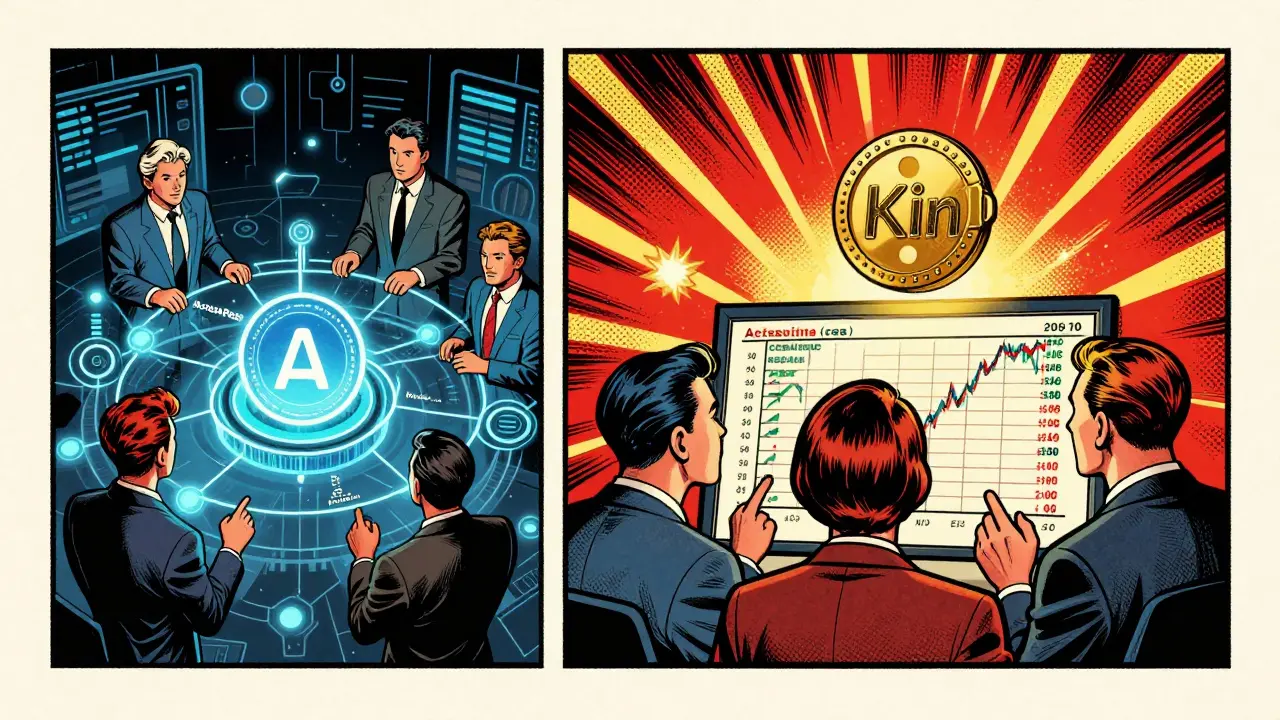
When you buy a token, are you buying access to a service-or are you buying a piece of a business? That single question separates utility tokens from security tokens, and it’s the difference between running a decentralized app and violating federal securities law.
What Makes a Token a Security?
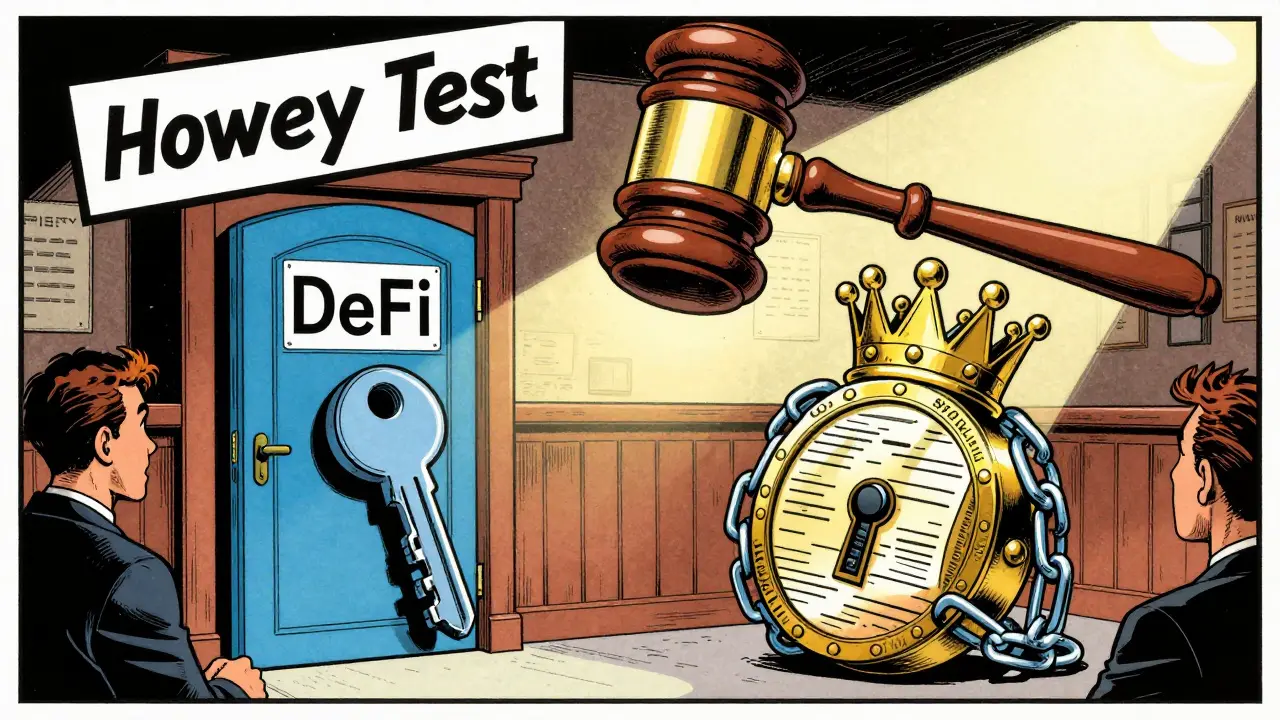
The legal line between utility and security tokens isn’t drawn by how a token looks or what it’s called. It’s drawn by how it’s sold and what investors expect. The U.S. Securities and Exchange Commission (SEC) uses a 78-year-old test called the Howey Test to decide this. It comes from a 1946 Supreme Court case about orange groves. Back then, people bought plots of land with the promise that a company would grow oranges and split the profits. The Court ruled that even though buyers didn’t own the fruit, they were still buying an investment contract because they relied on others to make money for them.
Today, that same logic applies to blockchain tokens. If you buy a token and you’re counting on the team behind it to build, grow, and increase its value-then you’re likely buying a security. The SEC doesn’t care if the token is called "UtilityCoin" or "AccessPass." What matters is whether there’s an investment of money, a common enterprise, and a reasonable expectation of profit from others’ efforts.
That’s why the SEC went after Kik Interactive in 2019. They sold Kin tokens as a "utility" for messaging apps. But their marketing promised huge returns. When Kin’s price jumped 1,200% in months, the SEC stepped in. Kik paid a $5 million fine for selling unregistered securities. The token wasn’t illegal because it was used for chat features. It was illegal because people bought it hoping to get rich.
What Makes a Token a Utility?
A utility token gives you access to a product or service on a blockchain network. Think of it like a prepaid card for a platform. You don’t own part of the company. You don’t get dividends. You just get to use something.
Ethereum’s ETH is the clearest example. The SEC said in 2018 that ETH isn’t a security because it’s used to pay for gas fees, run smart contracts, and interact with dApps. Its value comes from demand for network usage-not from promises of profit. If you buy ETH to stake, lend, or trade, that’s fine. But if you buy it because the Ethereum Foundation said they’ll "make the network more valuable" and you expect to cash out later? That’s where the line blurs.
Other utility tokens include:
- IXS Token - Grants access to IX Swap’s DeFi trading tools
- Filecoin (FIL) - Pays for decentralized cloud storage
- Render Token (RNDR) - Buys GPU power for 3D rendering
These tokens aren’t designed to be investments. They’re designed to be used. If the network stops working, the token loses its function-not just its price. That’s the key difference.
Security Tokens Are Like Digital Stocks
Security tokens represent real ownership. They’re not just digital coins-they’re digital shares, bonds, or real estate titles. A security token might give you:
- A share of a commercial building
- A slice of a private company’s equity
- Right to receive quarterly dividends from rental income
Examples include:
- Tradeflow eNote™ - Tokenized commercial debt from real estate projects
- RealT - Fractional ownership of U.S. rental properties
- Securitize - Issues tokens backed by private company shares
These aren’t speculative plays. They’re regulated financial instruments. Issuers must file with the SEC, provide financial disclosures, and limit sales to accredited investors (unless they use an exemption like Regulation A+ or Regulation D). The legal process is expensive: $100,000 to $500,000 in compliance costs. But for institutions, that’s a small price to pay for legal clarity.
Switzerland’s SIX Digital Exchange processed over CHF 1 billion in security token trades in early 2023. The EU’s MiCA regulation, effective in 2024, now requires security tokens to follow strict transparency rules. This isn’t just U.S. law-it’s becoming global.
Why the Confusion? It’s Not About the Token. It’s About the Pitch.
Many teams try to design utility tokens that look like securities. They say things like:
- "Our token will rise 10x as the platform grows."
- "Early buyers will get a cut of future revenue."
- "We’re building a ecosystem that will outperform Bitcoin."
These aren’t technical statements. They’re investment pitches. And the SEC treats them like securities.
Dr. David Lee from InvestaX says it plainly: "The determining factor is not the token’s name but its economic substance and how it’s marketed." A token sold as "access to a service" but promoted on YouTube with promises of 500% returns? That’s a security. A token sold as "pay for storage" with no mention of profit? That’s a utility.
That’s why 68% of blockchain projects now hire securities lawyers before launching a token-up from 22% in 2018. Most teams don’t realize how easily their marketing can cross the line.
Regulatory Differences Around the World
The U.S. isn’t the only player. Different countries handle this differently:
- Switzerland (FINMA) - Classifies tokens as payment, utility, or asset. Asset tokens = securities.
- Singapore (MAS) - Uses a similar approach. If a token offers profit-sharing, it’s regulated.
- EU (MiCA) - Takes effect in 2024. Utility tokens get light rules. Security tokens get full financial regulation.
- U.S. (SEC) - Still the strictest. Gary Gensler has said "most tokens are securities." The agency relies on enforcement, not clear rules.
The Ripple case in February 2024 showed even the SEC’s logic isn’t consistent. XRP was ruled a security when sold to retail investors-but not when sold to institutions. That’s not a clean rule. It’s a mess.
Meanwhile, the U.S. House passed FIT21 in May 2024, which would create a clear exemption for tokens with genuine utility. But it’s still stuck in the Senate. For now, companies are stuck guessing.
Costs, Timelines, and Risks
Launching a utility token? You might spend $20,000-$100,000 and finish in 3-6 months. You’ll need a whitepaper, smart contract audit, and AML checks. But you won’t need SEC registration.
Launching a security token? Plan for $100,000-$500,000 and 9-18 months. You’ll need:
- Legal structure (offering memorandum)
- Compliance with investor accreditation rules
- Reporting obligations under the Securities Exchange Act
- Listing on a regulated exchange (like SIX or tZERO)
And even then, you’re not safe. One developer on Reddit said his team got an SEC inquiry 18 months after launch-when their token’s price went up 300%. Why? Because the team kept improving the platform, and investors made money. That’s exactly what the Howey Test looks for.
What’s Next? Hybrid Models Are Rising
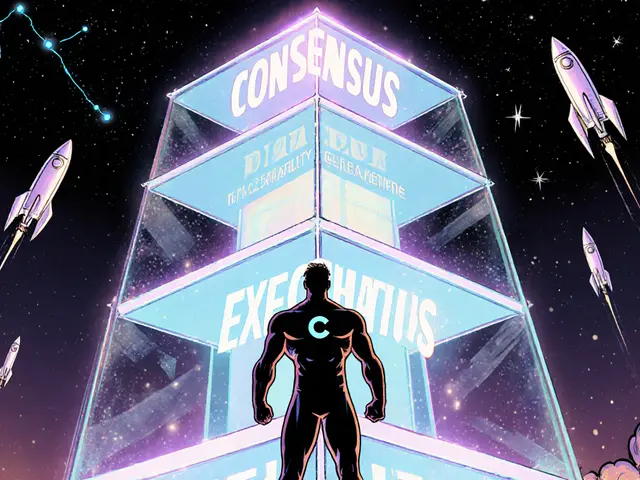
The smartest projects now use dual-token systems:
- Utility Token - Used for platform access, fees, voting
- Security Token - Represents ownership, revenue share, equity
Avalanche’s subnets do this. So do some real estate tokenization platforms. The utility token keeps the ecosystem running. The security token lets investors earn returns-without mixing the two.
By 2026, Gartner predicts 65% of security tokens will be tied to real estate and private equity. Utility tokens will still power DeFi, gaming, and decentralized apps. The line between them is getting sharper-not blurrier.
Key Takeaways
- Utility tokens = access. Security tokens = ownership.
- It’s not what the token does-it’s how it’s sold.
- If investors expect profit from your team’s work, it’s likely a security.
- SEC enforcement is aggressive. Don’t assume "we’re not a security" is enough.
- Security tokens cost more but offer real investor protection.
- Hybrid models are the future: separate utility from ownership.
Can a token start as a utility and become a security later?
Yes. The SEC doesn’t classify tokens at launch. It watches how they’re used over time. If a token was originally meant for platform access but later the team starts promising profits, marketing it as an investment, or centralizing control, regulators can reclassify it. Kik’s Kin token was initially marketed as a utility, but after price surges and profit-focused messaging, the SEC ruled it a security. This is why many projects now avoid any language about price appreciation-even if their token’s value naturally increases.
Are all ICOs illegal?
No. ICOs (Initial Coin Offerings) aren’t illegal by default. But if the tokens sold in an ICO meet the Howey Test criteria-money invested, in a common enterprise, with expectation of profit from others’ efforts-they’re unregistered securities and therefore illegal unless exempted. Many early ICOs in 2017-2018 were structured as utilities but marketed like investments. The SEC has since fined over a dozen projects for this. Today, legitimate token sales either follow strict utility design or are registered as STOs (Security Token Offerings).
Why does the SEC care if a token is a security?
Because securities laws exist to protect ordinary investors from fraud and manipulation. Without regulation, projects can raise millions by promising returns, then disappear. The 2017-2018 crypto boom saw hundreds of projects vanish after raising funds. The SEC’s goal isn’t to stop innovation-it’s to stop scams. Security tokens require disclosures, audits, and ongoing reporting. That’s why institutional investors now feel comfortable allocating billions to blockchain assets-they know where the money went and what they own.
Can retail investors buy security tokens?
It depends. Most security tokens are limited to accredited investors (those with $1 million net worth or $200,000 income). But under Regulation A+, issuers can offer tokens to non-accredited retail investors with limits on how much they can invest. Some platforms like Securitize and Harbor now allow U.S. retail investors to buy tokenized real estate or private equity with caps on investment size. It’s still restricted compared to buying Bitcoin-but it’s growing.
Is Ethereum a security?
The SEC officially said in 2018 that Ethereum (ETH) is not a security. Why? Because ETH functions as a utility: it pays for gas, runs smart contracts, and powers decentralized applications. Its value comes from network usage, not from promises of profit by a central team. Even when people stake ETH or lend it for yield, that’s not the same as buying a share of Ethereum the company. Ethereum has no company, no central team promising returns, and no profit-sharing structure. That’s why ETH remains outside securities regulation.
There are 20 Comments
Dana Sikand
Let me tell you something real quick - if you’re buying a token because you think the team will "make it valuable," you’re already in security territory. No amount of whitepapers or "utility" labels changes that. The SEC doesn’t care about your tech. They care about your hype. And if your Discord is full of "10x or bust" posts? You’re already fined.
Stop pretending your token is a utility if your marketing sounds like a Robinhood ad.
Fiona Monroe
The Howey Test remains the most robust legal framework for distinguishing utility from security tokens. Its longevity is not a flaw - it is a feature. The economic substance of an arrangement supersedes semantic labeling. A token that functions as a means of access but is marketed with promises of profit generation constitutes an investment contract under the test’s second and third prongs. This is not ambiguity - it is clarity enforced by precedent.
Projects that fail to align their communications with their technical architecture do so at their peril. The regulatory risk is not theoretical - it is operational, financial, and existential.
Molley Spencer
Nicki Casey
Let’s be brutally honest - the entire crypto regulatory framework is a joke. The SEC picks and chooses enforcement like a toddler with a hammer. XRP was a security for retail, not for institutions? That’s not law - that’s favoritism.
Meanwhile, the EU’s MiCA is the only sane approach. Clear categories. Clear rules. No vague "expectation of profit" nonsense. Why does the U.S. insist on being the last country to adopt logic? Because regulators are afraid of losing control. And that’s not regulation - that’s fear.
Lucy Simmonds
Daisy Boliaan
Okay but have you seen how some teams are now hiding behind "decentralized governance" while the core devs still control 70% of the treasury? That’s not utility - that’s a Trojan horse. I’ve seen projects where the token was "for voting" but the whitepaper said "early holders get 5% of revenue" - and they laughed when people called them out.
It’s not about the token. It’s about the people behind it. And if they’re still whispering "10x" in private DMs? You’re buying a security. Even if they delete the tweet.
Jessica Carvajal montiel
Why do you think the SEC is so aggressive? Because they know what’s coming. They’ve seen the data. When a token’s price spikes 300% because the team improved the protocol - that’s not market demand. That’s a signal. A signal that the team is now acting like a corporation. And corporations? They need to be regulated.
They’re not trying to stop innovation. They’re trying to stop fraud. And if you’re confused about the difference? That’s your problem - not theirs.
Robert Conmy
Samantha Stultz
Hybrid models are the future. You can’t have one token doing everything. It’s like trying to use your credit card to pay for groceries AND buy stocks. You need separation. Utility for access. Security for ownership. Clear boundaries. Clear compliance.
And yes - this means more legal fees. But if you want institutional capital? You pay the price. No one’s forcing you to build a token. But if you do? Don’t be lazy. Do it right.
McKenna Becker
precious Ncube
Patrick Streeb
It is worth noting that the European Union’s MiCA regulation provides a structured, predictable environment for token classification. By distinguishing between utility, asset, and payment tokens, it reduces regulatory arbitrage and fosters innovation within a compliance framework.
Contrast this with the U.S. approach, which relies on enforcement actions rather than legislative clarity. This creates uncertainty for developers, particularly small teams without legal budgets. A standardized, transparent model - as implemented in MiCA - is not merely preferable. It is necessary.
Cameron Pearce Macfarlane
maya keta
Oh honey, you think the SEC is the problem? Let me tell you - the real villains are the devs who say "we’re decentralized" while holding 90% of the tokens and selling them on day one.
They don’t care about utility. They care about cashing out. And then they blame the regulators when people lose money. Wake up. The system isn’t broken. You’re just using it wrong.
Lilly Markou
The emotional weight of this issue is not trivial. Investors are not faceless entities. They are people - grandparents, teachers, nurses - who saw a post online and put their life savings into a token because someone said "this will change everything."
The SEC’s aggression is not overreach. It is triage. The alternative is not innovation. It is a graveyard of broken dreams and emptied bank accounts.
Elana Vorspan
I love how this post breaks it down so clearly. The hybrid model is genius - it’s like having a debit card and a stock certificate in one ecosystem, but never mixing them.
Also - thank you for mentioning RealT and Securitize. I’ve actually invested in tokenized real estate through them. It’s slow, regulated, and boring - but I sleep at night. That’s worth more than 10x gains.
❤️
Phillip Marson
Danny Kim
So let me get this straight - if I buy ETH to pay for gas, it’s fine. But if I buy ETH because I think L1 competition will make it go up? Now it’s a security?
That’s not a legal test. That’s a psychological one. And if the SEC is policing people’s *thoughts* about tokens… we’re already in dystopia.
aaron marp
For anyone building: start with the utility. Build the product. Let the network grow. Then - and only then - consider a security token for revenue sharing.
Don’t try to do both at once. Don’t mix the messaging. Don’t promise returns. Don’t even say "growth." Say "usage."
The best projects aren’t the ones with the flashiest whitepapers. They’re the ones that never even mention price.
You want to build something that lasts? Build something people need - not something they want to flip.
Elizabeth Smith
Write a comment
Your email address will not be published. Required fields are marked *